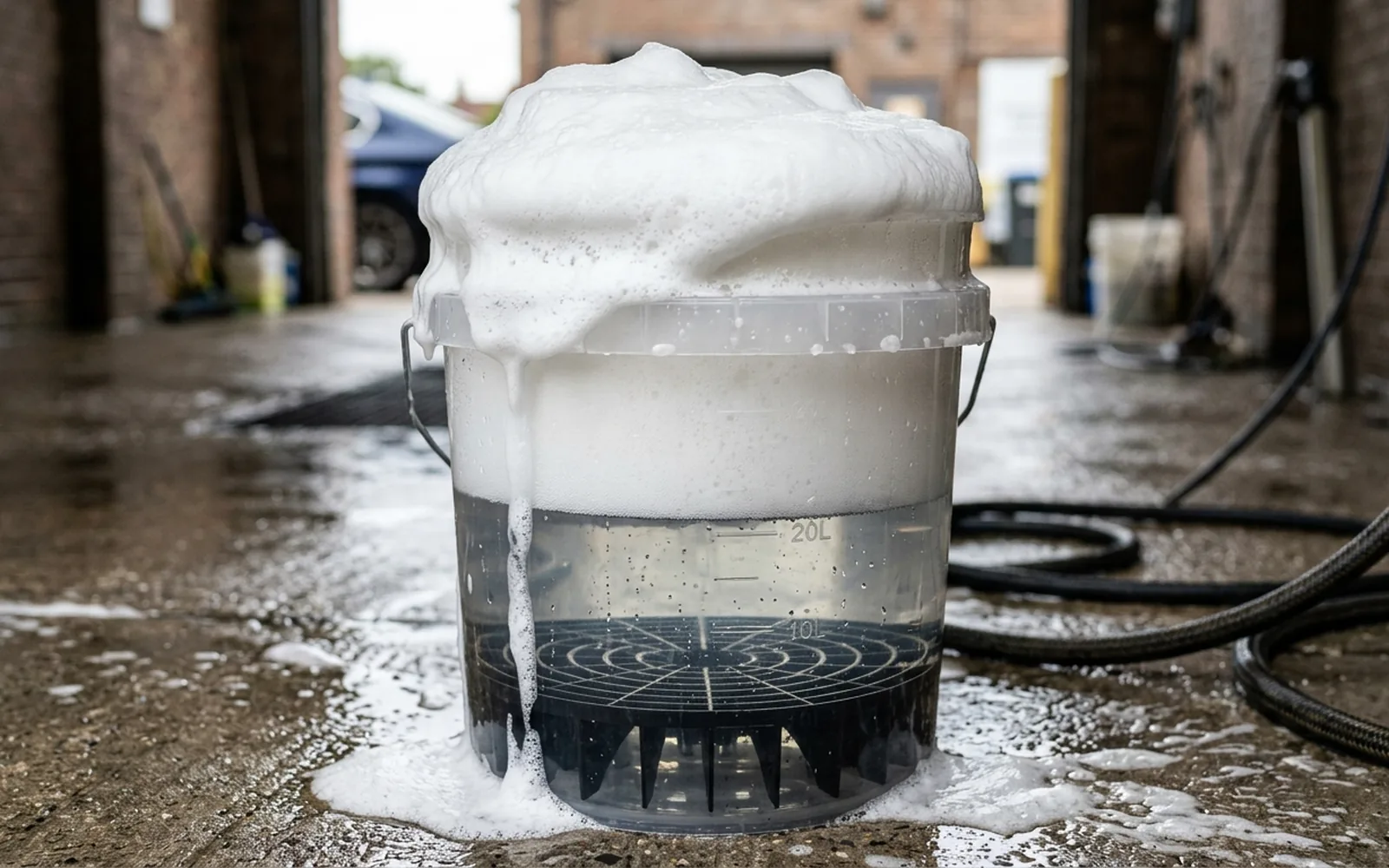
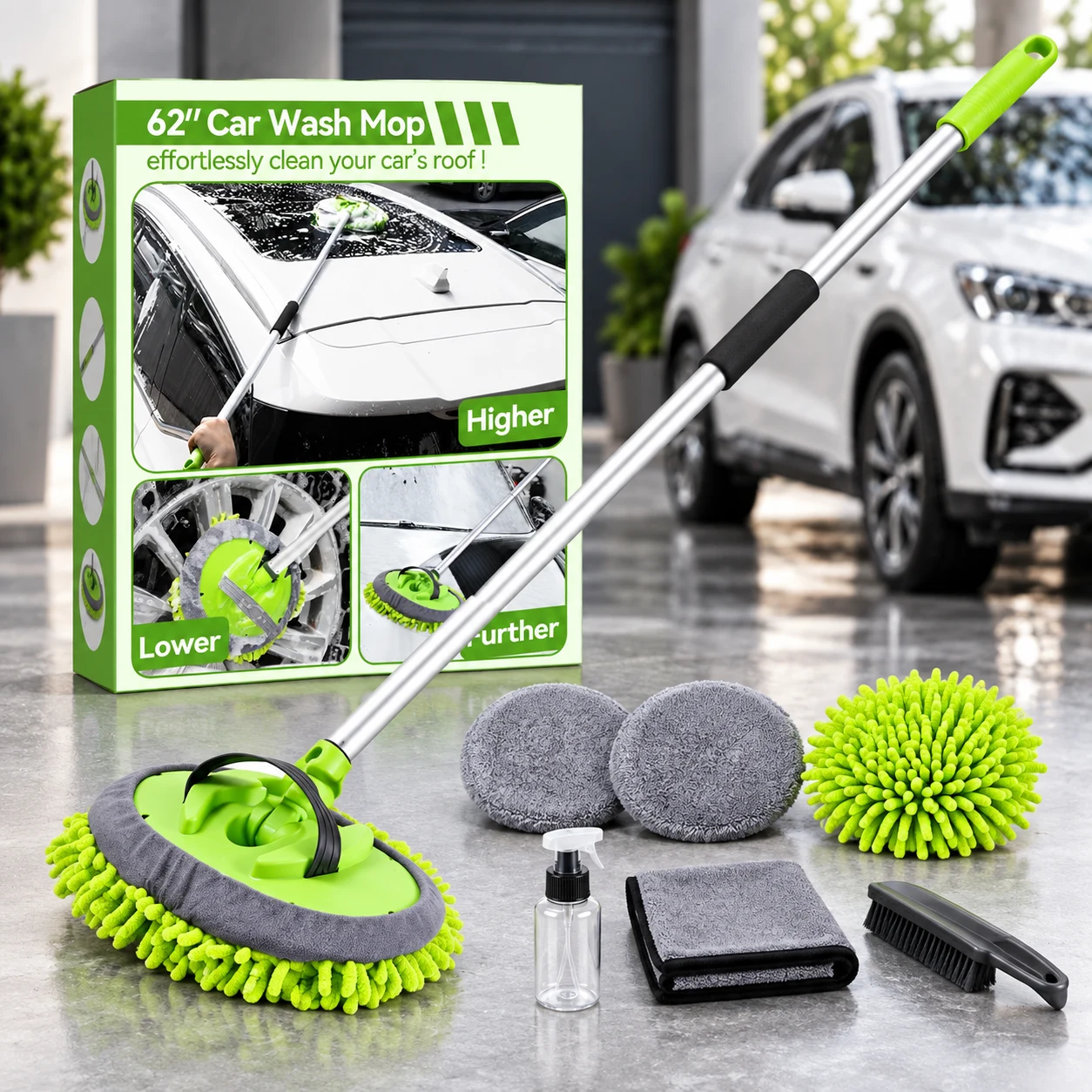
A beginner-friendly guide to DA throw, backing plates, pad size, speed control, ergonomics, and the limits of machine polishing.
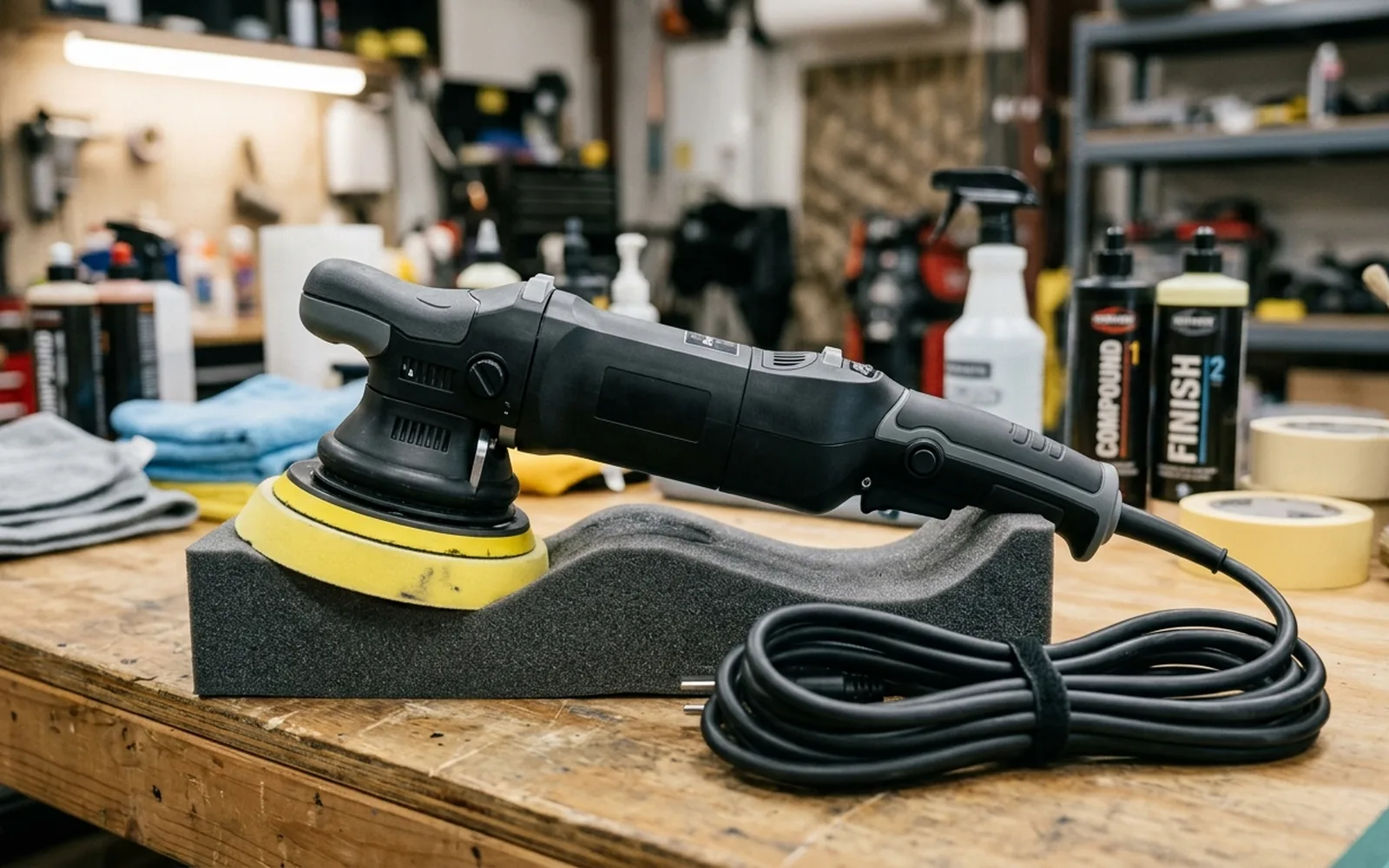
Table of Contents(6 sections)
The right dual-action polisher is not simply the machine with the biggest orbit or the highest advertised wattage. It is the one you can control, keep flat, pair with sensible pads and compound, and use on the shapes and paint condition in front of you. This guide is for researched equipment selection, not a claim that every scratch can be removed safely.
Paint-correction boundary
A machine polisher can improve gloss and reduce some defects, but it cannot restore missing clear coat. Test a small area, use the least aggressive combination that achieves the goal, and stop when the paint or pad becomes too hot.
Why a dual-action polisher is the default for beginners
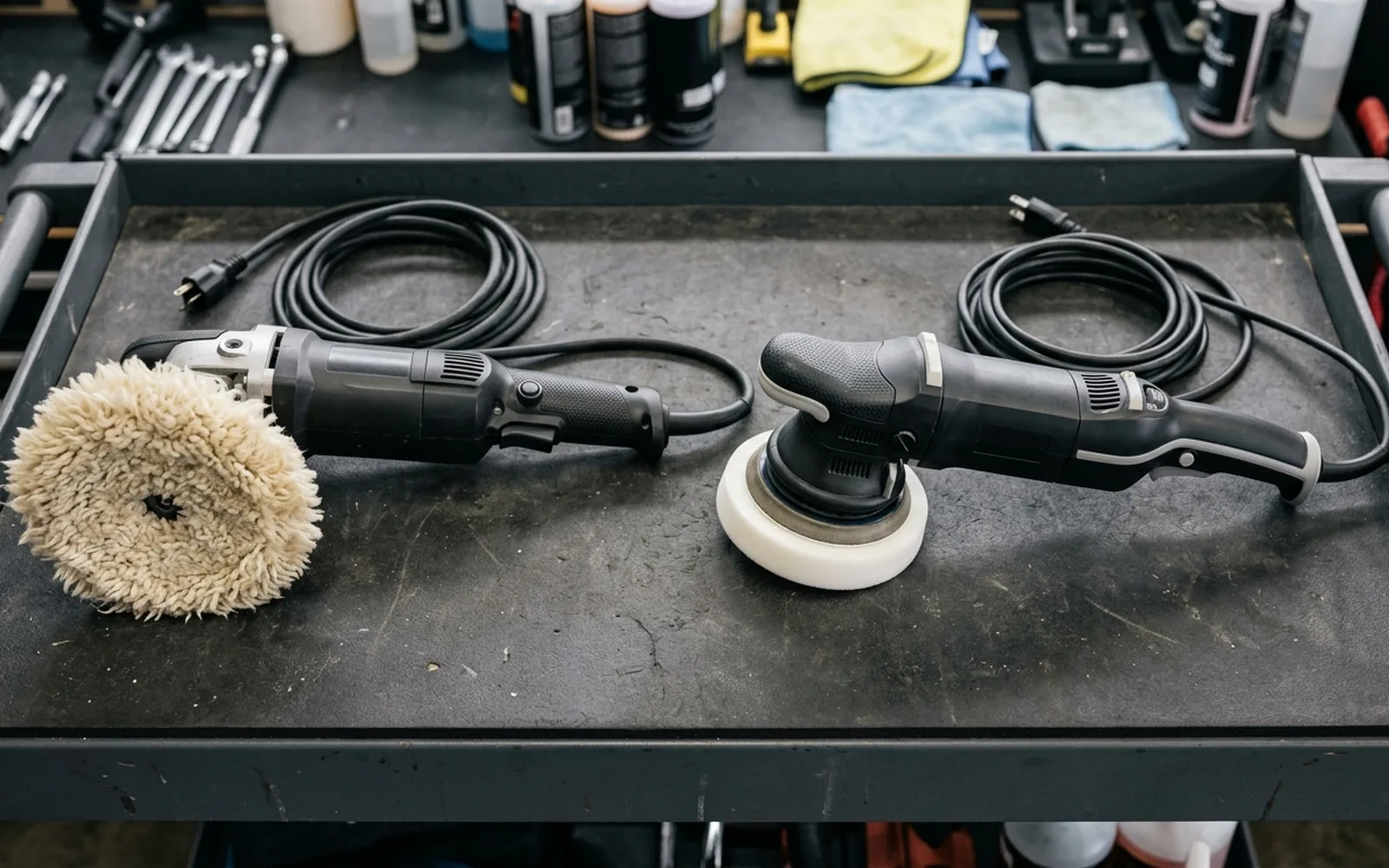
A dual-action machine combines rotation with an orbiting movement. That movement is often more forgiving than a direct-drive rotary for a new user, but it does not remove the need for clean pads, controlled pressure, sensible section sizes, and awareness of edges. Meguiar's professional material describes DA systems as an alternative to rotary correction; treat that as product guidance, not a guarantee of zero risk.
Throw size: speed versus control
| Throw family | Useful when | Trade-off |
|---|---|---|
| Compact or short throw | Tight panels, trim-adjacent work, and learning controlled movement | Usually slower on broad panels and may need more passes. |
| Around 15 mm | A versatile one-machine setup for mixed vehicle shapes | Still requires careful pad and pressure control near edges. |
| Around 21 mm | Large, open panels where faster coverage matters | Less convenient around contours and can magnify poor technique if the pad is tilted. |
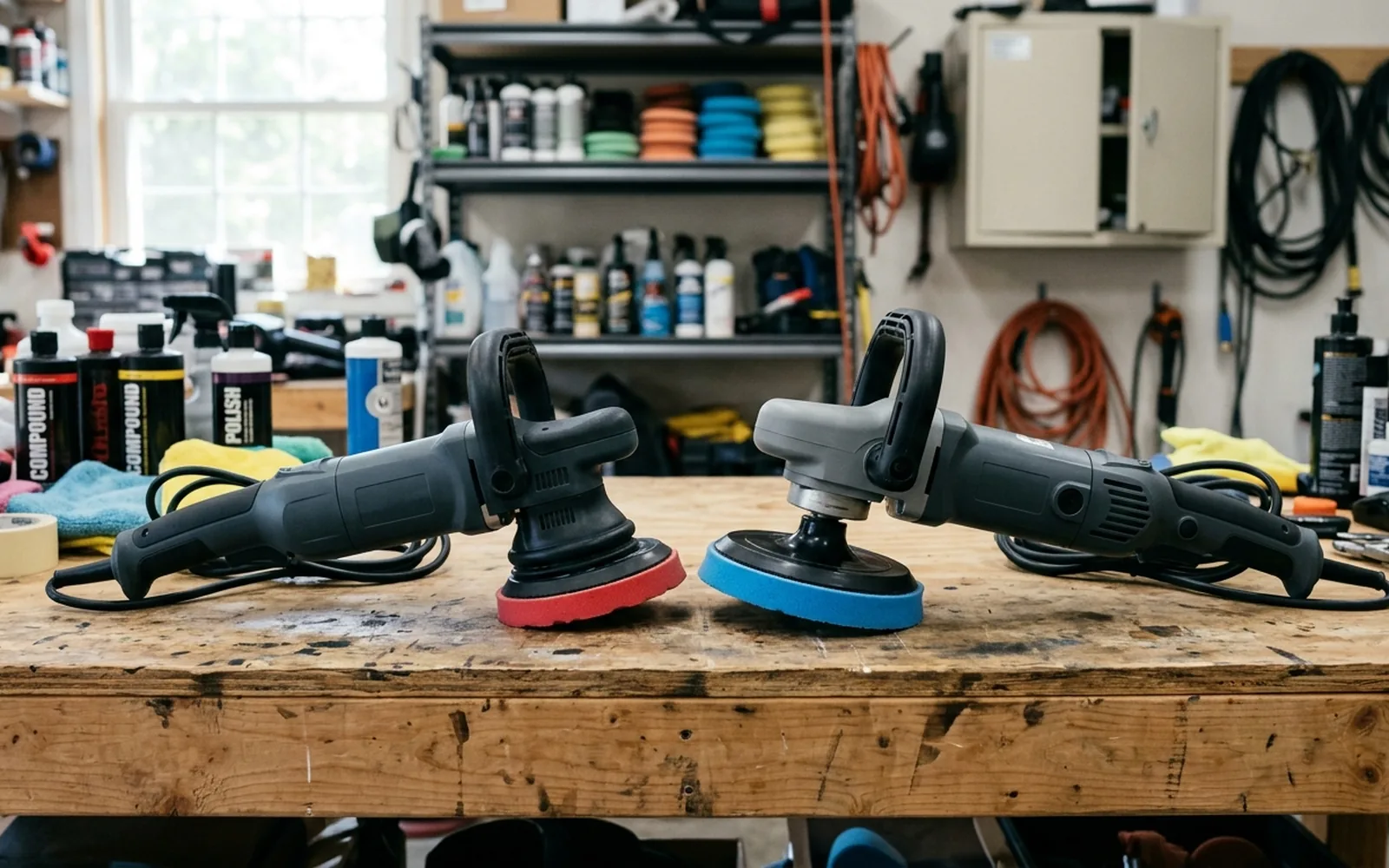
The five buying details that matter most
- Backing-plate compatibility: confirm the machine supports the pad size you can source locally.
- Speed control: a stable low setting helps spreading product and a controlled higher setting helps correction work.
- Balance and grip: a comfortable machine is easier to keep flat over a full panel.
- Cable, trigger, and switch layout: these determine whether your working position feels controlled.
- Pad and compound ecosystem: a machine is only useful if replacement pads and compatible products are available in the USA or UK.
A safe first correction workflow
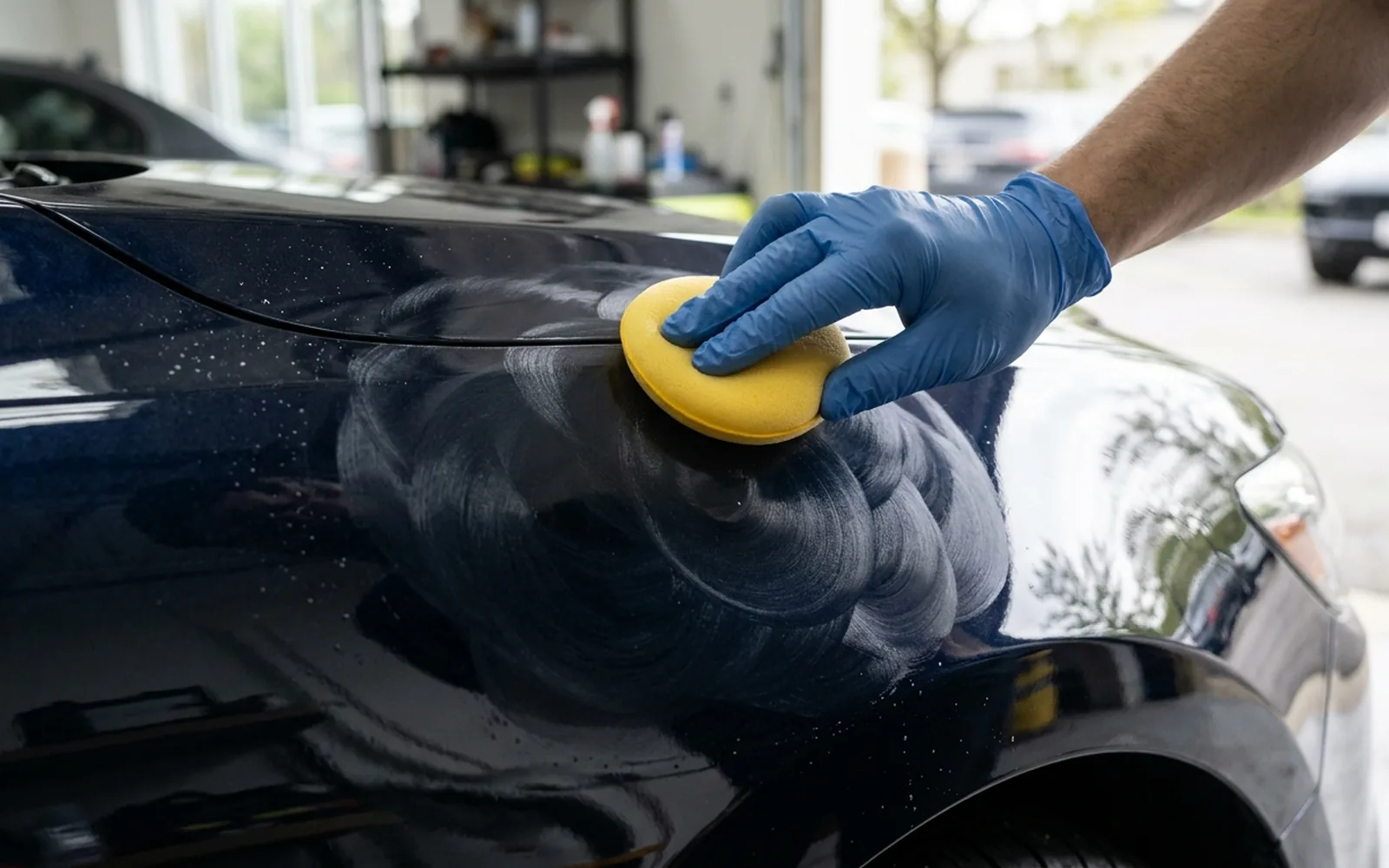
Beginner DA workflow
Inspect and wash
Clean the vehicle and inspect the paint in good light before deciding that correction is needed.
Choose a test spot
Use a small representative area and mark what changed after one controlled set of passes.
Start mild
Try a polishing pad and polish before moving to a cutting pad or stronger compound.
Work small sections
Keep the pad flat, use moderate arm speed, and clean or change pads before residue builds up.
Measure the goal
Stop when the defect is acceptably reduced and the finish is clear; chasing perfection can remove more material than the defect deserves.
Reasons to buy and reasons to skip
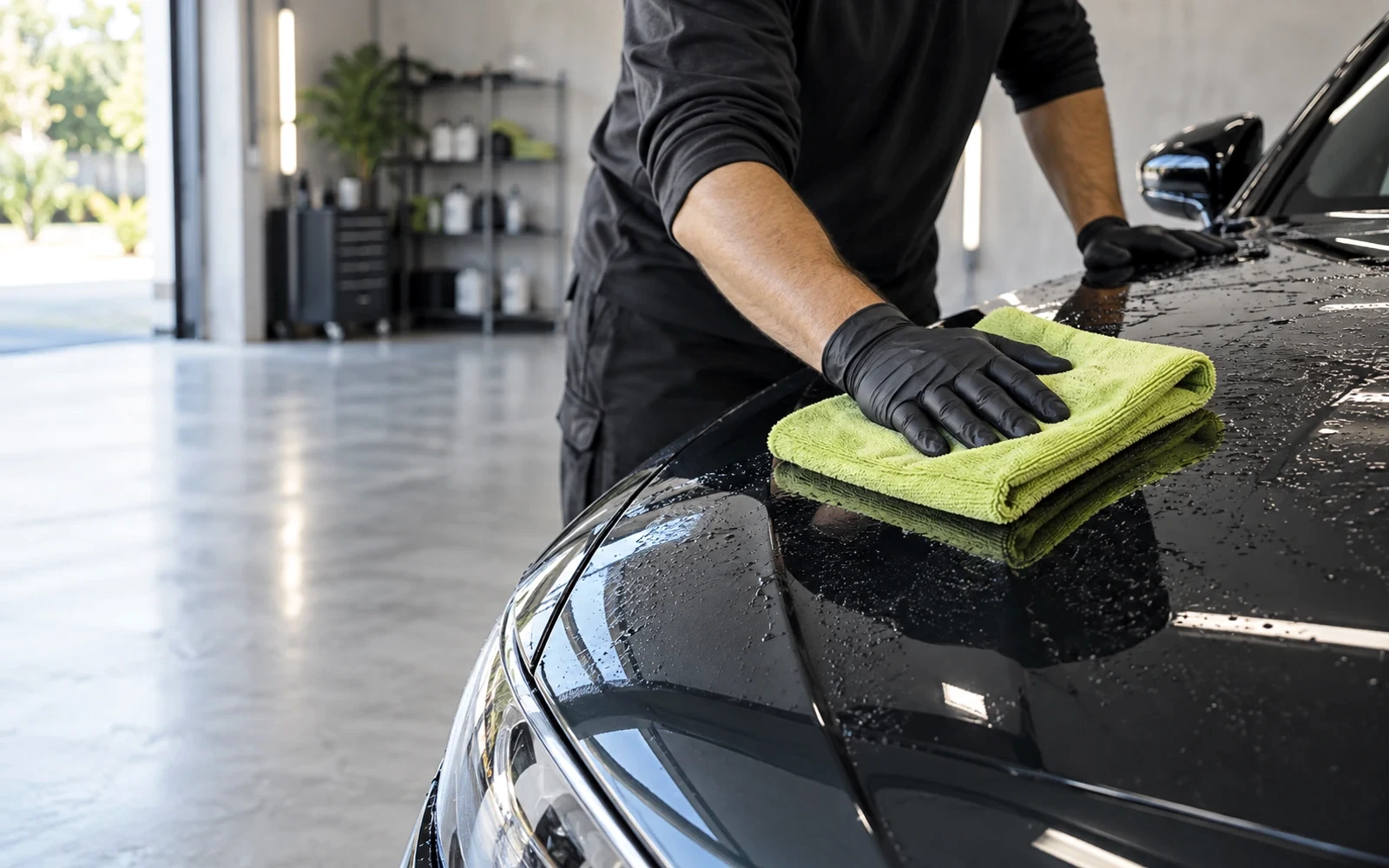
Buy a dual-action polisher when you have a defined paint goal, a place to work, lighting good enough to inspect the finish, and time to learn the machine. Skip the purchase when the paint has deep damage, peeling clear coat, or a defect that needs a body-shop repair; more machine power will not make missing material return.
Straight answers
Frequently Asked Questions
Key questions answered with verifiable test evidence and methodology.
What is the best dual-action polisher for a beginner?
A beginner should prioritize predictable speed control, comfortable balance, common backing-plate sizing, and a usable pad ecosystem. There is no single best machine for every vehicle or budget.
Is a 15mm or 21mm polisher better?
A 15mm machine is usually the more flexible one-machine choice. A 21mm throw can cover broad panels efficiently but needs more care around curves and tight areas.
Can a dual-action polisher remove deep scratches?
It can reduce some surface defects, but it cannot restore missing clear coat or repair damage that reaches through the paint system. Inspect the defect before polishing.
Do I need a rotary polisher for paint correction?
No. Many enthusiasts start with a DA polisher because its movement is often more forgiving. A rotary can be useful for specialist correction, but it is not a beginner requirement.
How many polishing pads do I need?
Enough clean pads to keep the working face fresh through the job. The exact number depends on vehicle size, pad type, product, and how often you clean or change pads.
Where to buy
Recommended Gear in this Guide
Active 2.0 1800 PSI 2.0 GPM Pressure Washer
Our lab-tested standard for safe automotive flow and pressure.
MTM Hydro PF22.2 Foam Cannon
The benchmark standard for uniform foam density and durability.
DetailRig is reader-supported. We test independently and never accept paid placement. When you buy through our links, we may earn an affiliate commission at no extra cost to you.
References & Sources
- • https://www.meguiars.com/sites/default/files/pdf/automotive-catalog.pdf
- • https://www.meguiars.com/sites/default/files/pdf/professional-catalog.pdf
- • https://support.google.com/google-ads/answer/3022575?hl=en-uk

Marcus Vance
Verified TesterDetailRig Editorial Contributor
Maintains equipment evaluations, methodology notes, and garage-workflow coverage. Professional credentials are withheld pending publisher verification.