DetailRig
GEAR. TESTED. REAL RESULTS.

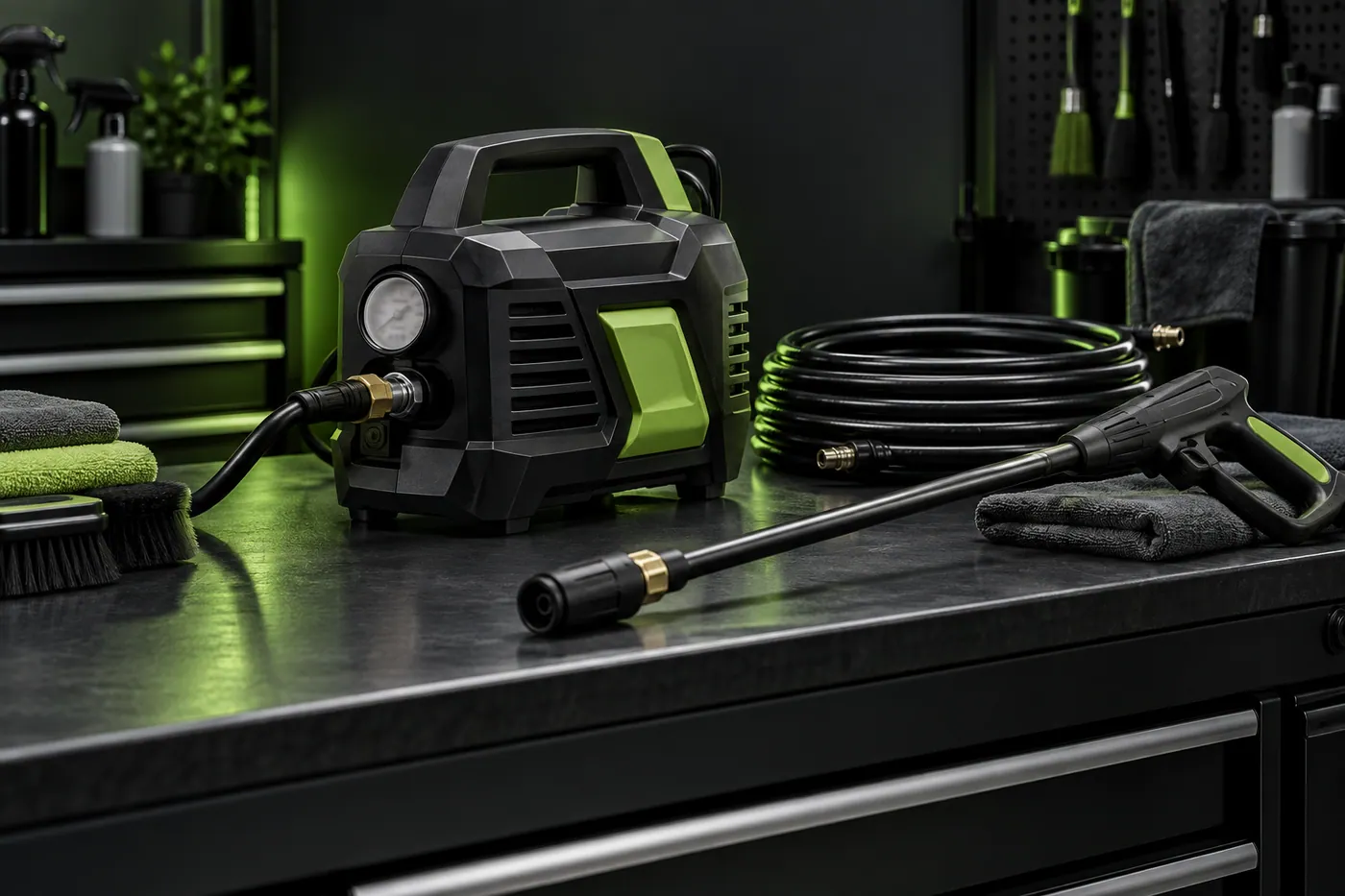
Illustrative artwork; not a product test photograph.

Free car detailing tool

Pressure Washer PSI to Bar & Flow Converter

Compare US pressure washer specifications with UK and metric listings. Enter PSI or bar and US gallons per minute or litres per minute to see both sets of units instantly.

How do you convert pressure washer PSI to bar?

Divide PSI by 14.5037738 to get bar. For flow, multiply US gallons per minute by 3.785411784 to get litres per minute. These conversions help compare US and UK product listings, but they do not reveal a washer’s actual pressure or flow at the nozzle.

Pressure

103.42 bar

1500 PSI

Flow

5.68 L/min

1.50 US GPM

These are unit conversions, not measured output or a paint safety assessment. Use working measurements when you have them; advertised maximum PSI and flow may occur under different conditions.

Conversion formulas

Use bar = PSI ÷ 14.5037738 and L/min = US GPM × 3.785411784. A US gallon is 3.785411784 litres; an Imperial gallon is different. Product listings that say GPM without specifying the gallon standard need a manual or manufacturer check.

Example for a detailing washer

A stated 1,500 PSI converts to about 103.42 bar, and 1.5 US GPM converts to about 5.68 L/min. This is an arithmetic example, not a measured washer result. Compare working values where possible; maximum pressure and maximum flow may be advertised separately.

Choosing equipment for car paint

Pressure alone cannot establish paint safety. Spray angle, distance, nozzle condition, damaged paint, and actual working pressure matter. Use a wide fan tip, keep the wand moving, and follow the vehicle and equipment manuals. Our nozzle sizing calculator estimates orifice size from measured flow and a selected target pressure.

Sources and calculation status

The conversion constants follow the NIST Guide to the SI conversion factors. The result is a unit conversion, not a product test or manufacturer specification. Reviewed 28 September 2026.

Detailing answers

Frequently asked questions about car detailing

Clear answers to common car detailing, washing, interior-care, and paint-protection questions.

What is car detailing?

Car detailing is the careful cleaning, decontamination, and protection of a vehicle’s interior and exterior. The process can include a wash, wheel and tire care, interior cleaning, paint decontamination, polishing, and a protectant; the right steps depend on the vehicle and finish.

What products do I need for car detailing at home?

Start with car wash soap, wash media, microfiber towels, wheel cleaner, an interior cleaner, and a vacuum. Add a pressure washer, foam cannon, polisher, or paint protection only when the task and your skill level justify them.

What car wash soap should I use?

Choose a soap made for automotive paint with clear dilution instructions. A pH-neutral car soap is a common starting point for routine maintenance, but the best choice depends on the coating, soil, wash method, and manufacturer guidance. Avoid household dish detergent on vehicle finishes.

How much PSI is needed to wash a car?

There is no single PSI target for every vehicle or washer. Use the lowest pressure and widest practical spray pattern that removes soil safely, keep the nozzle moving, and follow the washer and vehicle-maker guidance. Pressure, nozzle, distance, and technique all affect risk.

What is a foam cannon used for?

A foam cannon meters car wash solution into a pressure-washer stream to apply cleaning foam. It can help pre-soak and loosen loose soil before contact washing, but foam alone does not replace a careful rinse and wash.

How do I clean a car interior?

Remove loose items and vacuum first, then clean one material at a time with a compatible product and a lightly damp microfiber or brush. Test an inconspicuous area, avoid over-wetting electronics and upholstery, and follow the material and product instructions.

What is paint correction?

Paint correction is the controlled polishing of a vehicle’s clear coat to reduce the appearance of defects such as swirls or light scratches. It removes some material, so inspect the finish, use the least aggressive effective method, and treat deep defects as a professional-risk decision.

How do I choose a dual-action polisher?

Compare the machine’s throw, speed control, ergonomics, backing-plate compatibility, power, and support—not just the wattage. Beginners generally benefit from predictable control and manageable balance; pad and compound choice also change the result.

How long does ceramic coating last?

Ceramic-coating durability depends on the formulation, preparation, layers, exposure, maintenance, and manufacturer instructions. Treat a stated lifespan as a manufacturer claim unless DetailRig has documented evidence, and plan regular washing and inspection rather than assuming permanent protection.

What should I look for in car detailing products?

Match the product to the surface, soil, tool, and task; check dilution, compatibility, safety directions, and aftercare. DetailRig labels evidence as TESTED, USED, RESEARCHED, or MANUFACTURER-CLAIM so readers can distinguish hands-on evaluation from source-based or maker-provided information.