Table of Contents(6 sections)
What does lubricant do during claying?
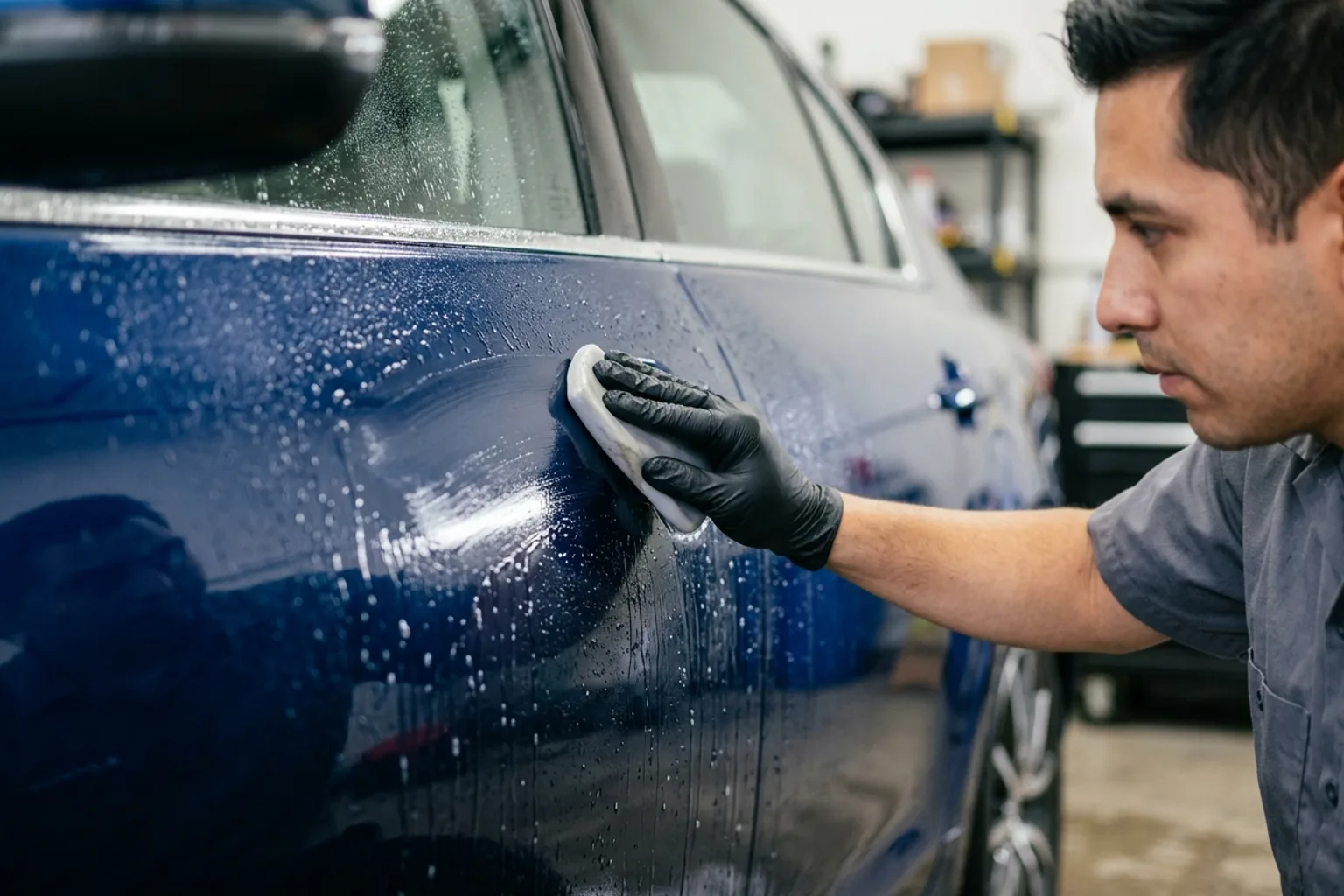
Clay removes above-surface contamination through contact. A wet lubricant film helps it move without grabbing a dry panel. Meguiar's supplies a detailer with its consumer clay kit, while its professional clay guidance names compatible products. The correct liquid is product-specific: follow the clay and lubricant labels rather than a universal home-mixed ratio.
How much should you apply?
Work in small sections so you can maintain a continuous wet film. Mist the paint and clay face, make a light pass, and add more immediately if movement becomes sticky. Fold clay to expose a clean face as directed. Wipe spent lubricant with a clean microfiber and inspect under light. If contamination is still heavy, reassess the sequence instead of pressing harder.
| Condition | Response | Avoid |
|---|---|---|
| Clay glides freely | Continue light passes | Unneeded force |
| Clay drags | Stop and add lubricant | Dry contact |
| Clay picks up grit | Fold or replace as directed | Reusing dirty face |
How do you put this into practice?
Clay Bar Lubricant workflow
3 stepsWash and inspect
Remove loose dirt and identify where bonded material remains.
Lubricate
Wet a small area and the clay face with a compatible product.
Glide and wipe
Use light motion, re-wet on drag, then wipe and check the result.
What if the clay falls on the ground?
Do not press a dropped clay bar back onto paint; embedded grit may scratch. Also do not mix products simply because both are liquids. A chemical decontamination step may reduce the mechanical work needed, but compatibility and surface instructions still govern. Clay may leave marring, so inspect before applying wax or coating.
Evidence status
Research-based guidance drawn from the linked manufacturer and vehicle-care sources. No DetailRig hands-on test or performance measurement is claimed for this article.
What is the useful next step?
Keep a clean spare clay piece and enough lubricant at hand so you never have to finish a panel dry. The paint-care guide covers the broader decontamination order.
Straight answers
Frequently Asked Questions
Answers based on the evidence and sources identified in this article.
Can I clay with plain water?
Only if the clay manufacturer explicitly permits it. Many clay bars require a compatible detailer or dedicated lubricant.
Do I need to press to remove rough spots?
No. Start with sufficient lubrication and light passes; reassess the contaminant if it does not release.
Where to buy
Recommended Gear in this Guide
Chemical Guys Clay Luber & Heavy-Duty Clay Block Kit
Includes dedicated high-lubricity spray and elastic synthetic clay to lift bonded grit without scratching paint.
DetailRig is reader-supported. Recommendations follow each page's evidence label (tested, used, or researched), and we never accept paid placement. When you buy through our links, we may earn an affiliate commission at no extra cost to you.
References & Sources

DetailRig Editorial
ContributorResearch publication
DetailRig Editorial publishes source-linked car-care explainers. These articles synthesize manufacturer instructions and clearly separate research from documented hands-on testing.