Clean Inside a Windshield Without Repeating Streaks
Clean inside your windshield with controlled product, dedicated glass towels, a separate dry pass, and a check for tint or special glass-care restrictions.
Sources verified:
Table of Contents(5 sections)
Evidence: researched
This guide combines the linked manufacturer instructions with editorial decision-making advice. DetailRig has not performed a controlled test for this article; product-specific claims remain attributed to their manufacturers.
Why another spray can make the smear worse
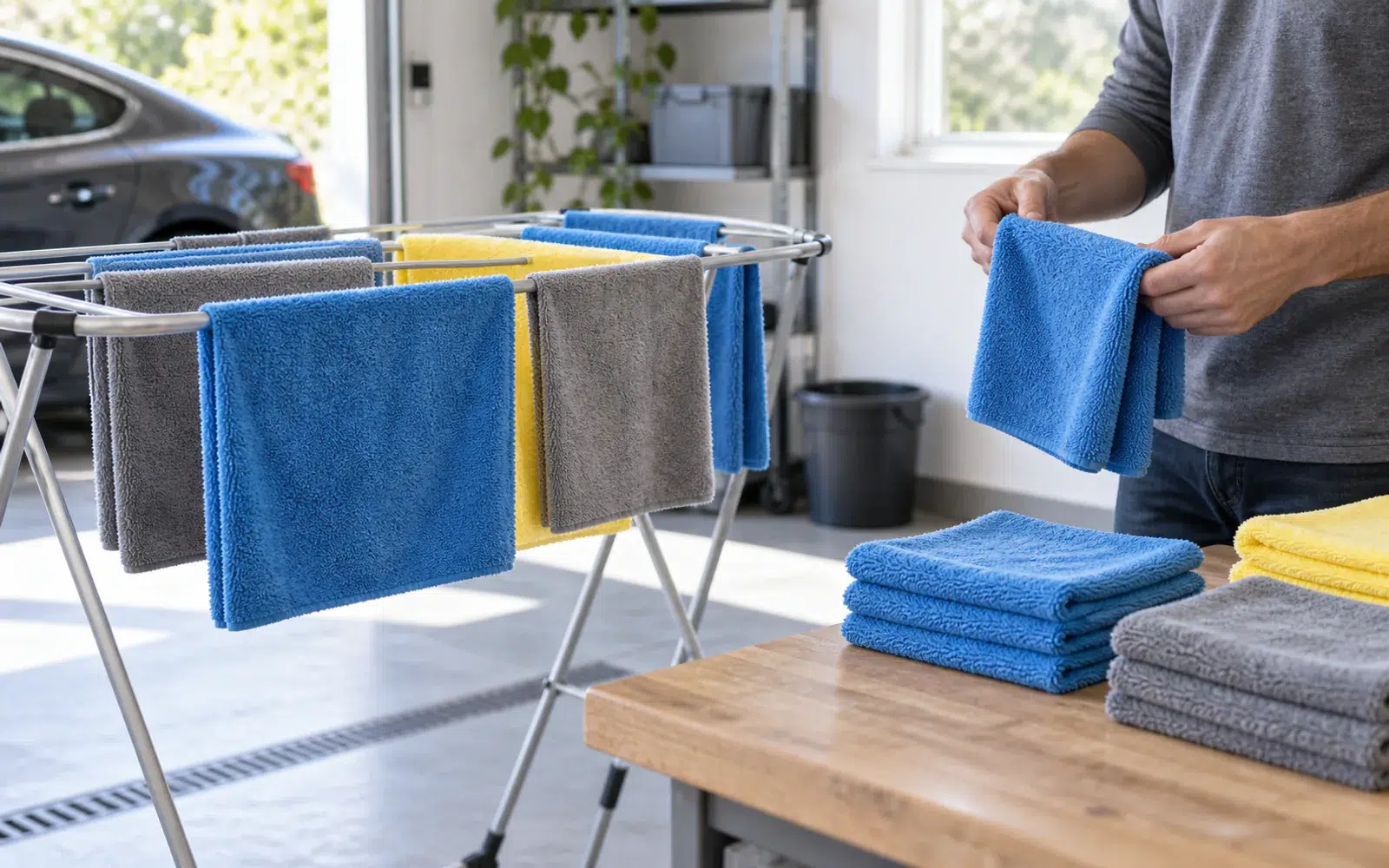
If the towel is carrying oily residue, adding cleaner may simply spread that residue over a larger area. Start by checking the cloth rather than increasing product volume. Keep glass towels separate from towels used for wax, dressing, or other oily treatments. A towel can look clean yet still carry something that leaves a visible film on glass.
Stoner recommends conservative product use and a clean finishing pass. Its tint-care guidance also advises applying cleaner to the towel for interior glass to control overspray. This is especially useful near the base of the windshield, where it is easy to spray the dash while trying to reach a distant corner.
An interior windshield cleaning sequence
Park and let the glass cool
Work with the vehicle stationary in shade. Remove loose items that obstruct access from the passenger side.
Confirm the cleaner is suitable
Check vehicle guidance and any tint installer’s instructions, including cure restrictions for newly installed film.
Clean a manageable section
Mist a dedicated towel as directed and wipe with light pressure. Work methodically so corners are not missed.
Use a separate dry pass
Finish with another clean, dry glass towel or a fresh tool cover. Replace a saturated towel instead of repeatedly spreading moisture.
Inspect from another angle
Look through the glass from both front-seat positions. If streaks remain, determine whether they are inside or outside before repeating the work.
Choose the next action from the pattern
| Pattern | Likely check to make | Useful response |
|---|---|---|
| Broad oily smears | Towel contamination or excess product | Switch to a fresh dedicated cloth and controlled application. |
| Haze confined to lower corners | Incomplete contact or reach | Use a clean reach-tool cover and deliberate overlapping passes. |
| Streak visible after both passes | Which side of the glass has the mark? | Inspect exterior glass before repeating interior cleaning. |
| Problem returns unusually quickly | Interior residue source or an underlying vehicle issue | Investigate rather than endlessly adding cleaner. |
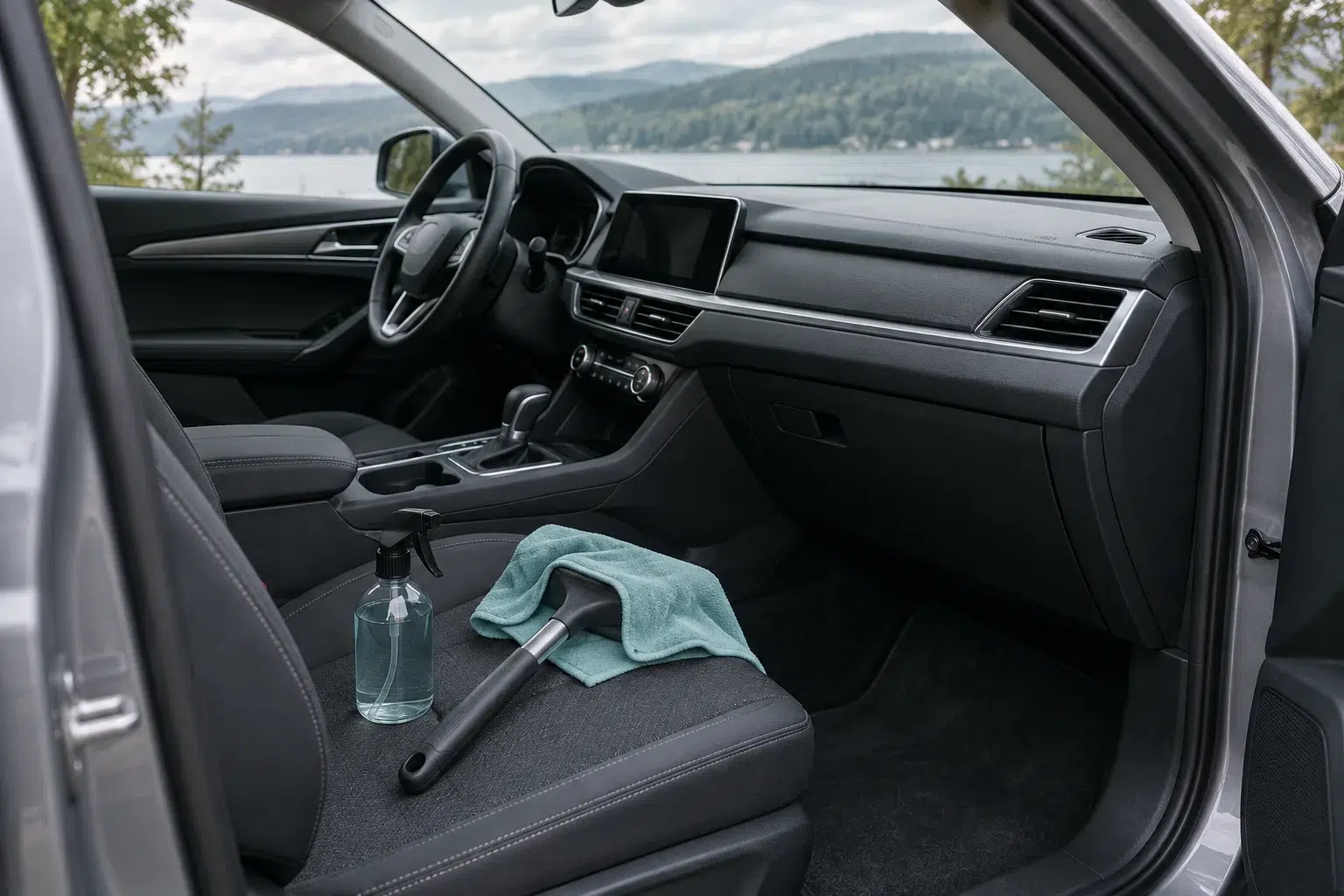
A reach tool is worthwhile when it helps keep the cleaning face flat against hard-to-reach glass. Stoner describes using one cover to clean and another to finish. The tool does not remove the need for clean covers, and a dirty cover can reproduce the same streaks as a dirty towel. Wash and store the covers according to their care instructions.
Protect special surfaces and coatings
Aftermarket tint, plastic instrument lenses, touchscreens, and head-up-display glass are not interchangeable with ordinary untreated glass. Do not extend an automotive glass cleaner recommendation to those surfaces without checking the relevant instructions. Avoid scraping film edges or using an abrasive household sponge to attack a persistent mark.
An exterior rain-repellent treatment is also a separate choice from an interior cleaner. Our glass cleaners and windshield treatments guide explains that distinction. Buying both does not mean both belong on the inside windshield. Keep the intended application written on your bottles so similar packaging does not lead to a mistaken treatment.
A small kit is usually sufficient
- Consider a suitable glass cleaner and at least two clean cloth faces for cleaning and finishing.
- Consider a reach tool when the lower glass is physically difficult to access.
- Skip added fragrance, dressing, and unapproved coatings on interior glass.
- Use the microfiber towel care guide to prevent laundry residue from undoing your next cleaning.
Know when to stop
Stop if a cleaner changes tint, trim, or display appearance. Do not drive until visibility is clear. Persistent film accompanied by other vehicle symptoms should be investigated rather than treated only as a cleaning problem.
Straight answers
Frequently Asked Questions
Answers based on the evidence and sources identified in this article.
Should I spray directly onto the inside glass?
Applying to the towel gives better control around the dashboard and electronics. Follow the specific cleaner instructions and use enough product to clean without excessive saturation.
Why does a fresh towel matter?
A towel that has collected oils or cleaning residue can spread them again. A separate clean, dry finishing pass helps remove the remaining moisture and film.
Where to buy
Recommended Gear in this Guide
Active 2.0 1800 PSI 2.0 GPM Pressure Washer
Our lab-tested standard for safe automotive flow and pressure.
MTM Hydro PF22.2 Foam Cannon
The benchmark standard for uniform foam density and durability.
DetailRig is reader-supported. We test independently and never accept paid placement. When you buy through our links, we may earn an affiliate commission at no extra cost to you.
References & Sources

DetailRig Editorial
ContributorResearch publication
DetailRig Editorial publishes source-linked car-care explainers. These articles synthesize manufacturer instructions and clearly separate research from documented hands-on testing.