Car Drying Towel vs Blower: Which Fits Your Wash?
Compare a car drying towel and blower by contact, access, storage, and workflow. Learn when using both is useful and when another purchase adds little.
Sources verified:
Table of Contents(4 sections)
Evidence: researched
This guide combines the linked manufacturer instructions with editorial decision-making advice. DetailRig has not performed a controlled test for this article; product-specific claims remain attributed to their manufacturers.
Choose around the part of drying that causes trouble
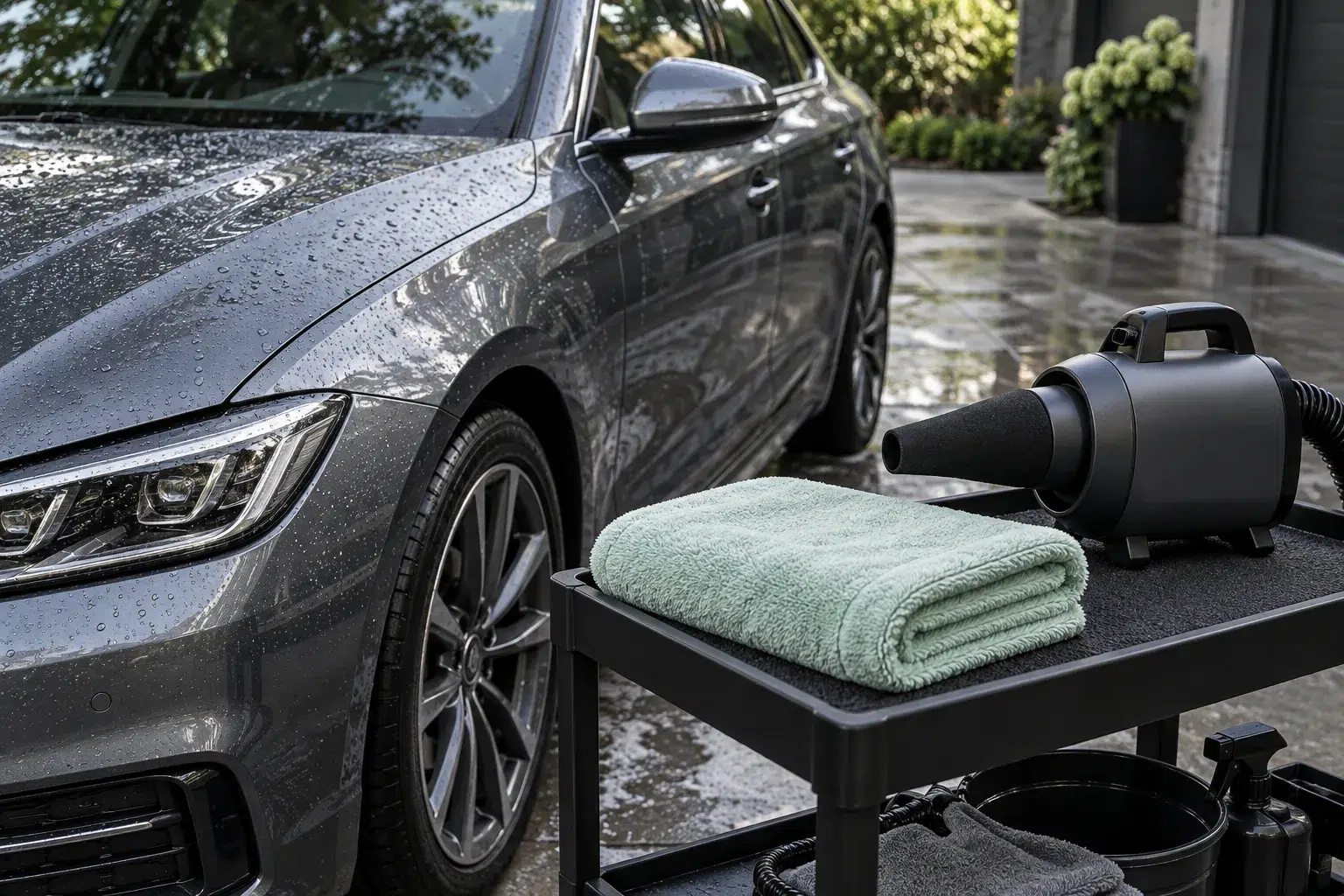
If your existing towel finishes the car comfortably, a blower may be an optional convenience. If water repeatedly drips from mirrors after you finish, directed air may solve a more specific problem. The Rag Company frames the choice as one with advantages and disadvantages rather than a universal winner. This comparison follows that use-case approach and does not assign unsupported drying-time or scratch-prevention scores.
| Consideration | Microfiber drying towel | Suitable car blower |
|---|---|---|
| Contact with paint | Direct contact requires clean paint and media. | Air can reduce contact, but the nozzle must stay clear. |
| Water around trim | Can absorb accessible drips. | Useful for directing air into accessible water-trapping areas. |
| Setup and storage | Requires clean storage and laundering. | Requires equipment storage and the specified power setup. |
| Control in a small space | Compact and easy to handle. | Hose, cord, airflow, and noise need consideration. |
| Finishing | Useful for remaining isolated drops. | May still leave areas needing a clean towel. |
A towel routine that starts clean
Drying is part of washing, not an opportunity to remove missed grit. Inspect the panel before putting a towel on it. Use a clean towel intended for the finish and a fresh face when needed. Keep wheel and tire cloths separate, and put a dropped towel aside until it has been properly cleaned and checked. A larger towel is not automatically easier to control around low panels.
Our guide to how to choose a microfiber drying towel covers the selection details. For this decision, focus on whether you can manage the towel without dragging it on the ground and whether it stays effective through your normal wash. Buy a second suitable towel if that solves saturation; do not jump to an equipment purchase merely because one small cloth runs out of capacity.
A blower routine that controls the air path
Use equipment suitable for vehicle drying and follow its intake, filter, nozzle, and electrical instructions. Keep the intake away from loose debris and avoid blowing dirt from the ground toward freshly washed paint. Hold the nozzle clear of the finish. Gtechniq includes air drying among its maintenance options, but that does not establish the suitability of every garden tool or compressor accessory.
Work from a stable position and pay attention to where displaced water goes. A narrow pocket of water around a mirror can reappear after the surrounding panel seems dry. Finish by inspecting seams and accessible trim, then collect any remaining drops with a clean towel if needed. There is no benefit in persisting with one method just to avoid using the other.
Pick a drying approach without overspending
Describe the problem
Identify whether you struggle with towel saturation, inaccessible drips, setup time, or storage.
Check the current kit
Inspect the towel condition or blower maintenance before judging the method itself.
Use a clean test area
After a proper wash, compare your handling and reach on a small section without claiming a controlled performance test.
Finish and inspect
Check for retained water around trim and for visible contamination before further contact.
Buy for the remaining gap
Choose one addition that addresses the specific limitation instead of replacing every part of the wash kit.
Know when to stop
Do not use a drying towel to wipe dirty paint, and do not direct air that carries grit toward the car. Observe the blower’s power and environmental limits; a wet wash area requires equipment used exactly as specified.
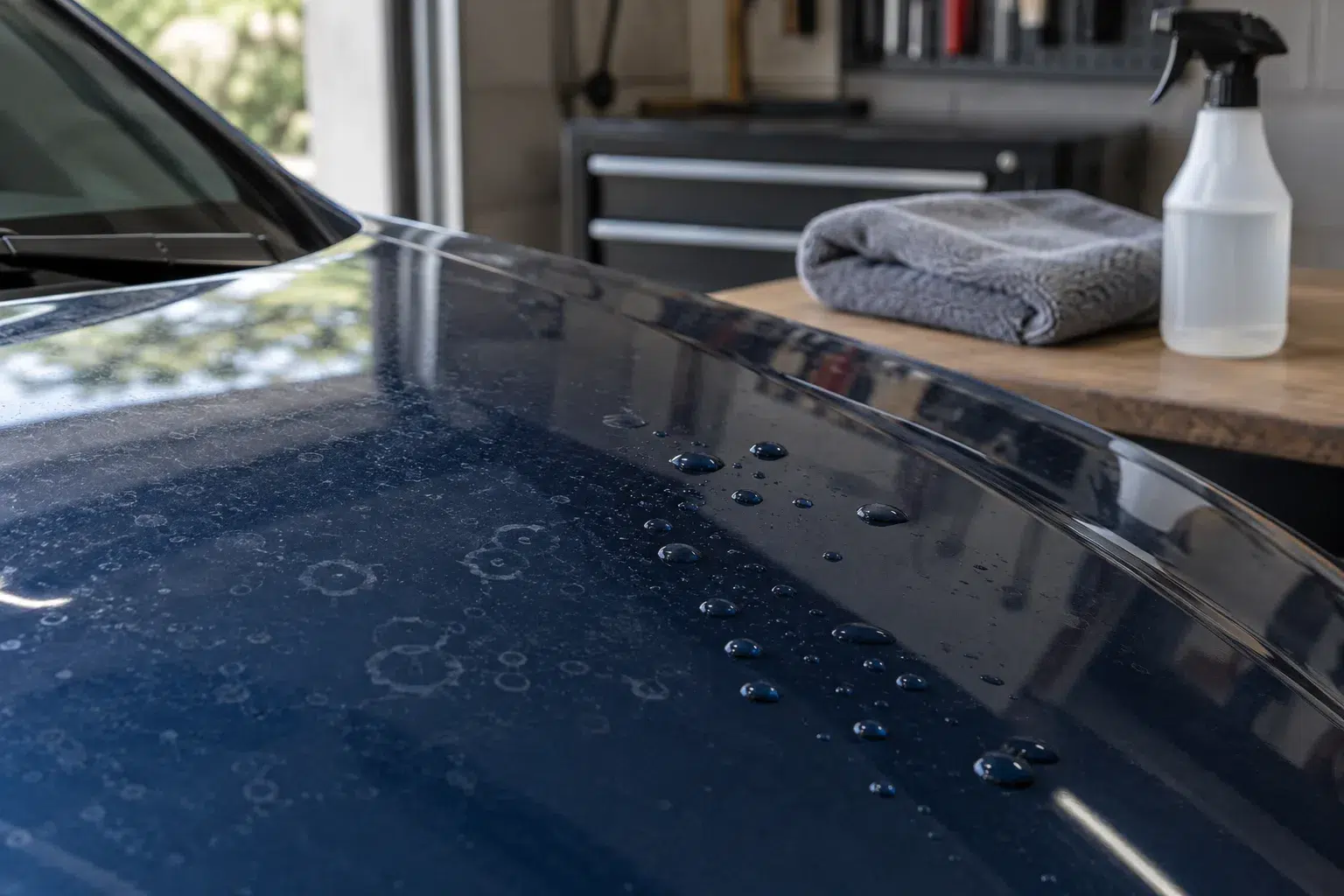
If marks remain after drying, use the water spots on car paint guide to distinguish removable deposits from possible surface damage. A different drying tool prevents some future problems but does not automatically remove an existing mark.
Straight answers
Frequently Asked Questions
Answers based on the evidence and sources identified in this article.
Do I need a blower for a ceramic-coated car?
Not necessarily. The cited coating-care guidance permits careful microfiber drying or air drying. Choose a method you can use correctly within the coating’s instructions.
Does a blower guarantee no scratches?
No. Contact can be reduced, but contaminated airflow, nozzle contact, and handling still matter. No scratch-free guarantee is supported by this research.
Where to buy
Recommended Gear in this Guide
Active 2.0 1800 PSI 2.0 GPM Pressure Washer
Our lab-tested standard for safe automotive flow and pressure.
MTM Hydro PF22.2 Foam Cannon
The benchmark standard for uniform foam density and durability.
DetailRig is reader-supported. We test independently and never accept paid placement. When you buy through our links, we may earn an affiliate commission at no extra cost to you.
References & Sources

DetailRig Editorial
ContributorResearch publication
DetailRig Editorial publishes source-linked car-care explainers. These articles synthesize manufacturer instructions and clearly separate research from documented hands-on testing.