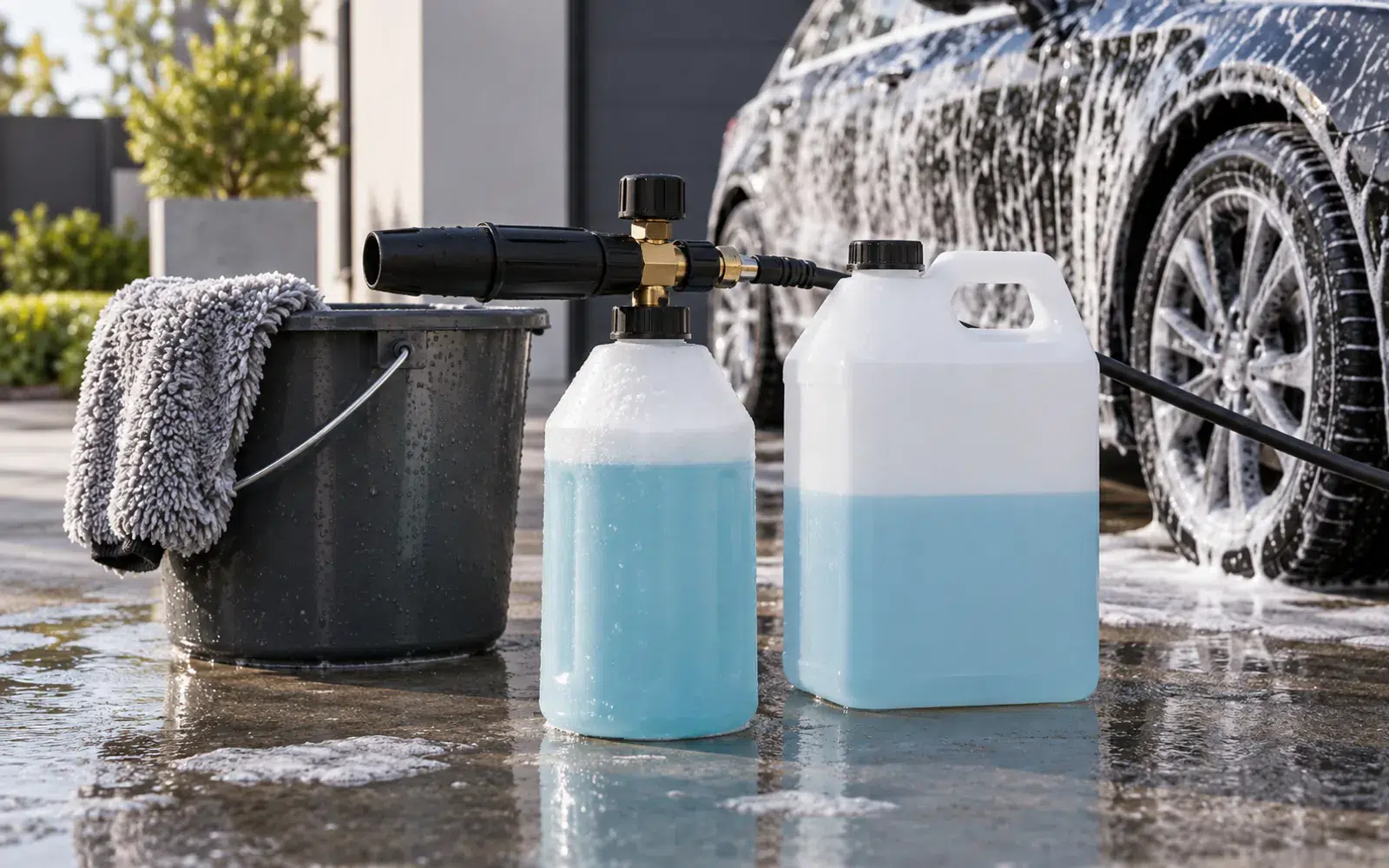
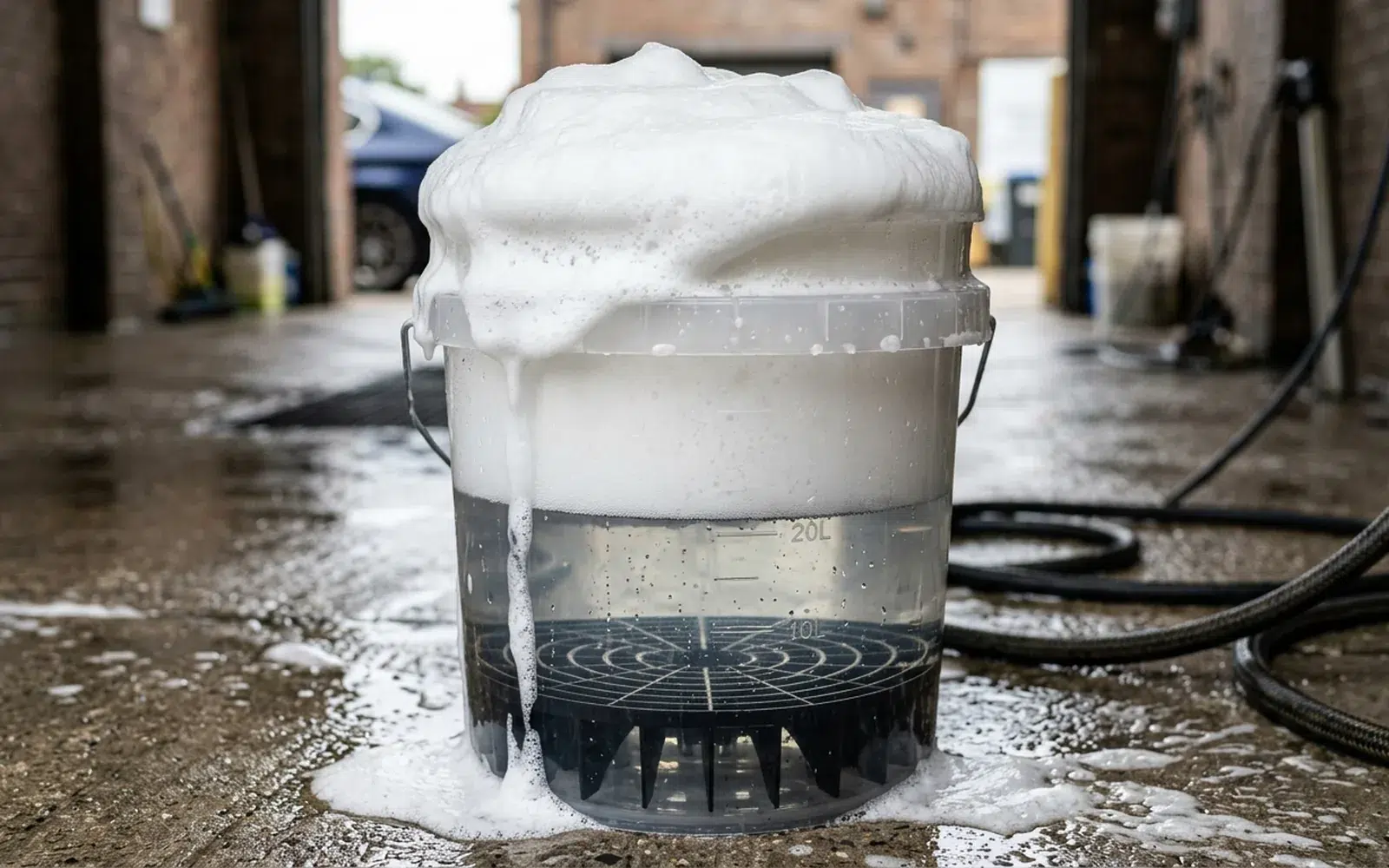
Foam Cannon Not Foaming? Check These Causes First
Troubleshoot a foam cannon that is not foaming by checking solution draw, dilution, water supply, fittings, and the filter before replacing equipment.
Sources verified:
Table of Contents(5 sections)
Evidence: researched
This guide combines the linked manufacturer instructions with editorial decision-making advice. DetailRig has not performed a controlled test for this article; product-specific claims remain attributed to their manufacturers.
Separate weak foam from no chemical draw
Watery output has more than one possible cause. Before replacing a cannon, identify whether solution is being drawn at all and whether the behavior is new. A unit that never worked with a particular washer presents a different compatibility question from one that performed normally until it was stored with chemical inside. Write down the washer, cannon, soap, mixture, and settings before changing them.
| Symptom | First check | Do not assume |
|---|---|---|
| Bottle level does not fall during normal use | Approved draw setting and pickup-tube arrangement | That adding more soap fixes a pickup problem |
| Bottle draws but foam is thin | Labeled mixture, adjustment, and equipment compatibility | That the thickest foam necessarily cleans best |
| Foam gradually weakened over several washes | Residue and filter condition | That the pressure washer needs replacing |
| Pulsing, leaking, or unusual operation | Stop and follow the equipment manual | That a smaller orifice is an automatic upgrade |
Check the mixture without guessing
The solution in the bottle is not necessarily the concentration reaching the car: a pressure-washer cannon also draws water through its mixing system. Start with the soap maker’s instructions for a foam cannon and the cannon maker’s setup guidance. Optimum, for example, lists different mixing directions for rinseless washing, a cannon, and a pump foamer. Those uses cannot simply share one bottle recipe.
Our foam cannon dilution ratio guide helps keep those quantities distinct. Use marked measuring tools and record the bottle volume. Changing soap, dilution, washer output, and adjustment knob position together leaves no clear explanation if the next attempt improves. A repeatable starting point is more useful than pouring until the mixture looks thick.
A practical troubleshooting order
Stop and make inspection safe
Switch off, isolate, and release pressure according to the pressure-washer and cannon manuals before disconnecting or servicing parts.
Check assembly and supply
Inspect the approved fittings and pickup arrangement. Confirm the washer’s water supply and normal operation before blaming the cannon.
Restore the documented setup
Use the labeled soap mixture and normal adjustment range. Reconnect and operate only as the manuals direct.
Evaluate draw and output
Observe bottle consumption and spray behavior. Record what changed instead of judging only how white the foam looks.
Service only as instructed
If residue or filter trouble is suspected, use the manufacturer’s cleaning or replacement procedure and specified parts.
A previously working cannon deserves a maintenance check
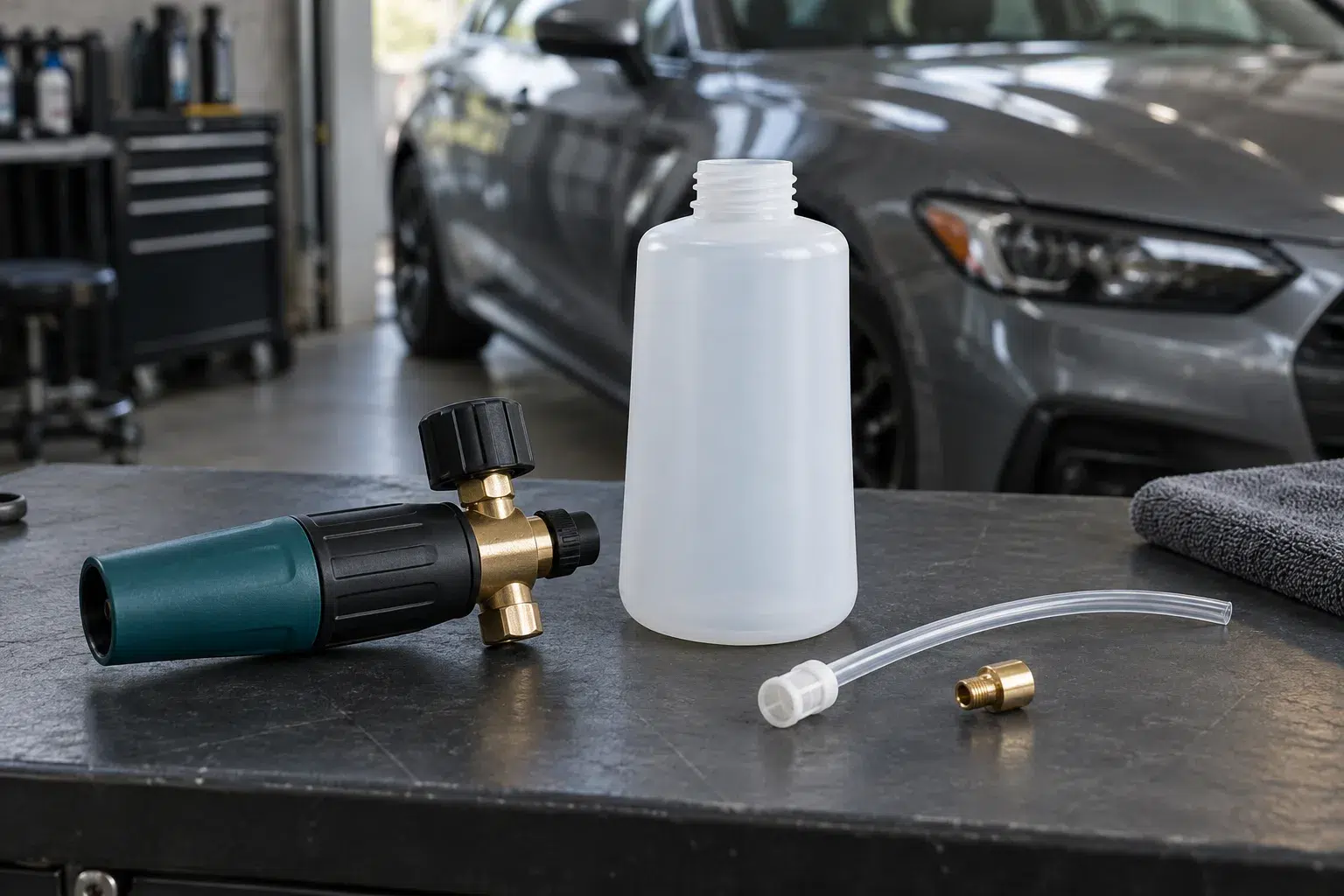
MTM explains that detergent residue can accumulate in the orifice, filter, and chamber and recommends clean-water flushing after use. It also identifies filter replacement as a maintenance task when needed. That guidance supports inspection of a declining PF22; it does not establish that every cannon has the same filter design or disassembly procedure.
Keep the relevant service instructions with your equipment record. If the cannon still draws poorly after approved maintenance, send the manufacturer the exact symptom and setup information. Replacing parts at random can cost more than identifying a mismatched fitting, incorrect setting, or worn component.
Know when to stop
Never dismantle a pressurized assembly or put a hand in the spray to judge output. Do not drill an orifice, bypass a restriction, or fit a smaller one without explicit compatibility guidance.
Buy only after the diagnosis
- Consider a specified replacement filter when inspection and the manual support that repair.
- Skip a new pressure washer purchase based solely on one watery foam attempt.
- Compare soap compatibility before buying a more concentrated formula.
- Treat reliable cleaning and safe operation as the objectives; foam appearance alone is not a test score.
Straight answers
Frequently Asked Questions
Answers based on the evidence and sources identified in this article.
Will a 1.1 mm orifice fix every weak cannon?
No. The correct orifice depends on the cannon and washer requirements. Use the manufacturer’s compatibility guidance rather than treating one size as universal.
Is thin foam proof that the soap does not work?
No. Mixture, draw, settings, water supply, and hardware affect the result. Diagnose the system before judging the chemical.
Where to buy
Recommended Gear in this Guide
Active 2.0 1800 PSI 2.0 GPM Pressure Washer
Our lab-tested standard for safe automotive flow and pressure.
MTM Hydro PF22.2 Foam Cannon
The benchmark standard for uniform foam density and durability.
DetailRig is reader-supported. We test independently and never accept paid placement. When you buy through our links, we may earn an affiliate commission at no extra cost to you.
References & Sources

DetailRig Editorial
ContributorResearch publication
DetailRig Editorial publishes source-linked car-care explainers. These articles synthesize manufacturer instructions and clearly separate research from documented hands-on testing.