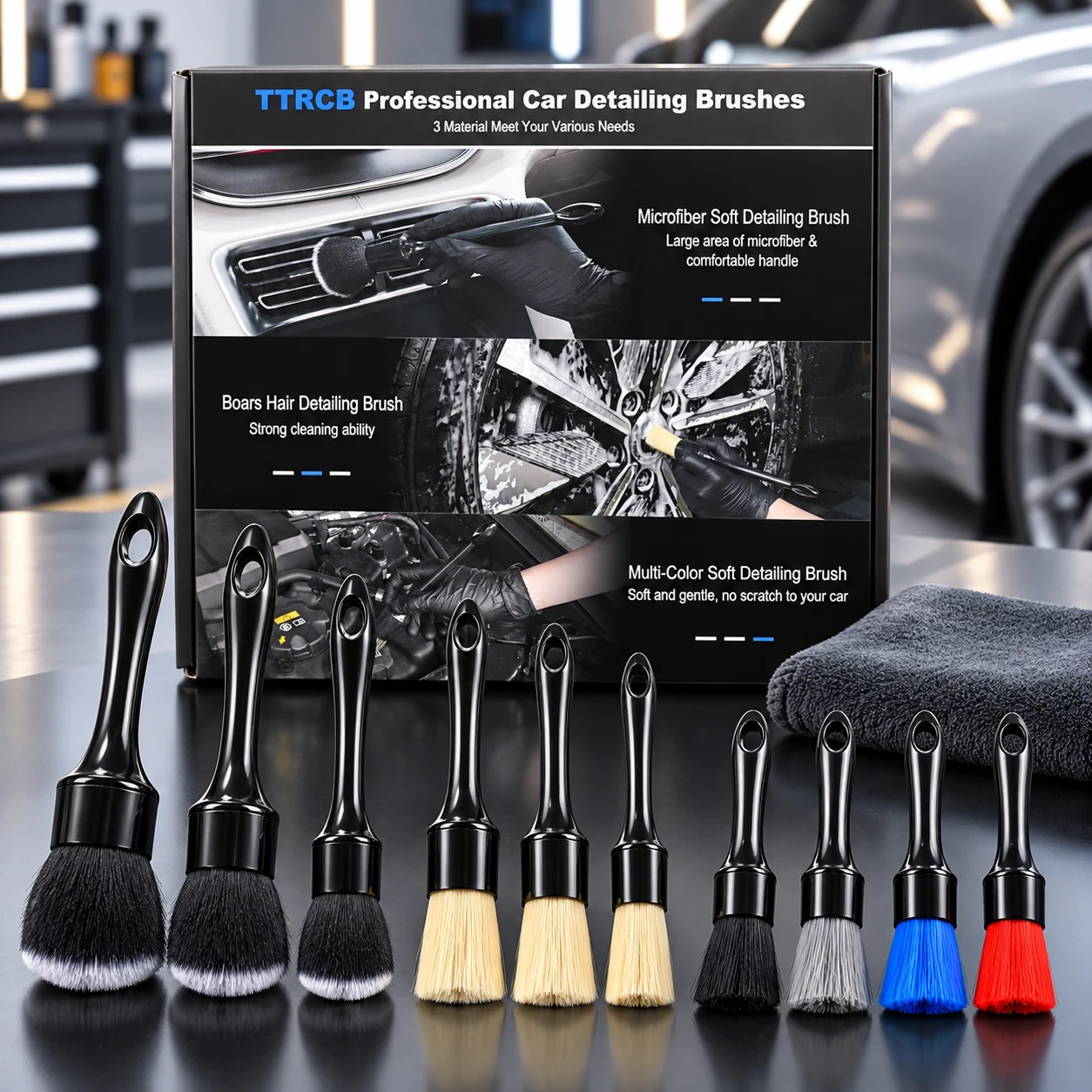
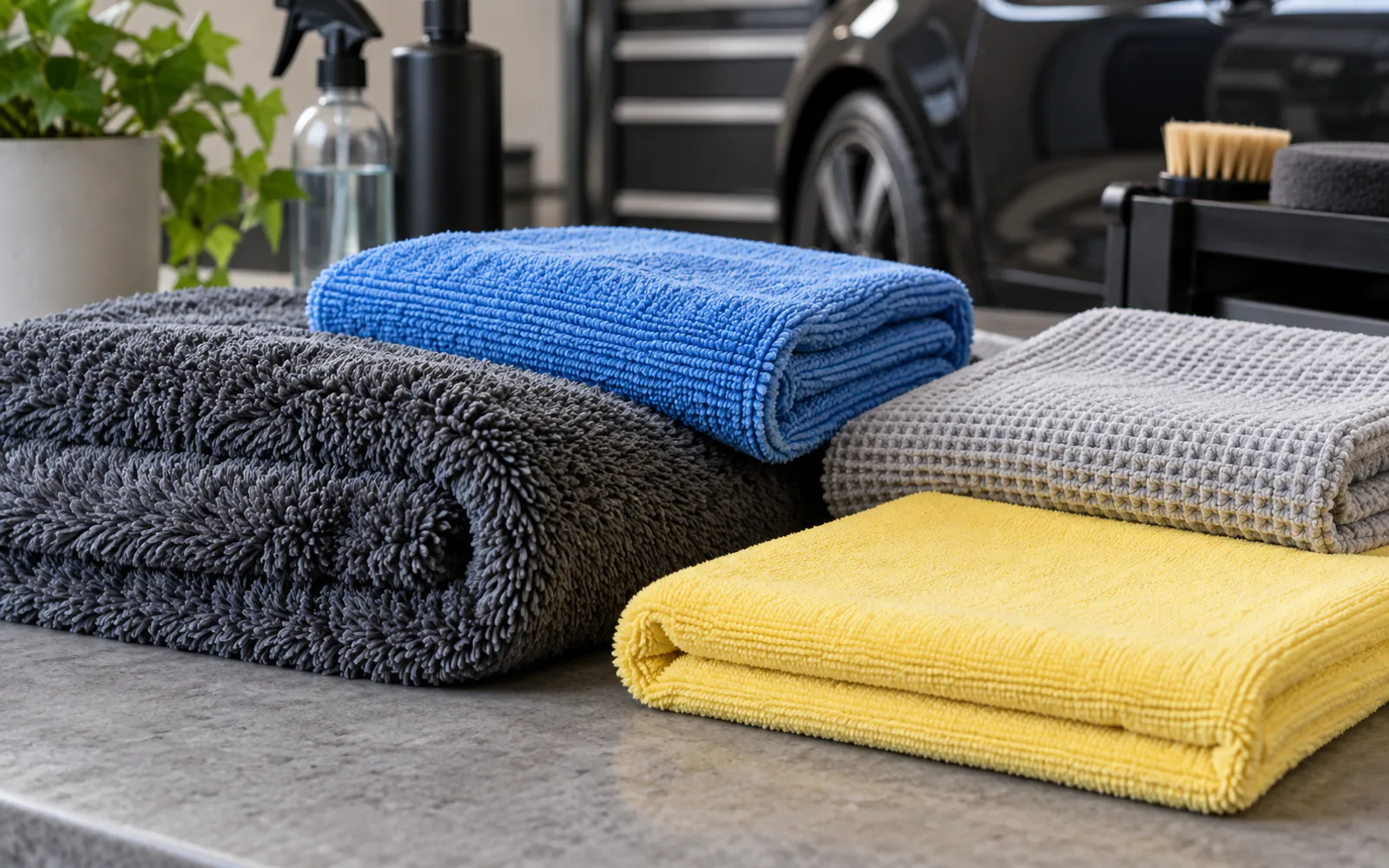
A careful interior car-cleaning workflow for plastics, screens, leather, fabric, carpets, vents, and high-touch surfaces.
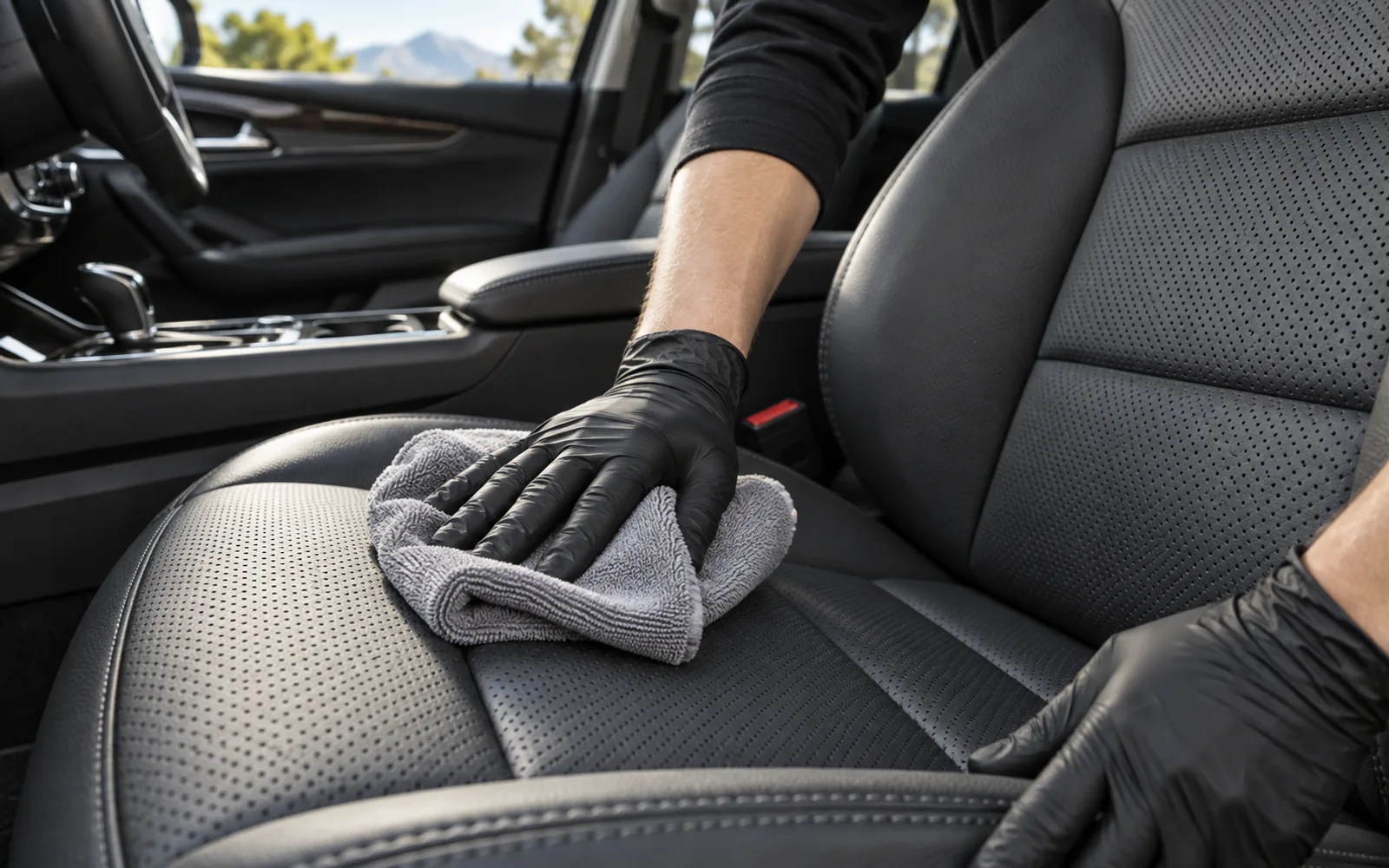
Table of Contents(6 sections)
Interior car cleaning is a materials problem before it is a product problem. Modern cabins combine textured plastics, soft-touch coatings, screens, stitched leather or synthetic leather, fabric, foam, rubber, and adhesives. The safest workflow identifies the surface, removes dry contamination first, and uses controlled moisture instead of flooding the cabin.
Before spraying
Do not spray directly onto screens, switches, vents, seat perforations, speaker grilles, or exposed connectors. Put product onto a towel or suitable brush unless the product instructions specifically say otherwise.
The material-first cleaning map
| Surface | Safer starting approach | Avoid |
|---|---|---|
| Hard plastic and vinyl | Damp microfiber plus a mild interior cleaner when needed | Glossy residue, stiff brushes, and excessive liquid. |
| Leather or coated leather | Product labelled for the exact finish, applied sparingly | Household degreasers, heavy soaking, and aggressive scrubbing. |
| Fabric and carpet | Vacuum, spot test, then controlled agitation and extraction | Over-wetting, which can leave odor or slow-drying foam. |
| Screens and piano-black trim | Dry or barely damp clean microfiber | Aerosol spray, paper towels, and abrasive dusting. |
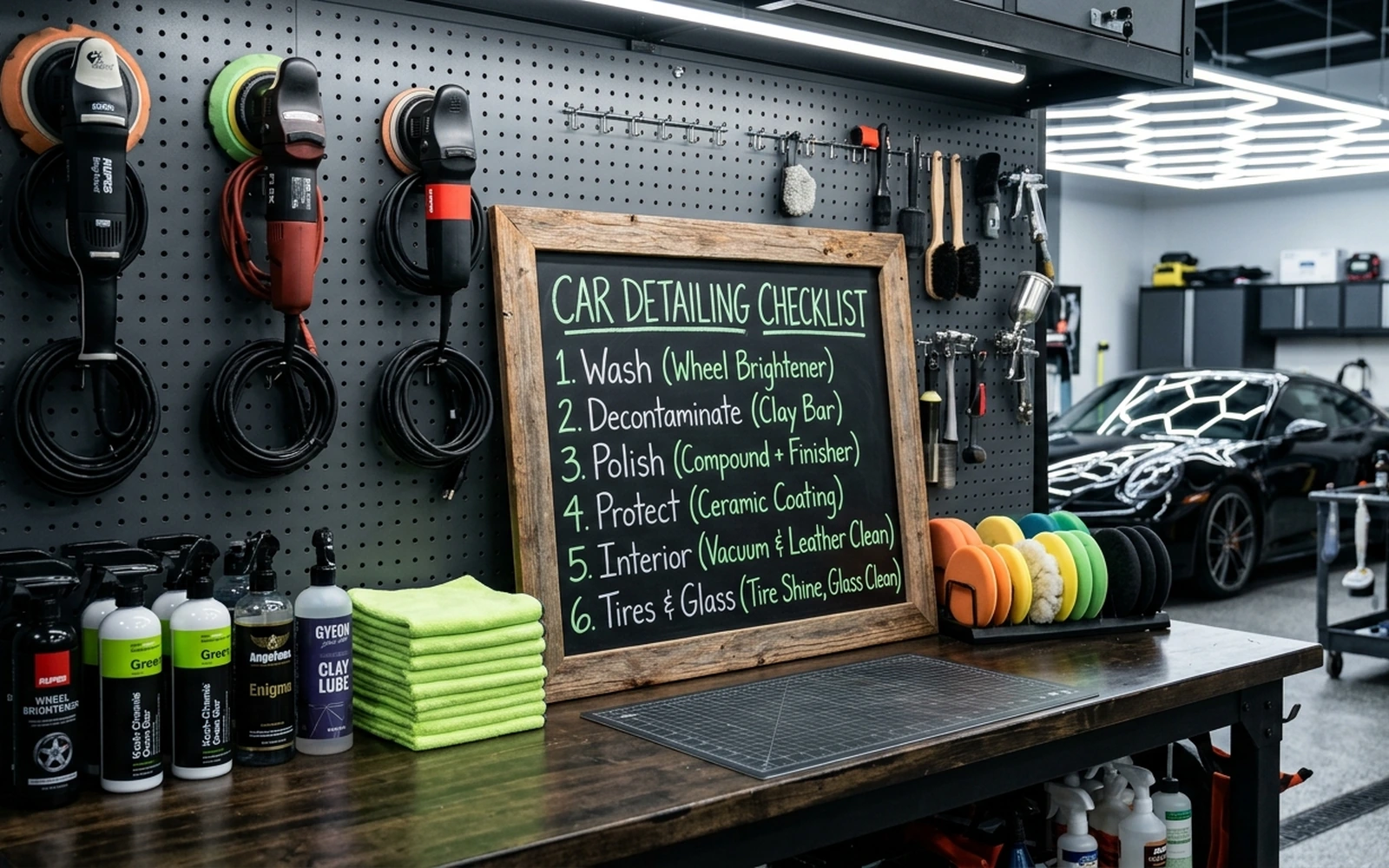
A safe step-by-step interior detail
Interior cleaning sequence
Remove loose items
Clear mats, bins, and personal items so dirt is not pushed into seams or hidden under seats.
Vacuum dry
Use crevice and soft-brush tools to remove dust before introducing moisture.
Clean high to low
Work from dash and trim toward carpets so falling dust is collected later.
Use controlled product
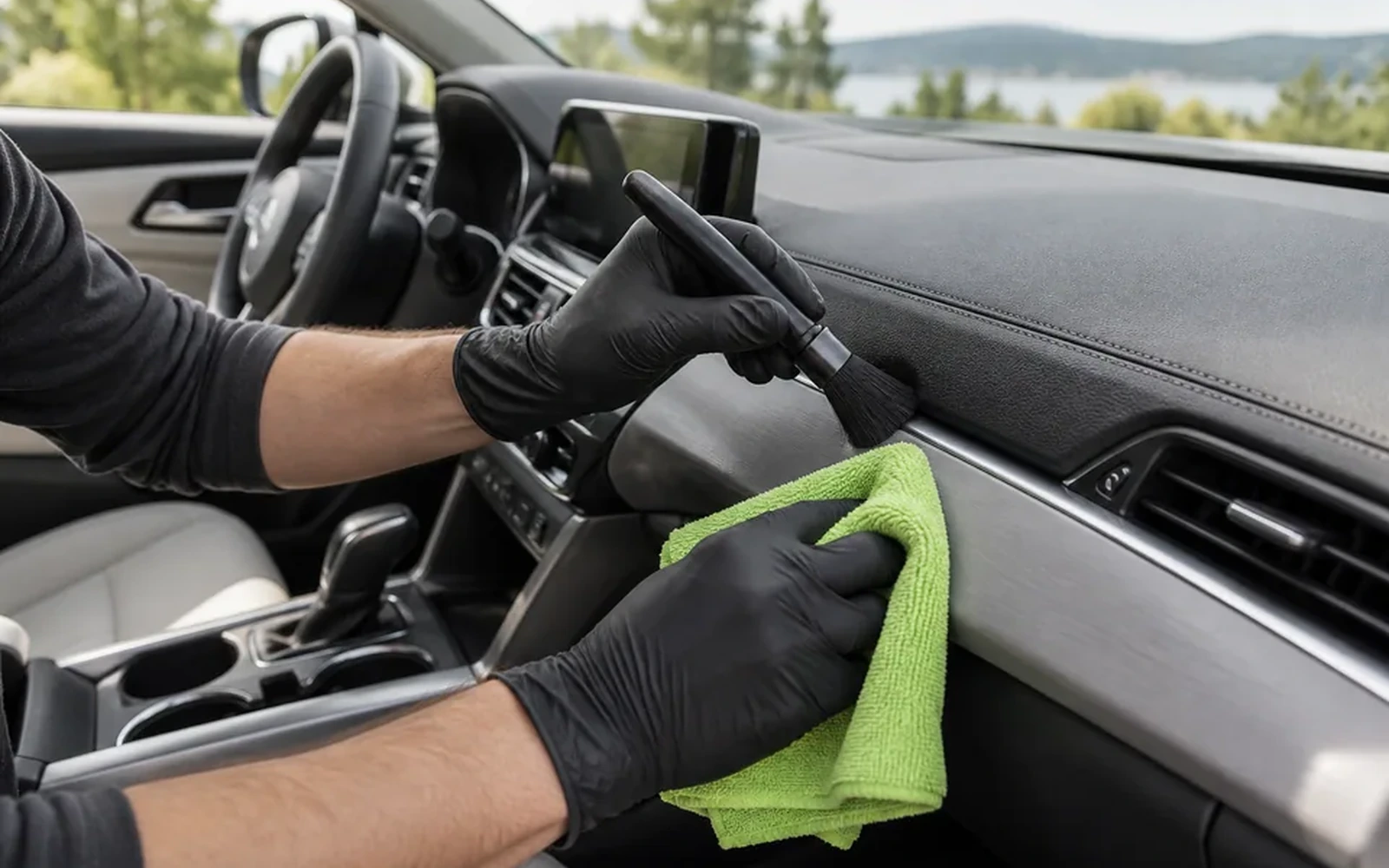
Apply a small amount to a towel or brush, work a small section, and wipe residue before it dries.
Dry and inspect
Open doors when practical, allow surfaces to dry, and inspect under neutral light for streaks or residue.
Screens, vents, and high-touch areas
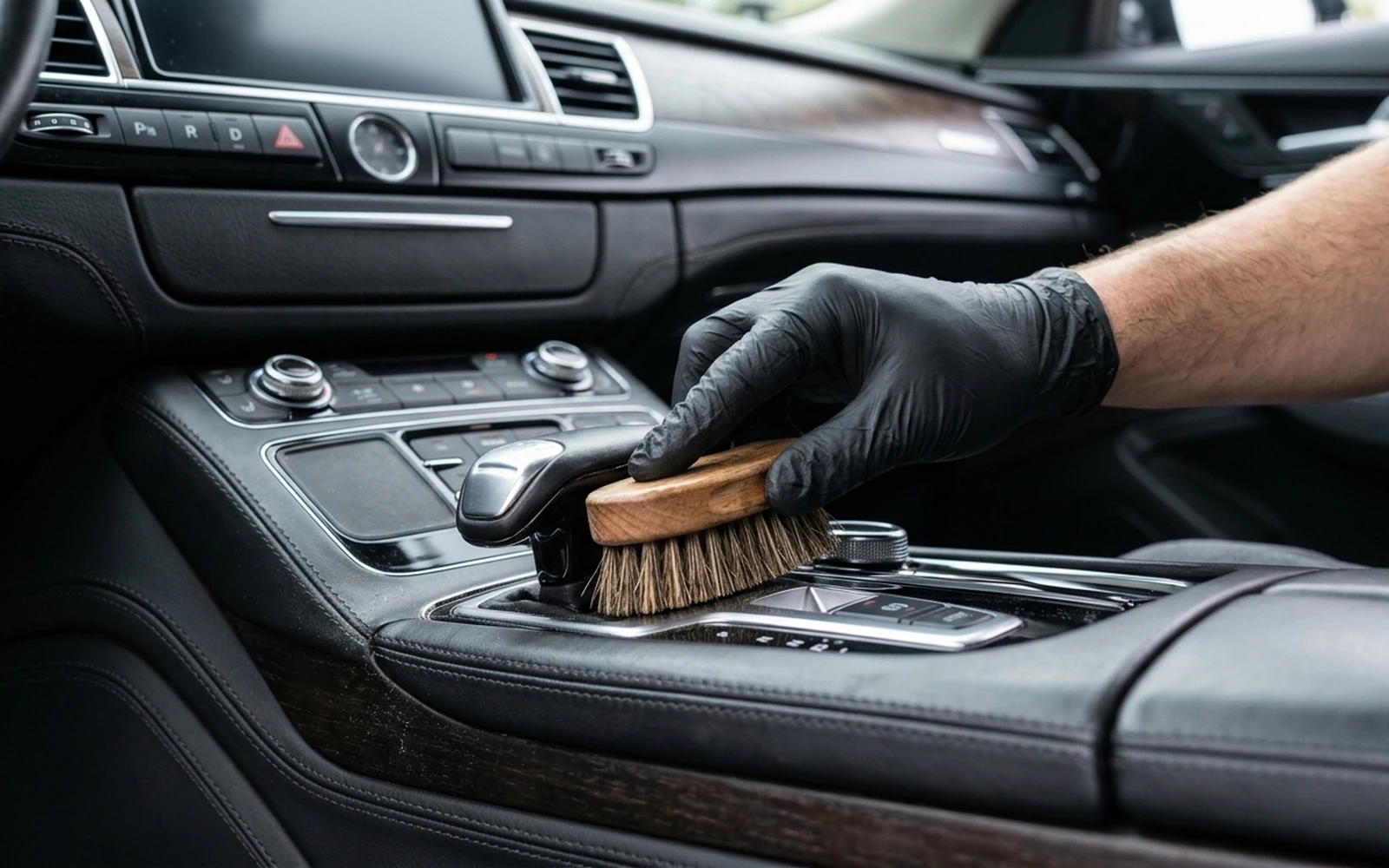
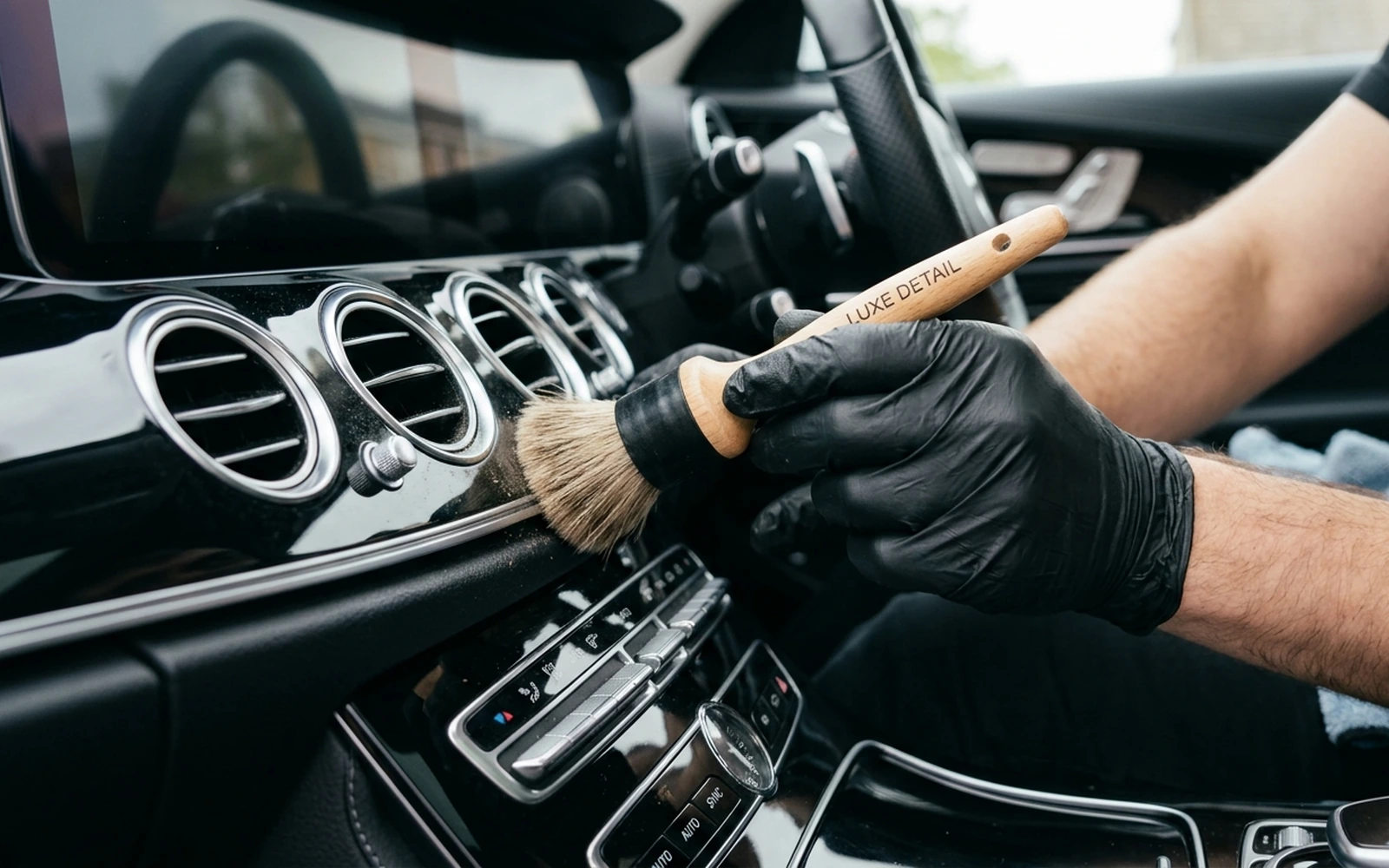
Screens collect fingerprints but do not tolerate the same workflow as vinyl. Use a clean, soft, lint-free cloth and keep liquid controlled. For vents and seams, loosen dust with a soft detailing brush or low-suction vacuum tool before wiping. Steering wheels, shifters, armrests, and door pulls deserve extra attention because skin oils can build a film that looks clean until it becomes glossy.
Fabric, carpets, and extraction limits
For fabric, vacuum first, spot test, and use the least moisture that lifts the soil. A drill brush or stiff agitation can damage fibers or spread a stain. Extraction can help when a product and machine are appropriate, but an extractor is not permission to saturate a seat or carpet. Work in sections and provide ventilation and drying time.
Reasons to buy and reasons to skip a dedicated cleaner
Buy a dedicated car interior cleaner when it gives clear material compatibility, residue guidance, and a manageable working dilution. Skip a product when its label is vague, its finish is excessively glossy, or it encourages one formula for every surface. A simple clean towel and controlled water are often the right first move.
Straight answers
Frequently Asked Questions
Key questions answered with verifiable test evidence and methodology.
What is the best way to clean a car interior?
Identify each material, vacuum first, use controlled moisture, test a hidden spot, and work from high surfaces to low surfaces. Wipe residue and allow the cabin to dry.
Can I use all-purpose cleaner on a car interior?
Only when the product label supports the material and dilution. An all-purpose cleaner can be too aggressive or leave residue on delicate or coated surfaces.
How do I clean a car screen?
Use a clean, soft lint-free cloth and minimal moisture. Do not spray liquid directly onto the screen or let it run into edges, buttons, or vents.
How do I clean perforated leather seats?
Vacuum gently, use a product made for the finish, apply sparingly to a brush or towel, and prevent liquid from pooling in the perforations.
How often should I detail my car interior?
Vacuum and wipe high-touch areas as needed, then schedule a deeper clean around usage, passengers, pets, weather, and visible soil rather than a fixed universal interval.
Where to buy
Recommended Gear in this Guide
Active 2.0 1800 PSI 2.0 GPM Pressure Washer
Our lab-tested standard for safe automotive flow and pressure.
MTM Hydro PF22.2 Foam Cannon
The benchmark standard for uniform foam density and durability.
DetailRig is reader-supported. We test independently and never accept paid placement. When you buy through our links, we may earn an affiliate commission at no extra cost to you.
References & Sources
- • https://www.sonaxusa.com/content/SONAX%20Ingredients%20%26%20SDS/SDS/02061410%20Alcantara%20%26%20Upholstery%20Cleaner%20-%201.9.24.pdf
- • https://support.google.com/google-ads/answer/6325025?hl=en
- • https://support.google.com/analytics/answer/9317498?hl=en

Alex Carter
Verified TesterDetailRig Editorial Contributor
Maintains researched car-care explainers and product profiles. Professional credentials are withheld until the publisher receives supporting documentation.