Remove Pet Hair From Car Carpet Without Harsh Scrubbing
Remove loose and embedded pet hair from car carpet with a vacuum-and-tool sequence, gentle test passes, tool cleaning, and practical ways to limit buildup.
Sources verified:
Table of Contents(4 sections)
Evidence: researched
This guide combines the linked manufacturer instructions with editorial decision-making advice. DetailRig has not performed a controlled test for this article; product-specific claims remain attributed to their manufacturers.
Loose hair and embedded hair are different jobs
A vacuum can collect loose hair and grit, while short hairs woven into carpet may need help being released. That does not mean the vacuum is useless or that the most aggressive brush is the right answer. Examine a small patch of the actual carpet before choosing a tool. Seat fabric, felt-like cargo lining, and floor carpet can respond differently.
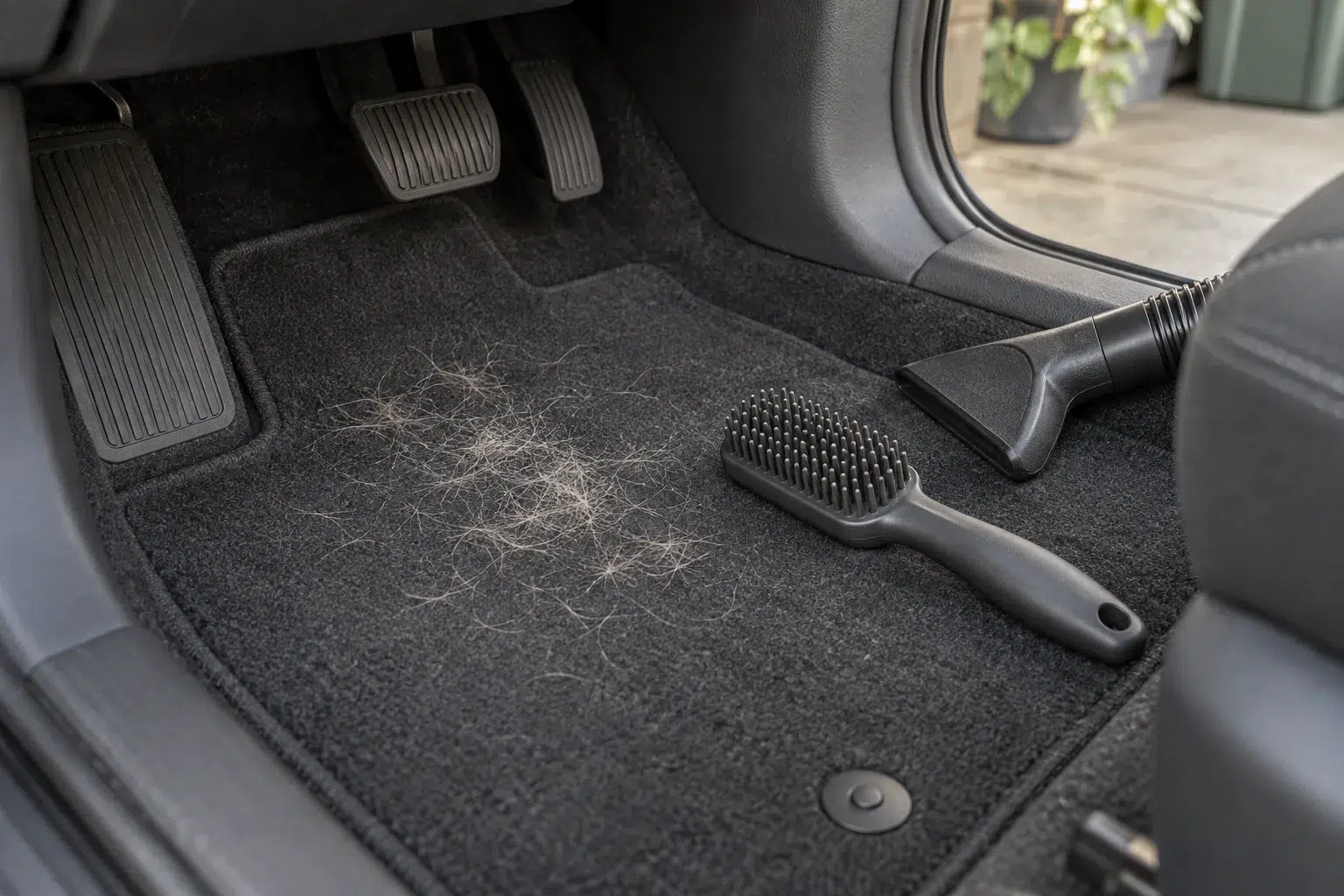
Lilly Brush distinguishes tools for fluffy surface hair from blades intended for more embedded hair. Its FAQ recommends vacuuming first and then using short strokes with light downward pressure. These are manufacturer instructions, not a comparative speed test by DetailRig. Claims that one tool is faster than all vacuums are outside the evidence used here.
| Surface or condition | Starting method | Stop point |
|---|---|---|
| Loose hair and dry dirt | Vacuum with a suitable attachment | Attachment catches trim or pulls material. |
| Embedded hair in durable carpet | Test a compatible rubber tool, then vacuum piles | Fibers pull or the surface becomes fuzzy. |
| Loose headliner or delicate fabric | Consult the vehicle care instructions | Do not transfer the carpet method automatically. |
| Hair around seat rails or wiring | Careful accessible vacuuming | Do not disconnect seats or electrical connectors. |
Vacuum, gather, collect, reassess
Prepare the cabin
Remove loose belongings and accessible floor mats. Follow the vehicle instructions for handling mats and seat adjustments.
Vacuum loose debris
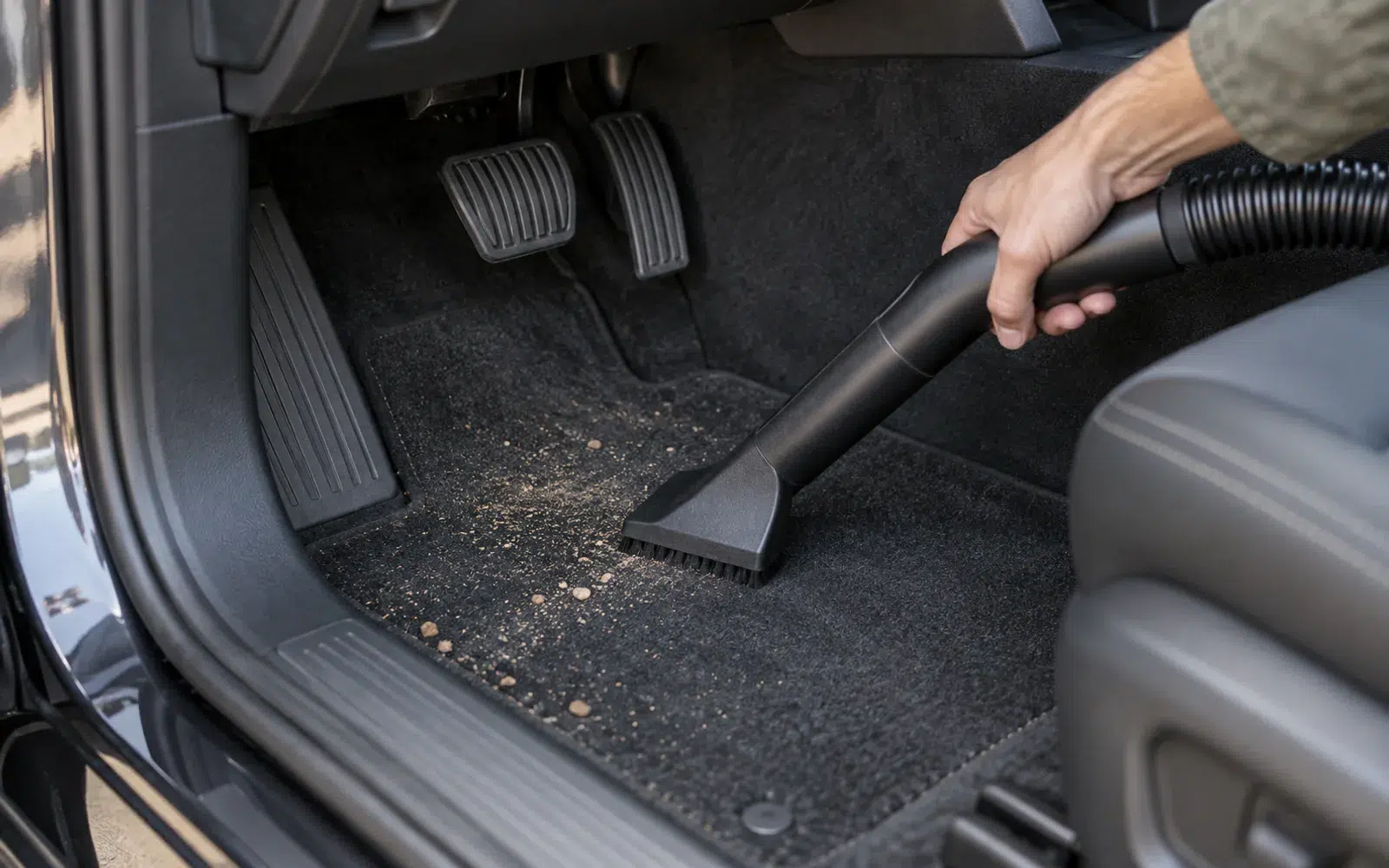
Remove grit and unattached hair first. Work around seams carefully without forcing attachments underneath trim.
Test the hair tool
Try light, short strokes on a discreet patch of compatible carpet. Check for fiber pull before continuing.
Gather and vacuum
Collect released hair in small piles and vacuum them away. Keep the tool clean so it remains effective.
Inspect and stop
Reassess under good light. Do not turn a few stubborn hairs into damaged fabric through repeated aggressive scraping.
Keep the tool working without adding chemicals
Lilly Brush recommends cleaning dust from its tools and washing its blade with light soap and water when needed. Follow the care instructions for the tool you own and let it dry appropriately before storage. Product buildup on a cleaning edge changes how it contacts fabric; a quick cleaning check can be more useful than increasing pressure.
Avoid improvising a wet extraction step solely because hair remains. Water and cleaning solution introduce a drying task without necessarily addressing hair woven into fibers. If the carpet also has stains, deal with that as a separate surface-care problem after loose debris and hair have been removed. Do not use an ordinary dry-only vacuum to collect liquids.
Which purchase helps most?
- Consider a compatible rubber hair tool when a working vacuum leaves embedded hair behind.
- Skip a new vacuum until you have checked the existing attachment, airflow, and filter care requirements.
- Skip metal scraping edges on unverified fabrics.
- Consult the interior car cleaning tools checklist to avoid buying several tools that solve the same problem.
A removable pet cover can reduce where hair accumulates, as Lilly Brush notes in its vehicle-cleanup guide. It still needs cleaning, and hair can arrive on clothing or migrate around the cabin. Keep covers clear of controls, seat-belt functions, and the installation requirements stated by the vehicle and cover manufacturers.
Know when to stop
Do not use force around seat wiring, trim clips, or delicate headlining. If the carpet starts to distort or fibers pull, stop and change the method rather than repeating the pass.
Straight answers
Frequently Asked Questions
Answers based on the evidence and sources identified in this article.
Is a rubber tool a replacement for a vacuum?
No. It helps gather or release certain embedded hairs. A vacuum still collects loose debris and the hair piles you create.
Can I use the same method on the headliner?
Do not assume so. Headliners can be delicate or loosely bonded; follow the vehicle’s instructions and avoid applying the pressure used on floor carpet.
Where to buy
Recommended Gear in this Guide
Active 2.0 1800 PSI 2.0 GPM Pressure Washer
Our lab-tested standard for safe automotive flow and pressure.
MTM Hydro PF22.2 Foam Cannon
The benchmark standard for uniform foam density and durability.
DetailRig is reader-supported. We test independently and never accept paid placement. When you buy through our links, we may earn an affiliate commission at no extra cost to you.
References & Sources

DetailRig Editorial
ContributorResearch publication
DetailRig Editorial publishes source-linked car-care explainers. These articles synthesize manufacturer instructions and clearly separate research from documented hands-on testing.