DetailRig Dual-Action Polisher Test Protocol (Version 1.0)
Effective Date: 2026-09-01
Lead Protocol Engineer: Marcus Vance
Dual-action polishers must deliver predictable defect removal without causing severe user fatigue or accidental paint damage.
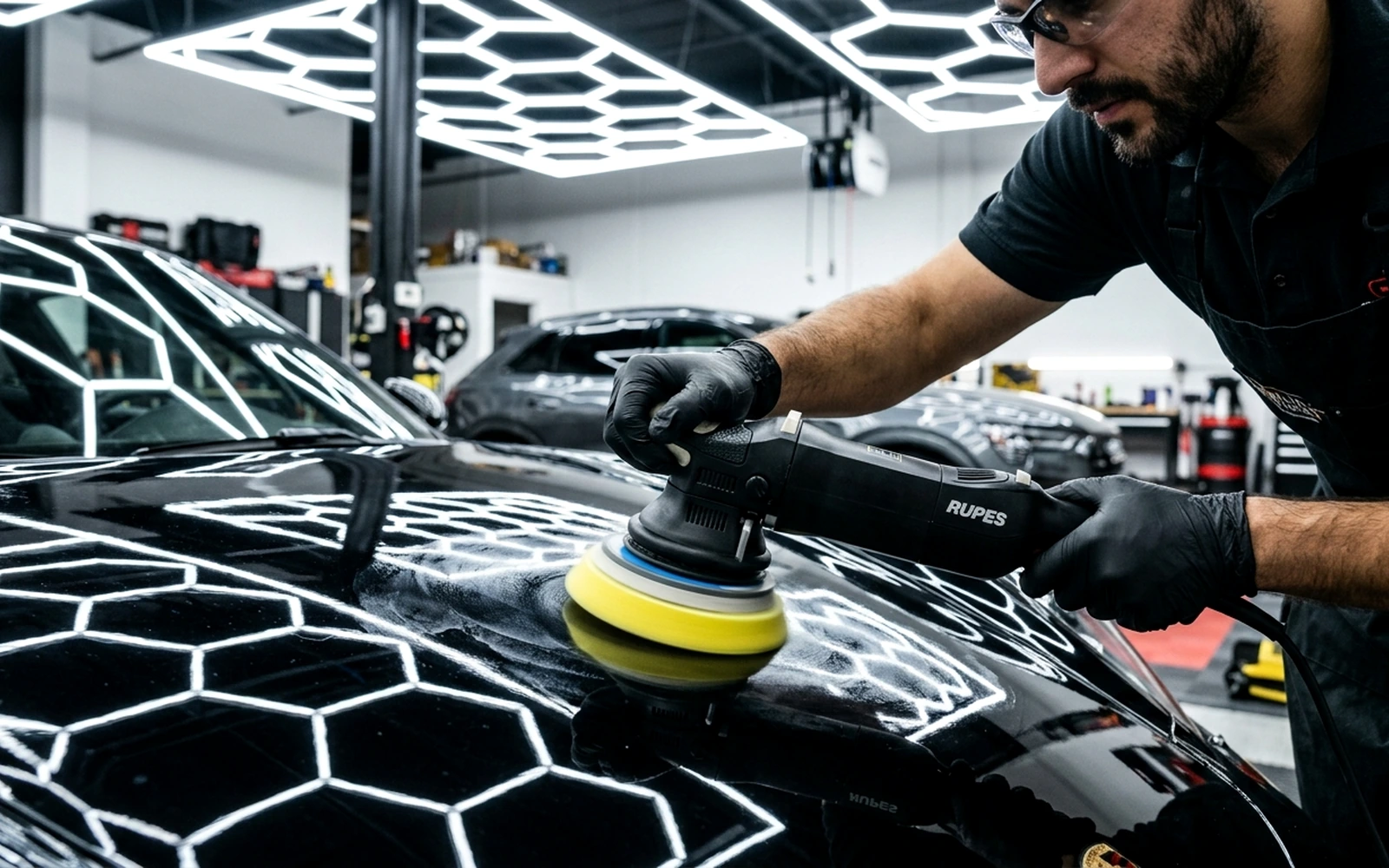
Key Measurement Criteria
- Rotational Stall Torque Under Downforce: We mount a digital force plate beneath a standardized curved test panel. Polishers are evaluated at speeds 3 through 6 with downward pressure increasing incrementally from 2 lbs to 15 lbs. The point at which pad rotation drops below 100 RPM is recorded.
- Handle Vibration Acceleration: Tri-axial accelerometer affixed to the front grip and rear handle to record vibration acceleration (m/s²) across all speed intervals.
- Thermal Transfer to Backing Plate: FLIR thermal imaging measures heat transfer from the motor armature and spindle bearing through the backing plate into the foam pad after 20 minutes of continuous loaded cycling.
- Cord Strain & Length: Verification of power cord gauge, jacket flexibility at 45°F, and operational reach around a standard full-size pickup.
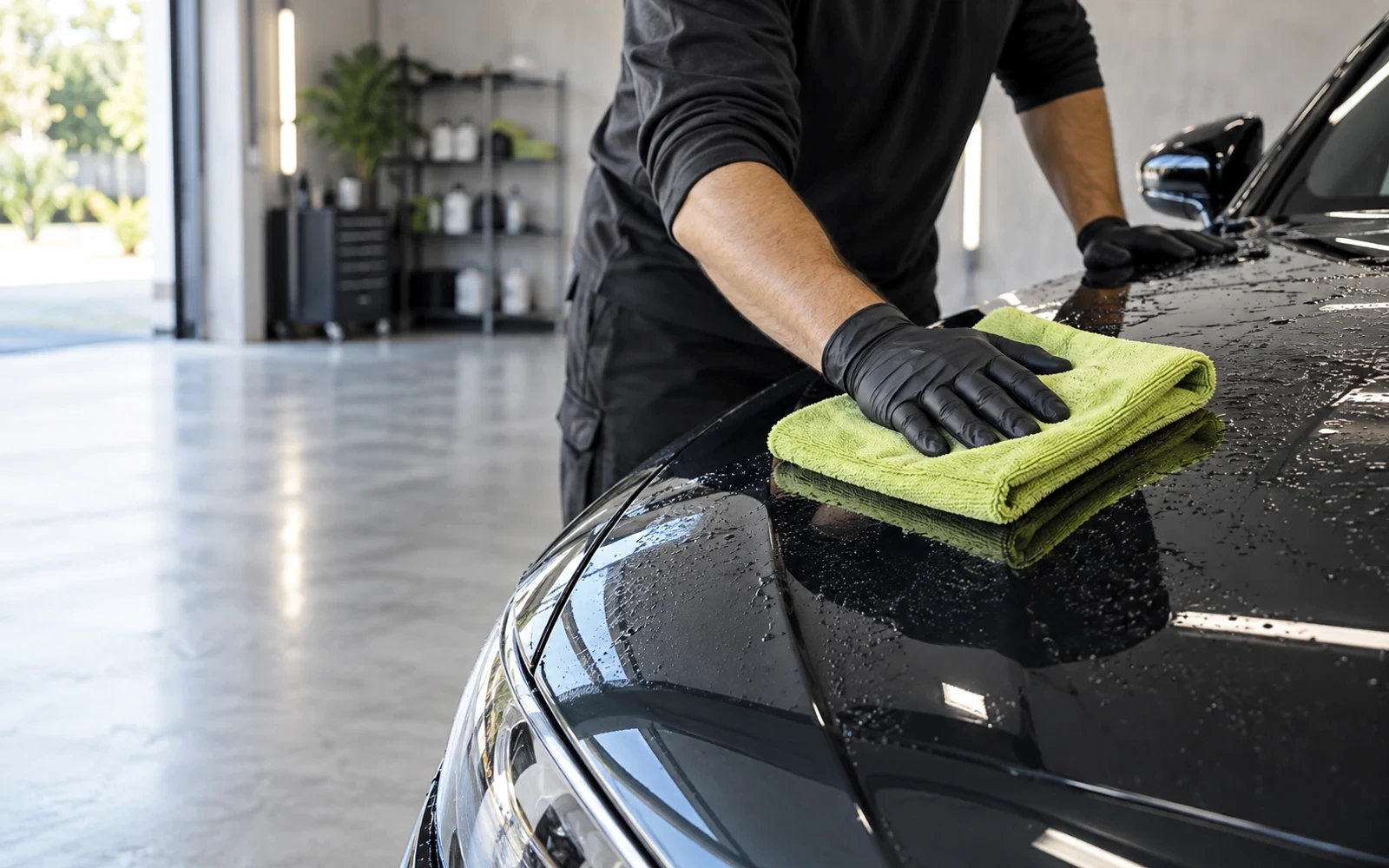

Marcus Vance
ContributorDetailRig Editorial Contributor
Maintains equipment evaluations, methodology notes, and garage-workflow coverage. Professional credentials are withheld pending publisher verification.
Detailing answers
Frequently asked questions about car detailing
Clear answers to common car detailing, washing, interior-care, and paint-protection questions.
What is car detailing?
Car detailing is the careful cleaning, decontamination, and protection of a vehicle’s interior and exterior. The process can include a wash, wheel and tire care, interior cleaning, paint decontamination, polishing, and a protectant; the right steps depend on the vehicle and finish.
What products do I need for car detailing at home?
Start with car wash soap, wash media, microfiber towels, wheel cleaner, an interior cleaner, and a vacuum. Add a pressure washer, foam cannon, polisher, or paint protection only when the task and your skill level justify them.
What car wash soap should I use?
Choose a soap made for automotive paint with clear dilution instructions. A pH-neutral car soap is a common starting point for routine maintenance, but the best choice depends on the coating, soil, wash method, and manufacturer guidance. Avoid household dish detergent on vehicle finishes.
How much PSI is needed to wash a car?
There is no single PSI target for every vehicle or washer. Use the lowest pressure and widest practical spray pattern that removes soil safely, keep the nozzle moving, and follow the washer and vehicle-maker guidance. Pressure, nozzle, distance, and technique all affect risk.
What is a foam cannon used for?
A foam cannon meters car wash solution into a pressure-washer stream to apply cleaning foam. It can help pre-soak and loosen loose soil before contact washing, but foam alone does not replace a careful rinse and wash.
How do I clean a car interior?
Remove loose items and vacuum first, then clean one material at a time with a compatible product and a lightly damp microfiber or brush. Test an inconspicuous area, avoid over-wetting electronics and upholstery, and follow the material and product instructions.
What is paint correction?
Paint correction is the controlled polishing of a vehicle’s clear coat to reduce the appearance of defects such as swirls or light scratches. It removes some material, so inspect the finish, use the least aggressive effective method, and treat deep defects as a professional-risk decision.
How do I choose a dual-action polisher?
Compare the machine’s throw, speed control, ergonomics, backing-plate compatibility, power, and support—not just the wattage. Beginners generally benefit from predictable control and manageable balance; pad and compound choice also change the result.
How long does ceramic coating last?
Ceramic-coating durability depends on the formulation, preparation, layers, exposure, maintenance, and manufacturer instructions. Treat a stated lifespan as a manufacturer claim unless DetailRig has documented evidence, and plan regular washing and inspection rather than assuming permanent protection.
What should I look for in car detailing products?
Match the product to the surface, soil, tool, and task; check dilution, compatibility, safety directions, and aftercare. DetailRig labels evidence as TESTED, USED, RESEARCHED, or MANUFACTURER-CLAIM so readers can distinguish hands-on evaluation from source-based or maker-provided information.