Water Spots on Car Paint: Removal and Stop Points
Identify water spots on car paint, choose a finish-compatible remover, distinguish deposits from possible etching, and build a drying routine that helps.
Sources verified:
Table of Contents(5 sections)
Evidence: researched
This guide combines the linked manufacturer instructions with editorial decision-making advice. DetailRig has not performed a controlled test for this article; product-specific claims remain attributed to their manufacturers.
Deposits and etching need different decisions
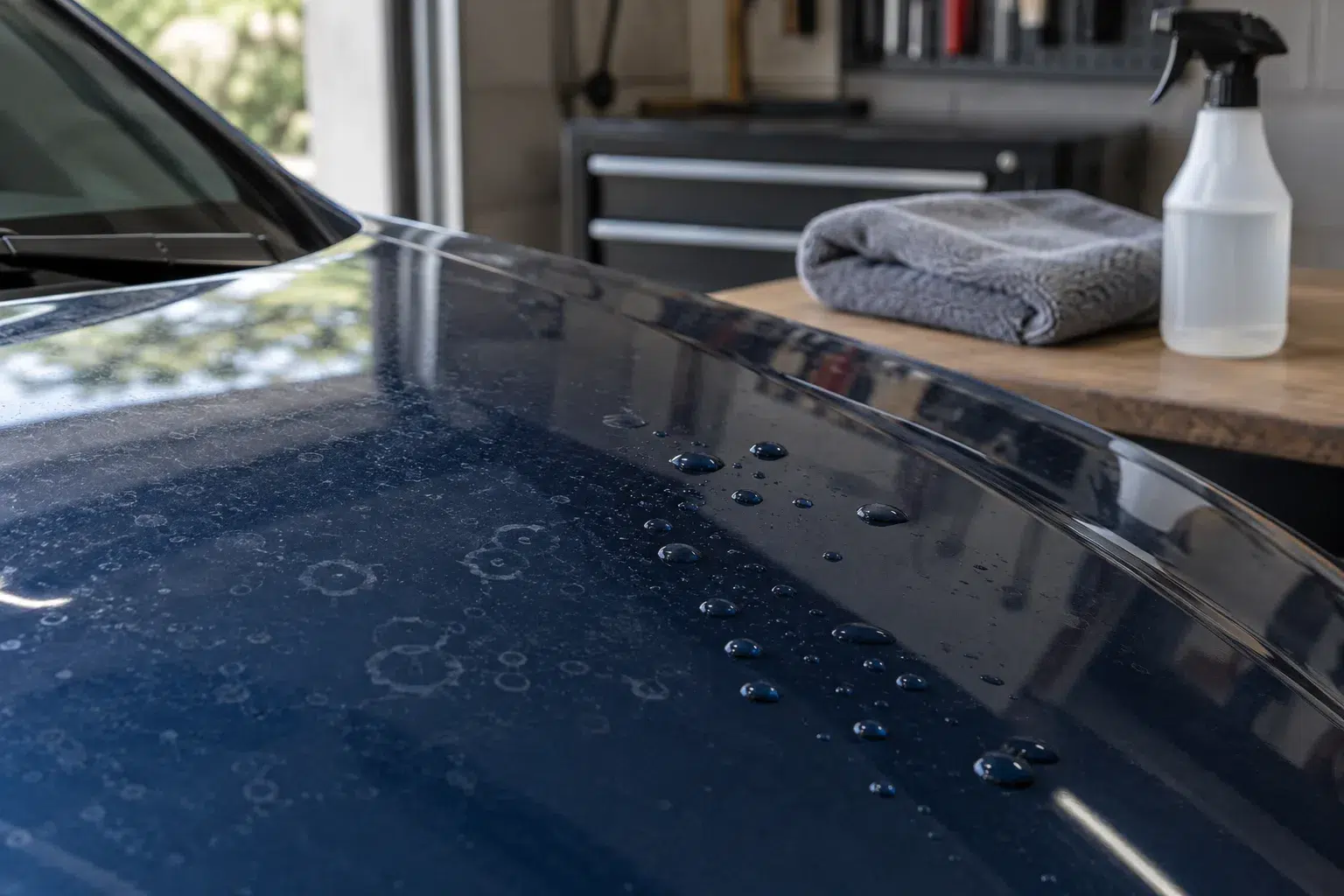
A pale ring after a sprinkler shower is a symptom, not a diagnosis. Some marks are residue sitting on the finish. Others remain because the surface itself has changed. A photograph rarely tells you which situation applies. Start with a normal wash and inspect the dry panel under consistent lighting so that soap film or temporary water beading does not confuse the assessment.
| Observation after washing | Next check | Avoid |
|---|---|---|
| Mark disappears | Improve washing and drying routine | Buying an abrasive correction product unnecessarily |
| Ring remains with visible residue | Small test with a compatible water-spot remover | Treating the whole car before checking one spot |
| Dry mark remains after the labeled treatment | Ask for a finish-specific assessment | Repeating aggressive applications indefinitely |
Choose by surface compatibility
Gtechniq describes dedicated water-spot treatment as a step after washing. Its W9 instructions and compatibility statements apply to W9; do not transfer those claims to a generic acidic cleaner. Read the current label for the permitted surfaces, contact time, protective equipment, and removal method. Matte paint, aftermarket film, unpainted trim, and coated glass can have different restrictions from conventional gloss clear coat.
If you do not know what protection is on the car, ask the installer or previous owner before using stronger chemistry. This is especially relevant to a recently coated panel. Choose a discreet test area and prepare the rinse or removal materials before opening the chemical. The practical objective is to remove a deposit with the least unnecessary treatment, not to force a flawless finish in one session.
A controlled water-spot removal check
Wash first
Remove loose dirt and road film with a suitable maintenance wash, then dry and inspect.
Confirm the finish
Identify paint, coating, wrap, or film and read the remover instructions for that surface.
Test locally
Treat only a small cool area using the labeled method. Prevent the product from drying or reaching excluded surfaces.
Remove and reassess
Complete the label-directed wipe or rinse. Judge the result only when the area is clean and dry.
Stop if unchanged
If the mark remains, document it and seek advice before escalating to polishing or repeated chemical treatment.
Prevent the next set of rings
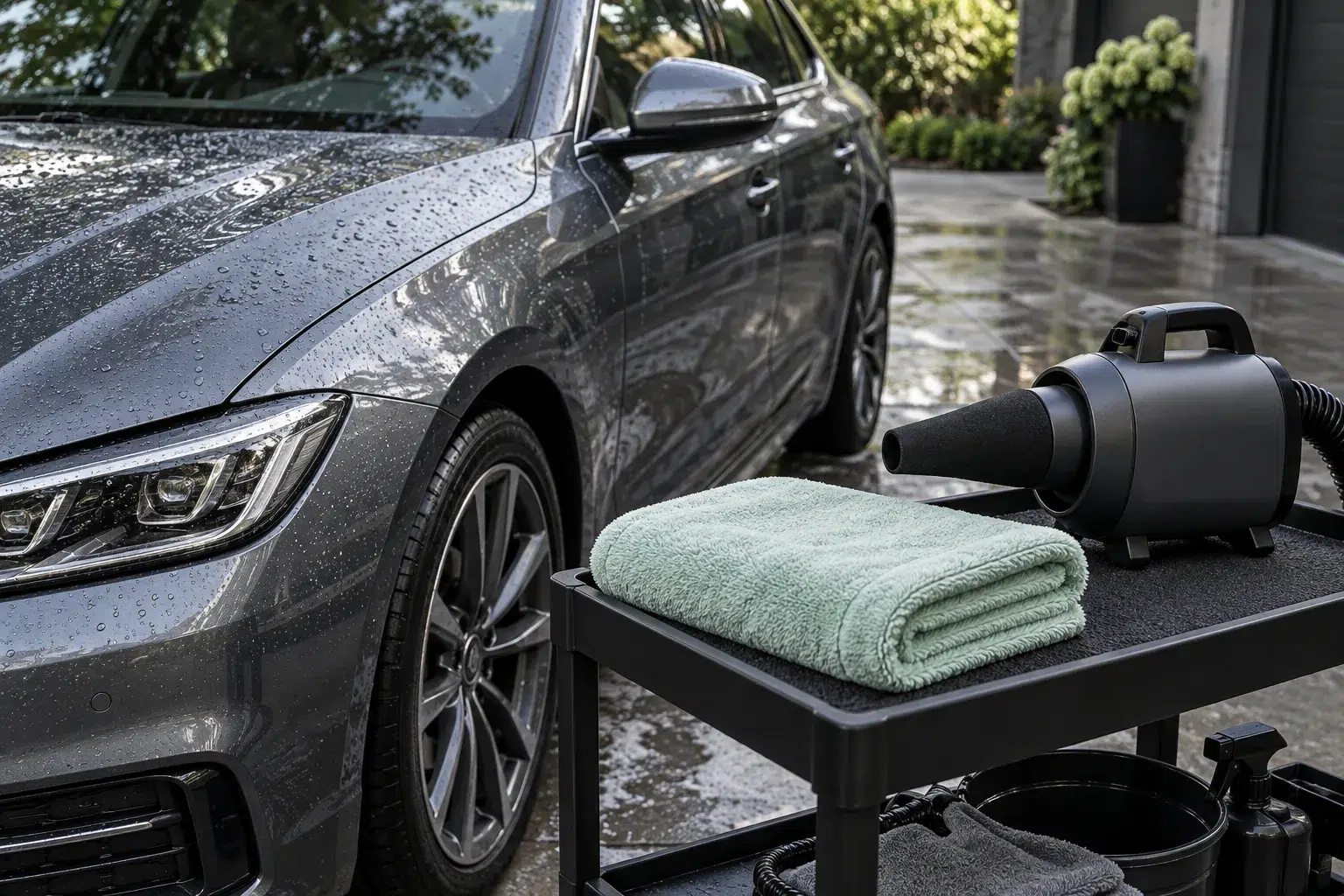
Gtechniq recommends drying after washing and avoiding hot panels. Translate that into a routine you can actually finish: wash at a manageable time, keep a fresh drying towel ready, and attend to water trapped around mirrors and badges. If your usual parking spot receives sprinkler spray, moving the car solves a recurring exposure that another bottle cannot.
A coating is not permission to leave mineral-laden water on paint. Likewise, a basic sediment filter is not evidence that dissolved minerals have been removed. If you are considering a water-treatment system, identify what it removes and how its output is checked. Choose the equipment around that documented function rather than the word filtered.
Know when to stop
Do not polish matte paint to chase a remaining ring. Do not mix household chemicals or assume a vinegar recipe is approved for your finish. Persistent marks deserve a surface-specific assessment.
When a purchase is worthwhile
- Consider a dedicated remover when ordinary washing leaves deposits and the manufacturer explicitly approves your surface.
- Skip a new chemical when the mark already washes off; improve drying first.
- Compare a car drying towel vs blower if retained rinse water is the recurring problem.
Straight answers
Frequently Asked Questions
Answers based on the evidence and sources identified in this article.
Will ceramic coating prevent every water spot?
No universal guarantee is supported here. Coating manufacturers still recommend prompt contamination removal and careful drying. Follow the instructions for the coating you own.
Should I clay the spots immediately?
Not as an automatic first step. Establish whether washing and an approved chemical treatment remove the residue; mechanical treatment can introduce a new correction problem.
Where to buy
Recommended Gear in this Guide
Active 2.0 1800 PSI 2.0 GPM Pressure Washer
Our lab-tested standard for safe automotive flow and pressure.
MTM Hydro PF22.2 Foam Cannon
The benchmark standard for uniform foam density and durability.
DetailRig is reader-supported. We test independently and never accept paid placement. When you buy through our links, we may earn an affiliate commission at no extra cost to you.
References & Sources

DetailRig Editorial
ContributorResearch publication
DetailRig Editorial publishes source-linked car-care explainers. These articles synthesize manufacturer instructions and clearly separate research from documented hands-on testing.