Table of Contents(6 sections)
Why does residual shampoo cause trouble?
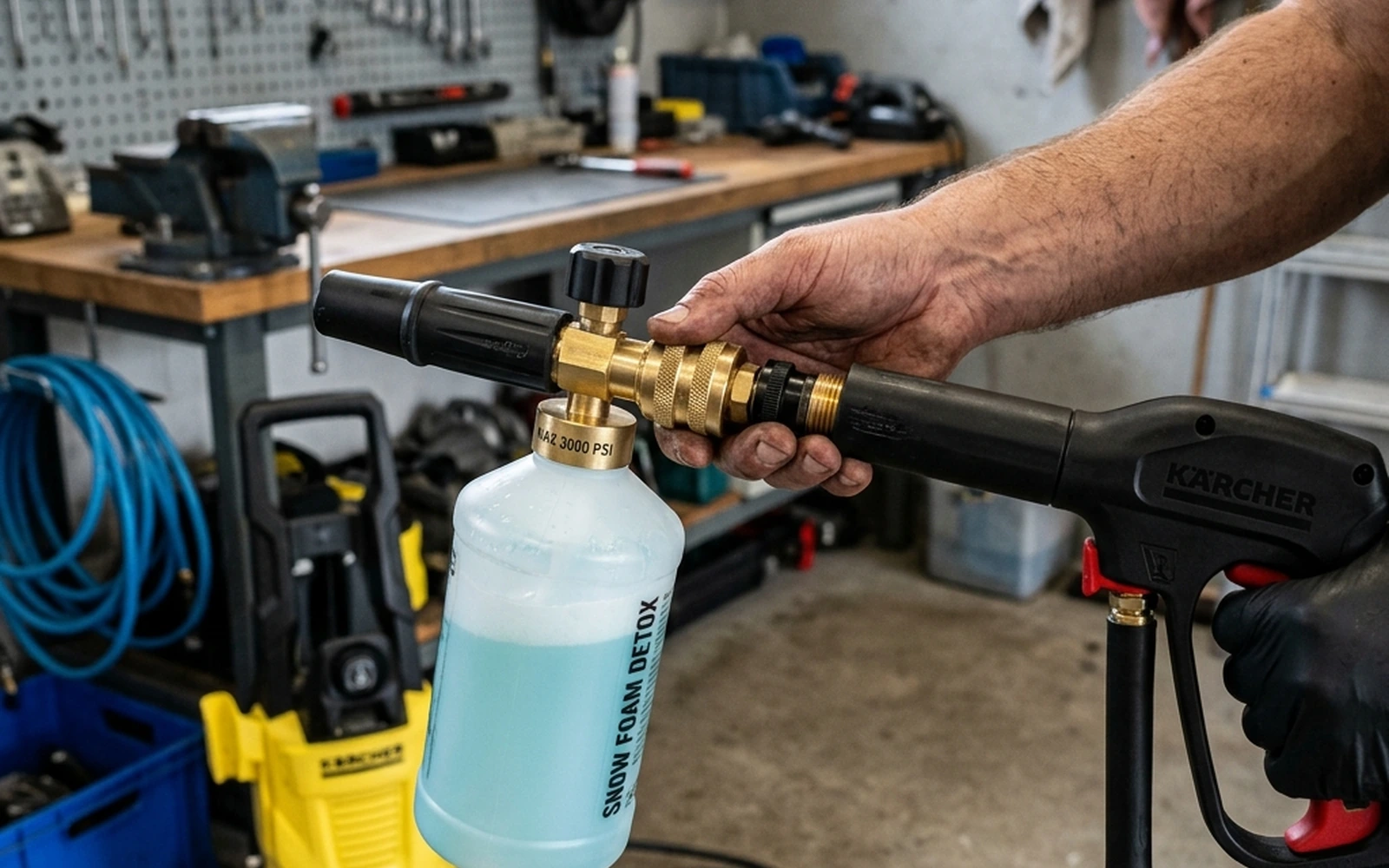
Concentrated solution can dry around the pickup tube, filter, and small metering passages. MTM Hydro advises flushing clean water through its PF22 chamber after foaming, keeping the cannon dry, and matching the orifice to the washer. Maintenance is especially useful when a tool sits for weeks between washes; a clogged siphon can look like a pressure-washer problem.
What should an after-wash routine include?
Empty the remaining mix according to the product label and local disposal rules. Flush the cannon with clean water, rinse its bottle, check the pickup tube for kinks, and wipe grit from quick-connect fittings. Let parts dry before sealing the bottle for storage. The maker's manual determines whether the orifice or filter should be removed; do not force small brass components.
| Part | Check | Symptom if neglected |
|---|---|---|
| Pickup tube/filter | Clean and seated | Poor chemical draw |
| Orifice | Correct size and clear | Weak or erratic foam |
| Quick-connect seal | Clean and intact | Leaks |
| Bottle | Rinsed and dry | Old residue |
How do you put this into practice?
Foam Cannon Maintenance workflow
3 stepsFlush
Run clean water through the foamer after removing the soap bottle.
Inspect
Look at tube, filter, nozzle, and connectors without forcing parts.
Dry and store
Drain the bottle and head, then keep them clean and dry.
What should you avoid when foam gets thin?
Do not immediately increase soap concentration to compensate for a blocked filter. Extra chemical can mask the cause and waste product. Also avoid swapping orifices based only on a social-media tip: check the machine's actual flow and the cannon maker's nozzle guidance. Use the correct size tool so brass threads are not rounded.
Evidence status
Research-based guidance drawn from the linked manufacturer and vehicle-care sources. No DetailRig hands-on test or performance measurement is claimed for this article.
What is the useful next step?
This routine costs only a few minutes and makes the next wash more predictable. The foam-cannon buying guide covers models with accessible filters and replacement parts.
Straight answers
Frequently Asked Questions
Answers based on the evidence and sources identified in this article.
Should I leave mixed soap in the bottle?
Prefer to empty and rinse it after use unless the product and cannon instructions say otherwise; stored mix can leave residue.
Is a 1.1 mm orifice always better?
No. MTM includes both 1.25 mm and 1.1 mm options for its PF22.2; select by equipment compatibility and actual flow.
Where to buy
Recommended Gear in this Guide
DetailRig is reader-supported. Recommendations follow each page's evidence label (tested, used, or researched), and we never accept paid placement. When you buy through our links, we may earn an affiliate commission at no extra cost to you.
References & Sources

DetailRig Editorial
ContributorResearch publication
DetailRig Editorial publishes source-linked car-care explainers. These articles synthesize manufacturer instructions and clearly separate research from documented hands-on testing.