Table of Contents(7 sections)
What is the two-bucket wash method?
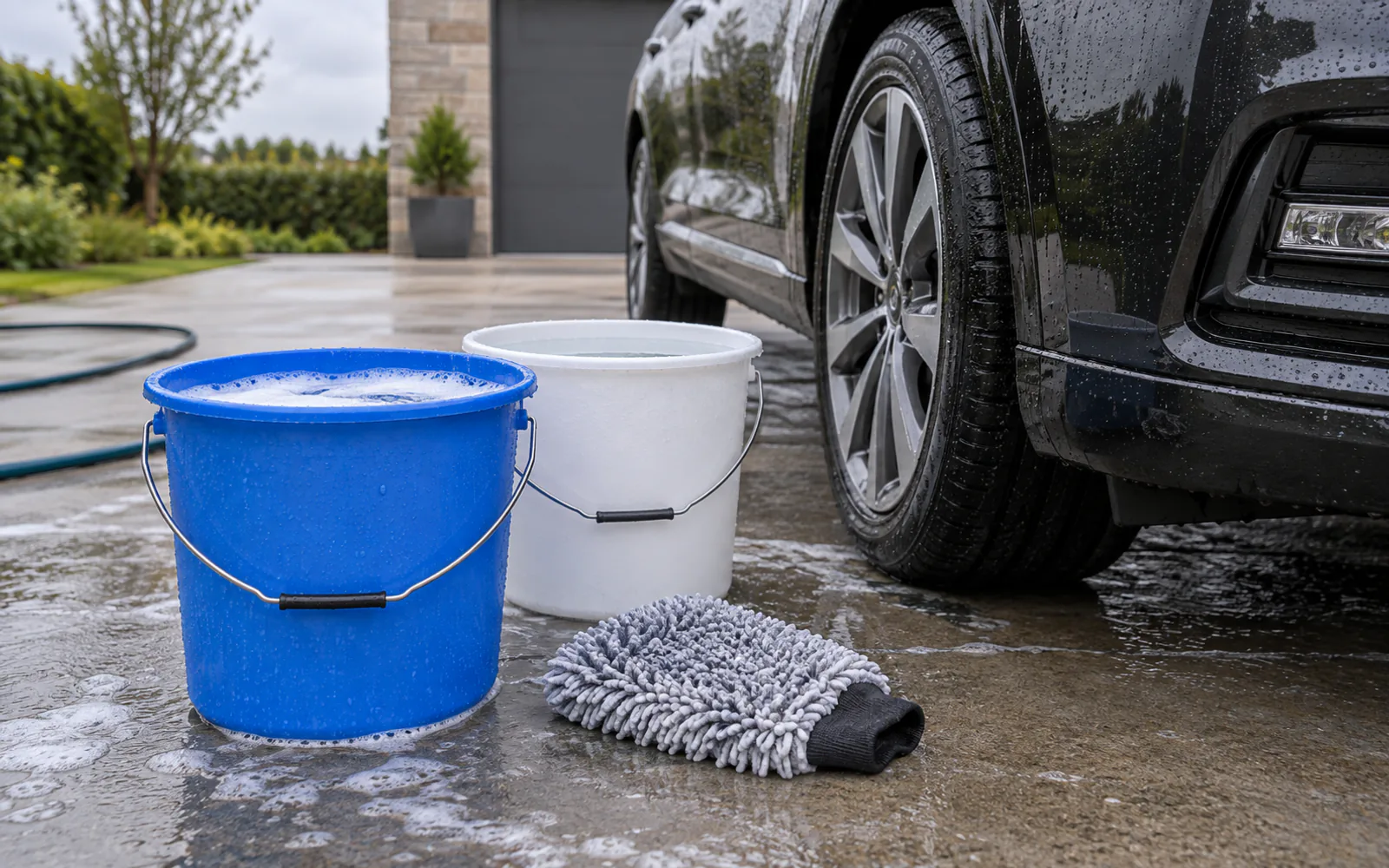
The two-bucket wash method is a contact-wash technique that separates clean soap from dirty rinse water. One bucket holds your diluted car shampoo. The second bucket holds plain water and exists only to clean your wash mitt between panels. A grit guard — a ribbed plastic insert that sits at the bottom of each bucket — traps settled dirt below the insert where the mitt cannot pick it back up.
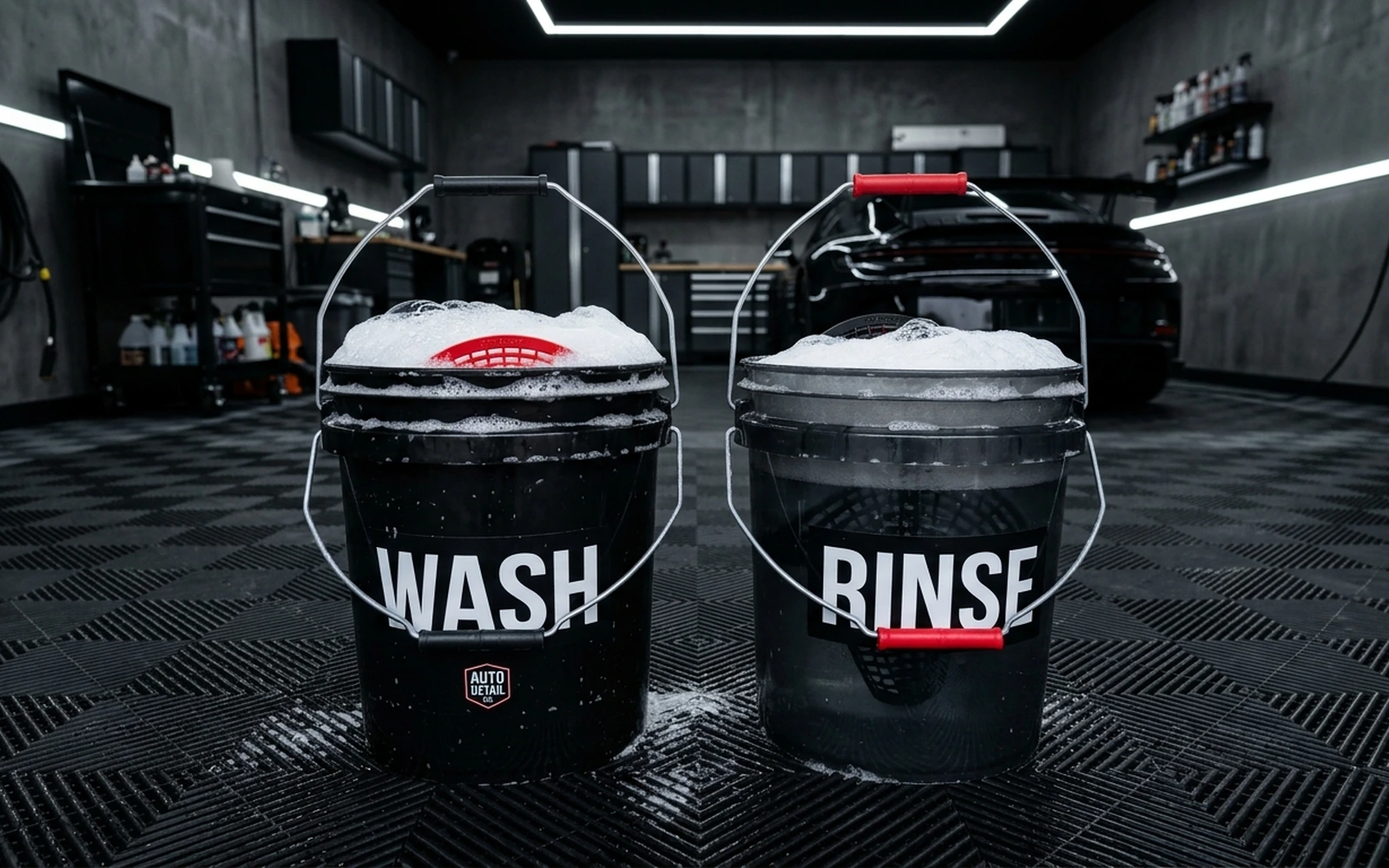
The logic is simple: every time the mitt touches the car, it collects abrasive particles. If that mitt goes straight back into your soap bucket, the soap becomes a suspension of grit, and each subsequent pass grinds that grit across the clear coat. Isolating the rinse step is what breaks that cycle.
Why do swirl marks happen during a wash?
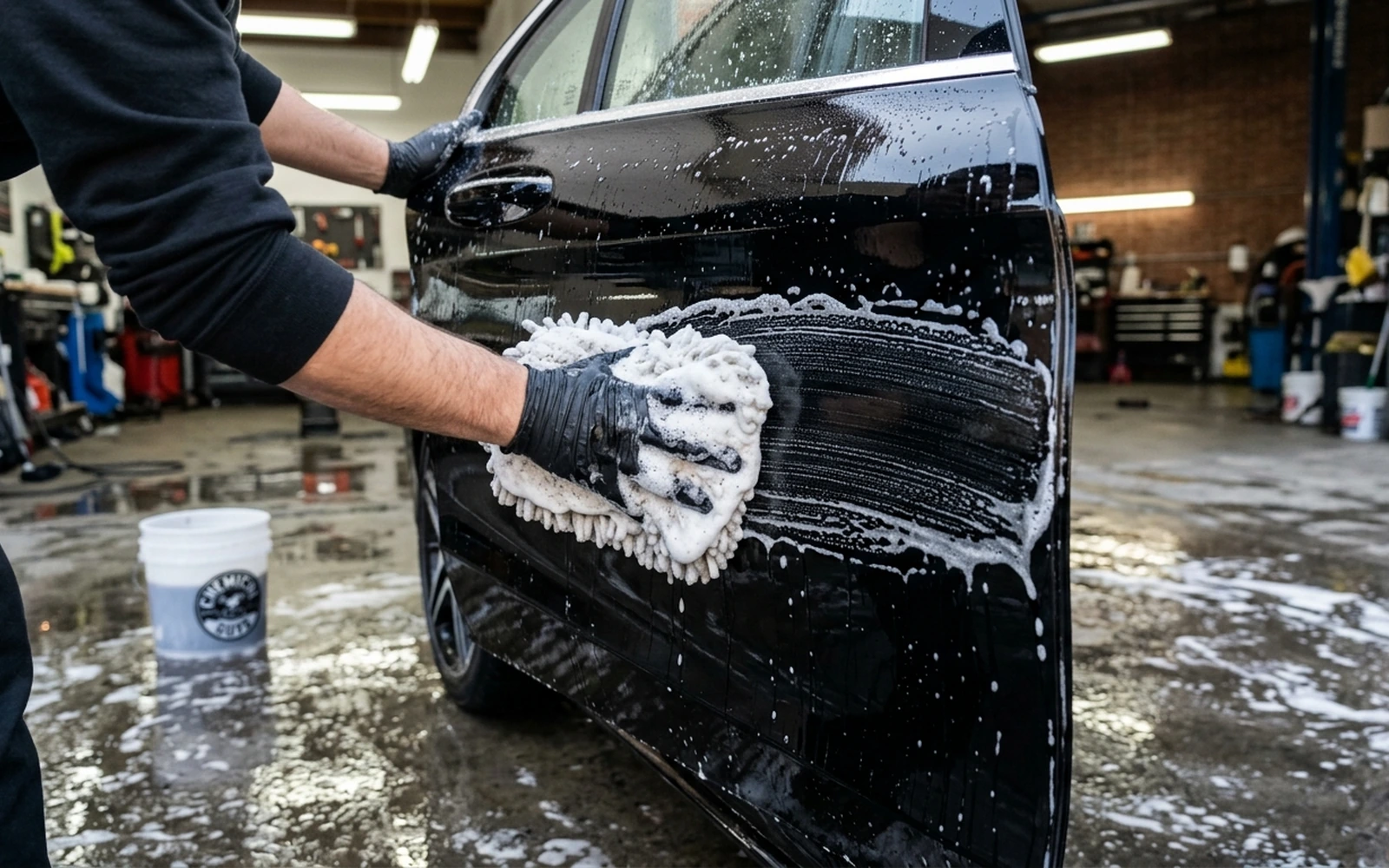
Swirl marks are microscopic scratches in the clear coat, and the majority are inflicted during washing and drying — not by driving. The mechanism is always the same: a hard particle gets trapped between a wash medium and the paint, then moves under pressure. Single-bucket washing maximizes that risk because the dirt you removed from the lower panels stays in the water you use on the upper panels.
The most common scratch source
Re-using a mitt that touched the rocker panels or wheel arches on the hood or doors. Lower panels carry the heaviest grit load. Wash them last, with a dedicated mitt or towel if possible.
How do you set up a two-bucket wash?
Two-bucket wash setup
5 stepsPre-rinse or foam the vehicle
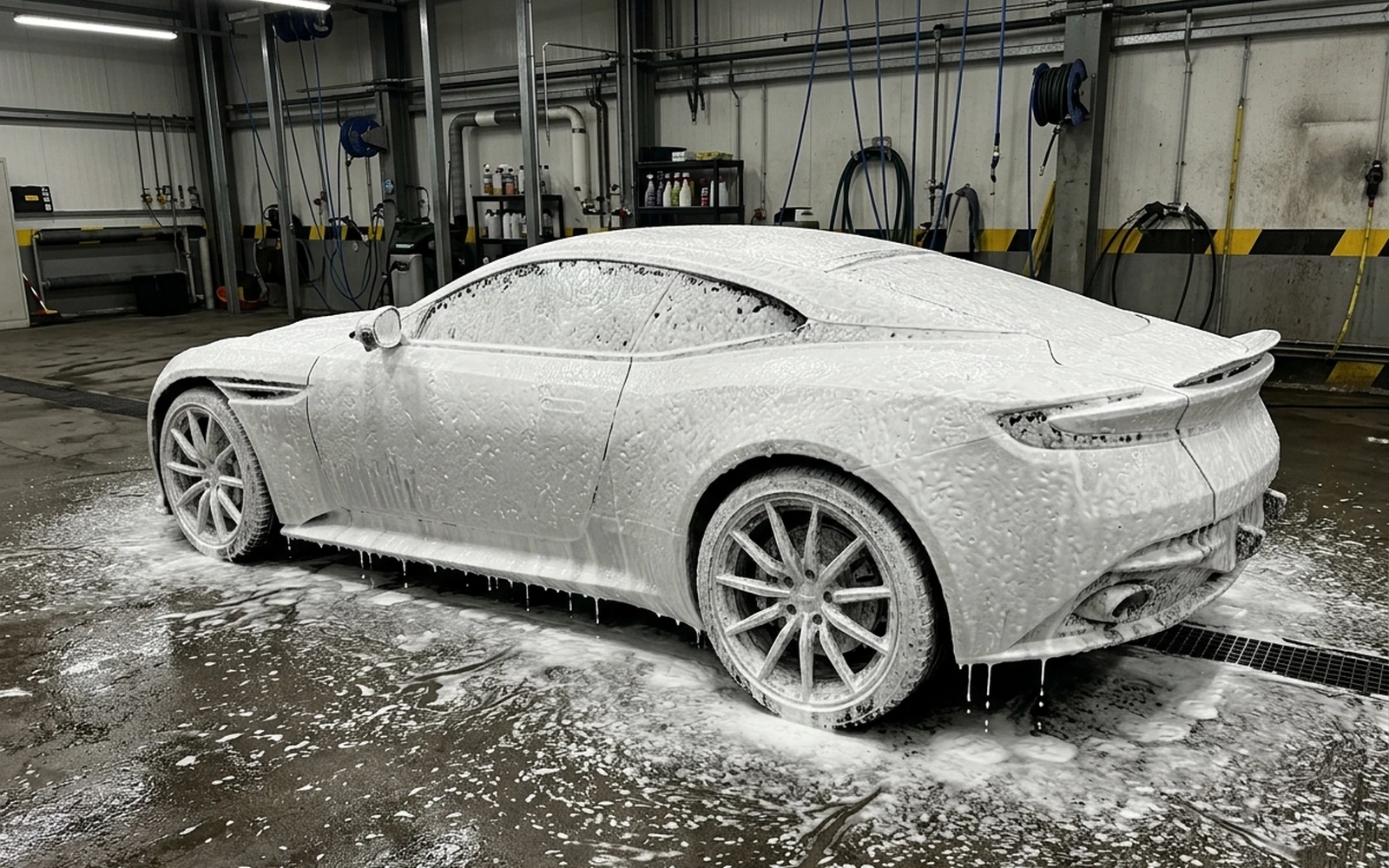
Knock loose dirt off with a pressure washer or a foam cannon pre-soak before any mitt touches the paint. The less grit present at contact, the safer the wash.
Fill the wash bucket
Add car shampoo to the wash bucket at the dilution on the label, then agitate with a strong stream of water to build suds.
Fill the rinse bucket with plain water
No soap. This bucket exists only to strip dirt off the mitt. Place a grit guard at the bottom of both buckets.
Wash top to bottom, one section at a time
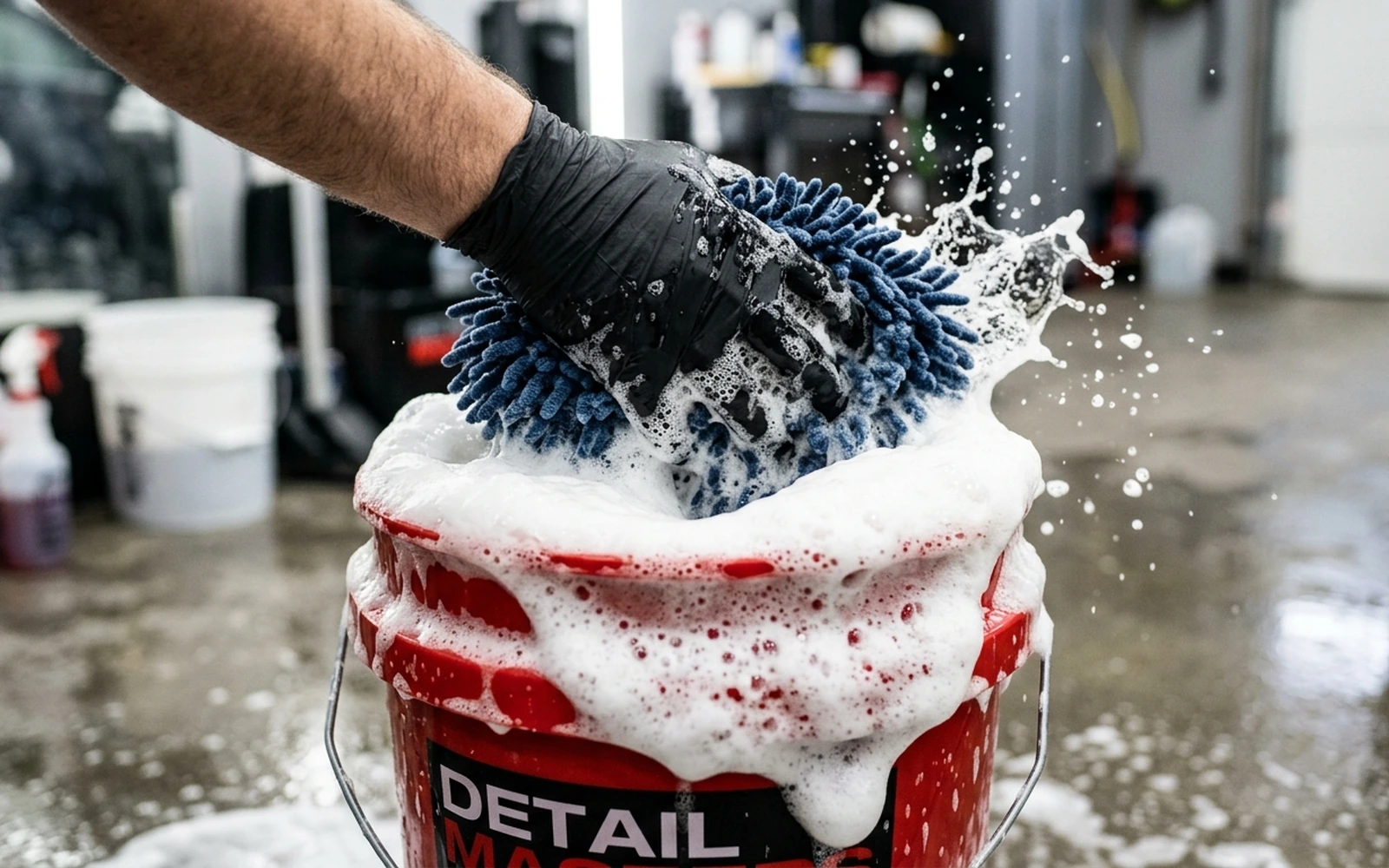
Load the mitt with soap, wipe a section with light, straight-line passes, then dunk and agitate the mitt in the rinse bucket before returning to the soap.
Rinse the panel and move on
Do not let soap dry on the paint. Work in the shade where possible and keep the whole vehicle wet until the final rinse.
Which wash media are safest for paint?
Deep-pile microfiber mitts and twisted-loop microfiber wash pads are the current consensus choice because their fibers lift particles away from the surface and release them in the rinse bucket. Natural sponges and flat foam pads hold grit at the surface, pressed directly against the paint. Whatever you use, it must release dirt easily in the rinse bucket — that property matters more than softness.
| Wash medium | Grit behavior | Paint safety |
|---|---|---|
| Deep-pile microfiber mitt | Pulls particles into the pile, releases in rinse | High when rinsed between panels |
| Twisted-loop microfiber pad | High dirt capacity, easy to rinse clean | High |
| Natural sea sponge | Holds grit at the contact surface | Low for routine washing |
| Flat foam sponge or pad | Traps particles against paint | Low |
Does a grit guard actually work?
A grit guard is not magic — it is a settling barrier. Dirt is denser than water, so agitated particles sink and lodge below the guard's fins. When you scrub the mitt against the guard in the rinse bucket, you are using its ribs to mechanically strip the mitt while the design keeps dislodged grit from swirling back up. It works best combined with the two-bucket discipline; a guard in a single bucket of increasingly dirty water helps less and less as the wash progresses.
“Treat the rinse bucket as the most important tool in the wash. The soap bucket cleans the car; the rinse bucket protects the paint.”
How should you dry the car without adding scratches?
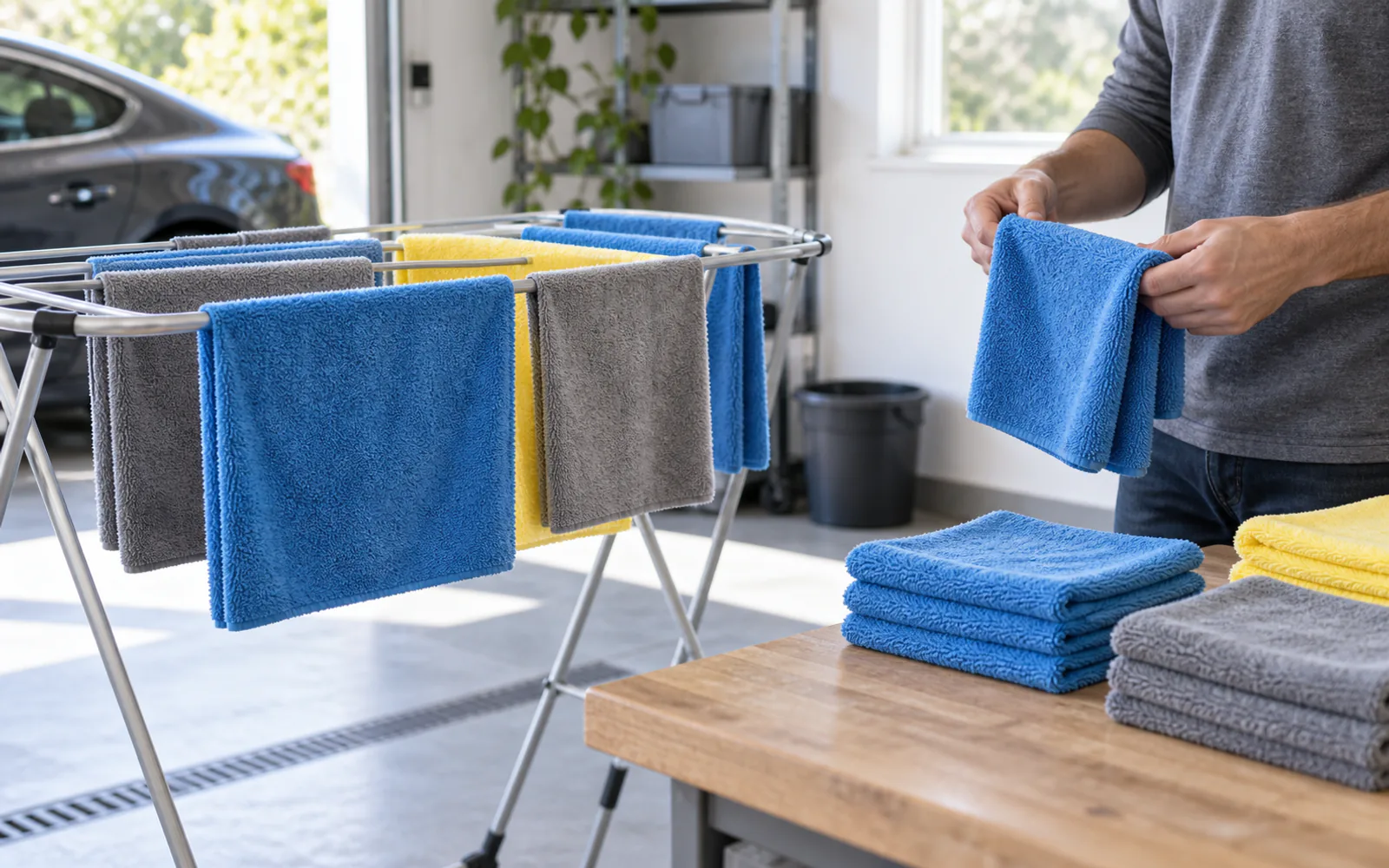
Drying causes as many swirls as washing because any particle left after the rinse is now dragged across the paint by the towel. Use a large, clean twisted-loop drying towel, lay it flat, and drag it with no downward pressure — or blot panel by panel. A dedicated drying aid or rinseless-wash spray adds lubrication if the towel grabs. Wash your wash your microfiber towels correctly correctly afterward or they reintroduce old grit on the next wash.
- Wash in shade on cool panels; heat bakes soap and water spots onto the finish.
- Use straight-line passes instead of circles to make any remaining marks less visible.
- Keep a separate mitt or towel for wheels, rocker panels, and the exhaust area.
- Replace the rinse water the moment it looks cloudy.
- Never drop the mitt on the ground and put it back on the paint.
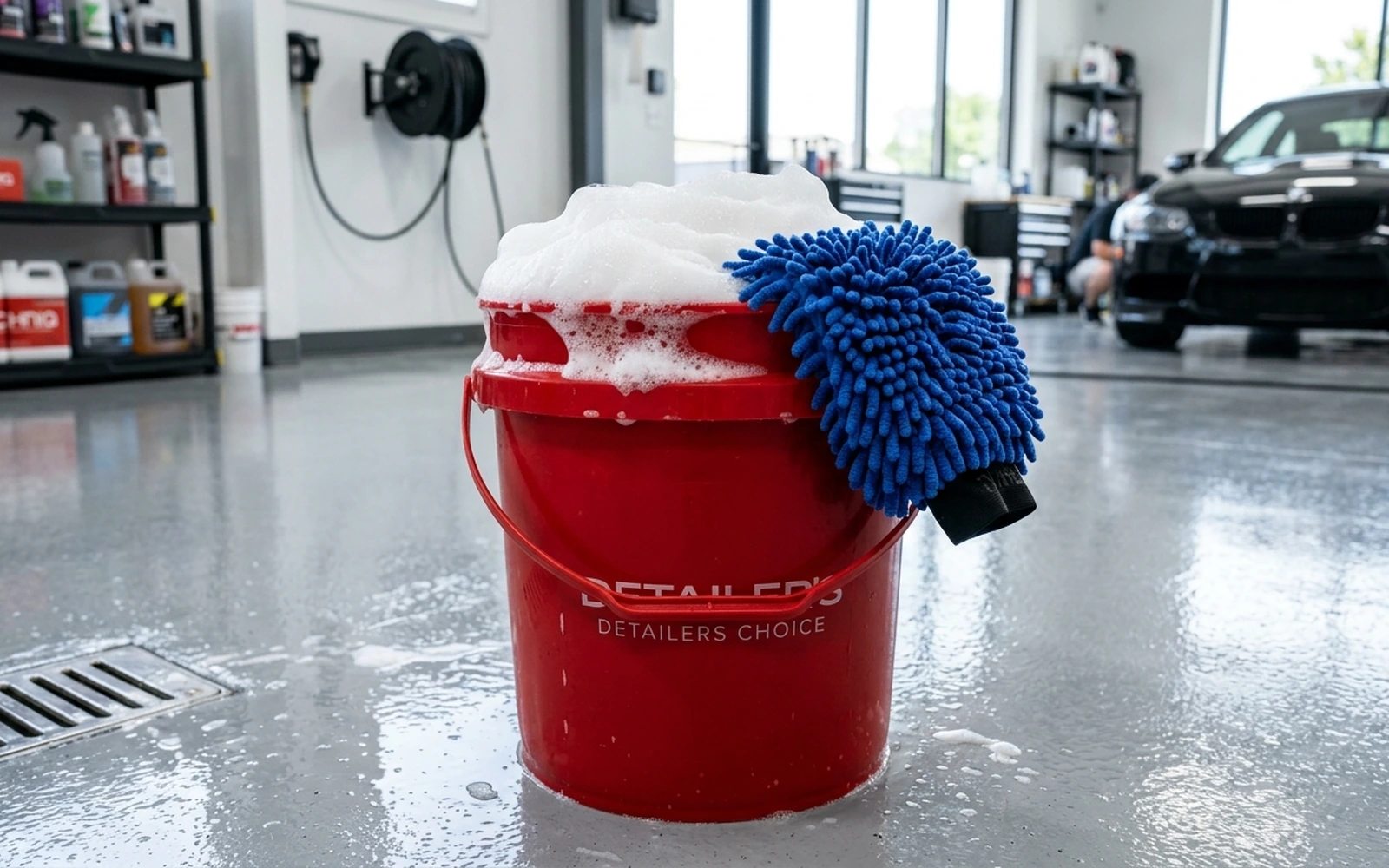
Product profiles for 10PCS Car Detailing Cleaning Kit Interior Cleaner, Battery Terminal Cleaner Tool Kit, and @UTOS 8Pcs Car Wash Kit are linked here so you can compare the supplied evidence, images, and trade-offs before buying.
Straight answers
Frequently Asked Questions
Answers based on the evidence and sources identified in this article.
Is the two-bucket method really necessary for a daily driver?
It is the highest-impact, lowest-cost change you can make to a wash routine. The buckets and grit guards are inexpensive, the technique adds almost no time, and it directly reduces the swirl marks that eventually require machine polishing to remove.
Can I use the two-bucket method without a pressure washer?
Yes. A garden hose pre-rinse still removes loose contamination before contact. A pressure washer or foam cannon simply removes more dirt before the mitt stage, which makes the whole process safer.
How often should I change the rinse water?
Change it as soon as it turns visibly cloudy, and always between very dirty vehicles. On a heavily soiled car that may mean refreshing the rinse bucket halfway through the wash.
What is the main answer about two bucket wash method?
The two-bucket wash method uses one bucket of soapy water and one bucket of clean rinse water, each with a grit guard at the bottom. You load the wash mitt with soap, wipe one panel, then rinse the mitt in the plain water bucket before re-soaping. This keeps dislodged grit trapped at the bottom of the rinse bucket instead of being dragged back across the paint, which is where most wash-induced swirl marks come from.
Who is this two bucket wash method guidance for?
This guidance is for drivers and detailers comparing a practical two bucket wash method workflow. Match the advice to your vehicle, surface, climate, tools, and experience rather than treating it as a universal rule.
What should I check before choosing a product?
Check the intended surface, compatibility, included accessories, maintenance requirements, return terms, and current merchant information. Product pages linked from this article show their evidence status and supplied sources.
Can beginners use this two bucket wash method advice?
Yes, beginners can use it as a decision framework. Start with the least aggressive suitable method, work on a small area when appropriate, and follow the product maker’s current instructions and safety guidance.
Are the products in this article independently tested?
The evidence level is shown on the linked product pages. A researched profile uses supplied records, sources, and media; it should not be read as a DetailRig hands-on test unless the page explicitly says tested.
Does this article include live product prices?
No exact live price is promised. Use the current merchant link to check availability, shipping, returns, regional fit, and the price shown at checkout because those details can change.
What is the main answer about two bucket wash method?
The two-bucket wash method uses one bucket of soapy water and one bucket of clean rinse water, each with a grit guard at the bottom. You load the wash mitt with soap, wipe one panel, then rinse the mitt in the plain water bucket before re-soaping. This keeps dislodged grit trapped at the bottom of the rinse bucket instead of being dragged back across the paint, which is where most wash-induced swirl marks come from.
Where to buy
Recommended Gear in this Guide
Chemical Guys Heavy-Duty Detail Bucket with Grit Guard
Traps heavy dirt particles at the bucket bottom so your wash mitt only picks up clean, soapy water.
The Rag Company Cyclone Microfiber Wash Mitt
Korean 70/30 blend microfiber safely traps grit inside its plush pile away from clearcoat surfaces.
DetailRig is reader-supported. Recommendations follow each page's evidence label (tested, used, or researched), and we never accept paid placement. When you buy through our links, we may earn an affiliate commission at no extra cost to you.
References & Sources
- DetailRig wash-process field notes, 2024–2026 garage sessions
- International Detailing Association (IDA) — wash and decontamination best practices
- Manufacturer care documentation for microfiber wash media
- Google Keyword Planner snapshot: United States + United Kingdom, English, Google Search, Sep 2025-Aug 2026; location scope excludes Pakistan.

Marcus Vance
ContributorDetailRig Editorial Contributor
Maintains equipment evaluations, methodology notes, and garage-workflow coverage. Professional credentials are withheld pending publisher verification.