How Much PSI Do You Need to Wash a Car Safely?
When shopping for an automotive pressure washer, the headline number plastered across the box is almost always PSI (Pounds per Square Inch). Manufacturers boast about 2,000, 3,000, or even 4,000 PSI machines.
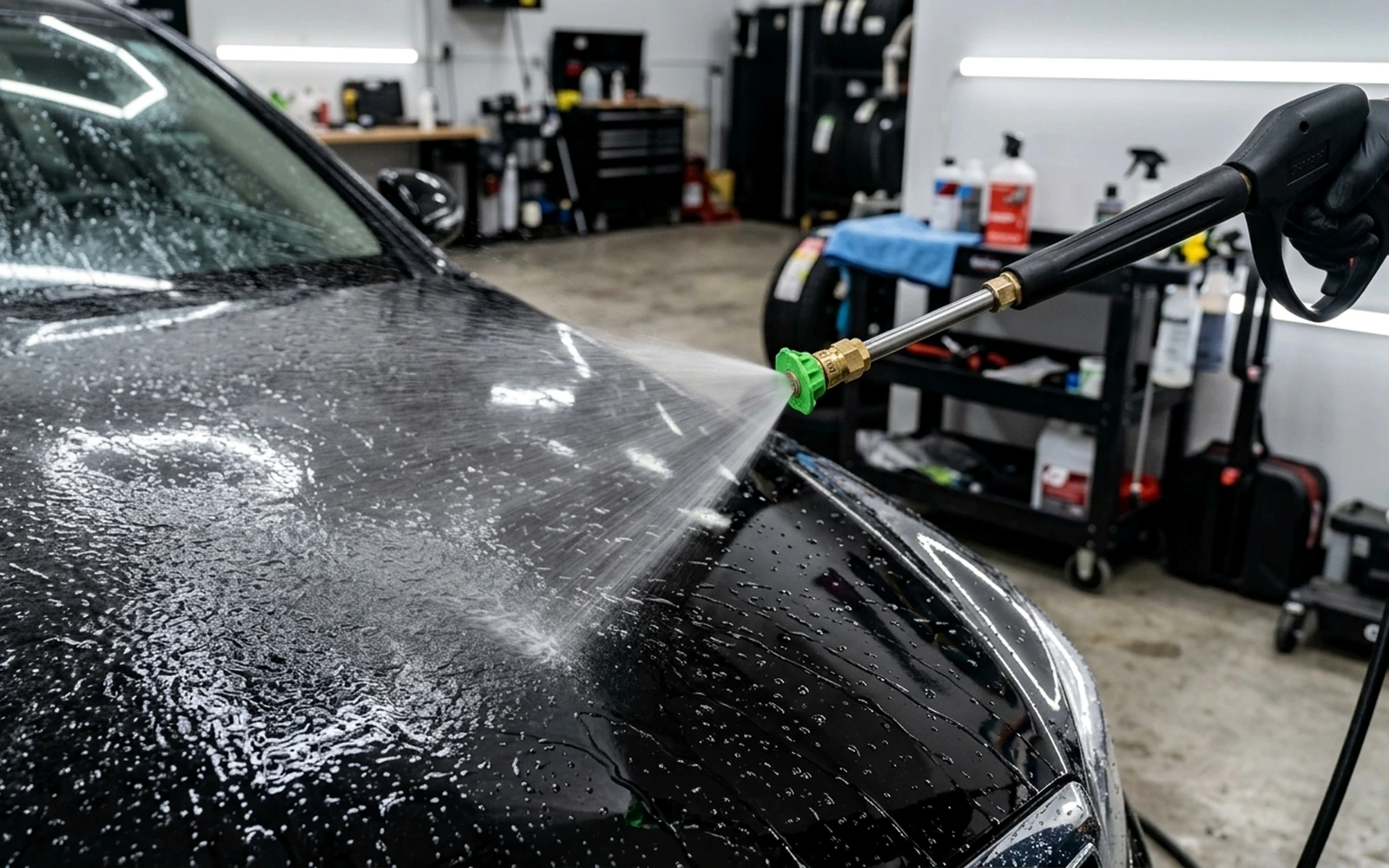
Here is the direct truth from our lab and garage testing: for automotive detailing, you only need 900 to 1,200 working PSI.
Anything significantly higher risks blasting away clear coat on stone chips, cutting into weatherstripping, peeling paint protection film (PPF), or forcing high-pressure moisture past sensitive door seals and wiring harnesses.
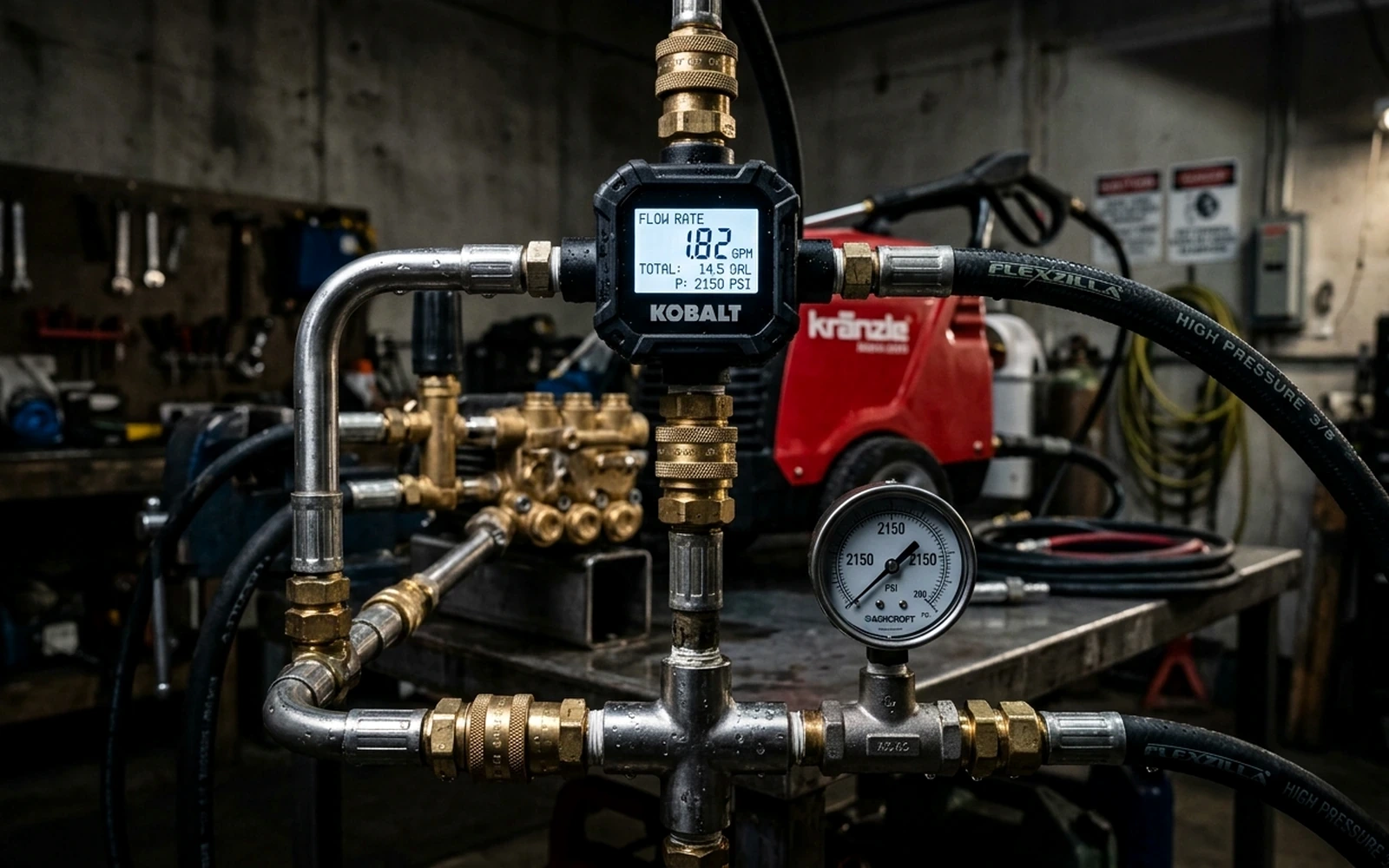
The Optimal Automotive Pressure Range
Under 800 PSI   — Garden hose territory; weak rinse power on road grime.
900 - 1,200 PSI — The Sweet Spot: Maximum safety, rapid rinsing, thick foam.
1,500 - 1,800 PSI — Caution Zone: Keep nozzle at least 18 inches away from paint.
2,000+ PSI      — Danger Zone: High risk of clear coat delamination on stone chips.
Why Water Flow (GPM) Matters More
In automotive detailing, pressure dislodges grit, but flow (Gallons Per Minute / GPM) flushes it safely away from the vehicle before your wash mitt touches the surface.
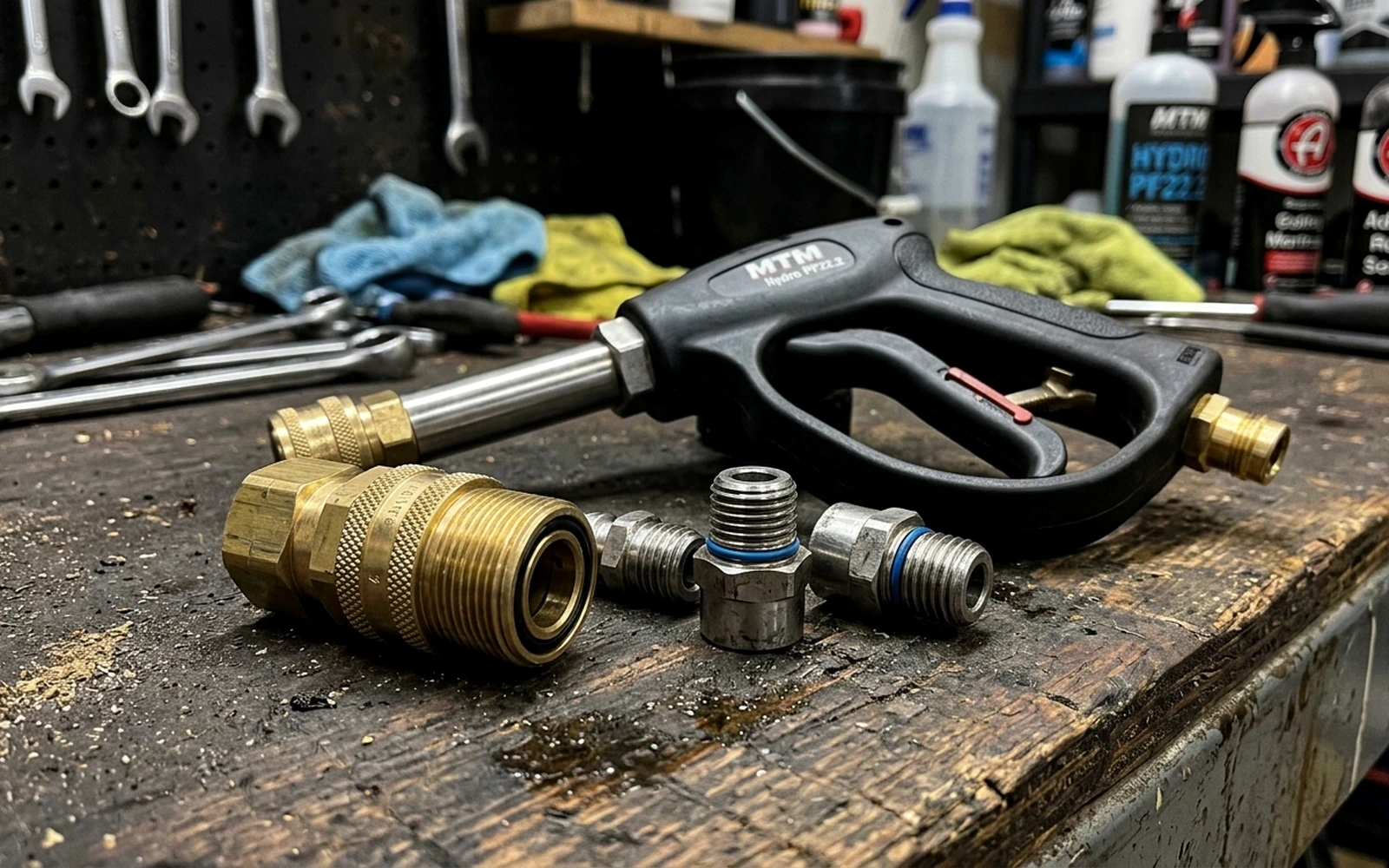
A machine pushing 1.2 GPM at 2,000 PSI creates a needle-sharp, high-velocity stream that cleans a very narrow path. Conversely, a machine operating at 1,000 PSI with 2.0 GPM delivers a wide, heavy curtain of water that encapsulates dirt particles and carries them harmlessly down the panels.
If you have to choose between more PSI or more GPM on a standard 15-amp household circuit, always choose higher GPM.
Practical Rules for Driveway Washing
- Use a 40-degree white or 25-degree green nozzle tip: Never use a 0-degree red pencil tip or a rotary turbo nozzle on automotive paint.
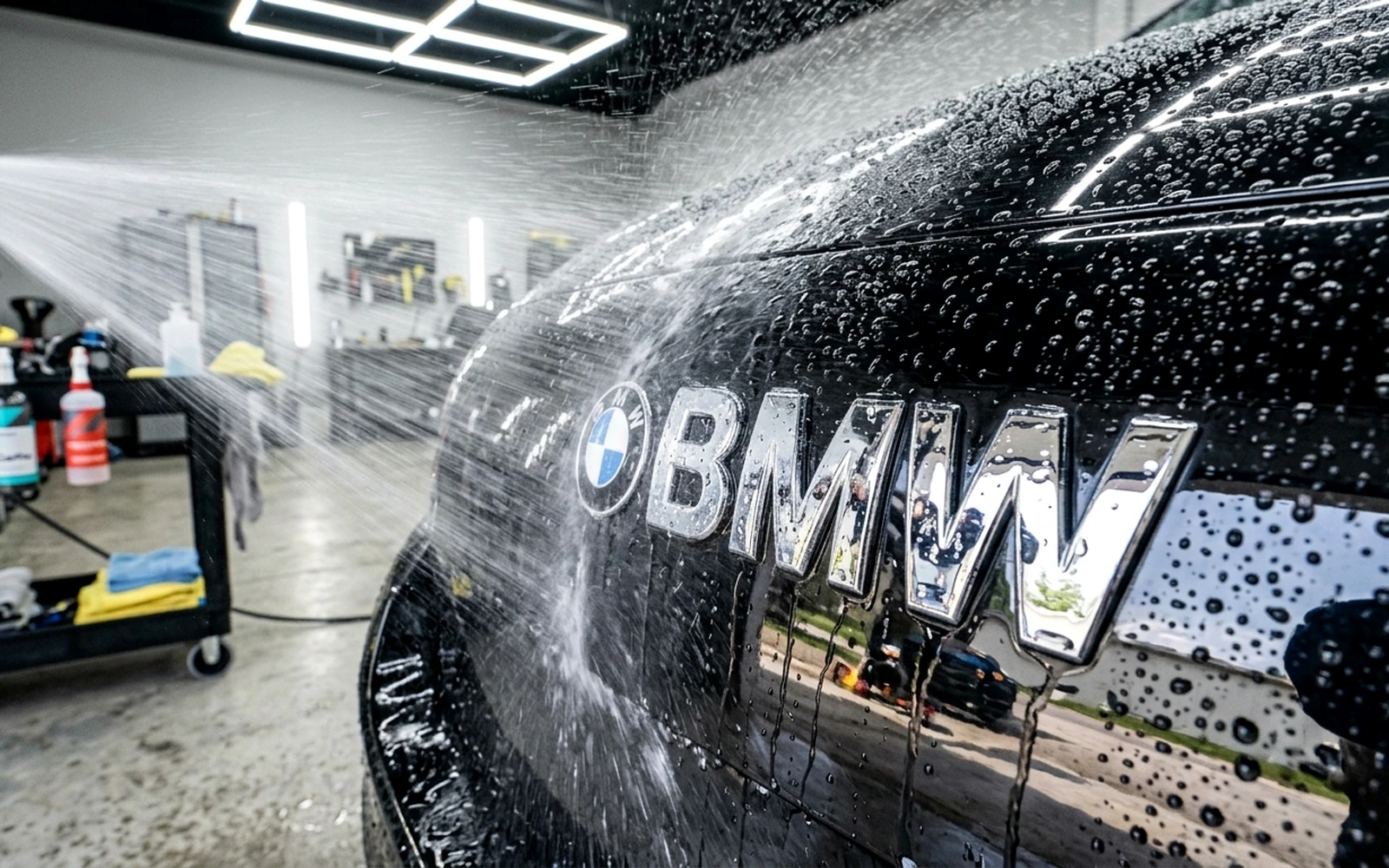
- Maintain a 12-to-18-inch standoff distance: Even at 1,000 PSI, pressing a nozzle tip 2 inches from fresh paint or vinyl wrap concentrates destructive shear force.
- Be cautious around edges and stone chips: Water forced under an existing chip will lift the clear coat immediately.
- Use our free calculator: Check your machine's actual working output with our Pressure Washer Calculator.
References & Technical Standards
- • DetailRig Pressure Testing Benchmark Data
- • Automotive Clear Coat Hardness & Shear Adhesion Technical Papers
- • PPF & Vinyl Wrap Manufacturer Installation Cleaning Specifications

Marcus Vance
ContributorDetailRig Editorial Contributor
Maintains equipment evaluations, methodology notes, and garage-workflow coverage. Professional credentials are withheld pending publisher verification.