Table of Contents(6 sections)
What does claying actually remove?
Claying removes bonded contamination — the particles that survive a normal wash. Rail dust, brake-dust fallout, tree sap mist, overspray, and industrial pollution embed into the clear coat surface and give paint that sandpaper feel when you glide a fingertip across it. Washing floats loose dirt away; claying shears off what is mechanically bonded. It is the mandatory reset before polishing, waxing, or coating.
Clay bar vs clay mitt: what is the actual difference?
| Factor | Clay bar | Clay mitt / towel |
|---|---|---|
| Speed on a full car | Slow — knead and refold constantly | 3–4x faster, large contact face |
| Dropped on the ground | Throw it away — it is contaminated | Rinse it off and keep working |
| Tactile feedback | Highest — you feel every particle release | Muffled through the mitt backing |
| Lifespan | 2–4 cars per bar typically | Dozens of cars with proper care |
| Tight areas and edges | Excellent — fold to any shape | Awkward around mirrors and badges |
| Cost per use | Higher over time | Lower over its lifespan |
When should you choose a clay mitt?
For routine full-car decontamination on maintained vehicles, the mitt wins on almost every practical measure. It covers a hood in a handful of passes, it survives the inevitable drop, and the cost per car drops to pennies over its life. If you clay more than a couple of vehicles a year, the mitt pays for itself quickly.
When is a clay bar still the right tool?
- Spot work: a single panel with overspray or sap does not justify unwrapping the mitt workflow.
- Heavy contamination: a fresh bar face conforms and grabs in a way a worn mitt surface cannot.
- Delicate or vintage paint: the bar's direct feedback tells you instantly when a particle is releasing versus dragging.
- Tight geometry: folded bar edges get behind badges, mirrors, and door handles.
The rule that protects your paint
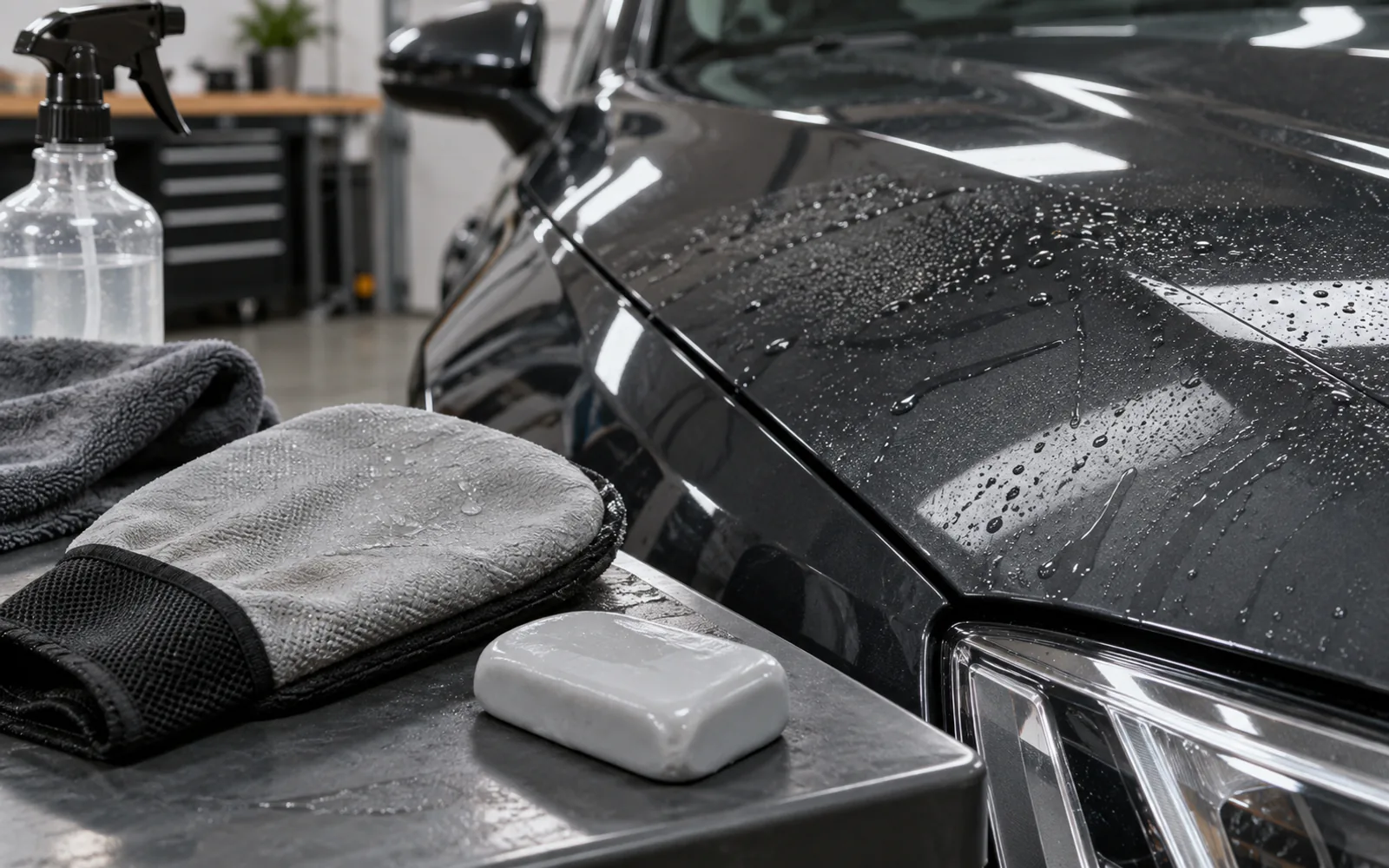
Never clay dry, and never clay with pressure. Use a dedicated clay lubricant or a slippery rinseless-wash solution, glide with zero downward force, and check the clay face every panel. The moment the face looks loaded, refold the bar or rinse the mitt.
How do you clay a car safely, step by step?
Safe decontamination workflow
5 stepsWash first
Remove all loose dirt before clay touches paint — claying a dirty car grinds grit into the clear coat.
Lubricate generously
Flood a 2x2 ft section with clay lubricant. The surface should feel slick, not just damp.
Glide with no pressure
Straight-line passes, fingertip weight only. You will hear and feel the contamination release, then the surface goes silent and smooth.
Wipe and inspect
Dry the section, then run a fingertip across it. Glass-smooth means done; still gritty means one more pass.
Protect after
Claying strips everything, including old wax. Re-protect with a wax, sealant, or coating before calling the job finished.

Product profiles for Armor All Car Cleaning Kit, Adam's Polishes Wheel Cleaner 16oz - Tough Wheel Cleaning Spray for…, and ABRO All-Season Windshield Washer Concentrate 16 oz are linked here so you can compare the supplied evidence, images, and trade-offs before buying.
Straight answers
Frequently Asked Questions
Answers based on the evidence and sources identified in this article.
How often should you clay your car?
For a daily driver, one to two times a year is typical — before a fresh protection layer, or whenever paint feels gritty after a proper wash. Garage-kept cars can go much longer between clay sessions.
Does claying remove swirl marks?
No. Clay removes bonded contamination on the surface; swirls are scratches in the clear coat and require machine polishing to remove. Claying first makes that polishing step cleaner and more effective.
Can I use soapy water as clay lubricant?
Car shampoo solution works in a pinch, but dedicated clay lubricants and rinseless-wash solutions are slicker and reduce the risk of marring. Dish soap is never acceptable — it strips and dulls.
What is the main answer about clay bar vs clay mitt?
Choose a clay mitt for full-vehicle decontamination — it is several times faster, can be rinsed clean if dropped, and lasts for dozens of cars. Choose a clay bar for precision work on small areas, heavy contamination, or when you want maximum tactile feedback on delicate paint. Both need generous lubricant and a light touch; neither should ever be used dry.
Who is this clay bar vs clay mitt guidance for?
This guidance is for drivers and detailers comparing a practical clay bar vs clay mitt workflow. Match the advice to your vehicle, surface, climate, tools, and experience rather than treating it as a universal rule.
What should I check before choosing a product?
Check the intended surface, compatibility, included accessories, maintenance requirements, return terms, and current merchant information. Product pages linked from this article show their evidence status and supplied sources.
Can beginners use this clay bar vs clay mitt advice?
Yes, beginners can use it as a decision framework. Start with the least aggressive suitable method, work on a small area when appropriate, and follow the product maker’s current instructions and safety guidance.
Are the products in this article independently tested?
The evidence level is shown on the linked product pages. A researched profile uses supplied records, sources, and media; it should not be read as a DetailRig hands-on test unless the page explicitly says tested.
Does this article include live product prices?
No exact live price is promised. Use the current merchant link to check availability, shipping, returns, regional fit, and the price shown at checkout because those details can change.
Why are product images included with this guide?
The supplied product images help you identify the item, compare form factors, and inspect what the source listing shows. Images are not proof of measured performance or compatibility.
Where to buy
Recommended Gear in this Guide
Chemical Guys Clay Luber & Heavy-Duty Clay Block Kit
Ultra-slick lubricant reduces friction while malleable clay grabs embedded fallout without clearcoat marring.
Maxshine Fine Grade Detailing Clay Mitt
Polymer rubber surface cleans panels 3x faster than traditional bars and easily rinses clean if dropped.
DetailRig is reader-supported. Recommendations follow each page's evidence label (tested, used, or researched), and we never accept paid placement. When you buy through our links, we may earn an affiliate commission at no extra cost to you.
References & Sources
- DetailRig wash-process field notes, 2024–2026 garage sessions
- Manufacturer usage guidance for clay bars and clay mitts
- Amazon Best Sellers: Car Care, accessed 2026-09-11
- Google Keyword Planner snapshot: United States + United Kingdom, English, Google Search, Sep 2025-Aug 2026; location scope excludes Pakistan.

Alex Carter
ContributorDetailRig Editorial Contributor
Maintains researched car-care explainers and product profiles. Professional credentials are withheld until the publisher receives supporting documentation.