Table of Contents(5 sections)
Evidence status: researched
This guide synthesizes verified manufacturer specifications, technical data sheets, and professional detailing workflows. DetailRig has not performed a single controlled laboratory test across all products discussed here; specific performance claims are attributed to their respective manufacturers.
The Chemistry Behind Water Spot Etching
Water spots are not simply evaporated water; they are concentrated mineral deposits. Tap water contains dissolved minerals—chiefly calcium carbonate, magnesium, sulfates, and chlorides (measured as Total Dissolved Solids, or TDS). When water beads sit on automotive paint under sunlight or warm ambient heat, the water evaporates while the minerals stay behind.
As sunlight focuses through the bead lens, temperatures rise, converting alkaline mineral rings into corrosive compounds that etch sub-surface craters into clear coat. Once etched, these deposits cannot be washed away with soap; they require acidic mineral removers or abrasive machine polishing. Preventing water spots during drying is vital to clear coat longevity.
| Drying Technique | Scratch Risk | Water Spot Prevention | Drying Speed | Best Use Case |
|---|---|---|---|---|
| Open-Hose Sheeting Rinse | Zero (Touchless) | Very High (Removes ~80% standing water) | 1 minute | Immediate post-wash prep before towel contact |
| Twisted-Loop Microfiber Towel | Extremely low with drying aid | High (Absorbs minerals instantly) | 3–5 minutes | Full vehicle body panels and flat surfaces |
| Forced-Air Blower / Leaf Blower | Zero (Touchless) | Maximum (No mineral contact or wiping) | 5–8 minutes | Mirrors, door jambs, lug nuts, and badges |
| Chamois / Leather Squeegee | High (Traps dust, drags friction) | Moderate (Leaves moisture streaks) | Slow | Outdated technique (Not recommended) |
The Open-Hose Sheeting Trick: Shedding 80% of Standing Water
Before touching the vehicle with any towel, remove the spray nozzle from your garden hose. Turn the water flow to medium-low so that a smooth, laminar stream cascades out. Starting at the top of the roof, hold the hose 1 to 2 inches above the surface and let the water drape across the paint.
Due to surface tension and water cohesion, the falling water sheet attracts and pulls beads with it as it flows down panels. A properly protected car (waxed, sealed, or ceramic-coated) will shed roughly 80% to 90% of standing water in under 60 seconds, leaving only isolated droplets for the drying towel.
Step-by-Step Scratch-Free Drying Procedure
How to safely dry car paint without water spots or swirl marks
5 stepsStep 1: Always dry in the shade on cool paint
Never dry a vehicle in direct sunlight or when panels feel warm to the touch. Heat accelerates droplet evaporation before towels can capture dissolved minerals.
Step 2: Sheet water with open hose
Run a low-velocity cascade over the roof, glass, hood, and doors to peel bulk water away.
Step 3: Mist panels with a lubricated drying aid
Lightly spritz a quick detailer, ceramic spray, or dilute rinseless wash onto damp panels. This acts as a water softener, adds lubricity, and prevents dry towel drag.
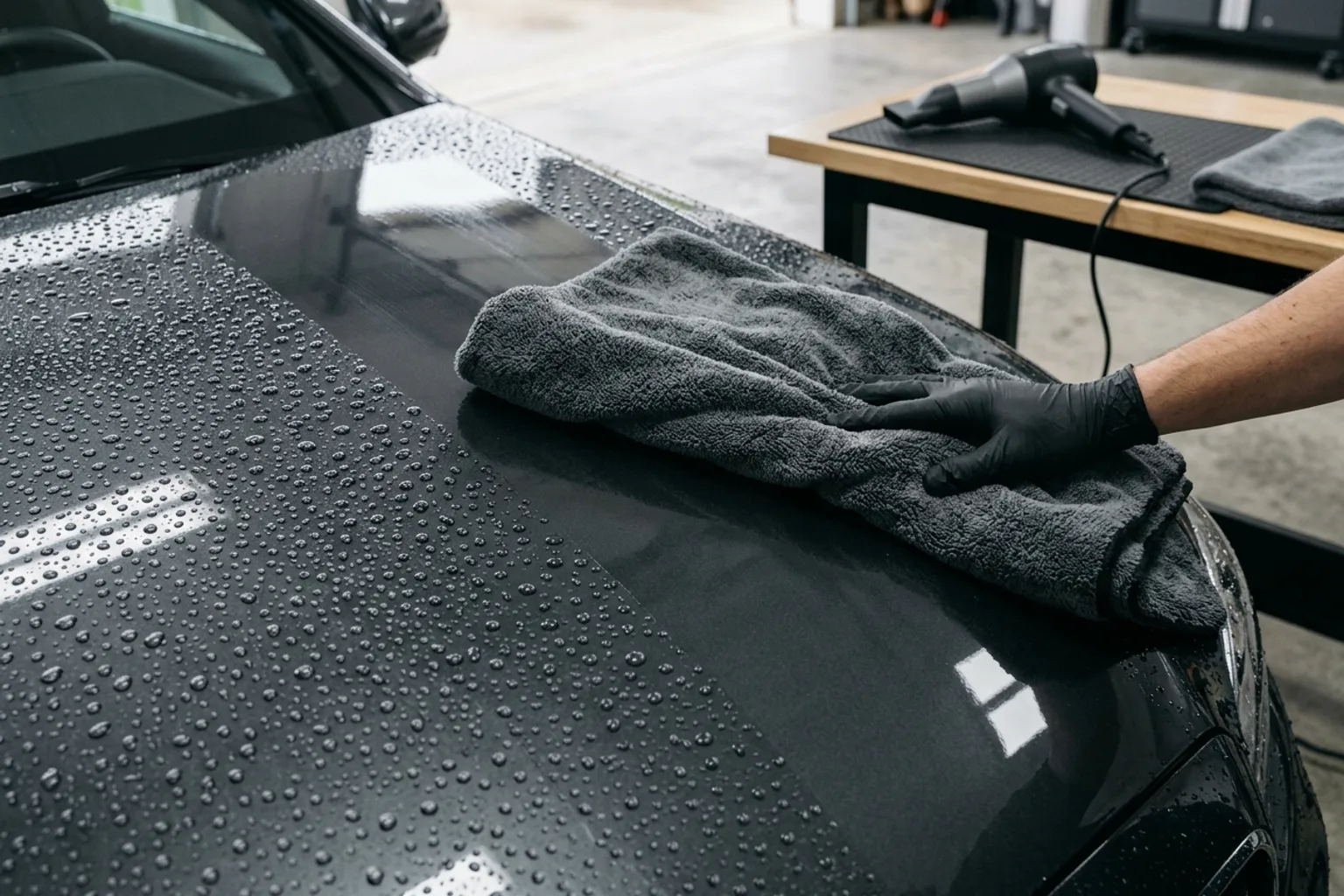
Step 4: Glide a twisted-loop towel using the drag method
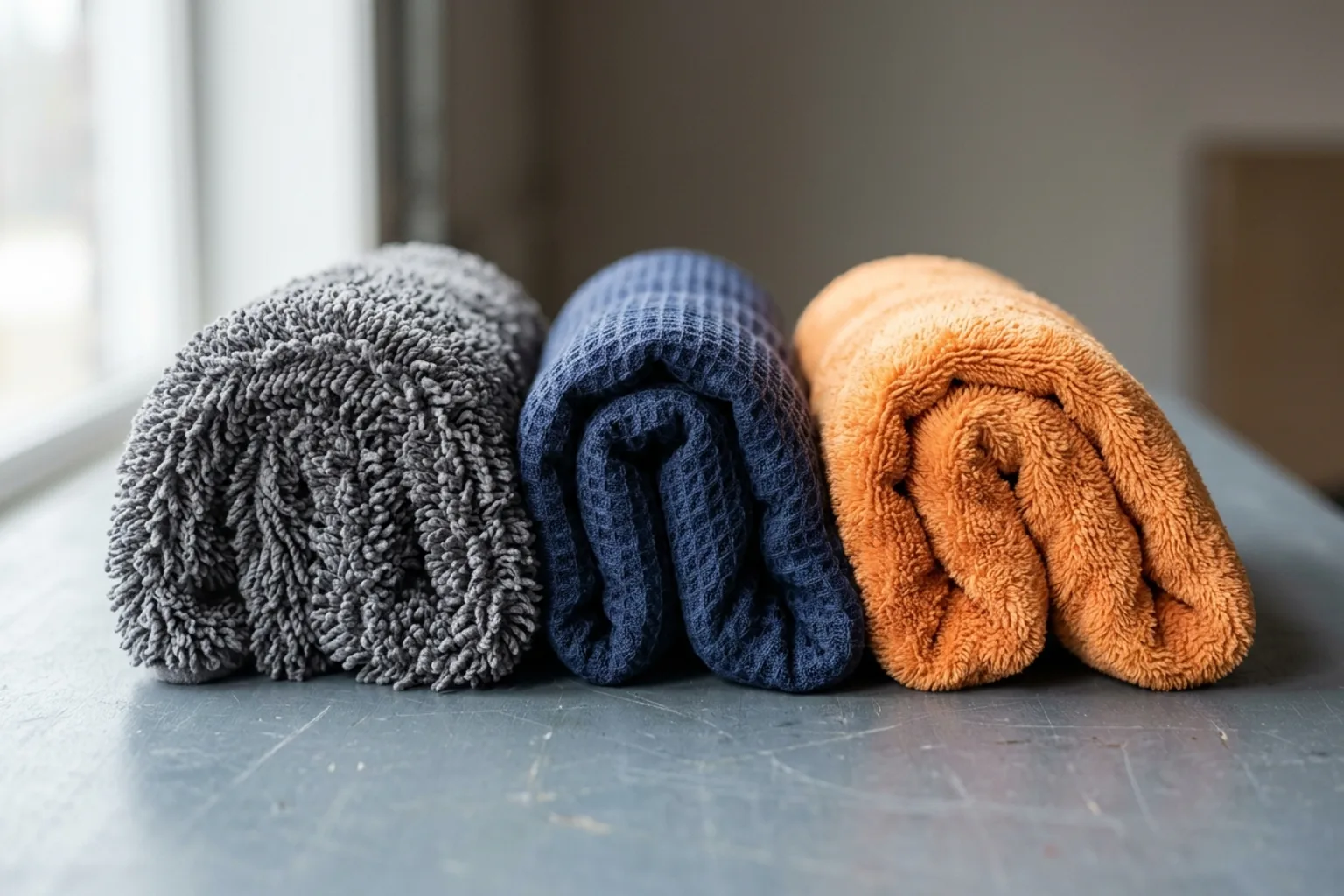
Unfold a large 1,000+ GSM twisted-loop microfiber towel. Lay it flat across the hood, hold two corners, and gently pull it toward you. Let the towel weight absorb moisture—never press down or rub vigorously.
Step 5: Flush crevices with forced air
Use a dedicated automotive air blower or filtered cordless blower to purge water out of side mirrors, window seals, headlight housings, and fuel doors to stop drip trails.
Why Chamois and Rubber Squeegees Ruin Clear Coat
Retire natural chamois and rubber squeegee blades
Natural leather chamois and silicone water blades have flat, non-porous surfaces. If a single speck of dust or airborne grit settles on your wet paint, a squeegee blade will trap that particle and drag it across the panel, creating a deep razor scratch. Deep-pile microfiber towels draw stray particles deep into fibers away from paint.
Straight answers
Frequently Asked Questions
Answers based on the evidence and sources identified in this article.
Can I use a leaf blower to dry my car?
Yes, provided the leaf blower is electric (zero oil or exhaust residue), clean, and equipped with a soft rubber tip protector. Never use a gas leaf blower that spits unburned fuel or hot exhaust onto paint.
What is a drying aid and why is it necessary?
A drying aid is a slick spray detailer or diluted ceramic spray applied while paint is wet. It encapsulates minerals in tap water, reduces friction between towel and clear coat, and boosts gloss and protection.
How do I wash my drying towels to maintain absorbency?
Wash drying towels with dedicated microfiber detergent in warm water without fabric softeners or bleach. Dry on low heat or hang dry; high heat melts polyester fibers and destroys absorbency.
Where to buy
Recommended Gear in this Guide
The Rag Company The Gauntlet Microfiber Drying Towel (900 GSM)
Absorbs standing water instantly across large roof and hood panels before mineral deposits can dry and bake.
DetailRig is reader-supported. Recommendations follow each page's evidence label (tested, used, or researched), and we never accept paid placement. When you buy through our links, we may earn an affiliate commission at no extra cost to you.
References & Sources

DetailRig Editorial
ContributorResearch publication
DetailRig Editorial publishes source-linked car-care explainers. These articles synthesize manufacturer instructions and clearly separate research from documented hands-on testing.