Table of Contents(6 sections)
Evidence status: researched
This guide synthesizes verified manufacturer specifications, technical data sheets, and professional detailing workflows. DetailRig has not performed a single controlled laboratory test across all products discussed here; specific performance claims are attributed to their respective manufacturers.
The Primary Cause of Swirl Marks: Wash Media Friction and Grit Drag
More than 90% of spider-web swirl marks and light clear coat scratches are inflicted during contact washing. When you wash a car, road dust, pulverized quartz sand, and silica particulates sit on the paint surface. If your wash tool presses that abrasive grit flat against clear coat and drags it across panels, the sand particles act as microscopic cutting gouges.
Traditional flat yellow cellular sponges are the worst offenders: because their flat face has nowhere for grit to escape, sand stays pinned between the sponge face and paint. Modern automotive wash mitts solve this problem through fiber depth: microscopic synthetic filaments draw abrasive particles up into the deep plush pile away from clear coat until released into a rinse bucket.
| Wash Media Type | Grit Encapsulation Depth | Soapy Water Retention | Grit Release in Rinse Bucket | Longevity & Machine Washability |
|---|---|---|---|---|
| Deep-Pile Microfiber Pad (Microfiber Madness style) | Maximum (Multi-length split strands trap grit deep) | High (Holds 3 to 4 lbs of wash solution) | Excellent (Releases dirt easily on grit guard) | Outstanding (Survives 100+ machine wash cycles) |
| Chenille Microfiber "Noodle" Mitt | Very High (Fingers wrap around contours) | Very High (Thick caterpillars store soap) | Very Good (Large channels flush cleanly) | Good (Elastic wrist cuff can loosen over time) |
| Genuine Merino Wool Wash Mitt | Extreme (Incredible natural fiber softness) | Massive (Absorbs huge soapy volume) | Moderate (Requires meticulous hand flushing) | Poor (Organic skin rots if not dried perfectly) |
| Traditional Flat Polyurethane Sponge | Zero (Flat face traps sand on surface) | Low (Water drains out quickly) | Poor (Traps grit in exterior pores) | Moderate (Never use on vehicle clear coat!) |
Chenille Microfiber Noodles vs Deep-Pile Korean Plush
Chenille microfiber mitts feature thick cylindrical "noodles" or caterpillars of microfiber. These individual fingers provide outstanding mechanical flexibility, easily conforming around complex body contours, roof rack mounts, and aggressive aerodynamic splitters. The wide channels between noodles allow larger debris to roll into the mitt without grinding against paint.
Deep-pile split microfiber wash pads (such as 70/30 Korean blend pads) offer the highest fiber density per square inch. They glide across flat hood and roof panels with silky slickness and are less prone to snagging on sharp exterior badges or emblem corners than loose chenille noodles.
Mitt vs Pad: Which Ergonomic Style Fits You?
- Cuffed Wash Mitt: Features an elastic wrist cuff that keeps the tool anchored to your hand, preventing accidental drops onto abrasive concrete wash bays.
- Borderless Wash Pad / Bone Sponge: Rectangular plush pad without an internal glove. Preferred by professional detailers because it allows flipping to a fresh, clean side without taking your hand out, and reduces finger cramping.
The Two-Bucket Rinse Routine to Keep Media Pure
How to use your wash mitt for swirl-free contact washing
5 stepsStep 1: Pre-wash foam and high-pressure rinse
Always foam and pressure rinse panels first to strip away 80% of loose grit before touching the car with a mitt.
Step 2: Submerge mitt in soapy wash bucket
Load the mitt with slick, sudsy car shampoo solution to maximize panel lubricity.
Step 3: Glide across one panel section with zero pressure
Wash using straight, overlapping horizontal lines. Never scrub in aggressive circles; let the weight of the soaked mitt do the work.
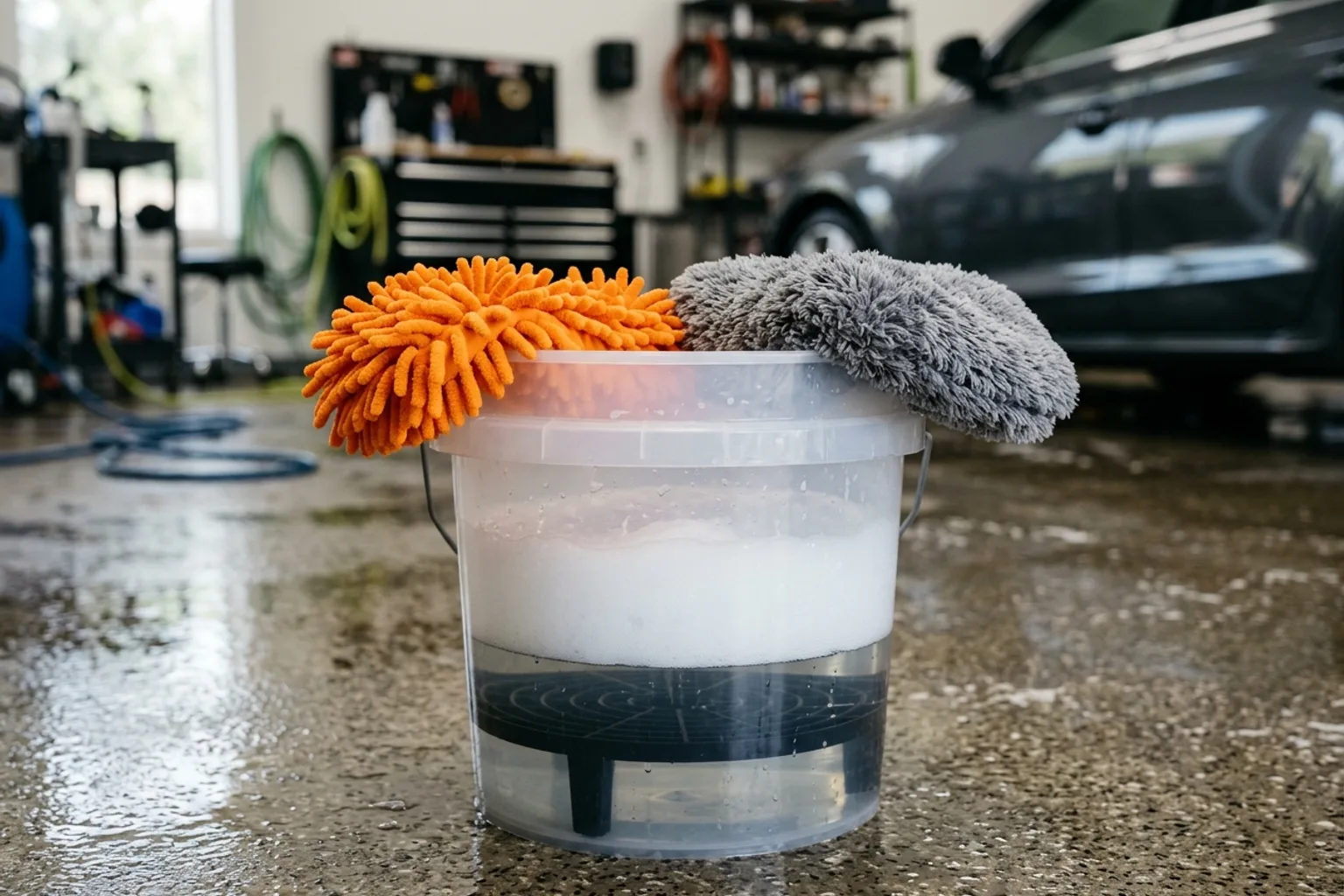
Step 4: Plunge into clean rinse bucket against grit guard
Dunk the contaminated mitt into your secondary clean-water rinse bucket. Rub the mitt vigorously against the bottom grit guard grating to release trapped dirt.
Step 5: Wring out and reload with fresh shampoo
Squeeze out dirty rinse water, then return the clean mitt to your wash soap bucket before touching the next panel.
Laundering and Storing Your Wash Mitts
Wash mitts separately from wheel and interior towels
Always wash your paint wash mitts in a dedicated load with your paint drying towels. Never wash them together with greasy wheel cleaning towels or dirty interior rag loads, which transfers heavy brake dust grit into paint wash media.
Straight answers
Frequently Asked Questions
Answers based on the evidence and sources identified in this article.
How often should I replace my car wash mitt?
A high-quality microfiber wash mitt typically lasts 1 to 2 years (or 50 to 75 washes) if laundered properly. Replace the mitt when fibers feel stiff, matted, or frayed.
What should I do if I accidentally drop my wash mitt on the ground?
Do not use it on paint! Drop it into the dirty laundry bucket immediately and grab a backup clean mitt. Ground grit becomes trapped deep inside fibers and cannot be reliably flushed out mid-wash.
Are wool wash mitts better than microfiber?
Natural merino wool is exceptionally soft and holds massive water, but is fragile. Wool mitts rot quickly if stored damp and cannot be machine washed. Modern 70/30 synthetic microfiber mitts match wool softness while offering 10x the durability.
Where to buy
Recommended Gear in this Guide
The Rag Company Cyclone Microfiber Wash Mitt
Premium 70/30 microfiber pile holds copious amounts of suds and releases grit easily in rinse buckets.
DetailRig is reader-supported. Recommendations follow each page's evidence label (tested, used, or researched), and we never accept paid placement. When you buy through our links, we may earn an affiliate commission at no extra cost to you.
References & Sources
- DetailRig Surface Scratch Lab: Fiber particulate entrapment and clear coat swirl indices
- International Carwash Association: Contact wash media abrasion testing standards

DetailRig Editorial
ContributorResearch publication
DetailRig Editorial publishes source-linked car-care explainers. These articles synthesize manufacturer instructions and clearly separate research from documented hands-on testing.