Bird Droppings on Car Paint: Remove Them Gently
Remove bird droppings from car paint with a soften-and-lift approach, recognize marks that need assessment, and prepare a small cleanup kit for travel.
Sources verified:
Table of Contents(4 sections)
Evidence: researched
This guide combines the linked manufacturer instructions with editorial decision-making advice. DetailRig has not performed a controlled test for this article; product-specific claims remain attributed to their manufacturers.
Act promptly without rushing the wipe
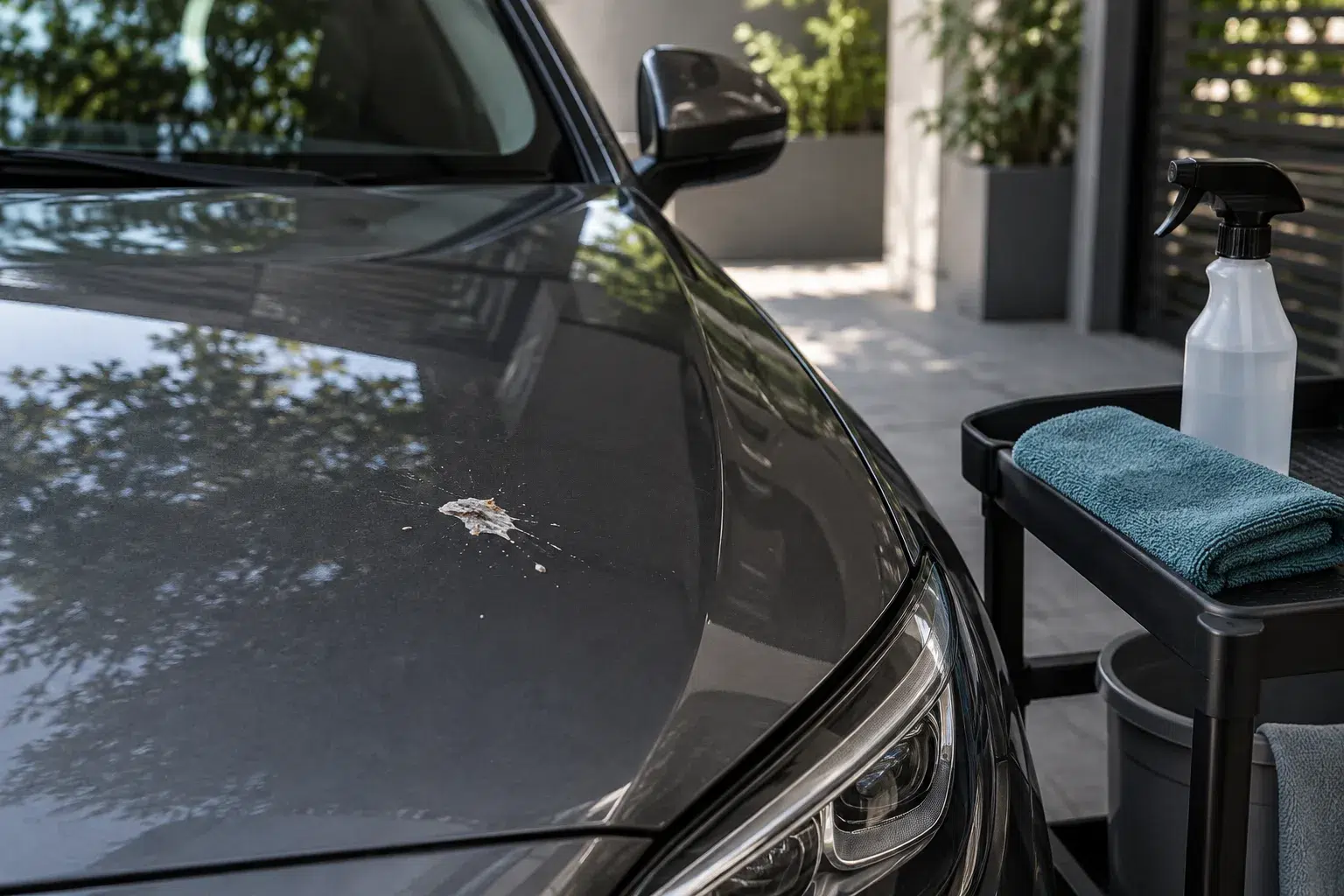
The useful response to a bird dropping is to prepare a gentle cleanup, not grab the nearest dry tissue. Autoglym instructs users to soften deposits before removal and warns against rubbing them dry. If the car is dusty as well, the material around the dropping matters: dragging the cloth into that dust can turn a small cleanup into a much larger wiping job.
Choose a product approved for the affected surface. A treatment appropriate for a conventional painted hood is not automatically suitable for a convertible roof, matte finish, or specialist film. Work in shade where practical and check the surface before applying anything. If you cannot clean safely right away, gather the right materials rather than improvising with a scraper.
Soften, lift, clean, inspect
Prepare the area
Move to shade where practical. Have a suitable cleaning product, clean soft cloths, and a place for used material ready.
Soften the deposit
Use a compatible wet wipe or damp cloth to wet the dropping. Allow it to soften instead of repeatedly rubbing the dry surface.
Lift gently
Use light contact and a clean portion of the cloth. If the deposit resists, soften it again rather than increasing pressure.
Clean the surrounding patch
Remove the remaining residue using the approved wash or cleanup product. Keep collected contamination off adjacent paint.
Inspect when dry
Look for an outline or dull patch. A remaining mark is a reason to reassess, not proof that more wiping is needed.
Why can a mark remain?
Autoglym describes paint damage associated with deposits and temperature changes, including changes in how the lacquer reflects light. Its explanation is manufacturer research, not a test conducted by DetailRig. The practical distinction is still important: cleaning removes contamination, while correcting an altered finish is a different job. Do not assume the residue remains simply because you can still see its shape.
| What you see | What to do next |
|---|---|
| Wet residue still on the surface | Continue gentle, compatible cleaning with fresh media. |
| Clean, dry paint with a dull outline | Pause and seek advice on the finish before correction. |
| Color transfer, swelling, or changed sheen | Stop treatment and contact a qualified repairer or installer. |
Build a small travel cleanup kit
A useful kit contains a sealed, surface-compatible cleanup product, clean cloths protected from grit, and a separate bag for used items. Check that products can be stored within the temperature range stated on their label; a hot parked car may not be a suitable storage place. Refill the clean cloth supply after each trip so an old contaminated cloth is not the only option available.
Choose a ready-to-use wipe if the convenience means you will actually use it promptly. Skip specialty products that do not identify the surfaces they support. There is no need to buy polish merely to assemble an emergency kit. For a fully dirty car, follow a normal wash instead of expanding a spot-cleaning method across every panel.
Know when to stop
Avoid dry scrubbing, fingernail scraping, and abrasive household pads. Treat used wipes as contaminated material, dispose of them appropriately, and clean your hands. If the finish is damaged, cleaning cannot guarantee restoration.
For a different sticky contaminant, use the separate guide to remove tree sap from car paint. Sap removal chemistry and bird-dropping cleanup should not be treated as interchangeable routines.
Straight answers
Frequently Asked Questions
Answers based on the evidence and sources identified in this article.
Can I wait until the next weekly wash?
Prompt removal is preferable. Autoglym warns that unattended deposits can leave lasting blemishes; soften and lift them with a suitable product rather than waiting for a scheduled wash.
Does a remaining outline mean I should scrub harder?
No. Once residue is removed, an outline may reflect surface damage. More scrubbing can add scratches without fixing that underlying mark.
Where to buy
Recommended Gear in this Guide
Active 2.0 1800 PSI 2.0 GPM Pressure Washer
Our lab-tested standard for safe automotive flow and pressure.
MTM Hydro PF22.2 Foam Cannon
The benchmark standard for uniform foam density and durability.
DetailRig is reader-supported. We test independently and never accept paid placement. When you buy through our links, we may earn an affiliate commission at no extra cost to you.
References & Sources

DetailRig Editorial
ContributorResearch publication
DetailRig Editorial publishes source-linked car-care explainers. These articles synthesize manufacturer instructions and clearly separate research from documented hands-on testing.