Tree Sap on Car Paint: A Careful Removal Workflow
Plan tree sap removal from car paint: wash first, check the finish and cleaner label, treat a small spot, and avoid scraping or unapproved solvent shortcuts.
Sources verified:
Table of Contents(4 sections)
Evidence: researched
This guide combines the linked manufacturer instructions with editorial decision-making advice. DetailRig has not performed a controlled test for this article; product-specific claims remain attributed to their manufacturers.
Identify the surface before choosing a solvent
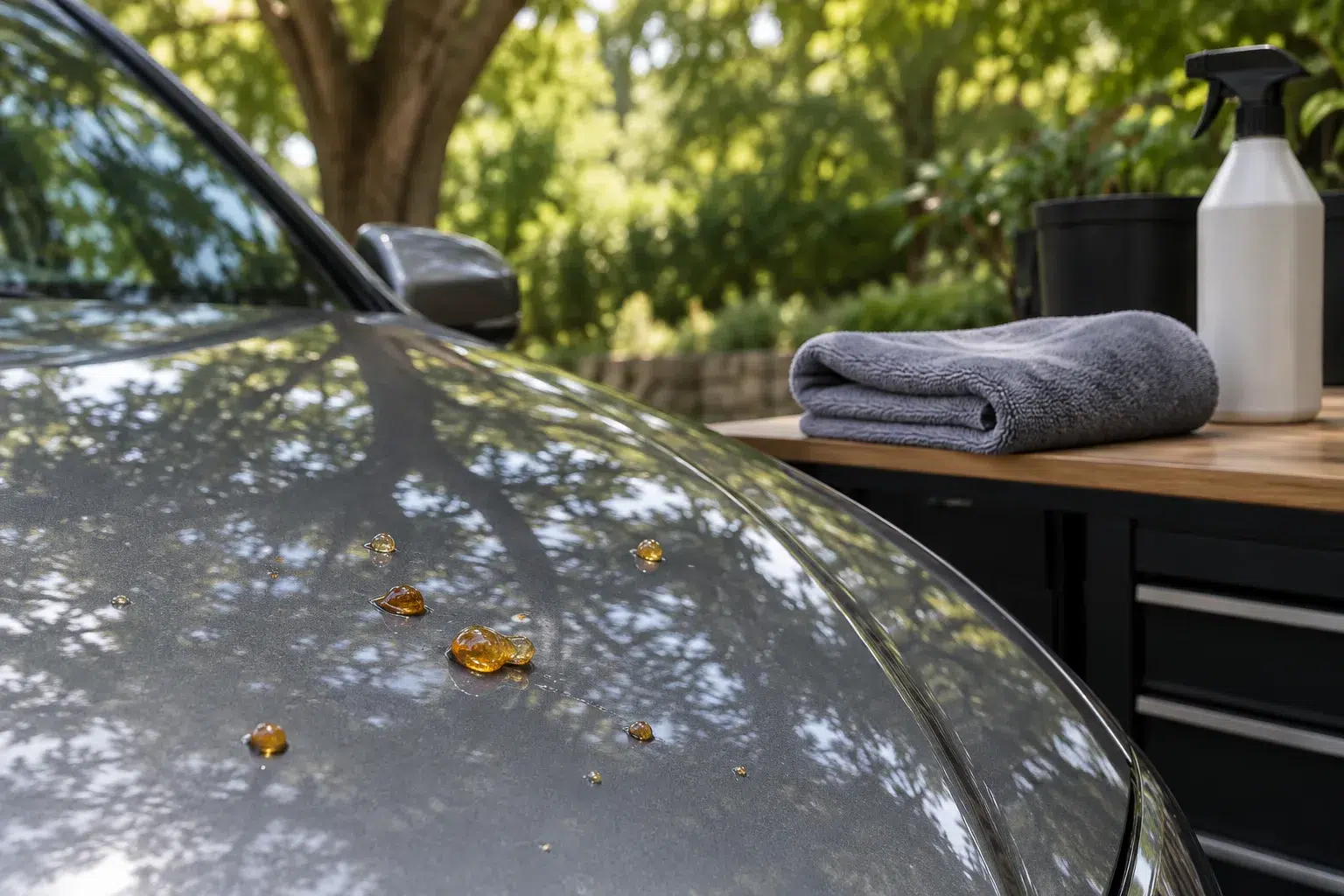
A sticky bead on a painted hood, a speck on a windscreen, and residue along a wrap edge are different cleaning situations. Before applying a remover, establish whether you are working on gloss paint, matte paint, glass, plastic, or film. If a product names tar but does not name sap or your surface, do not assume the same instructions apply. Contact the maker when its label leaves that point unclear.
Optimum advises prompt contamination removal and appropriate maintenance products according to their labels. That is a useful starting principle, but it does not supply a universal solvent recipe. This guide intentionally avoids prescribing alcohol strength or dwell time across unknown paint systems. The right limit belongs to the exact cleaner and finish combination.
| Situation | First decision | Reason to stop |
|---|---|---|
| Fresh residue on known gloss paint | Wash, then test an approved remover | Color or texture changes |
| Residue on matte paint or film | Use finish-specific instructions | No explicit compatibility statement |
| Hard deposit with a remaining outline | Separate residue removal from damage assessment | Repeated treatment makes no progress |
A small-area sap removal workflow
Wash loose dirt away
Use a normal compatible wash so surrounding grit is not dragged through the treatment area.
Read both sets of instructions
Check the remover label and the vehicle, coating, or film care guidance. Prepare the required removal materials.
Test discreetly
Apply to a small cool area as directed. Observe the finish rather than assuming compatibility from the cleaner name.
Soften and remove
Give the approved chemistry its labeled working time and use light contact. Never let extra pressure replace proper softening.
Clean and inspect
Remove chemical residue as directed, dry the area, and inspect. Ask the protection supplier whether any local protection needs renewing.
Where clay fits—and where it does not
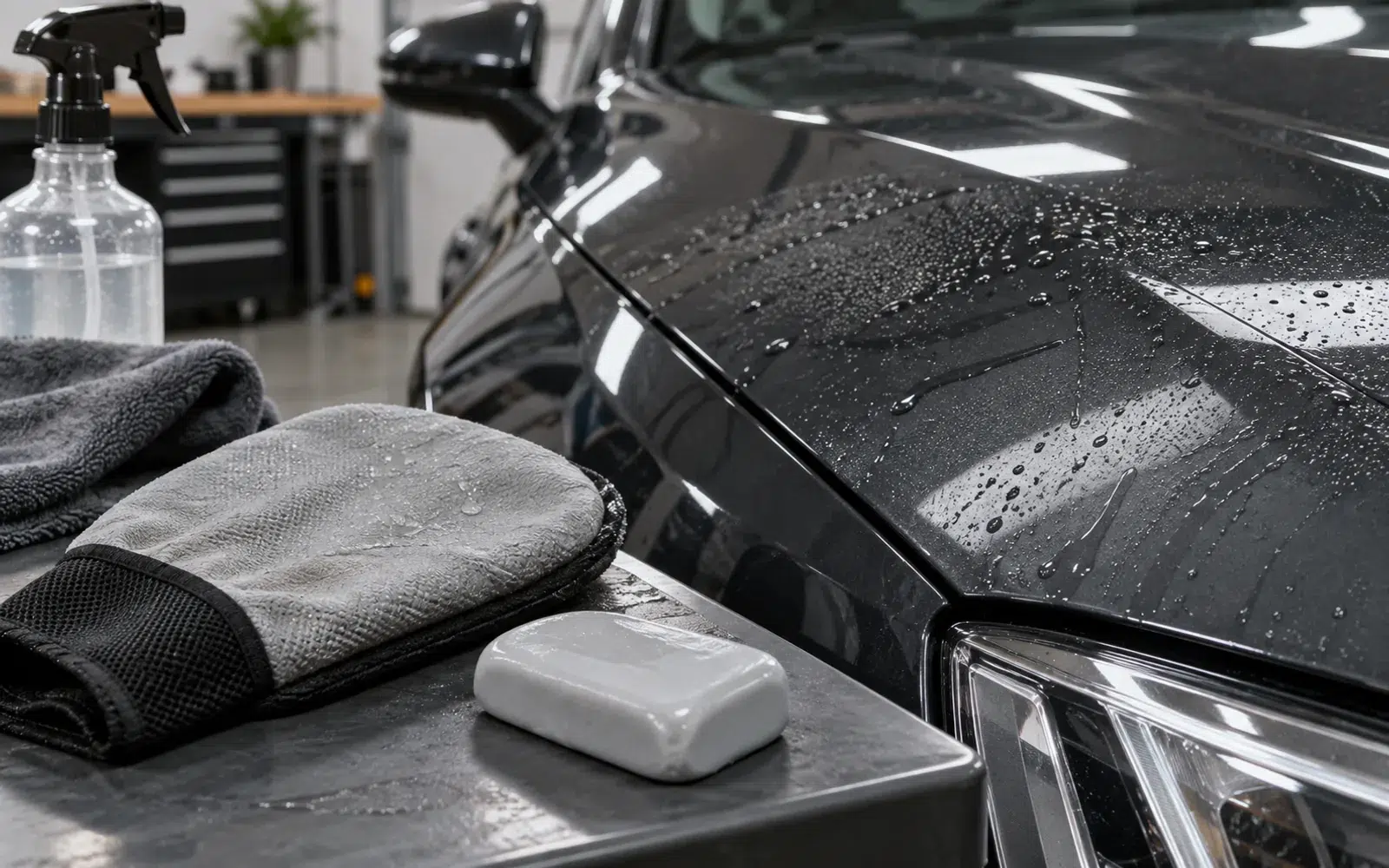
Autoglym identifies tree sap among the contaminants detailing clay can address. That establishes a possible use, not a requirement to clay every affected panel. Clay is mechanical contact and can create an additional finishing task. Our clay bar vs clay mitt guide explains the handling trade-offs. Confirm that your particular surface allows claying before considering either tool.
For matte paint, Dr. Beasley’s advises against claying and polishing and recommends appropriate chemical cleaning instead. This is why a one-size-fits-all sap hack is unhelpful. A method that leaves an acceptable finish on conventional clear coat can permanently change the appearance of a different finish. Treat unfamiliar materials as a reason to obtain specific guidance.
Choose a remover only when it answers the compatibility question
- Consider a dedicated remover when its documentation specifically supports the contaminant and surface.
- Skip a purchase based solely on a dramatic before-and-after photograph.
- Skip hard scrapers, abrasive pads, and repeated dry rubbing on paint.
- If you repeatedly park beneath a shedding tree, change the parking location where practical and inspect sooner.
Know when to stop
Stop if paint color transfers, film edges lift, the surface swells, or the sheen changes. A clean but still visible outline may require professional assessment; removing sap cannot promise to reverse damage.
Straight answers
Frequently Asked Questions
Answers based on the evidence and sources identified in this article.
Can I scrape sap off with a fingernail?
Scraping gives little control over pressure and may mark the finish. Prefer softening with an approved product and gentle removal according to the label.
Should I polish every sap spot afterward?
No. First inspect clean, dry paint. Polishing is a separate corrective process and is inappropriate for matte finishes; it may also remove existing protection.
Where to buy
Recommended Gear in this Guide
Active 2.0 1800 PSI 2.0 GPM Pressure Washer
Our lab-tested standard for safe automotive flow and pressure.
MTM Hydro PF22.2 Foam Cannon
The benchmark standard for uniform foam density and durability.
DetailRig is reader-supported. We test independently and never accept paid placement. When you buy through our links, we may earn an affiliate commission at no extra cost to you.
References & Sources

DetailRig Editorial
ContributorResearch publication
DetailRig Editorial publishes source-linked car-care explainers. These articles synthesize manufacturer instructions and clearly separate research from documented hands-on testing.