Rinseless Car Wash: A Practical First-Wash Guide
Learn when a rinseless car wash makes sense, how to mix your wash solution, manage dirty towels, dry each panel, and recognize when a pre-rinse is needed.
Sources verified:
Table of Contents(5 sections)
Evidence: researched
This guide combines the linked manufacturer instructions with editorial decision-making advice. DetailRig has not performed a controlled test for this article; product-specific claims remain attributed to their manufacturers.
Is this the right wash for today?
A rinseless wash is useful when your main problem is light road film and your main constraint is hose access. It still involves water, a suitable cleaning solution, clean wash media, and drying towels. It is a poor shortcut for thick mud, sand, or debris lodged around trim. Look at the lower doors and rear bumper before choosing the method; the roof can look clean while these areas carry abrasive material.
| Surface condition | Practical choice | Why |
|---|---|---|
| Light dust or ordinary road film | Consider rinseless washing | You can work in small, controlled sections. |
| Mud, sand, or visible grit | Pre-rinse before contact | A towel should not be asked to carry heavy debris across paint. |
| Hot panel or rapidly drying solution | Move to shade or postpone | A smaller section helps, but does not fix unsuitable conditions. |
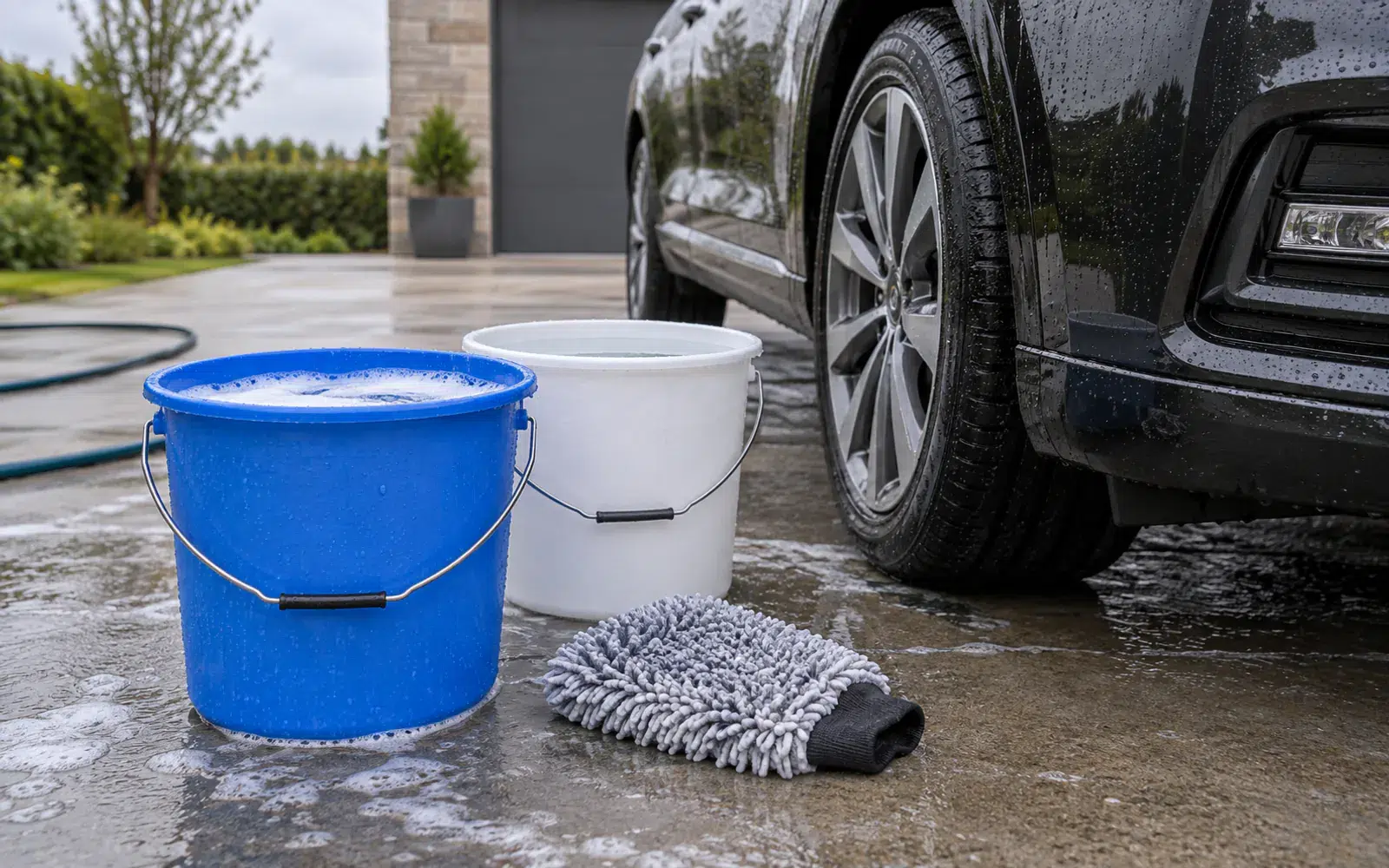
Measure the solution before touching the car
Optimum specifies 1 US fluid ounce of ONR Wash & Shine V6 per 2 US gallons of water for washing. That is approximately 30 mL in 7.6 L, or a product-to-water ratio of 1:256. This example belongs to that product and use, not every rinseless formula. UK readers should measure in litres rather than substituting an imperial gallon. Use the dilution calculator if your bucket markings differ.
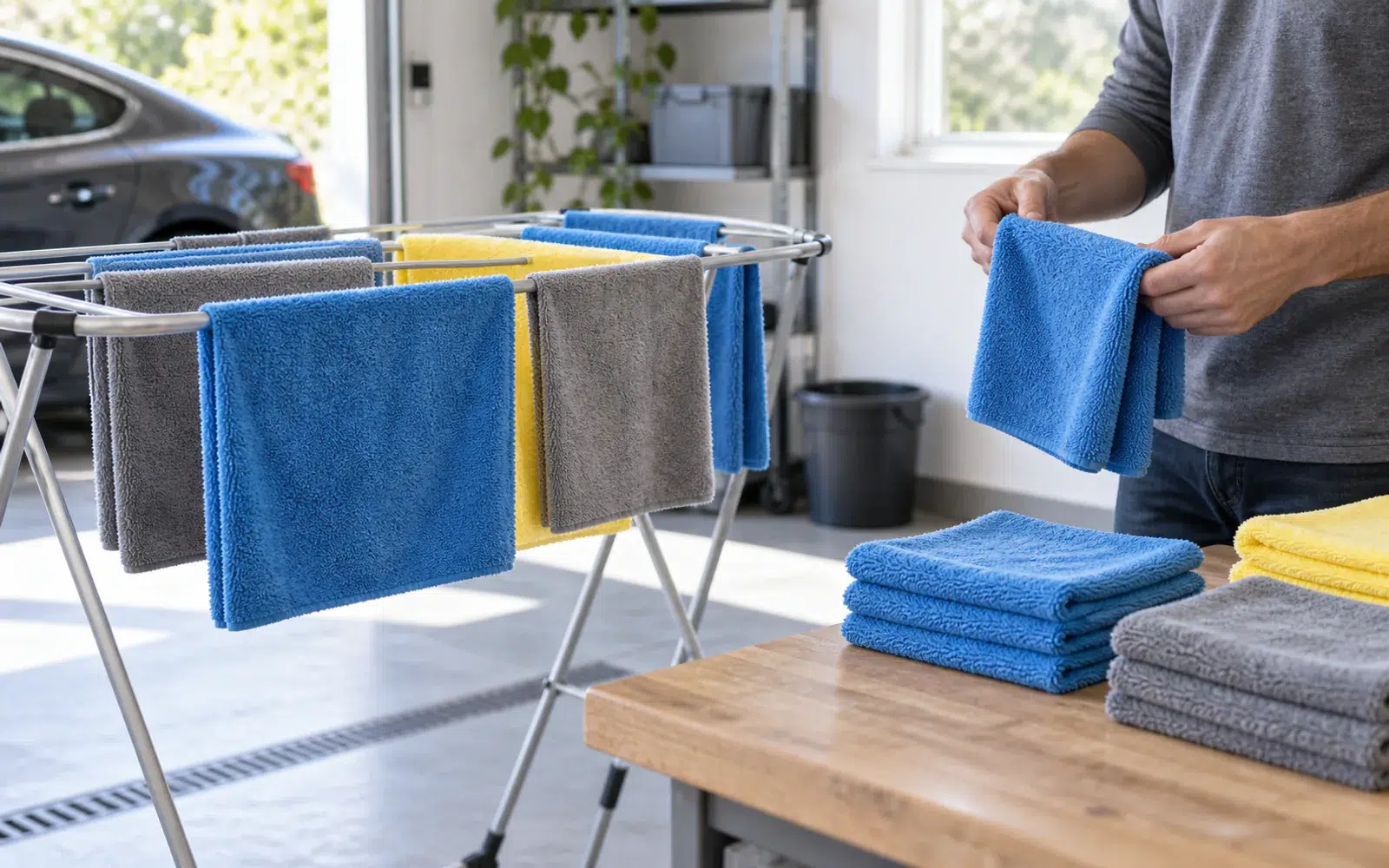
Set out separate clean and used towel containers before starting. This small preparation prevents the common mistake of dipping a dirty towel back among clean ones. Keep wheel towels out of the paint supply. Use enough clean media to change faces whenever dirt appears; there is no reliable universal number of towels for every vehicle.
How to perform a rinseless maintenance wash
Inspect and prepare
Park in shade, check the lower panels, and pre-rinse heavy contamination when necessary. Follow the vehicle and wash-product instructions.
Mix and saturate
Measure the labeled amount into water and fully wet the wash media. Do not substitute a conventional shampoo unless its instructions explicitly support rinseless use.
Wash one small section
Work gently from upper areas toward lower, dirtier areas. Turn to a clean towel face frequently; set contaminated towels aside.
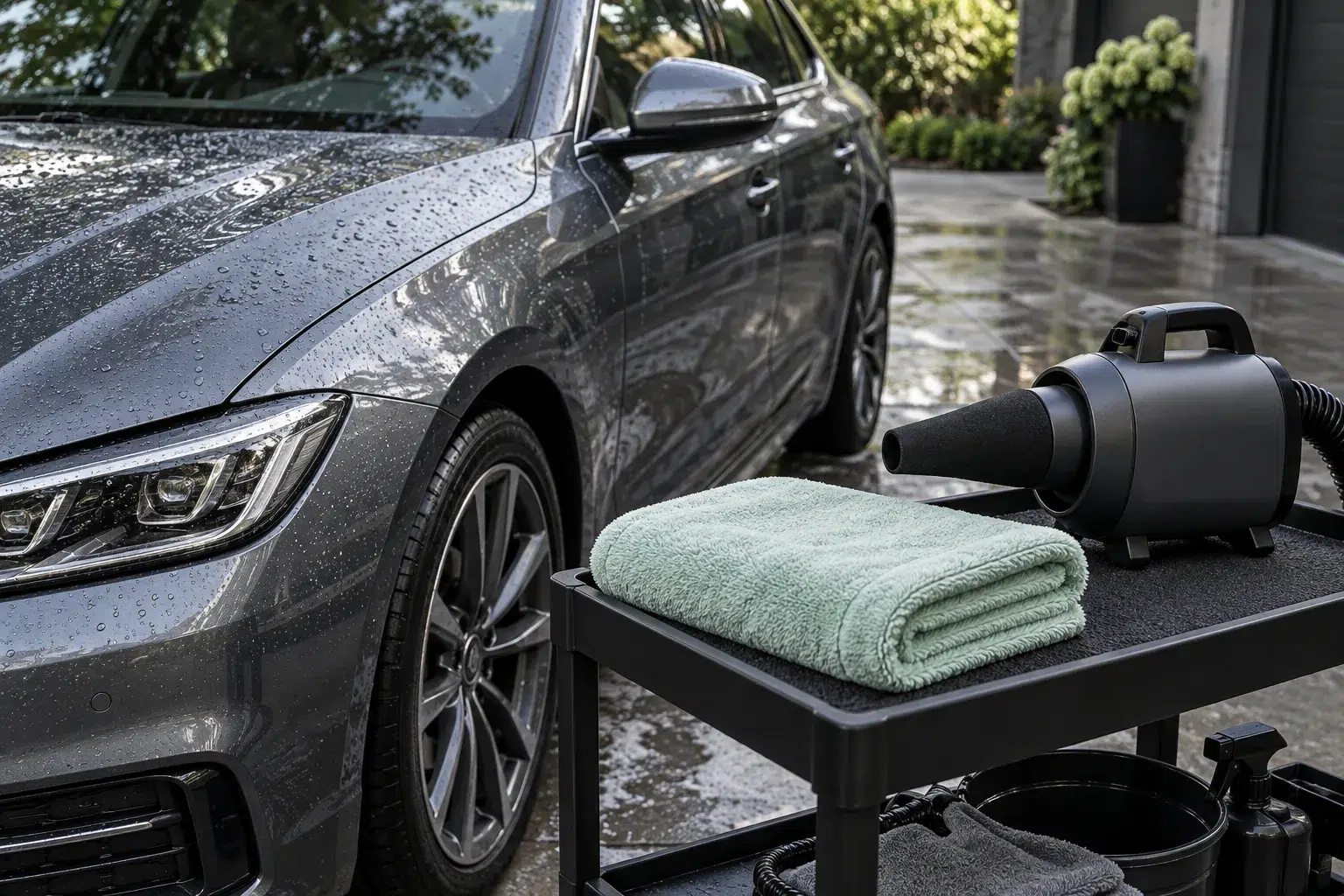
Dry that section
Use a separate clean drying towel. Optimum says to rewash and dry a section if its solution has dried before removal.
Inspect and reset
Check the finished area in angled light. If it still feels gritty or looks dirty, reassess the wash rather than applying more wiping pressure.
What success looks like
A good stopping point is a visibly clean panel that dries without obvious streaks or remaining loose dirt. That does not prove the paint is free of bonded contamination, and it does not certify a scratch-free result. Keep notes on dilution, surface condition, and which towels became dirty first. On the next wash, those observations are more useful than assuming more concentrate will solve every problem.
Know when to stop
Stop if the towel drags, visible grit remains, or the finish changes appearance. Do not continue across the rest of the car to compensate for a poor first section. Matte paint, wraps, and newly applied protection need their own approved care instructions.
Reasons to use it and reasons to skip it
- Consider a rinseless concentrate for controlled maintenance washes where hose access is inconvenient.
- Skip it as a substitute for removing heavy mud or abrasive debris before contact.
- Buy clean wash media and a drying towel before buying extra chemical accessories.
- Use the microfiber towel care guide to keep the next wash from starting with contaminated cloths.
Straight answers
Frequently Asked Questions
Answers based on the evidence and sources identified in this article.
Is rinseless the same as waterless?
No. This method uses a bucket of diluted wash solution. Waterless products use a different application method and may have different dilution instructions.
Can I use it on a ceramic-coated car?
Check the exact wash and coating instructions. Optimum lists ONR V6 for ceramic coatings, but that does not establish compatibility for every formula or newly applied coating.
Where to buy
Recommended Gear in this Guide
Active 2.0 1800 PSI 2.0 GPM Pressure Washer
Our lab-tested standard for safe automotive flow and pressure.
MTM Hydro PF22.2 Foam Cannon
The benchmark standard for uniform foam density and durability.
DetailRig is reader-supported. We test independently and never accept paid placement. When you buy through our links, we may earn an affiliate commission at no extra cost to you.
References & Sources

DetailRig Editorial
ContributorResearch publication
DetailRig Editorial publishes source-linked car-care explainers. These articles synthesize manufacturer instructions and clearly separate research from documented hands-on testing.