How to Wash Matte Car Paint Without Adding Gloss
Care for matte car paint with finish-specific wash products, gentle contact, prompt spot cleaning, and clear limits on wax, clay, polish, and scratch removal.
Sources verified:
Table of Contents(4 sections)
Evidence: researched
This guide combines the linked manufacturer instructions with editorial decision-making advice. DetailRig has not performed a controlled test for this article; product-specific claims remain attributed to their manufacturers.
Matte is a finish to preserve
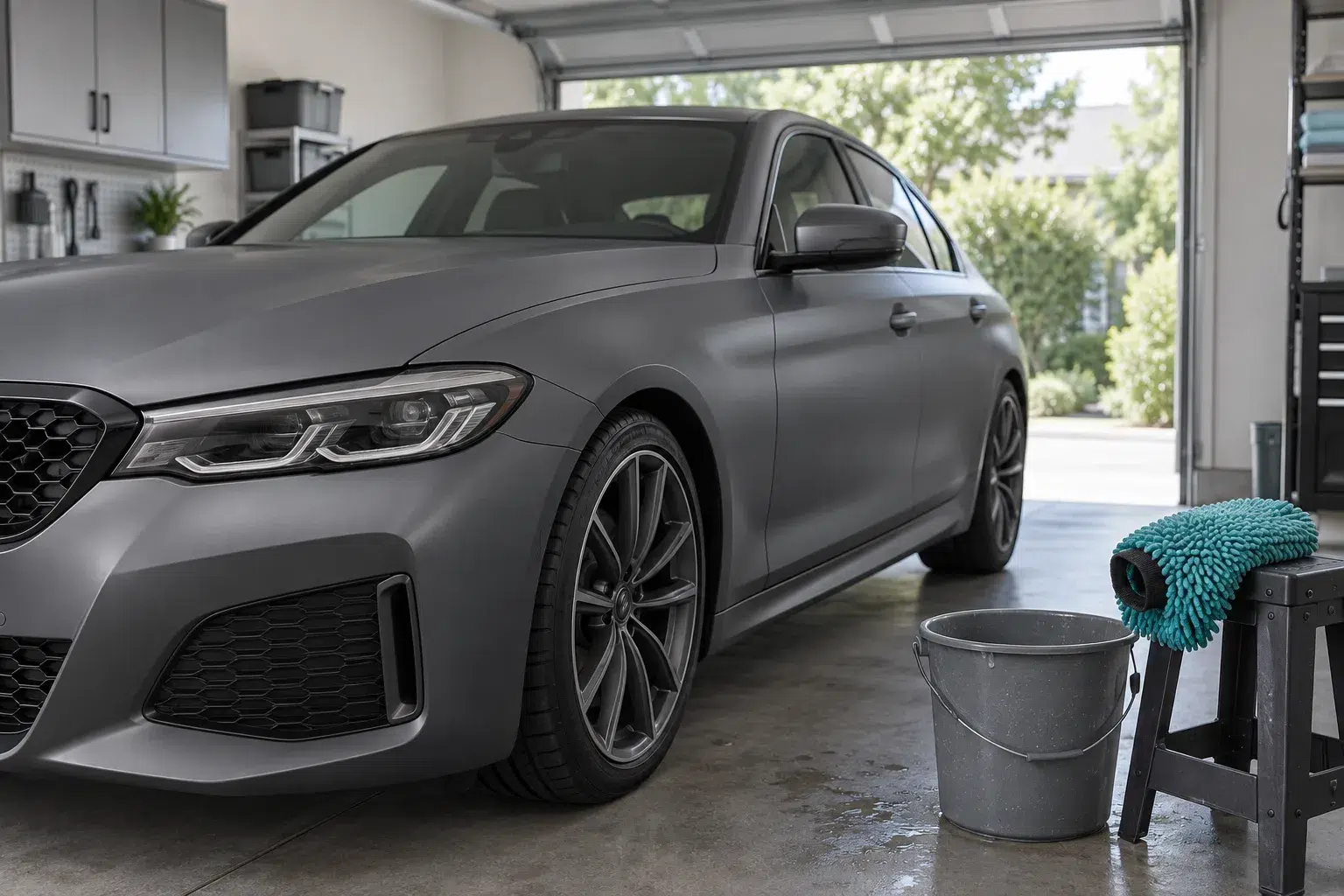
Do not judge a matte wash by how much shine it produces. The goal is clean, even appearance with the original sheen intact. Dr. Beasley’s explains that polishing smooths the texture responsible for diffuse reflection. That means a familiar gloss-paint correction method can create the very defect a matte owner wants to avoid.
First establish what you own. Factory matte paint, a satin repaint, matte paint-protection film, and matte vinyl are different systems. Ask the vehicle maker or installer for the relevant care sheet. A product advertised as safe for paint does not automatically answer whether it preserves the appearance or adhesive edges of your particular finish.
| Product or method | Decision for matte care |
|---|---|
| Wash formulated for the exact matte finish | Consider it after reading the current instructions. |
| Polish, compound, or cleaner wax | Do not use as a routine cleaning or spot-removal method. |
| Clay bar or clay mitt | Do not assume compatibility; matte-care guidance may prohibit it. |
| Protection labeled for matte surfaces | Check the finish maker’s approval and application instructions. |
A cautious matte maintenance wash
Read the finish guidance
Confirm the surface type, approved chemicals, and any pressure-washing restrictions.
Prepare a cool working area
Use shade and clean, dedicated wash media. Keep brushes and towels used on wheels separate.
Remove loose dirt
Rinse using the method permitted for the vehicle or film before contact washing.
Wash gently
Use the approved dilution and light pressure. Do not repeatedly scrub one mark to force it away.
Rinse, dry, and inspect
Remove the wash product as directed and dry with clean media. Check for remaining contamination without polishing it.
Spot-cleaning a stubborn mark
Dr. Beasley’s recommends matte-specific chemical cleaning for contamination rather than abrasive correction. Treat that as a compatibility requirement, not permission to use any strong cleaner. Use the product’s test-area and removal instructions, and distinguish a removable deposit from an actual scratch. Once the residue is gone, continuing to rub the same area can create a new appearance problem.
Photograph the clean mark in diffuse light before contacting the installer. State which product you used and whether the surface changed during cleaning. This gives the person assessing the finish more useful information than the statement that a spot will not come off. Do not attempt to make surrounding panels shinier to disguise one altered patch.
What to buy and what to leave out
- Consider a matte-approved shampoo and sufficient clean wash media for your vehicle.
- Skip a gloss-enhancing wash-and-wax formula unless the finish manufacturer explicitly permits it.
- Skip a polisher purchase intended to repair matte scratches.
- Consider specialist help when a cleaned mark remains or a local patch has changed sheen.
Know when to stop
Stop if the surface becomes shinier, blotchy, or discolored. Matte paint cannot be assumed to recover through more polishing or an ordinary wax. The next step should come from the finish manufacturer or a qualified repairer.
A rinseless car wash may be convenient, but convenience alone does not establish matte compatibility. Match the exact product to your finish guidance before adopting that workflow.
Straight answers
Frequently Asked Questions
Answers based on the evidence and sources identified in this article.
Can I buff a scratch out of matte paint?
Do not treat it like gloss clear coat. The cited matte-care guidance warns that polishing changes the surface texture and can leave a permanent shiny area.
Is every pH-neutral shampoo suitable?
No. pH alone does not describe gloss additives or compatibility with a specific matte finish. Look for explicit surface approval and follow the care sheet.
Where to buy
Recommended Gear in this Guide
Active 2.0 1800 PSI 2.0 GPM Pressure Washer
Our lab-tested standard for safe automotive flow and pressure.
MTM Hydro PF22.2 Foam Cannon
The benchmark standard for uniform foam density and durability.
DetailRig is reader-supported. We test independently and never accept paid placement. When you buy through our links, we may earn an affiliate commission at no extra cost to you.
References & Sources

DetailRig Editorial
ContributorResearch publication
DetailRig Editorial publishes source-linked car-care explainers. These articles synthesize manufacturer instructions and clearly separate research from documented hands-on testing.