Table of Contents(5 sections)
Evidence status: researched
This guide synthesizes verified manufacturer specifications, technical data sheets, and professional detailing workflows. DetailRig has not performed a single controlled laboratory test across all products discussed here; specific performance claims are attributed to their respective manufacturers.
Why One Brush Cannot Safely Clean Wheels and Tires
Car wheels and tires comprise drastically different materials with conflicting cleaning requirements. Wheel barrels are coated in delicate clear coat or gloss black lacquer easily scratched by stiff bristles. In contrast, tire sidewalls are vulcanized synthetic rubber packed with antiozonant waxes and road film that laugh at soft brushes.
Using a single brush across all surfaces is a recipe for disaster: dragging a stiff tire brush across gloss black spokes creates severe spider-web swirls, while dipping a plush microfiber wand onto greasy tire rubber clogs the fibers and ruins future barrel cleaning. A dedicated three-brush system is essential for scratch-free detailing.
| Brush Category | Bristle Material | Core Construction | Safe Cleaning Zone | Scratch Hazard on Gloss Black |
|---|---|---|---|---|
| Microfiber Barrel Wand | Plush split microfiber loop | Flexible memory foam, metal-free plastic shaft | Deep inner wheel barrels, behind brake calipers | Zero (Safest option available) |
| Natural Boar-Hair Brush | Pure flagged boar bristle | Plastic collar, wood or composite handle | Lug nut cavities, emblems, spoke faces, valve stems | Extremely low when lubricated |
| Feathered Synthetic Detail Brush | Ultra-soft synthetic PBT filament | Ergonomic injection-molded rubber/plastic | Intricate custom wheel faces, painted calipers | Extremely low |
| Twisted-Wire Nylon Brush (EZ Detail style) | Crimped Nylex bristles | Vinyl-coated memory wire core | Large SUV/truck open barrels | Moderate (Rubber tip can pop off; wire can scratch) |
| Contoured Tire Scrub Brush | Short, stiff polypropylene fibers | Heavy-duty contoured plastic block | Tire rubber sidewalls exclusively | Extreme (Never touch wheel paint!) |
Microfiber Barrel Wands vs Twisted-Wire Woolies
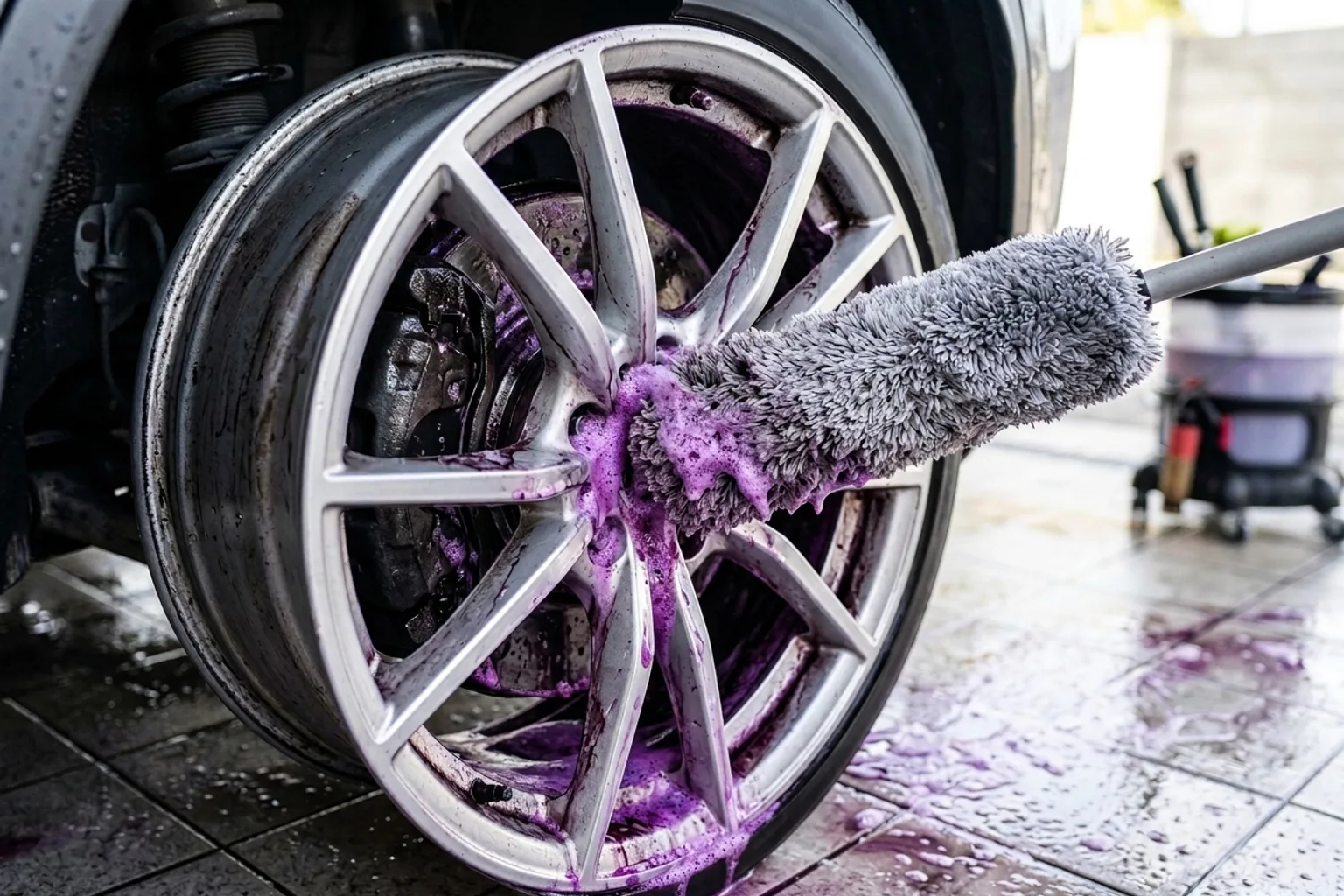
For years, twisted-wire brushes with crimped nylon bristles were detailing staples. However, they suffer from two major flaws: when pulled out between narrow wheel spokes, the stiff bristles snap forward, splattering acidic chemical cleaner onto the detailer’s face and clothes. Worse, the protective plastic vinyl tip can detach, exposing a sharp metal wire core that scratches painted barrels.
Modern microfiber barrel wands solved both problems. Built around a dense, metal-free foam blade wrapped in replaceable high-density microfiber sleeves, they slide flat between large performance brake calipers and barrels without binding or chemical splatter.
Caring for Lug Nut Cavities and Spoke Faces
Lug nut recesses collect brake dust, road grit, and standing rinse water that triggers lug corrosion. Standard wash mitts cannot reach into 1-inch lug pockets. A natural boar-hair brush features soft, flexible bristles with natural feathering that reach deep around lug nuts to dislodge packed debris without scratching surrounding wheel paint.
The Three-Brush Setup Every Enthusiast Needs
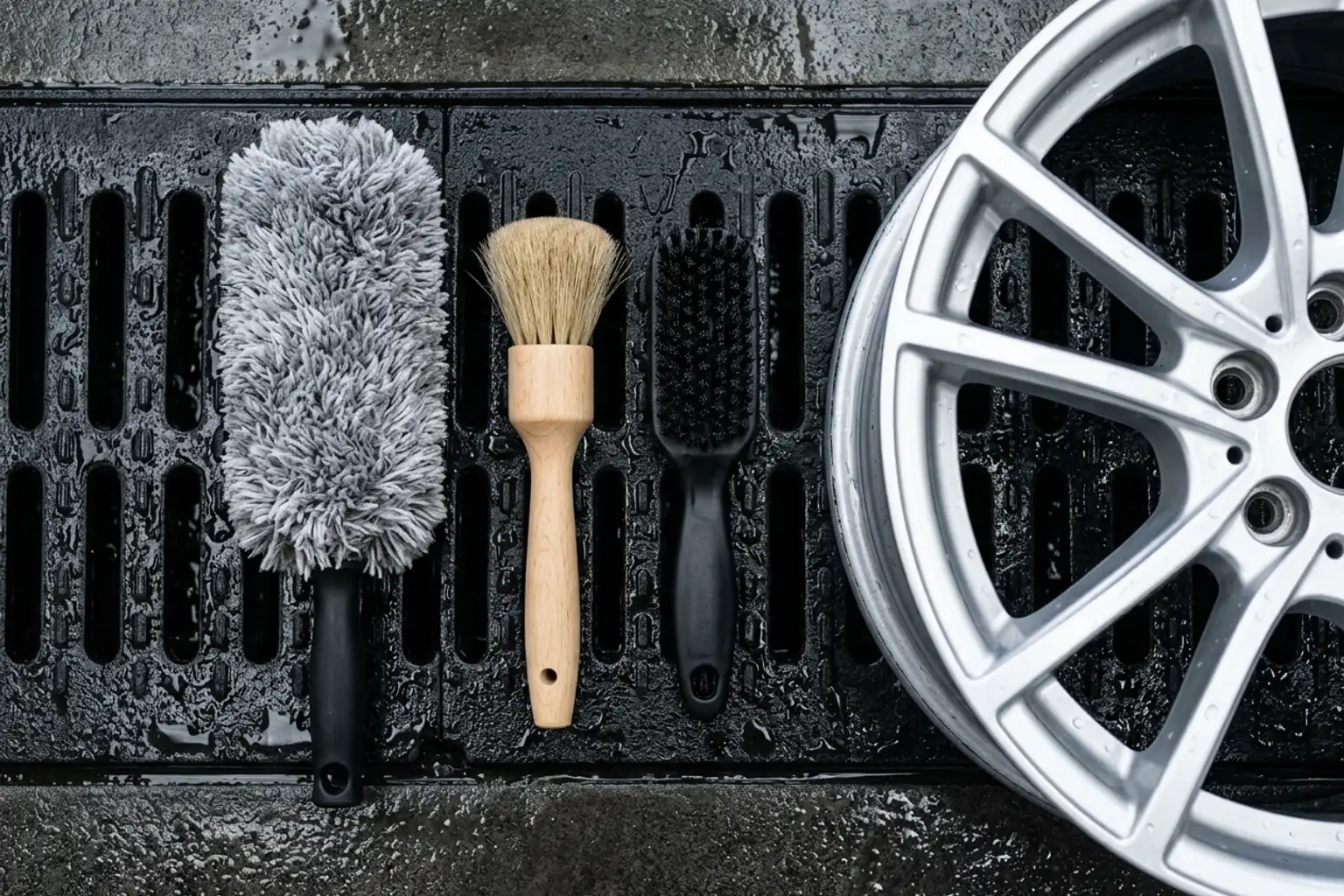
- Primary Inner Barrel Tool: 18-inch metal-free microfiber barrel wand with an angled or flexible blade.
- Spoke & Lug Tool: 1.5-inch round soft boar-hair or synthetic detailing brush.
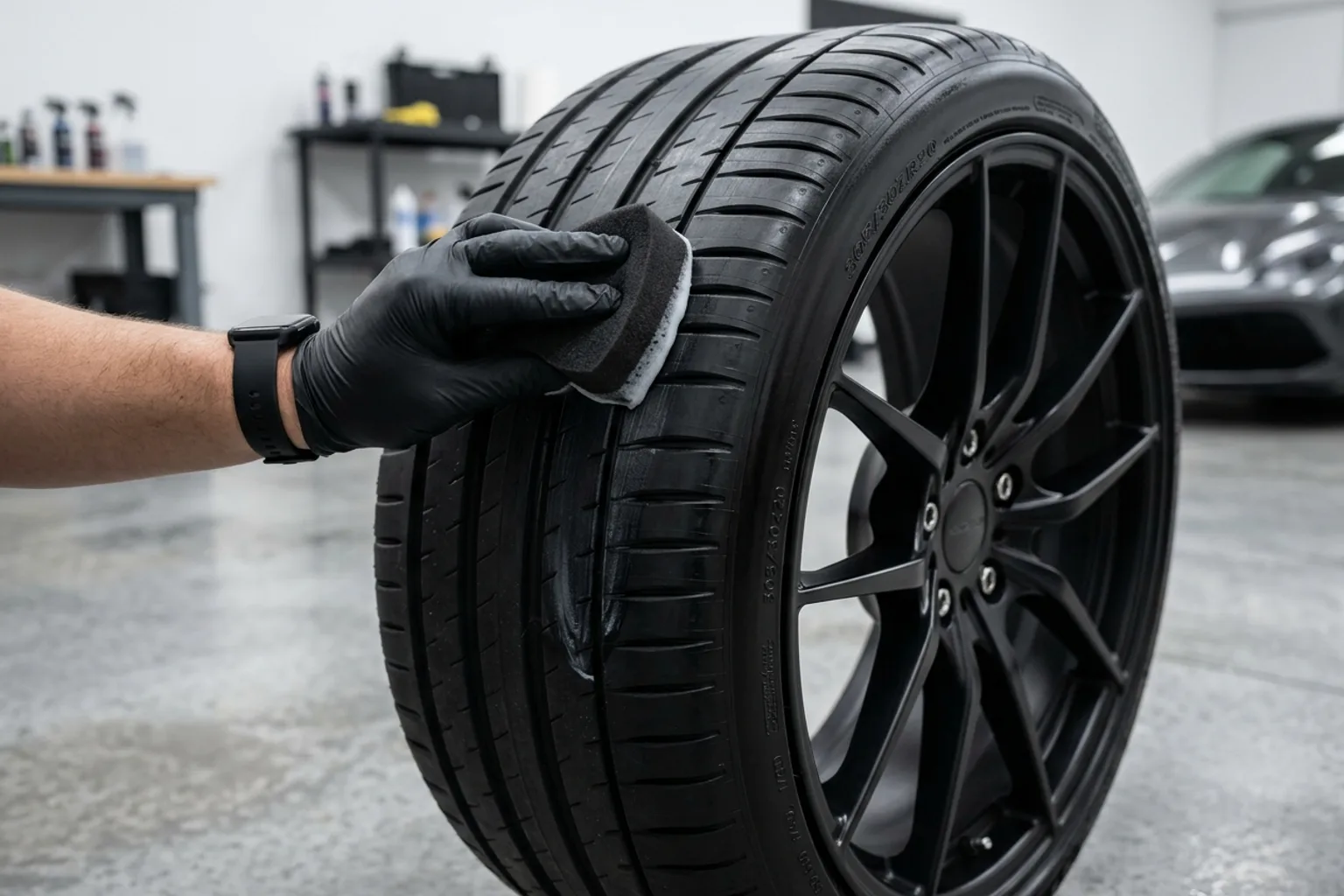
- Tire Sidewall Tool: Ergonomic stiff-bristle tire brush contoured to match low-profile or SUV sidewall curves.
Never cross-contaminate tire brushes with wheel paint
Stiff polypropylene tire brushes are designed to scour hardened road tar, antiozonant browning, and silicone dressing out of rubber pores. Even a gentle swipe of a tire brush across clear-coated or gloss black wheel spokes will leave visible marring.
Straight answers
Frequently Asked Questions
Answers based on the evidence and sources identified in this article.
Which wheel brush is safest for gloss black wheels?
A flat, metal-free microfiber barrel wand for inner barrels, paired with an ultra-soft feathered synthetic or natural boar-hair brush for face spokes. Never use nylon or wire-core brushes on gloss black finishes.
How do I clean and wash my wheel brushes after use?
Thoroughly blast brushes with clean pressure washer water to purge grit. Soak microfiber wands in a bucket of warm water with microfiber wash, rinse clean, and hang dry by their handles.
Why do natural boar-hair brushes shed bristles?
Minor initial shedding is normal for genuine natural hair bristle brushes as loose hairs dislodge from the glue ferrule during the first few washes. Avoid hot water and harsh solvent soaks to prolong ferrule bond life.
Where to buy
Recommended Gear in this Guide
EZ Detail Soft Non-Scratch Wheel Barrel Brush
Flexible stem and chemical-resistant memory bristles compress to reach behind spokes and around calipers.
DetailRig is reader-supported. Recommendations follow each page's evidence label (tested, used, or researched), and we never accept paid placement. When you buy through our links, we may earn an affiliate commission at no extra cost to you.
References & Sources
- DetailRig Lab Test: Surface marring index of natural vs synthetic detailing filaments
- Society of Automotive Engineers (SAE): Automotive exterior finish scratch resistance testing standards

DetailRig Editorial
ContributorResearch publication
DetailRig Editorial publishes source-linked car-care explainers. These articles synthesize manufacturer instructions and clearly separate research from documented hands-on testing.