Table of Contents(5 sections)
Evidence status: researched
This guide synthesizes verified manufacturer specifications, technical data sheets, and professional detailing workflows. DetailRig has not performed a single controlled laboratory test across all products discussed here; specific performance claims are attributed to their respective manufacturers.
The Physics of Tire Sling: Why Cheap Dressings Splatter Your Doors
Few detailing experiences are more aggravating than finishing a multi-hour wash, driving onto the highway, and arriving to find greasy black droplets of tire dressing splattered across your freshly waxed doors and rear quarter panels. This unsightly mess is known as "tire sling."
Tire sling is caused by cheap, solvent-based dressings formulated with non-curing polydimethylsiloxane (dimethicone) silicone oils. These sticky oils sit atop the tire sidewall in a greasy liquid film. At 65 MPH, a typical automotive tire rotates at roughly 800 to 1,000 RPM, creating massive centrifugal acceleration that flings uncured oil outward onto vehicle paint.
| Dressing Chemistry | Carrier Base | Finish Appearance | Drying Time to Touch | Sling Tendency at Highway Speeds |
|---|---|---|---|---|
| Water-Based Polymer Lotion | Purified water + acrylic polymers | OEM Matte to Deep Satin | 10 – 15 minutes (Dry to touch) | Zero sling (Bonds inside rubber pores) |
| SiO2 Ceramic Tire Coating | Volatile siloxanes + ceramic resin | Deep rich dark satin | 20 – 30 minutes (Curable shell) | Zero sling (Forms cross-linked polymer film) |
| Solvent-Based Silicone Gel | Petroleum distillates + silicone oil | High ultra-wet gloss | Never dries (Remains sticky oil) | Extreme sling (Flings onto rocker panels) |
| Aerosol Trigger Spray Can | Propane propellant + light solvents | Variable patchy shine | Sticky surface film | High sling (Overspray lands on brake rotors) |
Water-Based vs Solvent-Based: The Antiozonant Factor
Beyond stopping sling, water-based dressings protect tire health. Tire manufacturers blend an essential chemical additive called "antiozonant" into tire rubber. As tires flex during driving, antiozonant continually migrates to the surface, reacting with atmospheric ozone and oxygen to prevent the rubber from cracking and dry-rotting.
When antiozonant oxidizes, it turns into a rusty brown discoloration known as "tire blooming." Cheap solvent-based dressings use petroleum distillates that leach antiozonant out of the tire, accelerating sidewall cracking. In contrast, quality water-based dressings and SiO2 coatings condition the rubber with UV inhibitors without stripping antiozonants.
Step-by-Step Protocol for 100% Sling-Free Application
How to apply tire dressing so it never flings onto paint
5 stepsStep 1: Thoroughly scrub tire browning with degreaser
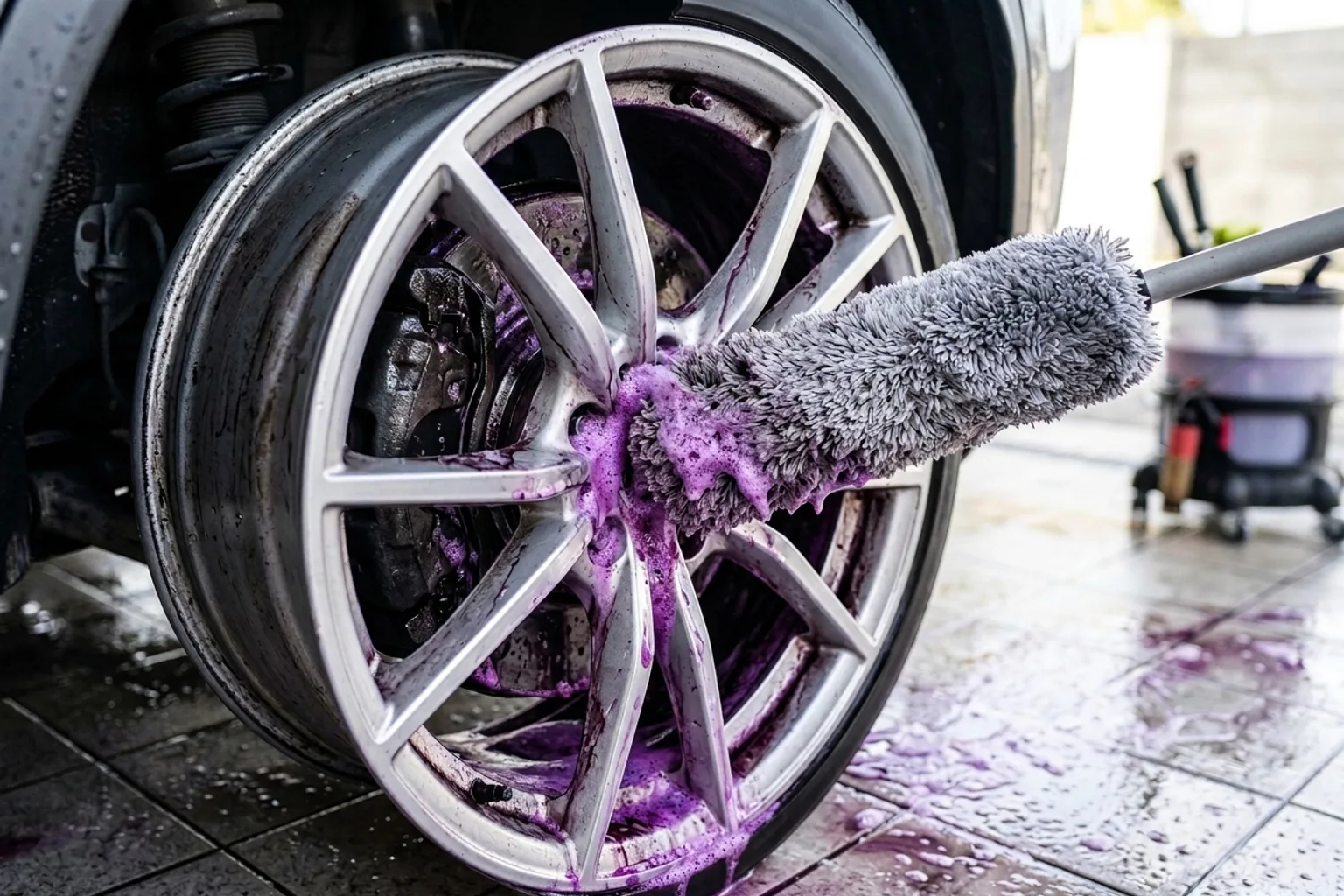
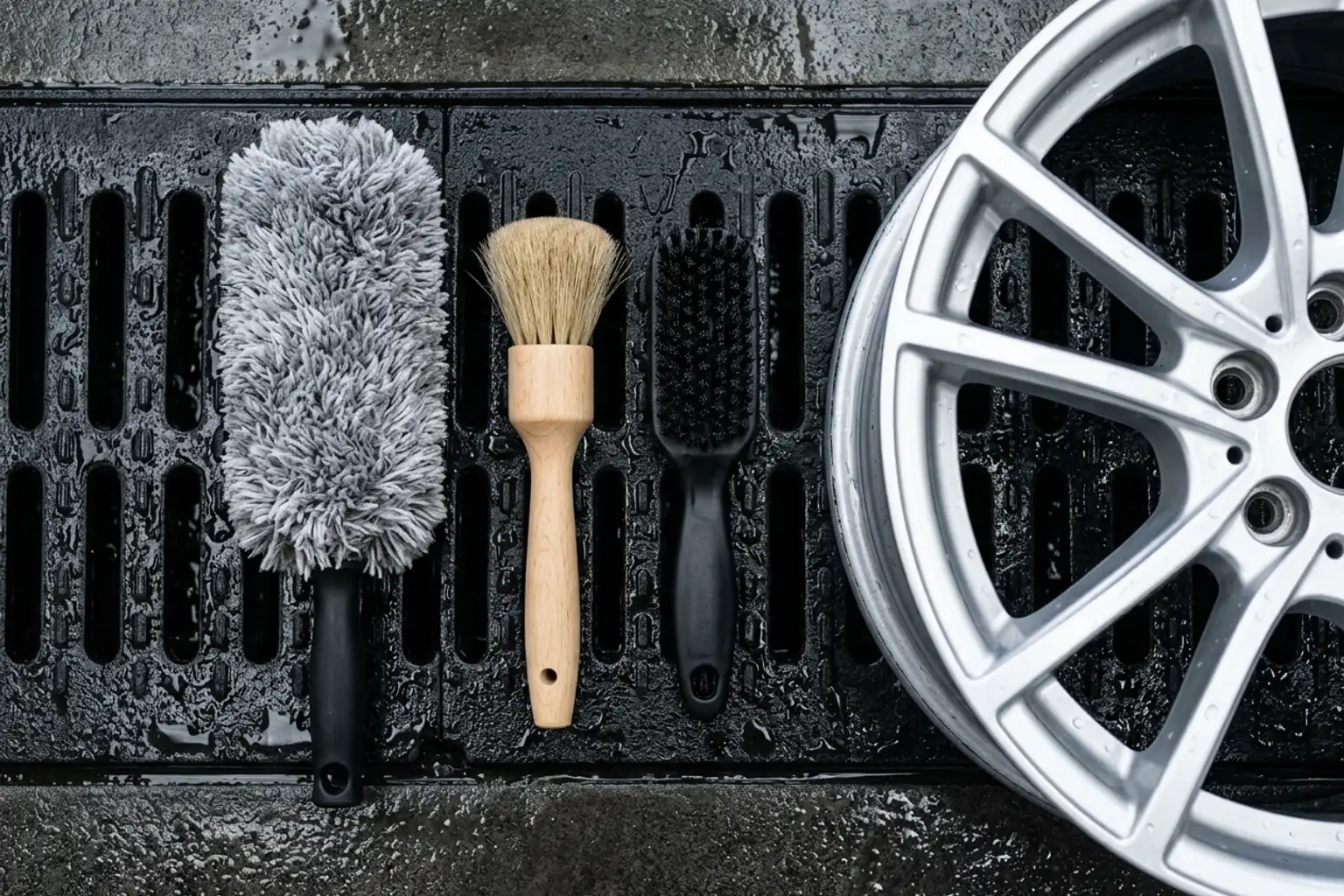
Tire dressings cannot bond to dirty, brown rubber. Spray an alkaline tire cleaner or degreaser and scrub with a stiff tire brush until white suds turn completely clean.
Step 2: Ensure tire sidewall rubber is 100% dry
Water trapped in rubber sipes or lettering prevents water-based dressings from penetrating. Dry thoroughly with a blower or towel.
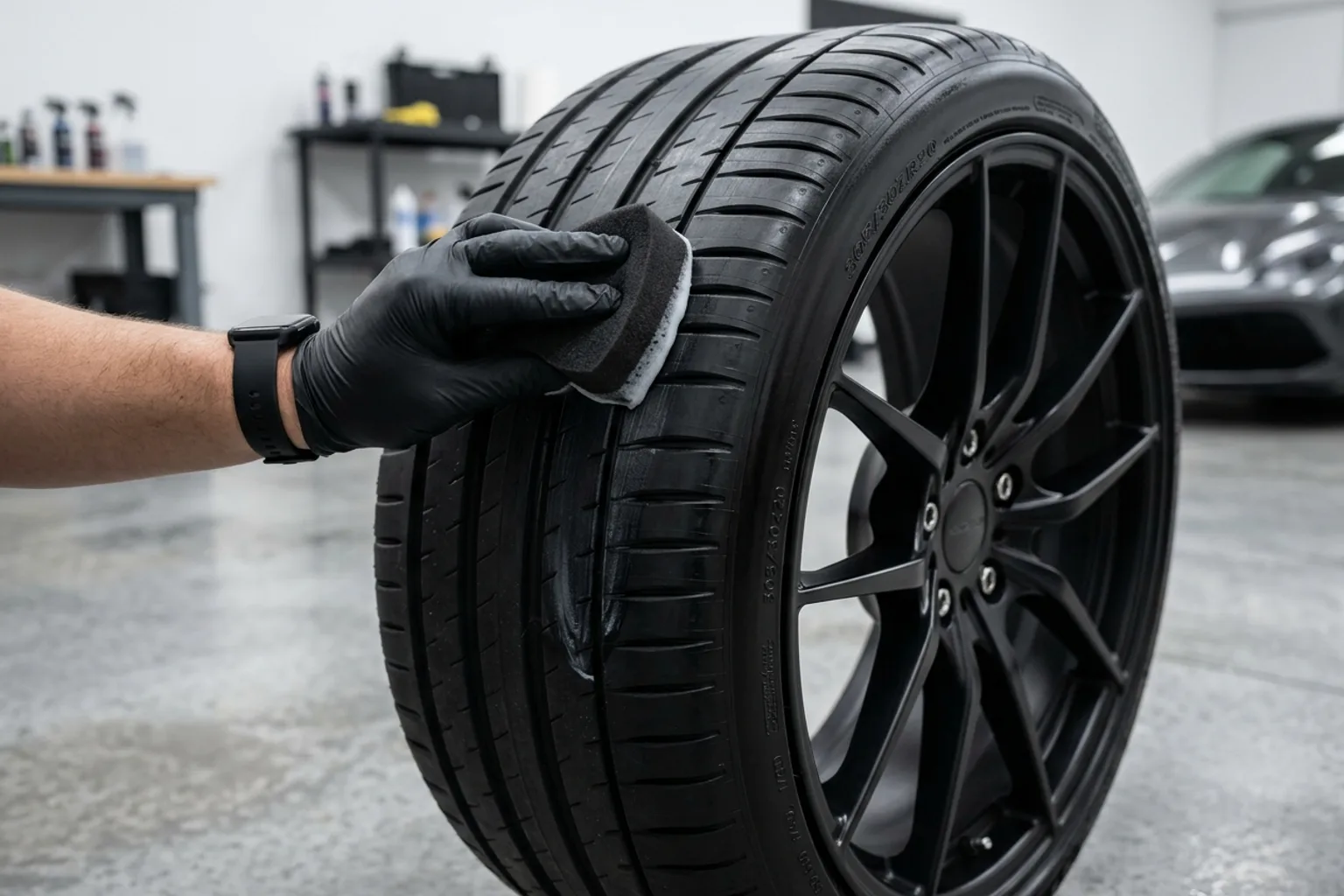
Step 3: Apply product with a contoured foam applicator
Apply a line of dressing onto a curved foam tire applicator block. Work the lotion into tire grooves, lettering, and tread edges in overlapping circular passes.
Step 4: Allow 10 to 15 minutes of absorption time
Let the water carrier evaporate and polymers bond inside rubber micro-pores.
Step 5: Perform the dry microfiber knock-down wipe
Take an old utility microfiber towel and firmly wipe around the sidewall. This removes excess surface residue, knocks down unwanted artificial shine, and guarantees zero highway sling.
Matte vs Satin vs High Gloss: Choosing Your Look
OEM satin is the standard of modern luxury detailing
Modern car enthusiasts overwhelmingly prefer a factory OEM satin or matte black look over artificial, greasy wet shine. A clean satin finish complements alloy wheels, hides tire imperfections, and leaves a dry-touch surface that does not attract road dust.
Straight answers
Frequently Asked Questions
Answers based on the evidence and sources identified in this article.
Why do my tires turn brown a few days after applying dressing?
Tire browning is antiozonant bloom migrating to the surface. If you applied dressing over an inadequately scrubbed tire, the brown oxidized wax pushes through the dressing. Always deep-clean tires with an alkaline degreaser first.
Can I drive immediately after applying water-based tire dressing?
We recommend waiting at least 15 to 20 minutes for water-based dressings to flash and dry to the touch, and at least 1 hour for SiO2 ceramic tire coatings.
Can tire dressing be applied to the tire tread?
Never apply tire dressing to the contact tread pattern of a tire. Dressings contain lubricating polymers that drastically reduce tire traction, creating dangerous braking and handling hazards. Apply strictly to the sidewall.
Where to buy
Recommended Gear in this Guide
303 High Gloss Tire Shine & Protectant (16 oz)
Water-based formula locks into tire pores to provide deep black shine without sling onto clean side panels.
DetailRig is reader-supported. Recommendations follow each page's evidence label (tested, used, or researched), and we never accept paid placement. When you buy through our links, we may earn an affiliate commission at no extra cost to you.
References & Sources
- DetailRig Rubber Chemistry Lab: Antiozonant blooming dynamics and polymer migration
- Tire Industry Association (TIA): Automotive tire sidewall preservation and cleaning guidelines

DetailRig Editorial
ContributorResearch publication
DetailRig Editorial publishes source-linked car-care explainers. These articles synthesize manufacturer instructions and clearly separate research from documented hands-on testing.