Table of Contents(4 sections)
Evidence status: researched
This protocol reflects commercial carpet and upholstery cleaning standards from the IICRC (Institute of Inspection Cleaning and Restoration Certification) adapted for automotive polyurethane foam seat construction.
Why does overwetting cloth seats cause recurring stains and mildew?
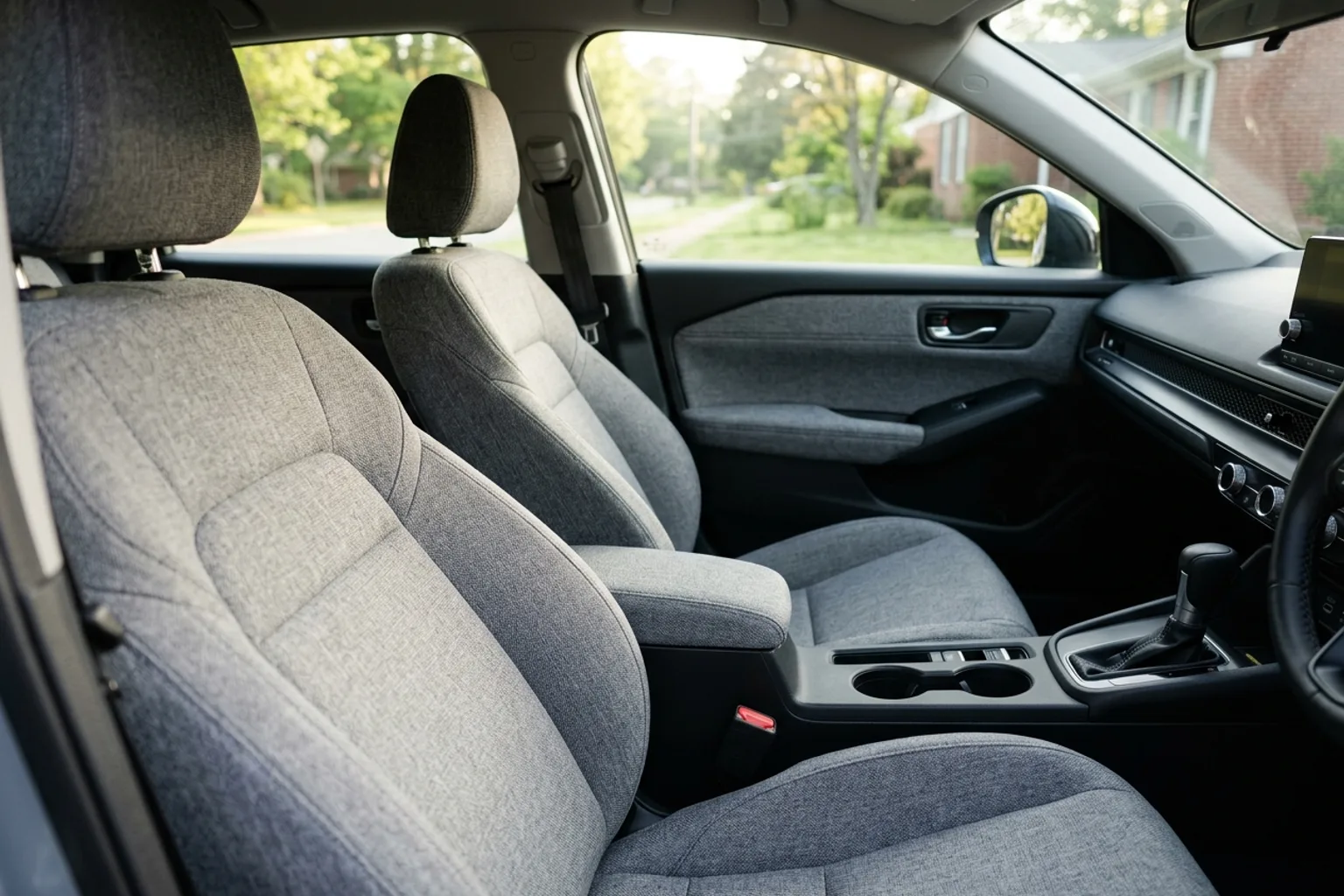
When excessive water soaks through automotive fabric into the open-cell foam cushion below, it creates two major detailing problems: soil wicking and mold growth. As the foam dries, capillary action draws liquid and dissolved dirt back to the fabric surface, forming unsightly water rings. If drying takes longer than 24 hours in a sealed car, mildew colonies develop rapidly.
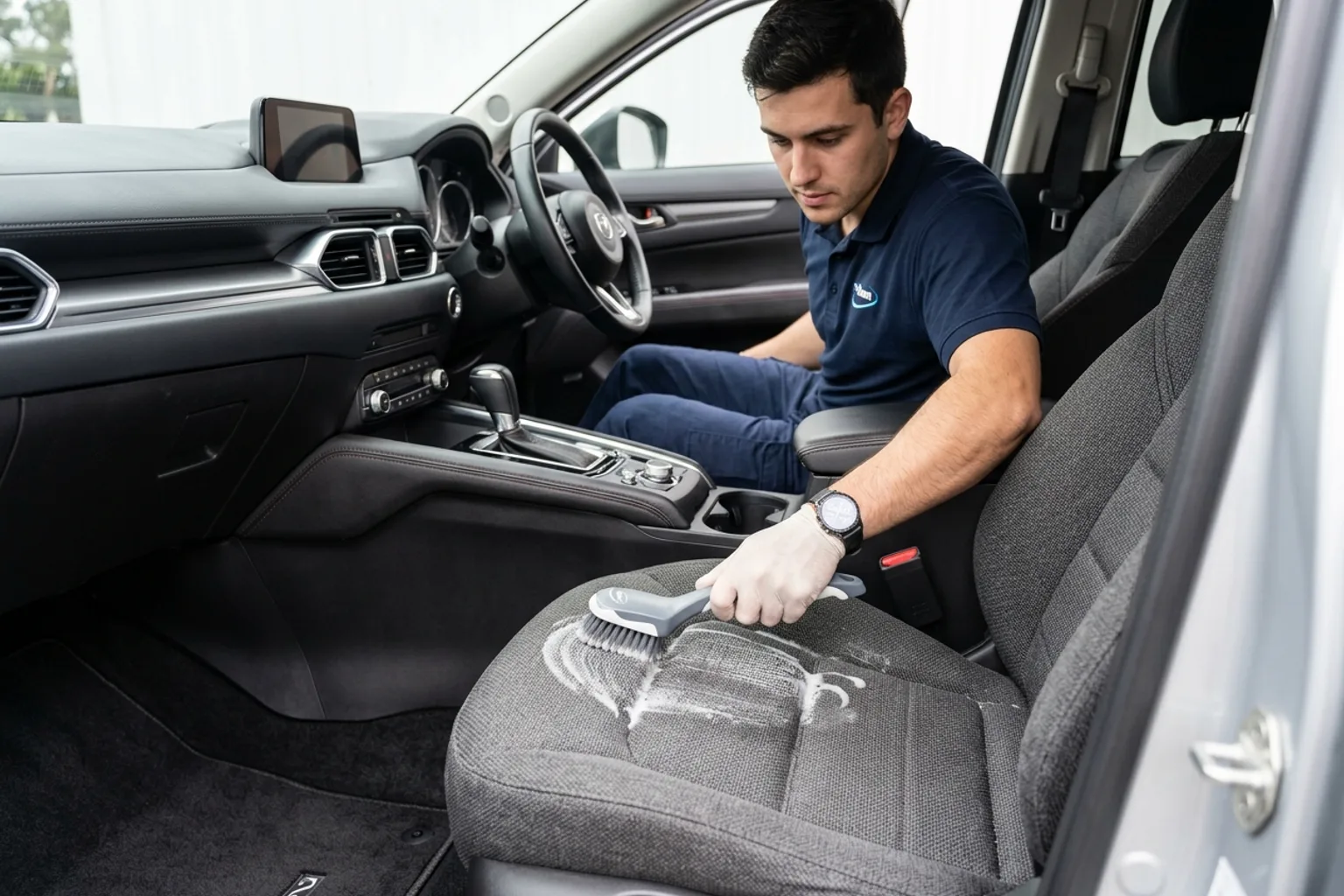
What is the low-moisture cloth seat cleaning procedure?
The 5-step low-moisture fabric seat restoration procedure
5 stepsThorough dry vacuuming
Extract dry sand and pet dander thoroughly. Adding liquid to unvacuumed upholstery creates mud that clogs fabric fibers.
Light misting of fabric shampoo
Mist dedicated automotive upholstery cleaner evenly across the panel from 10 inches away, keeping the surface damp but never soaked.
Gentle agitation with an upholstery brush
Agitate with a nylon upholstery brush or drill brush attachment on low RPM, working in cross-hatch motions to loosen stubborn spills.
Extraction with wet passes followed by multiple dry passes
Extract loosened dirt with a shop-vac claw nozzle or extractor, completing 1 wet extraction pass followed by 2–3 slow dry vacuum passes.
Force-drying with active air circulation
Point an air mover fan directly into the interior with windows cracked open to circulate dry air and achieve full dryness within 2 hours.
How do extraction tools compare for DIY home detailing?
| Equipment Type | Suction Power (Water Lift) | Moisture Injection | Best Use Case |
|---|---|---|---|
| Wet/Dry Shop Vac with Claw | 50–70 inches | Manual spray bottle | Budget DIY, versatile general garage use |
| Portable Spot Extractor | 40–60 inches | Built-in trigger pump | Convenient home and car spot stain removal |
| Heated Commercial Extractor | 100+ inches | High-pressure heated solution | Heavy commercial detailing, severe fluid spills |
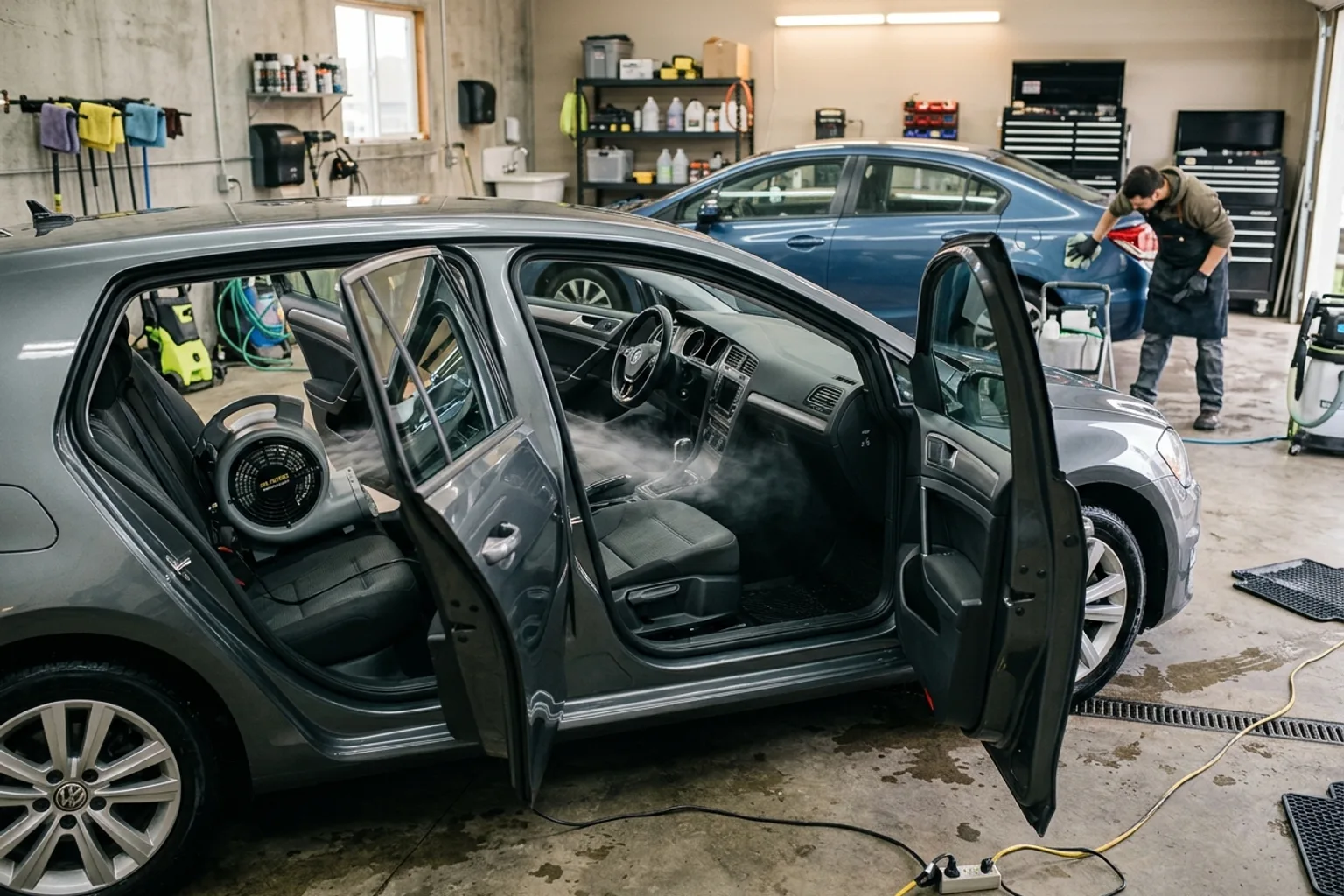
Do not seal damp car doors shut
Never roll up windows and park a car with damp upholstery in a warm garage overnight. Humidity trapped inside vehicle cabins condenses on windows, causing mold growth in headliners and air vents.
Straight answers
Frequently Asked Questions
Answers based on the evidence and sources identified in this article.
How do you get water stain rings out of cloth car seats?
Clean the entire panel evenly from seam to seam rather than spot-cleaning the center of the ring. Blending the edge and extracting moisture across the whole cushion prevents boundary mineral rings.
How long do cloth car seats take to dry after detailing?
With proper low-moisture technique and fan circulation, seats dry within 1.5 to 3 hours. Without air movement in humid weather, drying can take 6 to 12 hours.
Can you use laundry detergent on car upholstery?
No. Household laundry detergents are high-foaming and nearly impossible to rinse out of automotive foam cushions without industrial extractors, leaving sticky residues that attract dirt faster.
Where to buy
Recommended Gear in this Guide
Active 2.0 1800 PSI 2.0 GPM Pressure Washer
Our lab-tested standard for safe automotive flow and pressure.
DetailRig is reader-supported. Recommendations follow each page's evidence label (tested, used, or researched), and we never accept paid placement. When you buy through our links, we may earn an affiliate commission at no extra cost to you.
References & Sources
- IICRC S300 Standard: Professional Upholstery Cleaning and Moisture Extraction (iicrc.org)
- Bissell Commercial: Automotive Fabric and Foam Drying Best Practices (bissellcommercial.com)
- Chemical Guys: Fabric Clean & Low-Moisture Extraction Guides (chemicalguys.com)

DetailRig Editorial
ContributorResearch publication
DetailRig Editorial publishes source-linked car-care explainers. These articles synthesize manufacturer instructions and clearly separate research from documented hands-on testing.