Table of Contents(4 sections)
Evidence status: researched
Modern automotive upholstery (except in select ultra-luxury untreated aniline hides) is polyurethane top-coated leather. This guide follows Leather Clinic and OEM automotive care instructions for protected automotive leather.
What makes perforated and ventilated leather vulnerable?
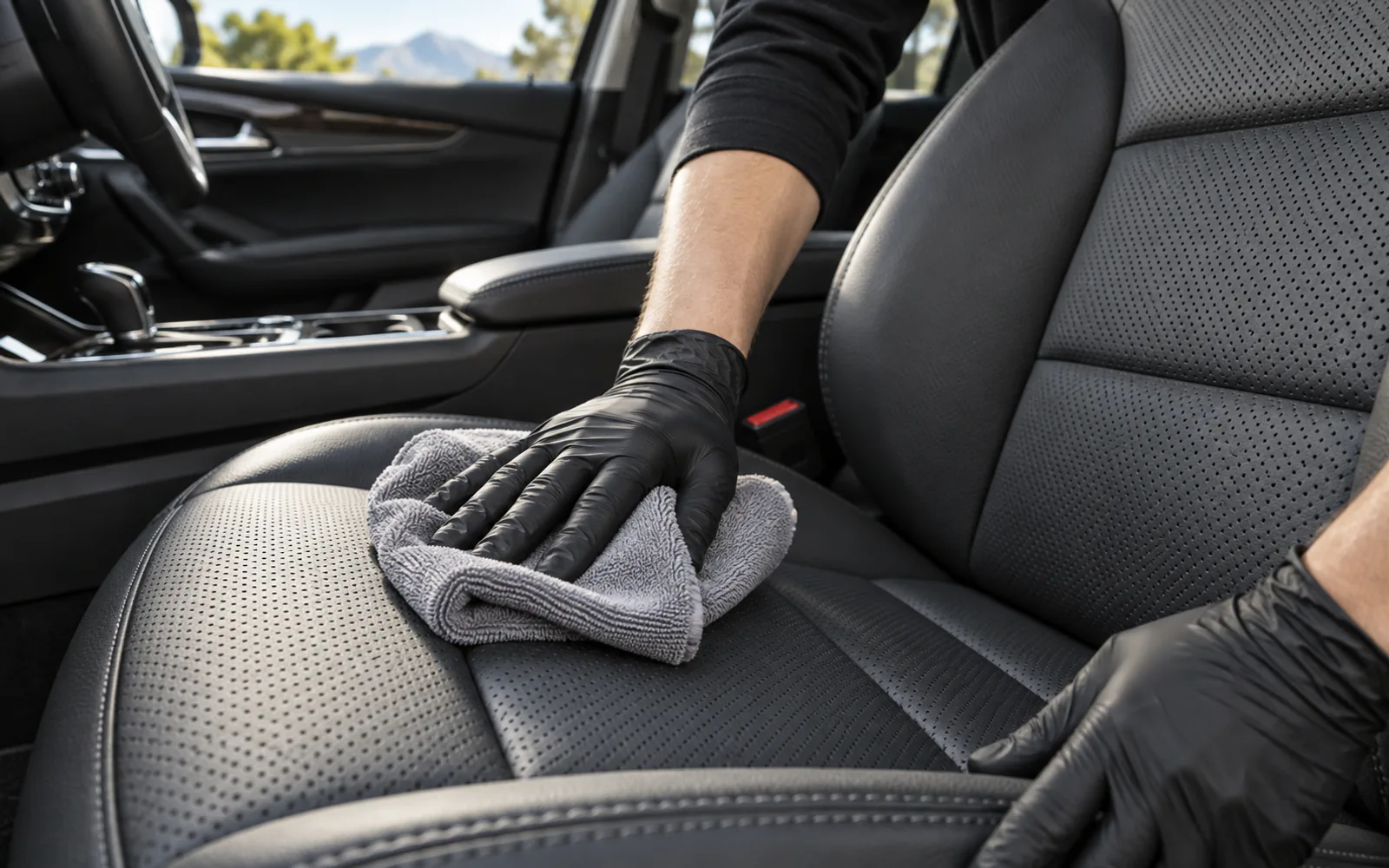
Ventilated and heated leather seats feature thousands of tiny perforations. Spraying liquid cleaners or applying heavy cream conditioners directly onto these panels forces moisture through the holes into the internal foam backing. This trapped liquid breeds bacteria, creates persistent damp odors, and risks electrical heating element short-circuits.
What is the safe step-by-step leather cleaning protocol?
The 5-step leather seat detailing protocol
5 stepsStep 1: Vacuum all crevices with a soft brush
Spread seat bolsters apart gently and vacuum using a horsehair brush attachment to remove abrasive crumbs, pet hair, and grit without scratching the clear top-coat.
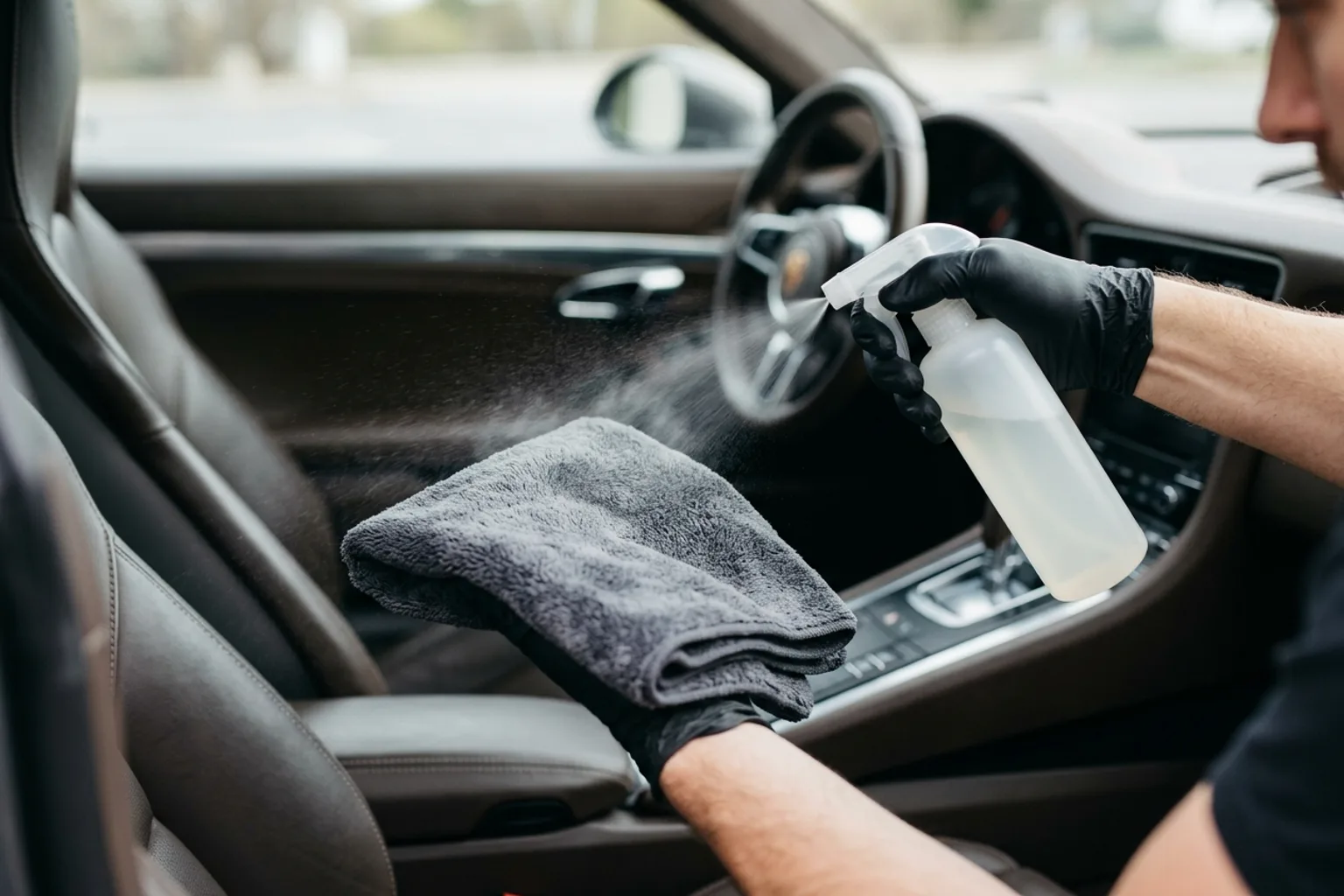
Step 2: Spray cleaner onto the towel or brush
Mist your pH-balanced automotive leather cleaner onto a folded microfiber cloth or the tips of a horsehair detailing brush—never spray the seat surface directly.
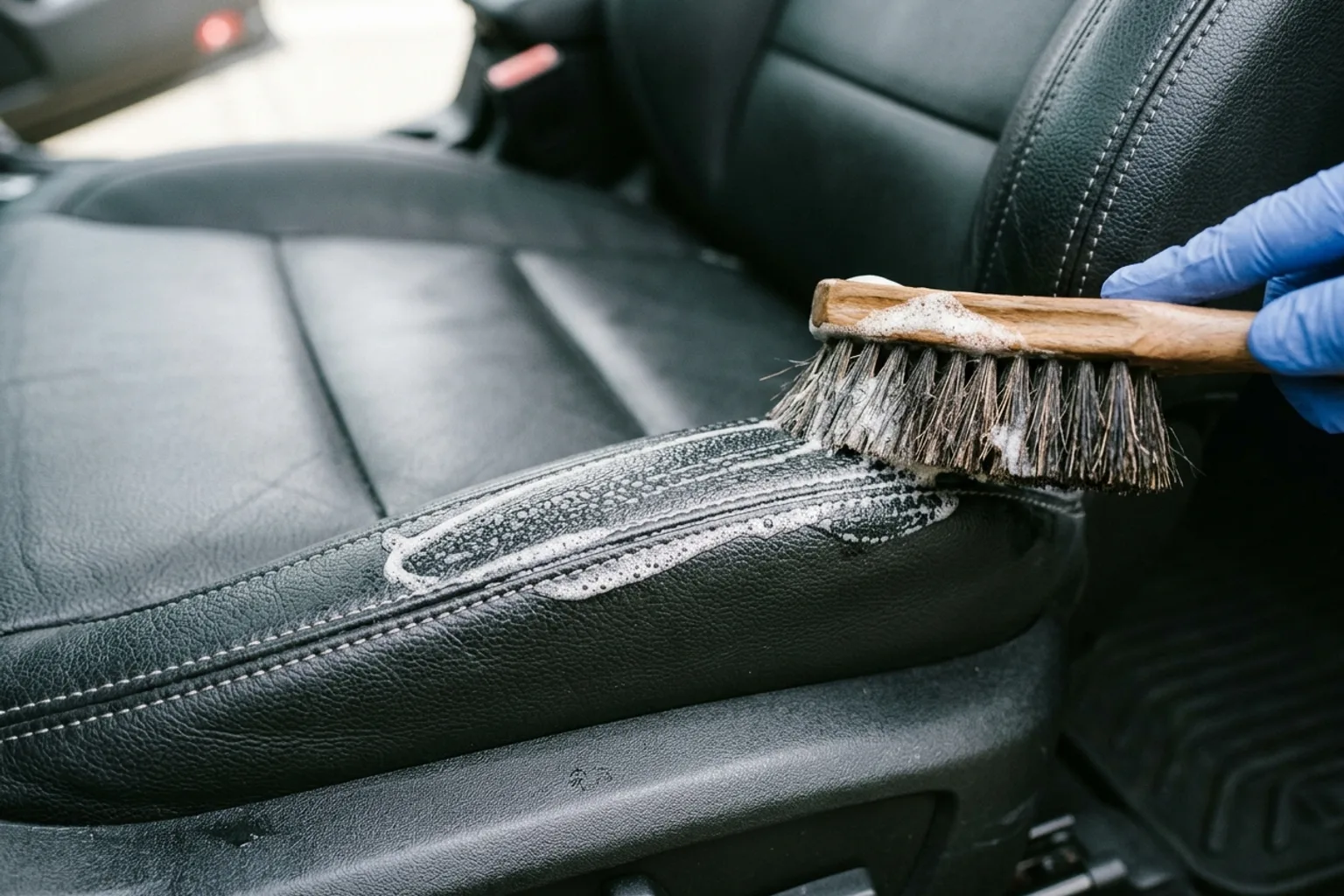
Step 3: Agitate gently in circular motions
Work the lather across one section at a time with light, circular hand pressure. Let the surfactant chemistry dissolve embedded skin sebum and body oils.
Step 4: Wipe dry immediately with a clean towel
Buff the loosened grime and residue off the leather before the cleaner dries, using a dry, clean microfiber cloth.
Step 5: Apply a water-based matte protectant
Use a breathable, non-greasy water-based UV protectant to shield the factory clear top-coat from dye transfer without clogging perforations.
What common leather cleaning mistakes should you avoid?
- Using magic eraser melamine sponges, which are microscopic abrasives that sand off the factory clear coat.
- Using household dish soap or multi-surface vinegar sprays, which strip essential plasticizers and cause premature drying and cracking.
- Applying thick petroleum or silicone paste conditioners that leave seats greasy and attract dust into perforations.
- Scrubbing aggressively on worn side bolsters where the leather top finish has already experienced friction thinning.
Shiny leather is dirty leather
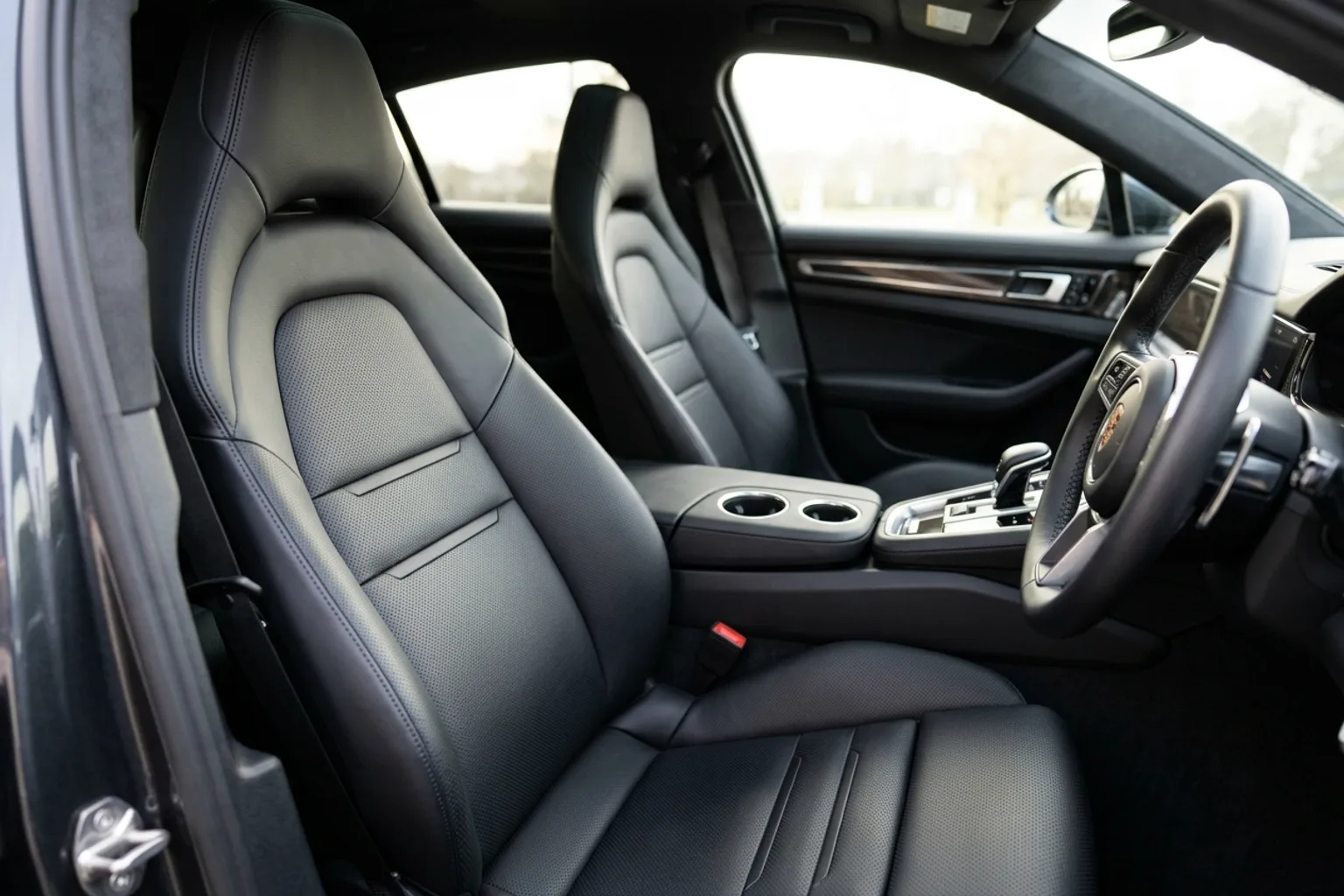
Clean automotive leather has a soft, matte satin sheen. A shiny, reflective, or sticky leather seat is coated in accumulated body oils and sweat. Proper cleaning restores the original factory matte finish.
Straight answers
Frequently Asked Questions
Answers based on the evidence and sources identified in this article.
Can you use baby wipes or household disinfectant wipes on leather seats?
No. Household disinfectant and alcohol wipes contain solvents that chemically dissolve the clear protective urethane lacquer on automotive leather, leading to peeling, color fading, and rapid cracking.
How often should you clean and condition leather car seats?
Wipe down leather seats with a damp microfiber or gentle detailer every 2 to 4 weeks. Deep clean and apply a breathable UV protectant every 3 to 6 months.
How do you remove jean dye transfer from light-colored leather?
Treat dye transfer promptly using a specialized mild leather cleaner and a soft brush. For set-in denim dye stains, a dedicated water-based dye remover is required before applying a ceramic leather shield.
Where to buy
Recommended Gear in this Guide
Active 2.0 1800 PSI 2.0 GPM Pressure Washer
Our lab-tested standard for safe automotive flow and pressure.
DetailRig is reader-supported. Recommendations follow each page's evidence label (tested, used, or researched), and we never accept paid placement. When you buy through our links, we may earn an affiliate commission at no extra cost to you.
References & Sources
- Colourlock Leather Care Institute: Chemistry of Protected Automotive Leathers (colourlock.com)
- Leather Repair Company: Perforated and Ventilated Seat Maintenance Guidelines (leatherrepaircompany.com)
- Automotive Interior Specialists Association: Surface Top-Coat Preservation (autointerior.org)

DetailRig Editorial
ContributorResearch publication
DetailRig Editorial publishes source-linked car-care explainers. These articles synthesize manufacturer instructions and clearly separate research from documented hands-on testing.