Table of Contents(4 sections)
Evidence status: researched
Rubber chemistry and blooming mechanisms described here cite technical tire manufacturing documentation from Michelin, Continental, and published rubber science literature.
What causes tires to turn brown (antiozonant blooming)?
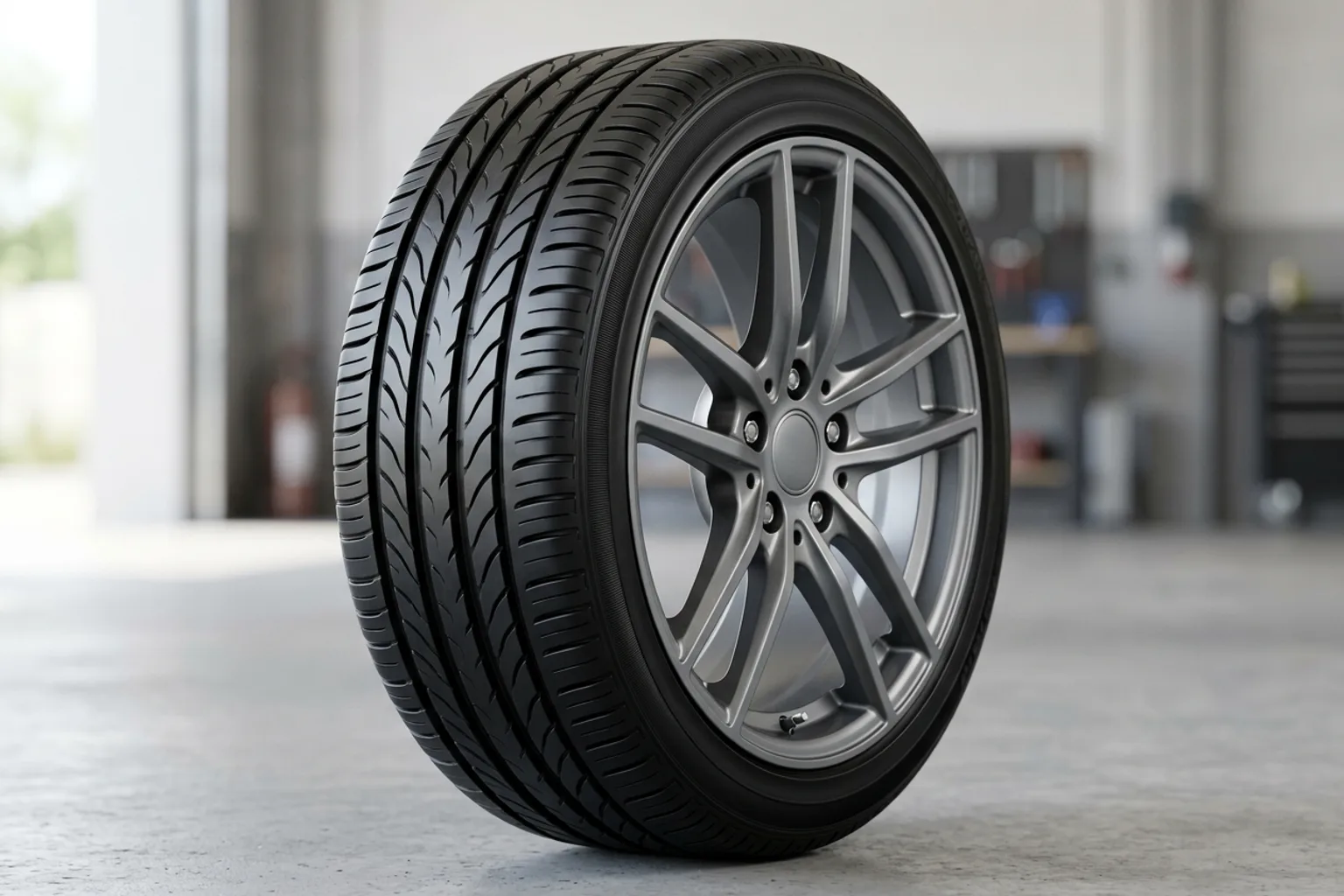
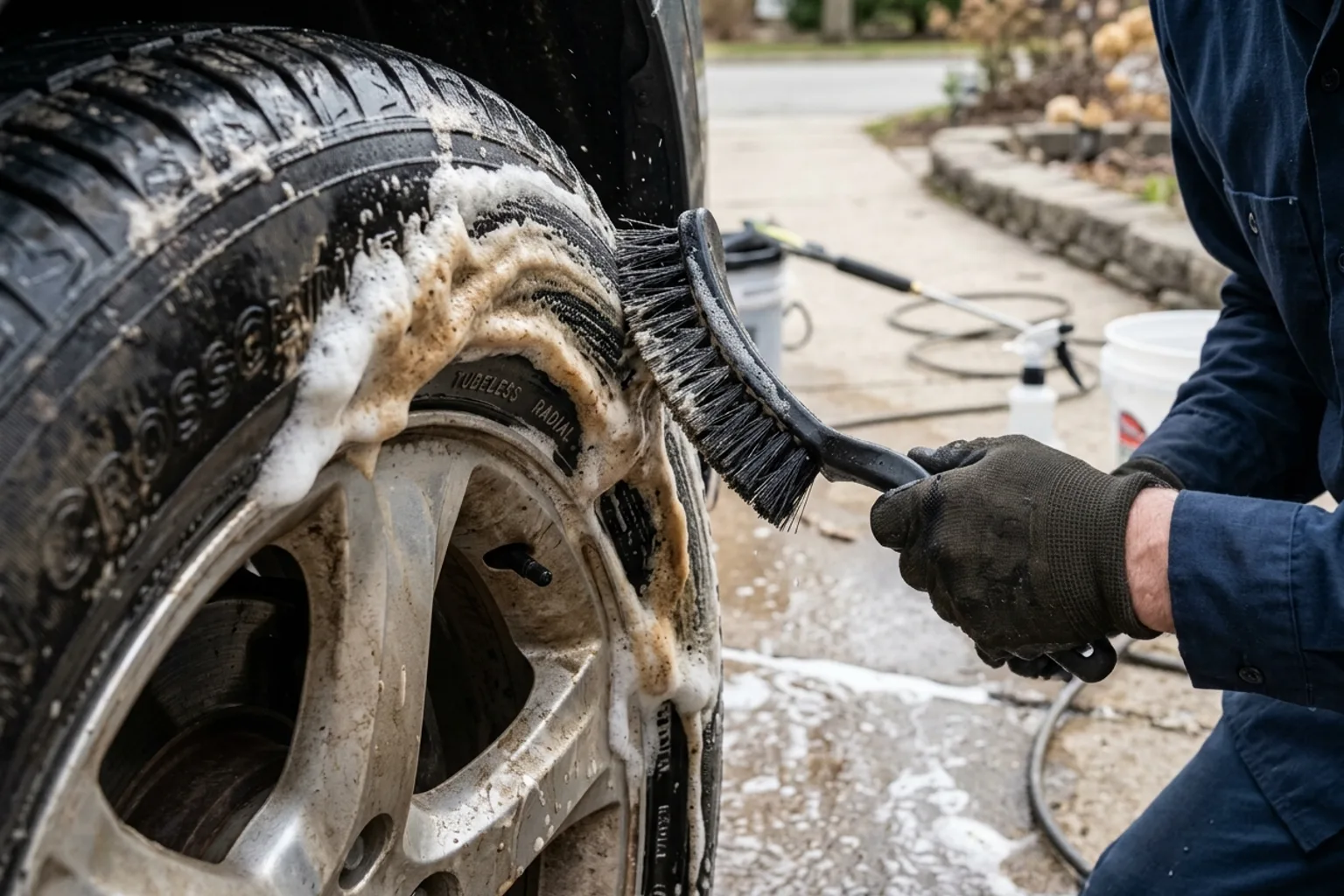
Tire browning is not dirt—it is chemistry. During tire manufacturing, chemical compounds known as antiozonants (such as 6PPD) are blended into the rubber compound. As you drive, flex the sidewalls, and encounter atmospheric ozone, these molecules continuously migrate ("bloom") to the outer surface, reacting with oxygen to form a sacrificial protective layer that prevents dry rot and sidewall cracking. When antiozonants oxidize, they turn brown.
How do you clean tires properly before applying dressing?
The 4-step tire deep-clean and dressing protocol
4 stepsRinse loose road film and brake dust
Pressure rinse the wheel and tire sidewall to knock off loose road gravel and brake dust before applying concentrated chemicals.
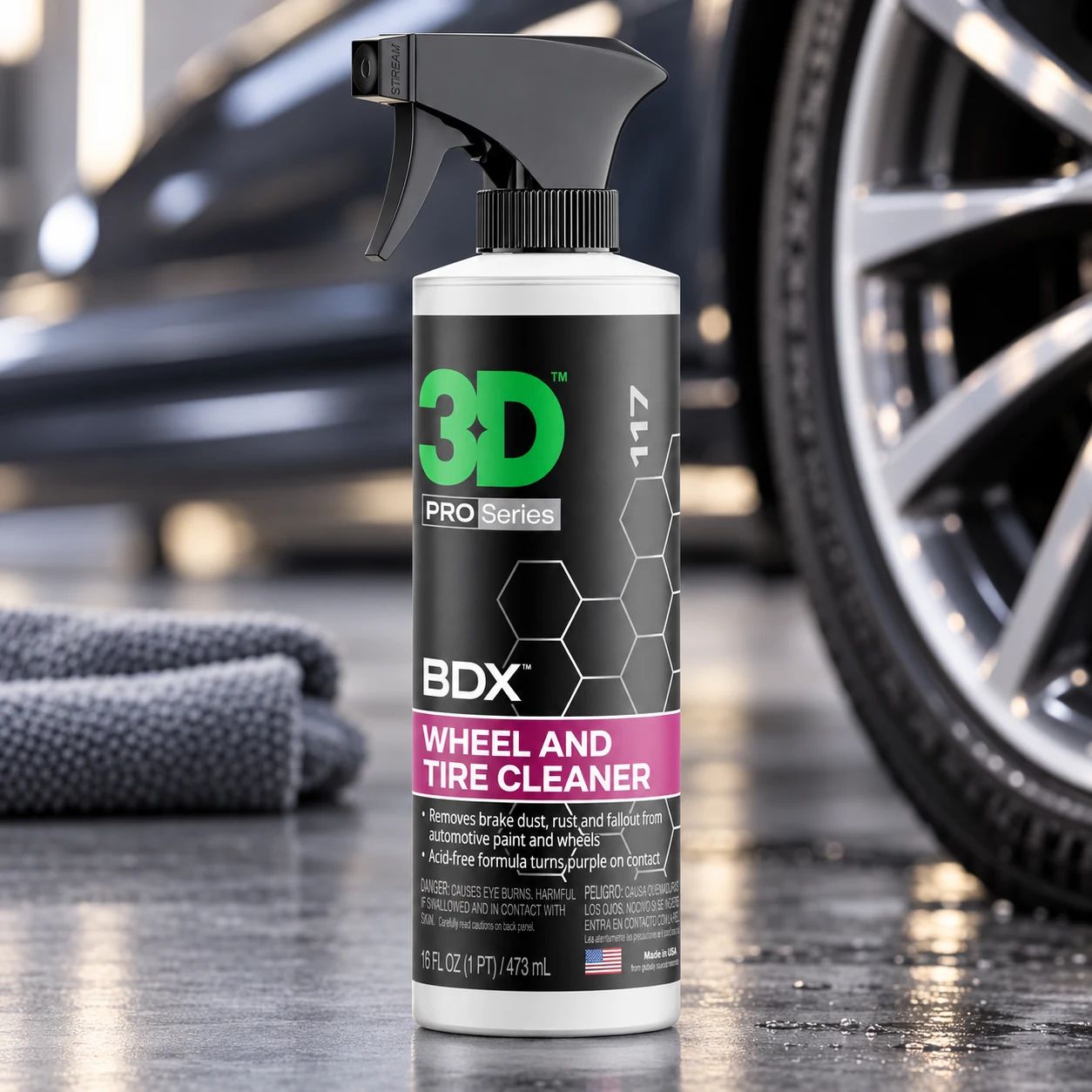
Apply dedicated rubber cleaner or degreaser
Spray an alkaline tire cleaner or rubber degreaser directly onto the wet tire sidewall and let dwell for 45 to 60 seconds.
Scrub vigorously with a stiff nylon tire brush
Scrub the sidewall firmly. The foam will turn deep brown. Rinse thoroughly and repeat until the scrubbing suds stay completely pure white.
Dry rubber completely before dressing
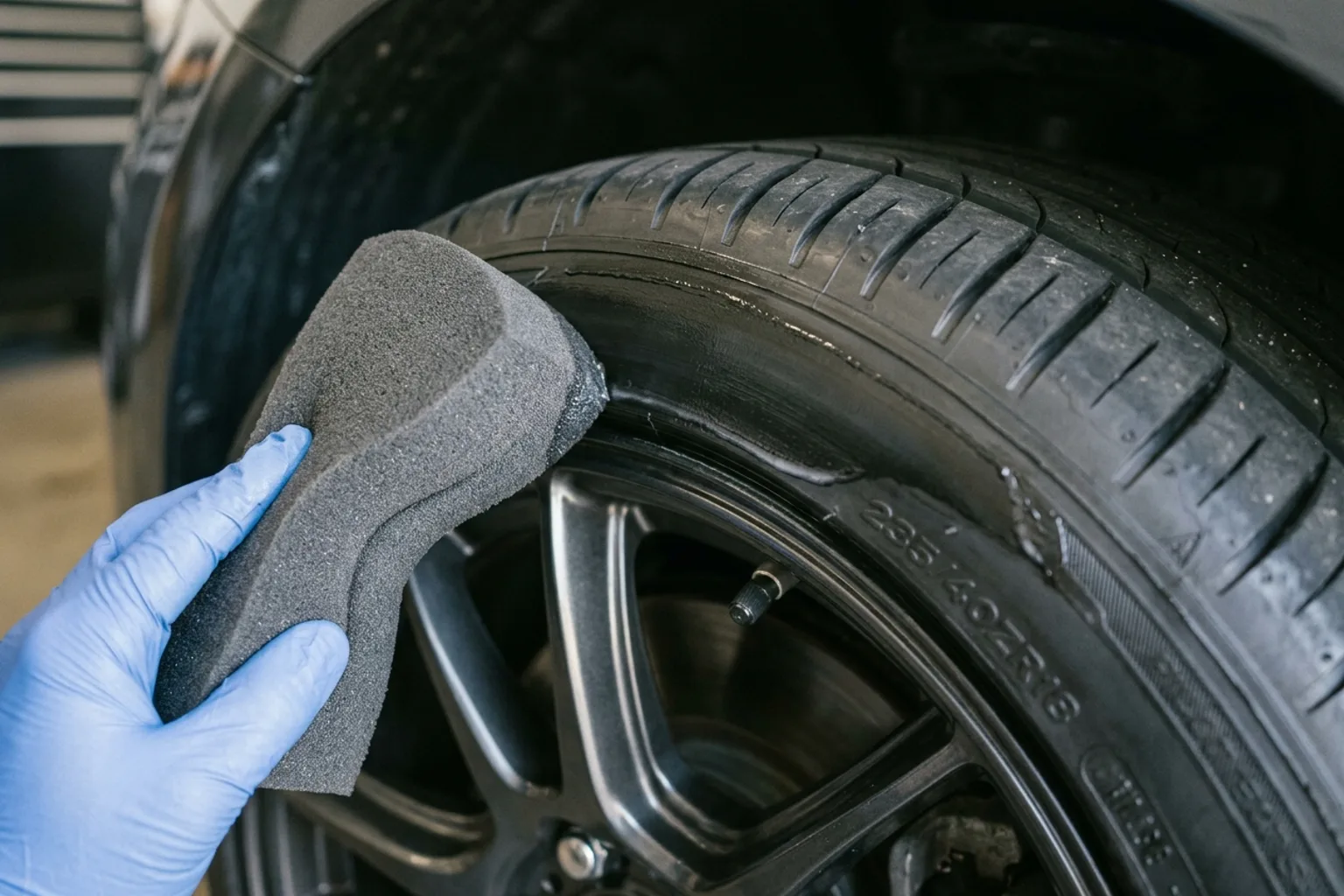
Dry the tire with a leaf blower or dedicated shop towel. Applying dressing to damp rubber prevents proper bonding and causes tire sling.
Why does tire shine sling down the side of your car?
Tire sling happens when thick silicone-based dressings are applied over wet rubber or layered excessively thick into tire tread grooves. When the vehicle reaches highway speeds, centrifugal force flings the unbonded oily residue down your clean paintwork. Choose water-based satin dressings, apply with a contoured applicator pad, and buff with a dry towel after 10 minutes.
Avoid petroleum solvent dressings on dry-rotted tires
Solvent-based aerosol tire sprays strip natural rubber plasticizers over time, accelerating micro-cracking and dry rot. Stick to water-based silicone emulsion formulas.
Straight answers
Frequently Asked Questions
Answers based on the evidence and sources identified in this article.
Does scrubbing off tire browning damage the tire?
No. Removing oxidized surface bloom does not compromise structural integrity. Fresh antiozonants inside the tire compound will naturally continue migrating to the surface over time.
Can you use standard car wash soap to clean brown tires?
Standard car wash shampoos are formulated with gentle pH-neutral surfactants that lack the alkaline strength required to break down oxidized antiozonants and old silicone dressings.
How do you know when a tire is clean enough to dress?
When you spray tire cleaner and agitate it with a brush, look at the foam color. If the lather is brown or grey, dirt is still lifting; when the foam stays bright white, the tire is clean.
Where to buy
Recommended Gear in this Guide
303 High Gloss Tire Shine & Protectant (16 oz)
UV-blocking water-based formula prevents tire browning, dry rot, and slinging under highway speeds.
DetailRig is reader-supported. Recommendations follow each page's evidence label (tested, used, or researched), and we never accept paid placement. When you buy through our links, we may earn an affiliate commission at no extra cost to you.
References & Sources
- Tire Industry Association (TIA): Sidewall Weathering & Antiozonant Migration Science (tireindustry.org)
- Michelin Technical Bulletins: Tire Sidewall Discoloration and Cleaning Best Practices (michelinman.com)
- Continental Tires: Understanding Tire Blooming & Rubber Anti-Degradants (continental-tires.com)

DetailRig Editorial
ContributorResearch publication
DetailRig Editorial publishes source-linked car-care explainers. These articles synthesize manufacturer instructions and clearly separate research from documented hands-on testing.