Table of Contents(5 sections)
Evidence status: researched
This guide synthesizes verified industry detailing standards, IDA professional guidelines, and manufacturer safety data sheets. DetailRig did not run a single controlled test across every tool listed; product-specific claims remain attributed to respective manufacturers.
Why does detailing order of operations matter?
Following a strict sequence prevents recontaminating cleaned surfaces and dragging abrasive grit across your paintwork. Cleaning wheels after washing the body splatters corrosive brake dust back onto clean panels. Similarly, applying a sealant before decontaminating locks road grime beneath the protective barrier.
What is the complete 6-stage detailing sequence?
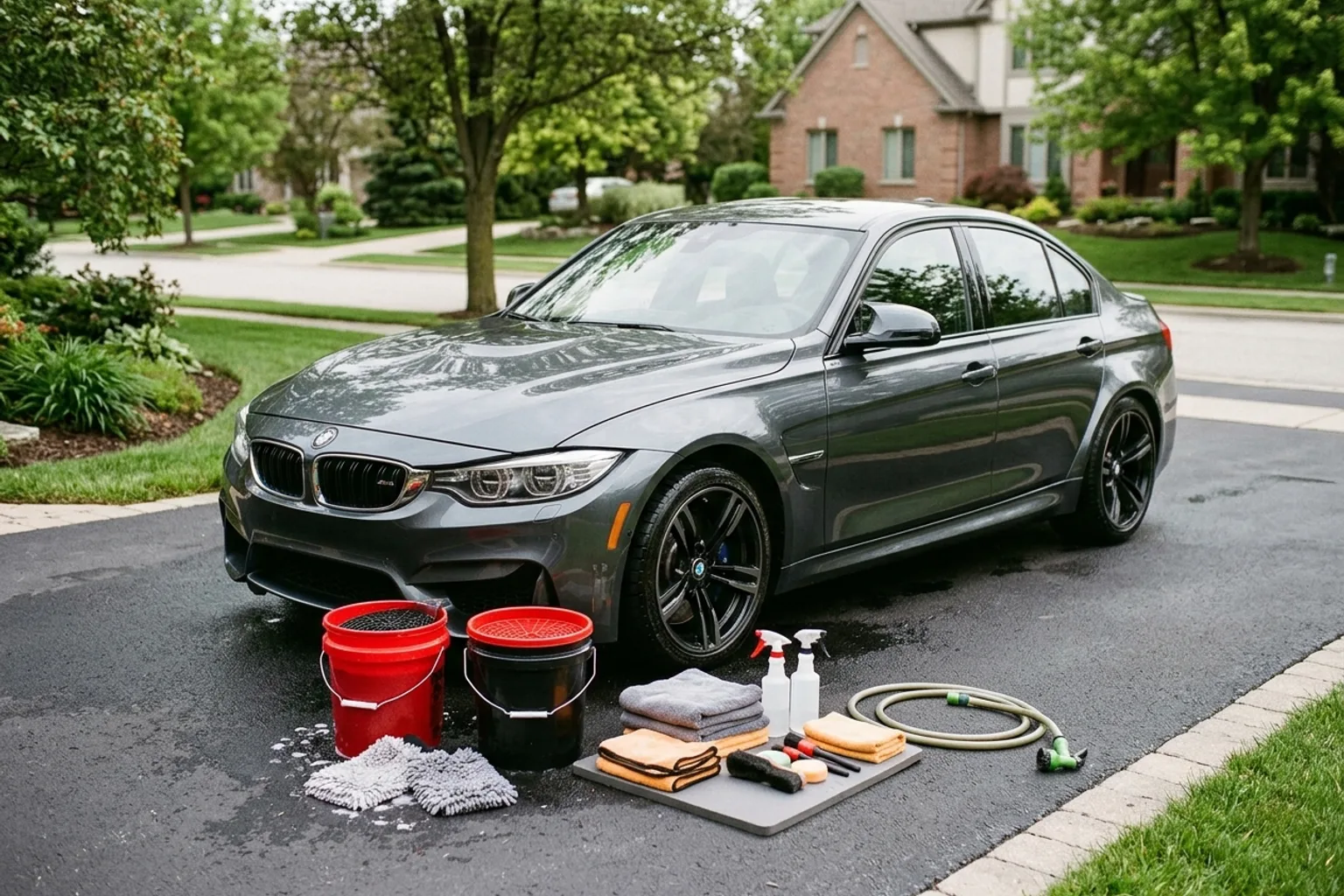
The 6-stage home car detailing workflow
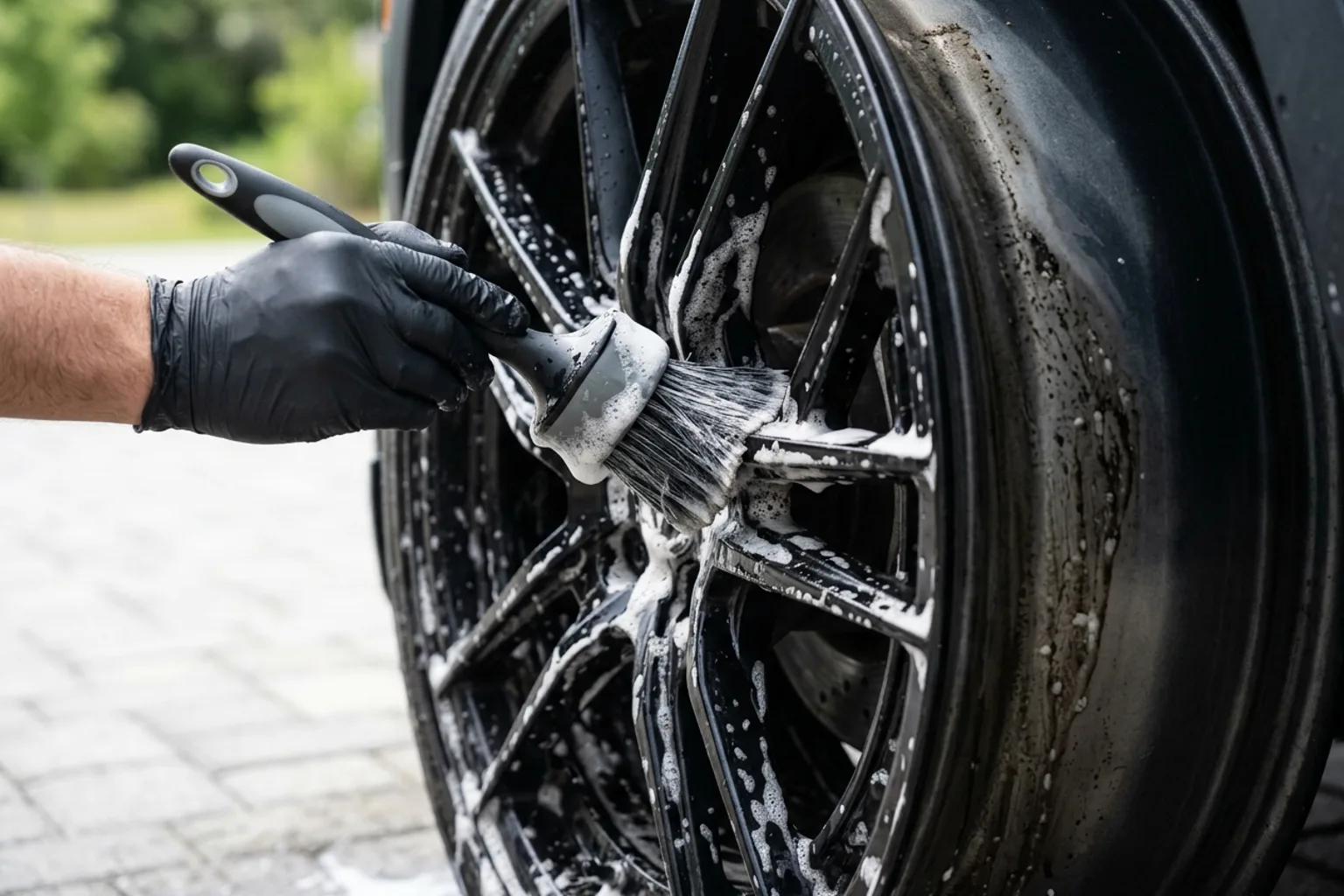
6 stepsStage 1: Clean wheels, tires, and wheel wells
Isolate the dirtiest area of the vehicle first using dedicated wheel buckets, pH-appropriate cleaners, and soft wheel brushes.
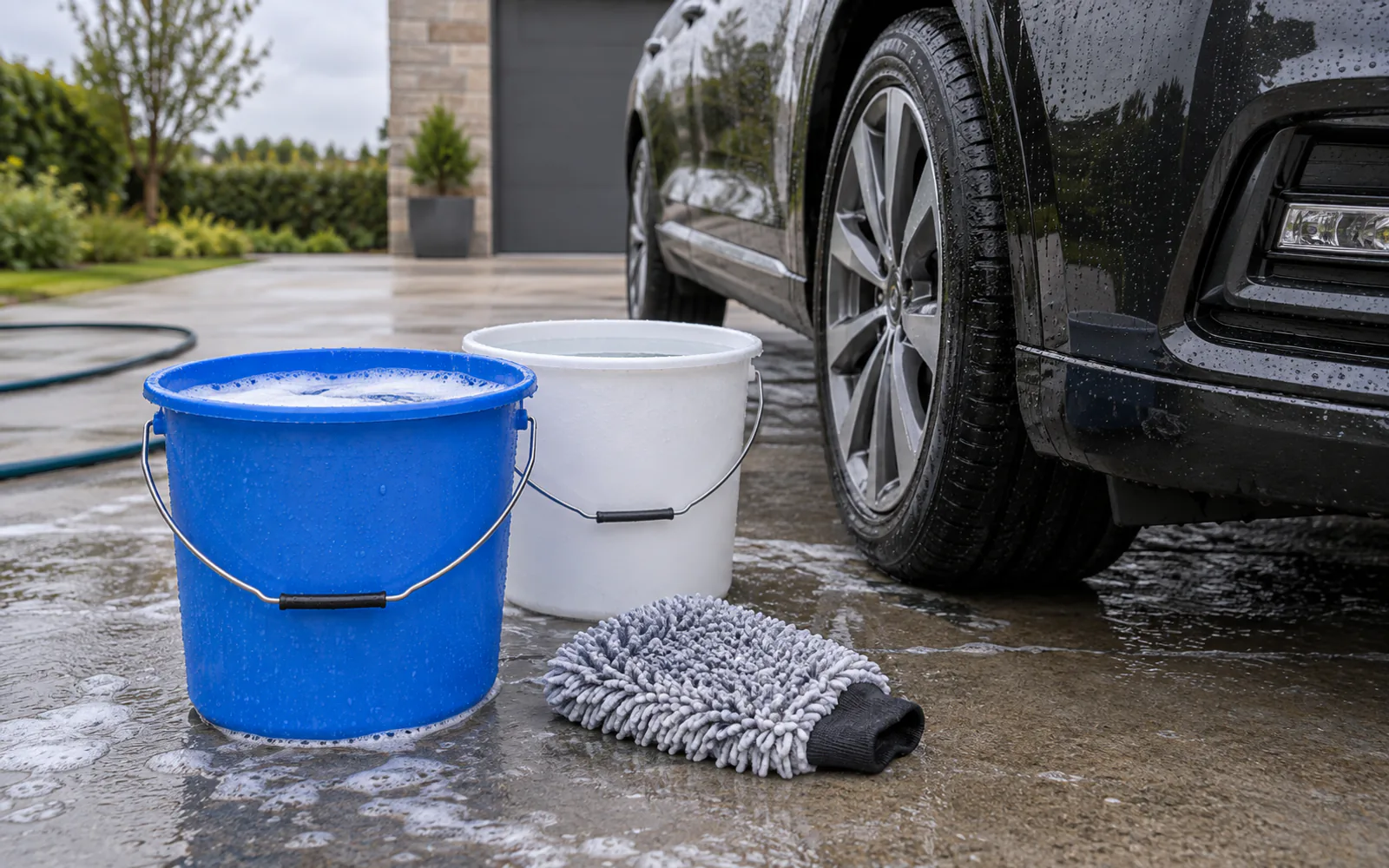
Stage 2: Pre-rinse, foam soak, and two-bucket contact wash
Loosen surface traffic film with high-lubricity foam before touching the vehicle with a deep-pile microfiber mitt in straight lines.
Stage 3: Chemical and mechanical decontamination
Dissolve embedded metallic fallout with an iron remover and level bonded surface grit using a lubricated detailing clay bar.
Stage 4: Paint correction and inspection (optional)
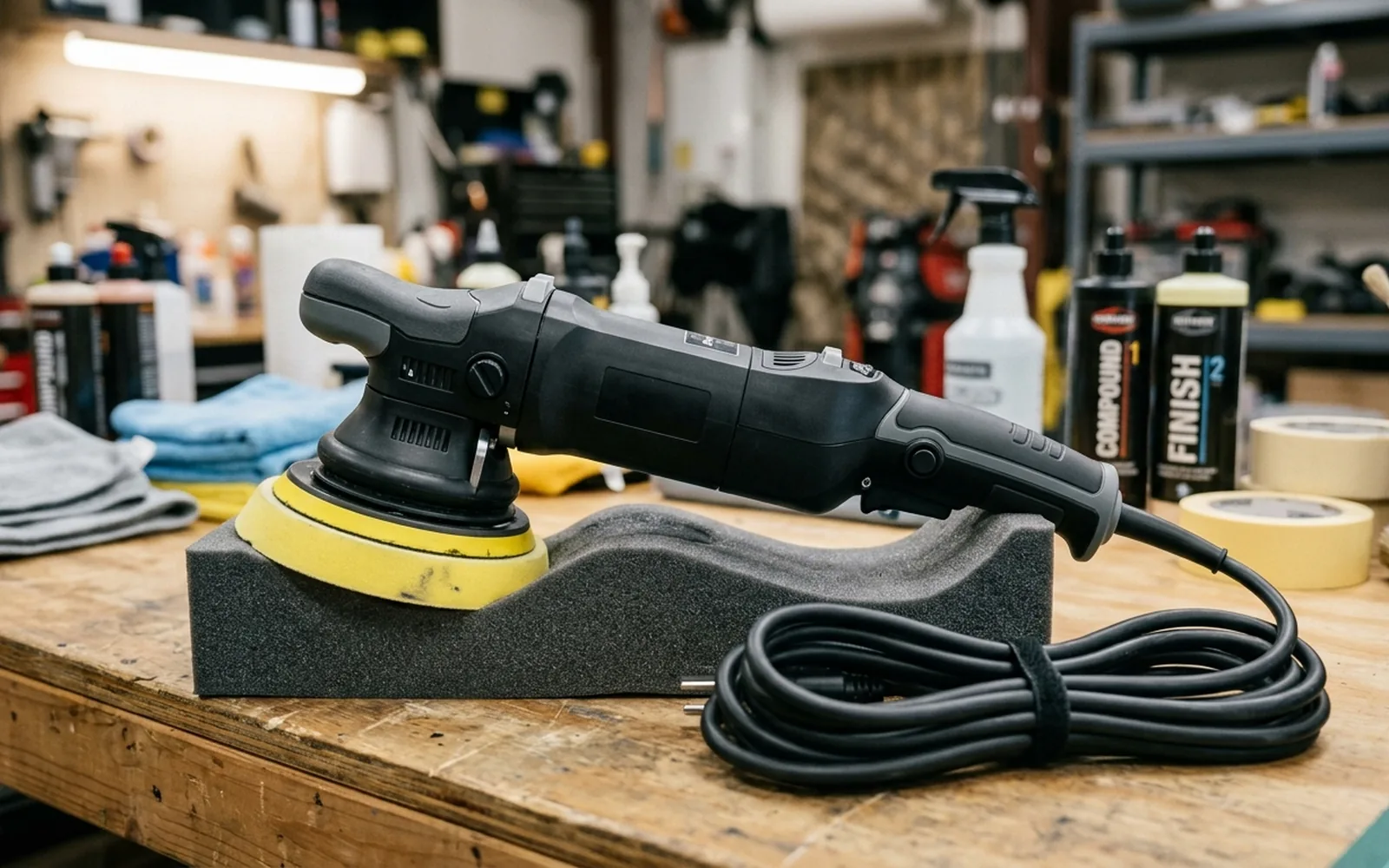
Level clear-coat micro-scratches and swirl marks using a dual-action orbital polisher after dialing in a verified test spot.
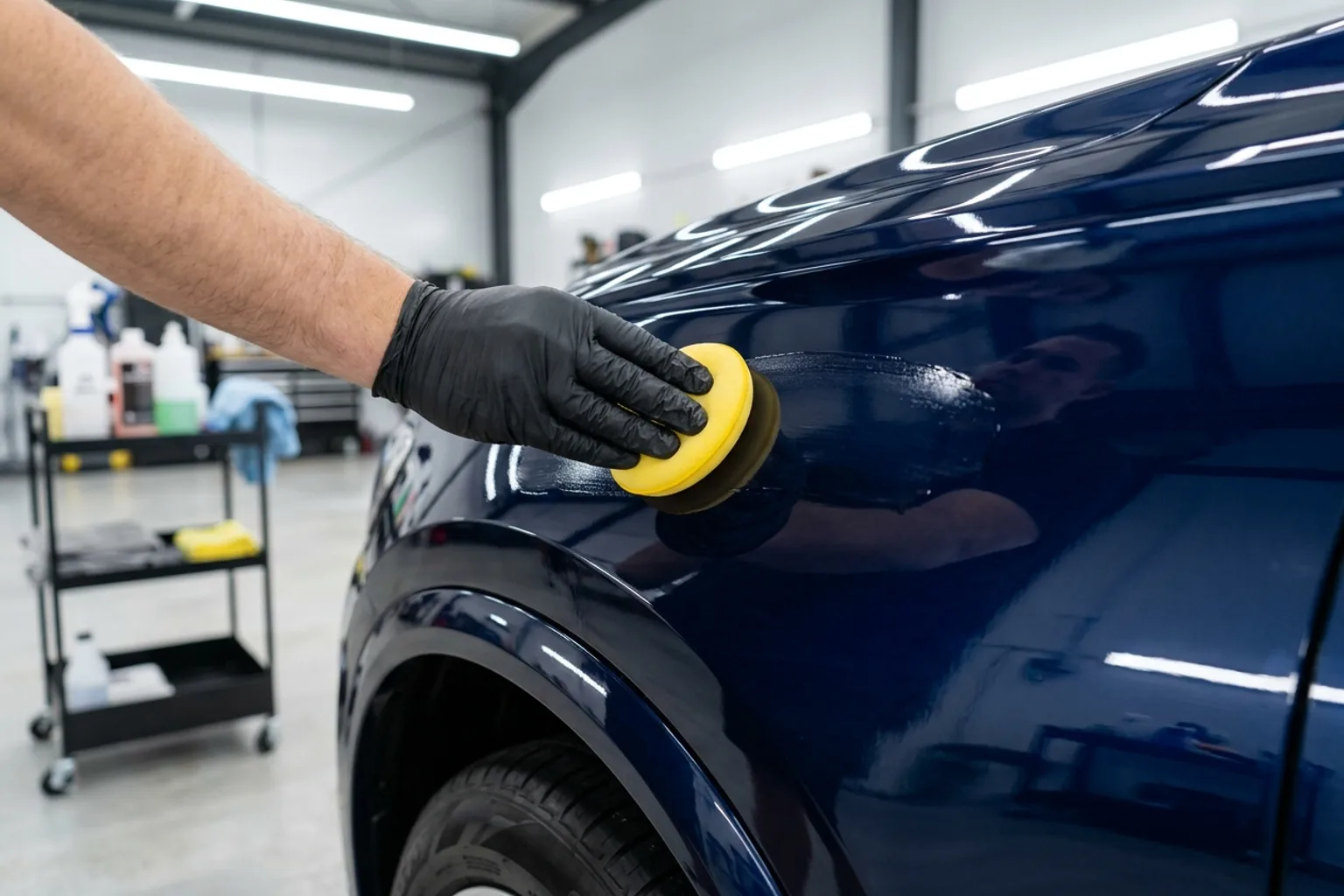
Stage 5: Apply paint protection (wax, sealant, or ceramic)
Seal clear coat against environmental UV degradation, bird dropping etching, and traffic film with your selected sacrificial barrier.
Stage 6: Interior deep clean and streak-free glass
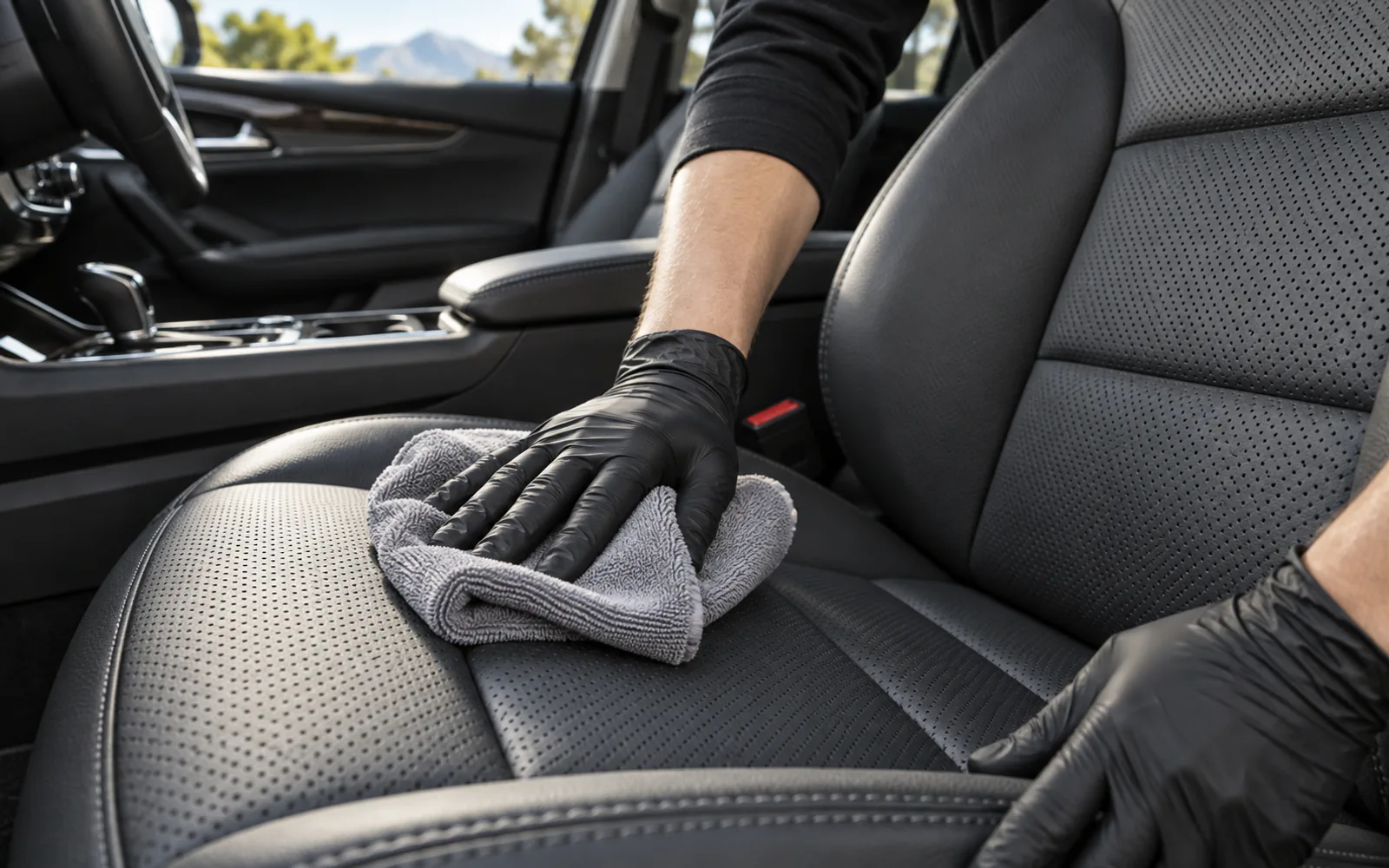
Extract fabric or condition leather, wipe trim with low-residue cleaner, and finish exterior and interior glass with dedicated towels.
How should you allocate time and effort for home detailing?
| Detailing Phase | Estimated Time | Skill Level | Critical Tooling |
|---|---|---|---|
| Wheels & Tires | 30–45 min | Beginner | Wheel brushes, tire cleaner, bucket |
| Contact Wash & Dry | 45–60 min | Beginner | Two buckets, grit guards, microfiber mitt |
| Decontamination | 30–45 min | Intermediate | Iron remover spray, clay bar, lubricant |
| Paint Correction | 2–5 hours | Advanced | Dual-action polisher, pads, compound |
| Protection Application | 30–60 min | Beginner to Intermediate | Applicator pads, plush buffing towels |
| Interior & Glass | 60–90 min | Beginner | Vacuum, interior detailer, waffle glass towels |
When should you detail at home versus hiring a professional?
Routine maintenance washes, surface decontamination, interior cleaning, and paint sealant applications are straightforward DIY jobs that require modest initial tool investments. However, heavy multi-stage clear-coat defect removal on thin factory paint, wet sanding deep scratches, or installing multi-year ceramic coatings on uncured repainted panels often warrant professional paint gauge readings and climate-controlled bay lighting.
Safety and surface preservation warnings
Never wash or polish panels under direct blazing sunlight or when metal surfaces feel hot to the touch. Rapid chemical evaporation leads to alkaline water spotting and premature product flash-curing that can etch clear coat.
Straight answers
Frequently Asked Questions
Answers based on the evidence and sources identified in this article.
How often should you detail a car at home?
Perform a thorough maintenance wash every 1 to 2 weeks. Deep decontamination, claying, and sacrificial sealant reapplication are typically needed every 3 to 6 months depending on daily driving mileage and climate exposure.
Do you need a pressure washer to detail a car at home?
No. While a pressure washer and foam cannon improve pre-wash lubrication, a standard garden hose with a shut-off nozzle paired with careful two-bucket contact washing provides safe, swirl-free results.
Should you wash the interior or exterior first?
Wash the exterior first through the drying stage. This allows exterior water to drain from crevices while you work inside, preventing water spots from forming while you detail the cabin.
Where to buy
Recommended Gear in this Guide
Active 2.0 1800 PSI 2.0 GPM Pressure Washer
Our lab-tested standard for safe automotive flow and pressure.
DetailRig is reader-supported. Recommendations follow each page's evidence label (tested, used, or researched), and we never accept paid placement. When you buy through our links, we may earn an affiliate commission at no extra cost to you.
References & Sources
- International Detailing Association (IDA): Detailing Best Practices & Order of Operations (the-ida.com)
- Meguiar’s Detailing Training Institute: Exterior Vehicle Preparation and Surface Inspection (meguiars.com)
- Auto Finesse: Comprehensive Guide to Car Detailing Sequence (autofinesse.com)

DetailRig Editorial
ContributorResearch publication
DetailRig Editorial publishes source-linked car-care explainers. These articles synthesize manufacturer instructions and clearly separate research from documented hands-on testing.