Table of Contents(6 sections)
Evidence status: researched
This guide synthesizes verified manufacturer specifications, technical data sheets, and professional detailing workflows. DetailRig has not performed a single controlled laboratory test across all products discussed here; specific performance claims are attributed to their respective manufacturers.
Why Orifice Size Dictates Foam Density
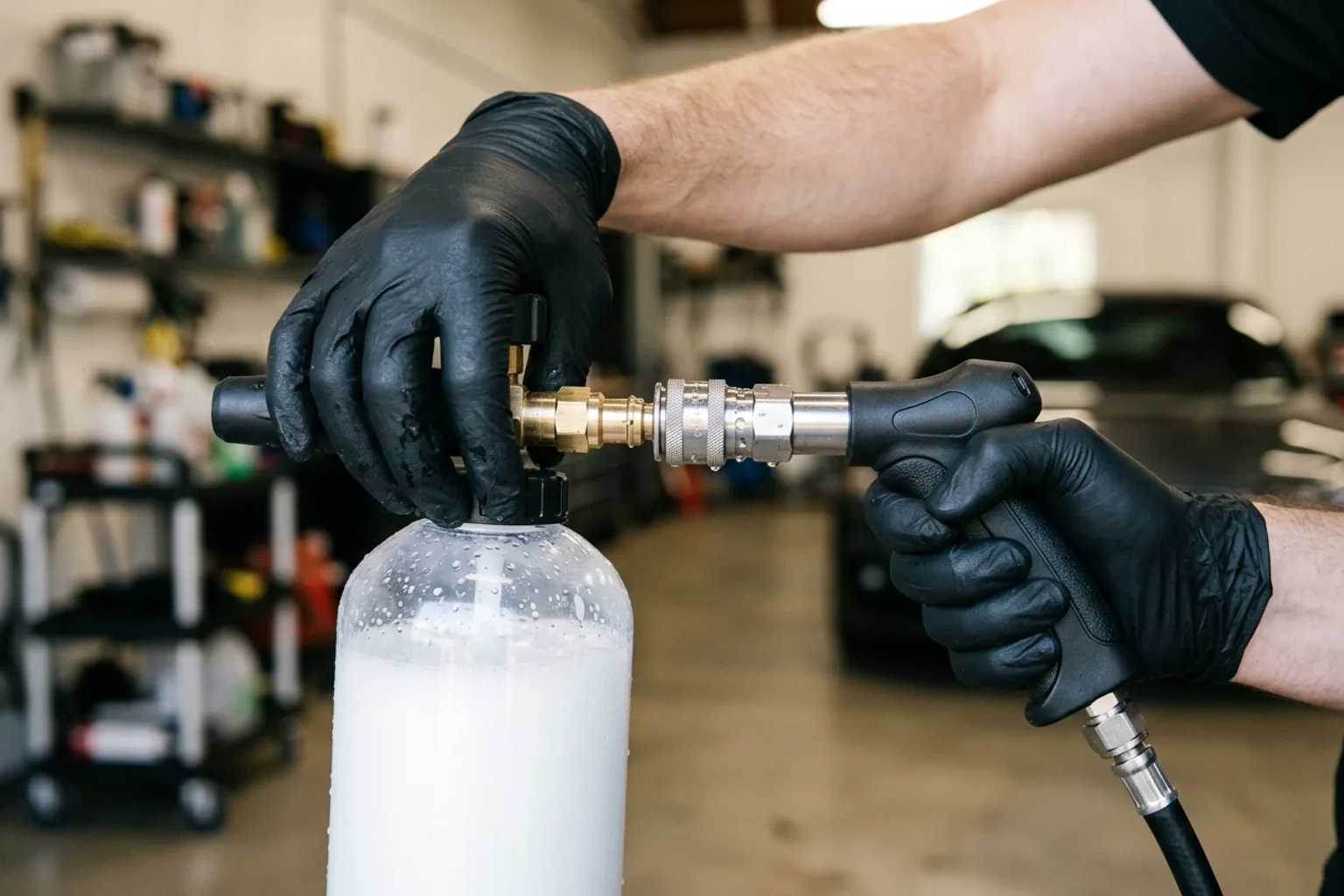
Snow foam cannons operate using the Venturi effect: high-pressure water streams through a tiny brass orifice nozzle, creating a low-pressure vacuum zone that siphons concentrated soap solution from the bottle and aerates it across a stainless steel mesh agitator. Most factory foam cannons ship standard with a 1.25mm (0.049-inch) orifice designed for commercial gas pressure washers outputting 2.0 to 3.5 gallons per minute (GPM).
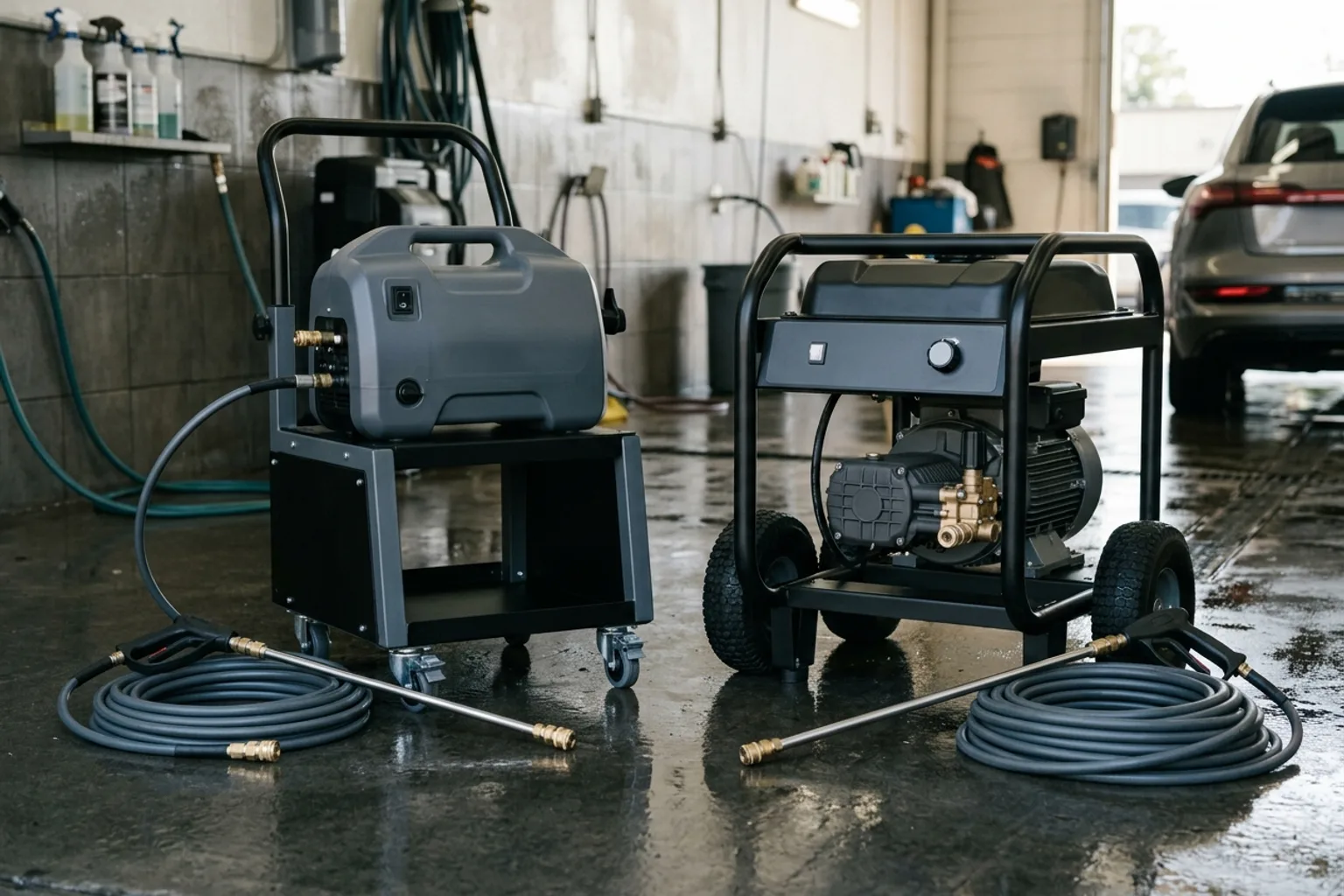
When an entry-level or mid-range residential electric pressure washer delivering only 1.1 to 1.4 GPM pumps through a stock 1.25mm hole, the velocity is too low to produce a strong vacuum. The result is thin, watery suds that rapidly run off vehicle panels rather than clinging to encapsulate abrasive road film. Swapping to a precision-machined 1.1mm orifice restricts the opening, restoring the necessary internal velocity and vacuum pull.
| Pressure Washer Output | Factory Orifice | Recommended Orifice | Expected Foam Thickness | Surging Risk |
|---|---|---|---|---|
| 1.1 – 1.4 GPM @ 1,000–1,600 PSI | 1.25mm | 1.1mm | Thick, shaving-cream consistency | Zero (Optimal) |
| 1.5 – 1.8 GPM @ 1,500–2,000 PSI | 1.25mm | 1.1mm or 1.15mm | Dense clinging blanket | Low (Check duty cycle) |
| 1.9 – 2.2 GPM @ 1,800–2,200 PSI | 1.25mm | 1.25mm (Stock) | Dense blanket | Moderate if 1.1mm used |
| 2.3 – 4.0 GPM @ 2,000–3,500 PSI | 1.25mm | 1.25mm – 1.35mm | Maximum density without restriction | High with 1.1mm (Do not use) |
Signs Your Foam Cannon Needs a 1.1mm Jet Swap
If you are dissatisfied with your foam density, evaluate whether your pressure washer output matches the orifice. You will benefit from a 1.1mm nozzle swap if you observe:
- Watery, runny foam that slides off dry panels within 30 seconds of application despite using maximum soap concentration.
- An electric pressure washer with actual measured flow under 1.6 GPM (such as popular portable Kärcher, Ryobi, Sun Joe, or Greenworks models).
- You have already tested proper soap-to-water ratios (2 to 3 ounces of dedicated snow foam concentrate per 800ml of warm water) without improvement.
- The foam cannon air regulator knob is dialed completely closed toward maximum chemical draw.
Step-by-Step 1.1mm Orifice Replacement Walkthrough
How to replace a foam cannon orifice nozzle
5 stepsStep 1: Disconnect and drain
Remove the foam cannon from your pressure washer spray gun and unscrew the soap reservoir bottle. Allow all trapped water to drain.
Step 2: Remove the 1/4-inch quick-connect male fitting
Use an adjustable wrench or 14mm socket to unthread the brass 1/4-inch quick-connect plug from the rear intake manifold of the cannon.
Step 3: Extract the internal stock jet
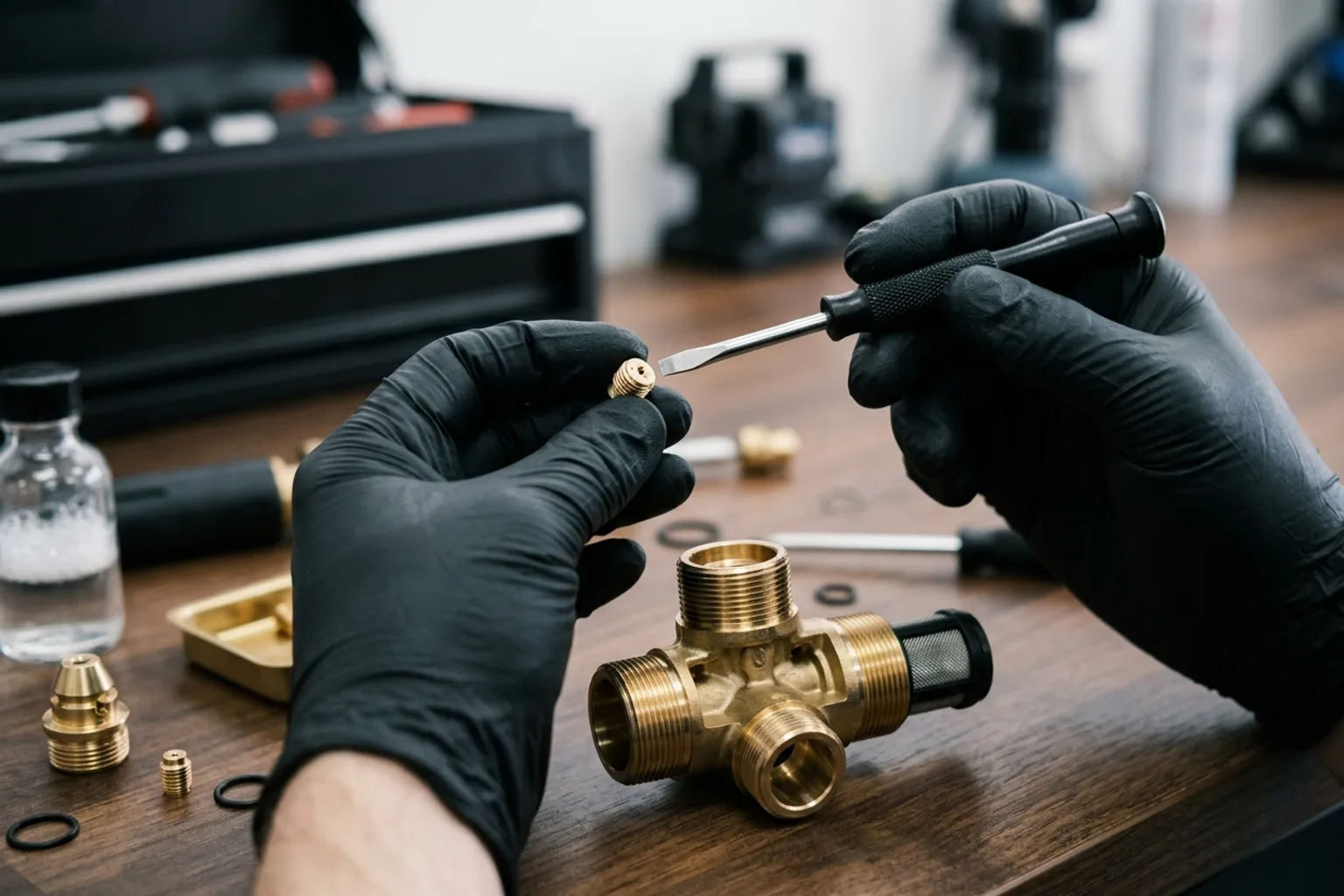
Look down the intake channel to locate the slotted brass orifice screw. Insert a flathead screwdriver that snugly fits the slot, and turn counter-clockwise to back the jet out.
Step 4: Inspect and thread the 1.1mm jet
Check the internal threads for debris. Thread the new 1.1mm brass orifice jet into the barrel by hand first to prevent cross-threading, then tighten firmly with the screwdriver until snug. Do not overtighten brass threads.
Step 5: Reinstall quick connect and test
Reapply Teflon thread sealing tape if needed, thread the male quick-connect fitting back onto the manifold, reattach your bottle, and test spray against vehicle paint.
Understanding the Equipment Risk: Pump Pulsing and Unloader Cycling
Preventing pump damage from excessive restriction
If your pressure washer motor pulses rapidly on-and-off during spraying (shuddering repeatedly), water cannot exit fast enough. The unloader valve is triggering high-pressure bypass to protect the pump. Immediately discontinue spraying and reinstall the larger 1.25mm orifice to prevent burnt motor windings or ruptured pump seals.
Gasoline pressure washers or professional commercial electric units producing over 2.2 GPM should never run a 1.1mm orifice. The excessive backpressure forces high-output triplex plunger pumps into continuous bypass, overheating pump oil and blowing thermal relief valves. Always measure or verify your pressure washer pump flow before modifying fittings.
Recommended Upgrades and Practical Next Steps
- Pair the 1.1mm orifice with a stubby pressure washer gun with a built-in swivel to prevent hose binding around tires.
- Use warm water in your foam reservoir bottle to speed up chemical emulsification and surfactant lathering.
- Clean the internal stainless steel mesh aerator tablet every 6 months by soaking the brass core in white vinegar or descaling solution.
Straight answers
Frequently Asked Questions
Answers based on the evidence and sources identified in this article.
Can a 1.1mm orifice damage my pressure washer?
Yes, if installed on a high-flow machine (above 2.0 GPM). The excessive restriction triggers the unloader valve into rapid cycling or bypass, which can overheat electric motors and strain pump seals. On 1.1 to 1.6 GPM machines, it is safe.
Does a 1.1mm orifice use more car wash soap?
It draws slightly more concentrate because the higher vacuum siphons soap faster. However, because the resulting foam clings to vertical panels for 4 to 6 minutes instead of running off immediately, you achieve far better pre-wash grime softening.
What tool do I need to swap the orifice jet?
You need a standard flathead screwdriver with a narrow shank to reach inside the rear intake barrel, and an adjustable wrench to remove the outer 1/4-inch quick-connect male fitting.
Where to buy
Recommended Gear in this Guide
Chemical Guys Honeydew Snow Foam Car Wash Shampoo
pH-neutral formula foams exceptionally thick in foam cannons without stripping existing wax or sealant.
DetailRig is reader-supported. Recommendations follow each page's evidence label (tested, used, or researched), and we never accept paid placement. When you buy through our links, we may earn an affiliate commission at no extra cost to you.
References & Sources

DetailRig Editorial
ContributorResearch publication
DetailRig Editorial publishes source-linked car-care explainers. These articles synthesize manufacturer instructions and clearly separate research from documented hands-on testing.