Table of Contents(5 sections)
Evidence status: researched
This guide synthesizes verified manufacturer specifications, technical data sheets, and professional detailing workflows. DetailRig has not performed a single controlled laboratory test across all products discussed here; specific performance claims are attributed to their respective manufacturers.
The Golden Rule: GPM Cleans Cars, PSI Damages Paint
When consumers shop for pressure washers, hardware store marketing pushes astronomical PSI (Pounds per Square Inch) numbers: 3,000, 3,500, or 4,000 PSI. For stripping paint off concrete or blasting mildew off wooden decks, high PSI is beneficial. In automotive detailing, high PSI is your greatest enemy.
Automotive clear coat, delicate rubber weatherstripping, window seals, and parking sensors are engineered to withstand maximum pressures of 1,200 to 1,800 PSI with a 40-degree wide fan tip. Pressures exceeding 2,500 PSI can peel factory paint around rock chips, shred tire sidewall cords, and force water past sealed electrical connectors.
What truly speeds up car washing is GPM (Gallons per Minute)—the physical volume of water carrying encapsulated dirt particles down panels. High GPM rinses soap faster, creates richer foam in foam cannons, and reduces contact wash swirl risks.
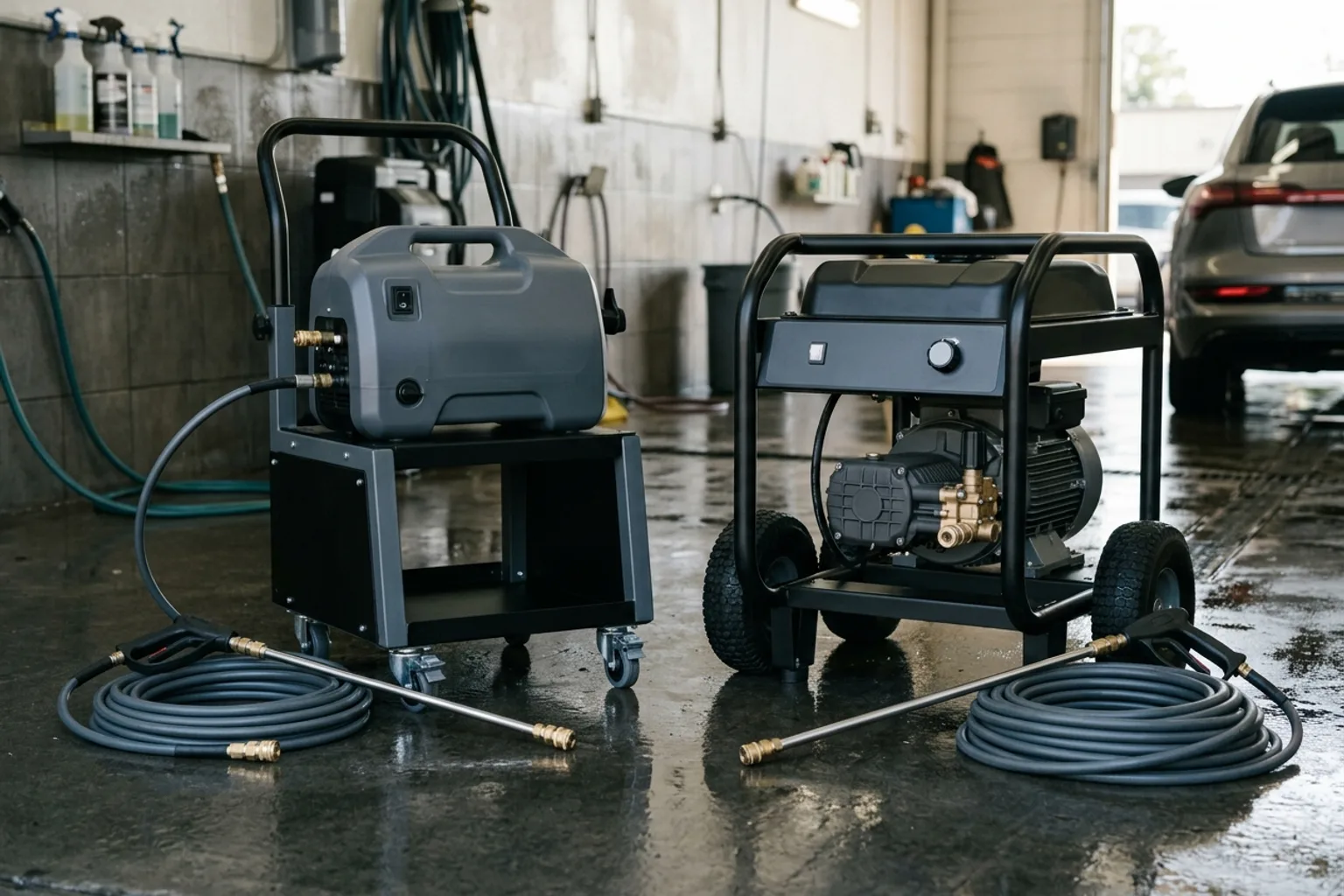
| Parameter | Electric Pressure Washer (Detailing Spec) | Gas Pressure Washer (Commercial Spec) | Automotive Detailing Verdict |
|---|---|---|---|
| Typical Operating Pressure | 1,000 – 1,500 PSI | 2,800 – 4,000 PSI | Electric is within safe clear coat envelope; gas requires nozzle detuning |
| Water Flow Rate (GPM) | 1.2 – 2.0 GPM | 2.5 – 4.0 GPM | Gas rinses significantly faster; high-end electric matches well |
| Noise Level (Decibels) | 68 – 78 dB (Conversation level) | 90 – 105 dB (Requires hearing protection) | Electric is neighborhood and garage friendly |
| Total Stop System (TSS) | Standard (Motor shuts off when trigger is released) | Rare (Engine idles continuously; pump heats up in bypass) | Electric eliminates unloader overheating and pump wear |
| Indoor / Garage Storage | 100% safe (Zero fumes, zero oil leaks) | Hazardous indoors (Carbon monoxide, gasoline fumes) | Electric is ideal for permanent garage shelf mounting |
| Maintenance Requirements | Virtually zero (Sealed wobble or triplex pump) | High (Engine oil, spark plugs, carburetor fuel stabilizer) | Electric provides hassle-free plug-and-play operation |
The Total Cleaning Units (CU) Formula Explained
To calculate the true working power of any pressure washer, multiply its operating pressure by its water flow rate: Cleaning Units (CU) = PSI × GPM. Consider these two real-world machines:
- A cheap consumer gas pressure washer producing 3,000 PSI at 2.0 GPM yields 6,000 CU, but 1,500 of that PSI is dangerously excessive for car paint.
- A professional commercial electric detailing rig (like a Kranzle or Active 2.3) producing 1,100 PSI at 2.2 GPM yields 2,420 CU, delivering maximum water volume right in the optimal paint safety zone.
When Gas Makes Practical Sense
Gasoline pressure washers remain the tool of choice for mobile detailing rigs lacking customer electrical access, commercial semi-truck fleet washing, and agricultural equipment detailing where massive water volume (3.5+ GPM) is needed to strip thick mud cakes. When using gas on passenger cars, always install an oversized orifice nozzle (such as a 4.5 or 5.0 orifice 40-degree spray tip) to drop operating pressure down to 1,200 PSI while maintaining full GPM.
Why Electric Wins for 95% of Enthusiasts
Instant Total Stop System protects pumps and ears
Electric pressure washers feature Total Stop Systems (TSS) that automatically shut off the electric motor the instant you release the spray gun trigger. When you pause to scrub wheels or wipe door jambs, the machine is completely silent, consumes zero electricity, and prevents water inside the pump head from overheating in bypass mode.
Straight answers
Frequently Asked Questions
Answers based on the evidence and sources identified in this article.
Is 2000 PSI safe for washing a car?
2,000 PSI is the maximum upper safety limit for car paint, and only when using a wide 40-degree white spray tip held at least 12 to 18 inches away from panels. The sweet spot for safe automotive washing is 1,000 to 1,400 PSI.
Can I mount an electric pressure washer permanently on a garage wall?
Yes. Modern compact electric pressure washers are specifically designed for wall-shelf mounting, paired with 50-foot retractable hose reels for immediate, tidy garage detailing.
Why does my electric pressure washer pulse when I pull the trigger?
Pulsing is almost always caused by water starvation (insufficient garden hose supply flow), air trapped in the pump, or an undersized nozzle orifice creating excessive backpressure.
Where to buy
Recommended Gear in this Guide
Active 2.0 1800 PSI 2.0 GPM Electric Pressure Washer
Quiet, compact electric design produces higher working flow (2.0 GPM) than typical consumer pressure washers.
DetailRig is reader-supported. Recommendations follow each page's evidence label (tested, used, or researched), and we never accept paid placement. When you buy through our links, we may earn an affiliate commission at no extra cost to you.
References & Sources
- DetailRig Pressure Testing Lab: Hydrodynamic impact velocity and clear coat adhesion
- Pressure Washer Manufacturers Association: Safety certification standards for surface washing

DetailRig Editorial
ContributorResearch publication
DetailRig Editorial publishes source-linked car-care explainers. These articles synthesize manufacturer instructions and clearly separate research from documented hands-on testing.