Table of Contents(5 sections)
Evidence status: researched
This guide synthesizes verified manufacturer specifications, technical data sheets, and professional detailing workflows. DetailRig has not performed a single controlled laboratory test across all products discussed here; specific performance claims are attributed to their respective manufacturers.
The Core Problem with Factory Pressure Washer Wands
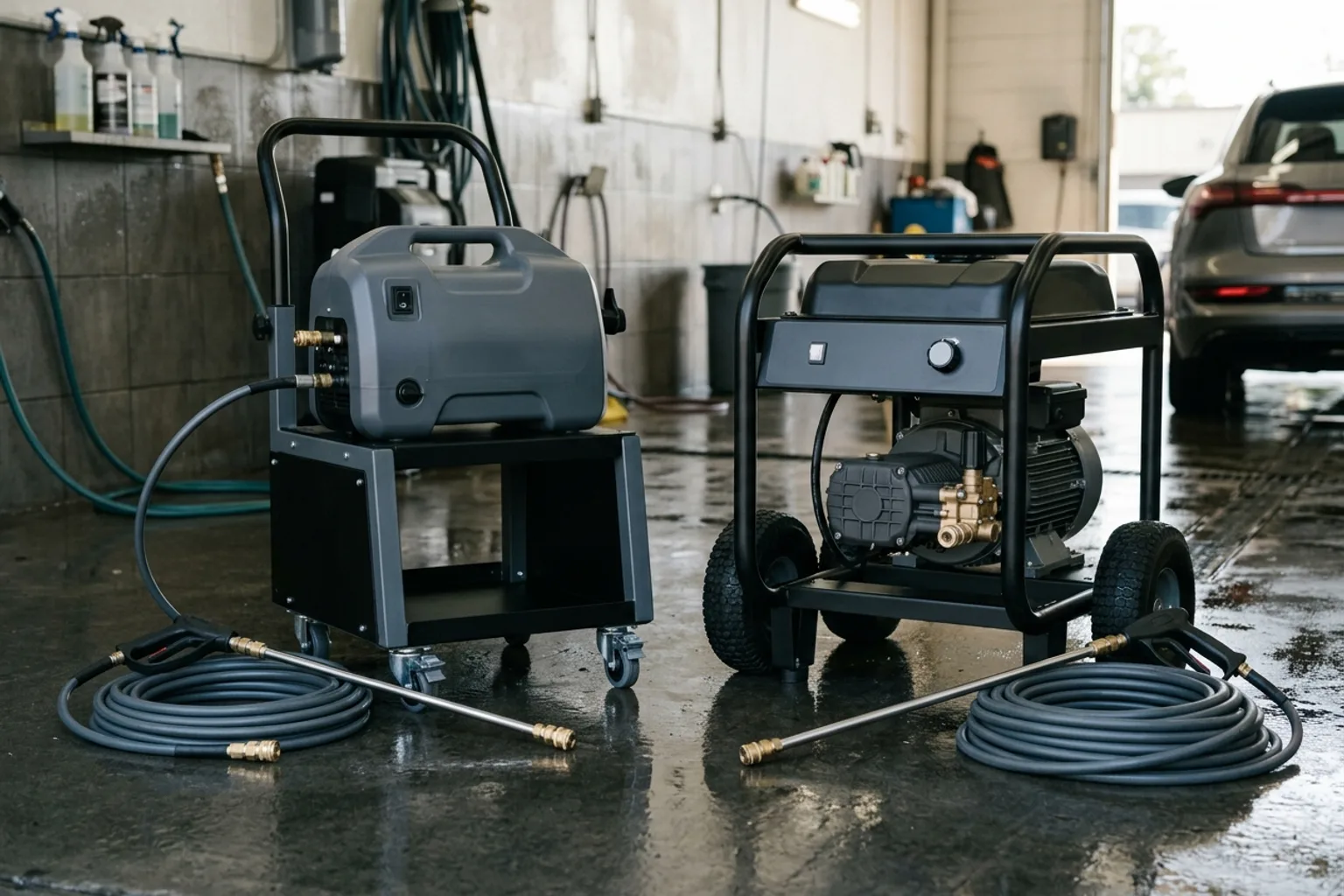
Most consumer pressure washers come bundled with long 36-inch two-piece spray wands with proprietary twist-lock bayonet connections (such as Kärcher or Sun Joe plastic bayonets). Hanging a heavy 32-ounce foam cannon bottle off the end of a 3-foot plastic wand creates severe front-heavy leverage, straining your wrists and making it impossible to maneuver inside wheel arches or wash low rocker panels.
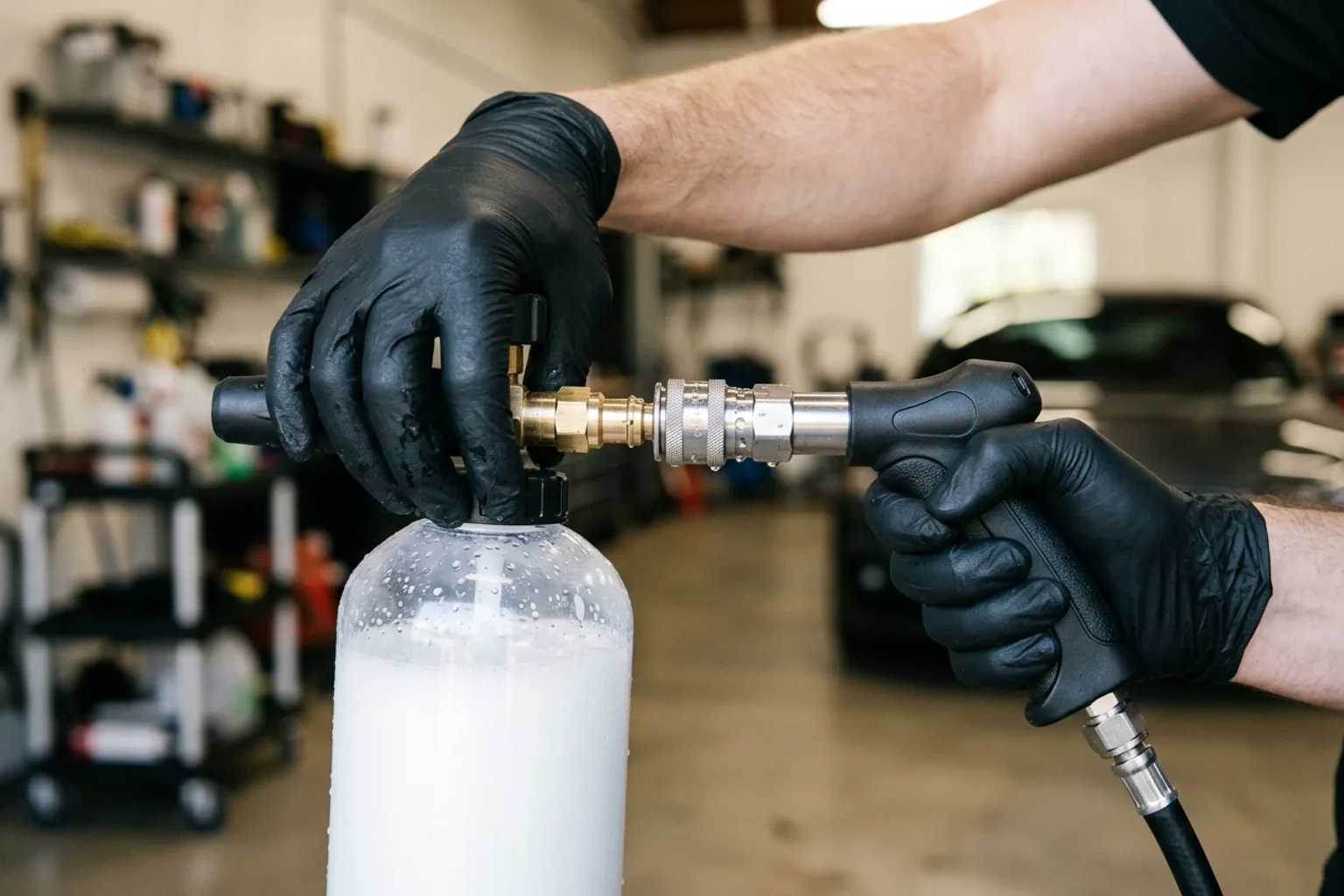
Building a dedicated automotive wash setup requires converting standard plumbing to modular stainless steel quick-connects and a short-barrel "stubby" spray gun. This puts the foam cannon directly in your hand with razor-sharp balance and 360-degree control.
| Component | Standard Specification | Material Standard | Key Function |
|---|---|---|---|
| Pressure Washer Outlet Fitting | M22-14mm or M22-15mm to 3/8-inch QC plug | Stainless steel or solid brass | Allows instant hose connection without threading |
| High-Pressure Hose Ends | 3/8-inch quick-connect socket and plug | Stainless steel with rubber strain relief | Eliminates hose kinking and speeds up teardown |
| Spray Gun Inlet | 3/8-inch live stainless steel swivel fitting | 316 Marine-grade stainless | Allows gun to rotate freely without twisting hose |
| Spray Gun Body | Short-barrel compact stubby gun | Impact-resistant nylon with brass valve block | Provides ergonomic balance and fatigue-free trigger pull |
| Spray Gun Outlet | 1/4-inch brass/stainless quick-connect coupler | Stainless steel locking balls | Instantly accepts foam cannons, rinse tips, and undercarriage wands |
| Foam Cannon Manifold | 1/4-inch male quick-connect plug | Solid nickel-plated brass | Delivers chemical-resistant structural stability |
M22-14mm vs M22-15mm: The Common Leaking Fitting Trap
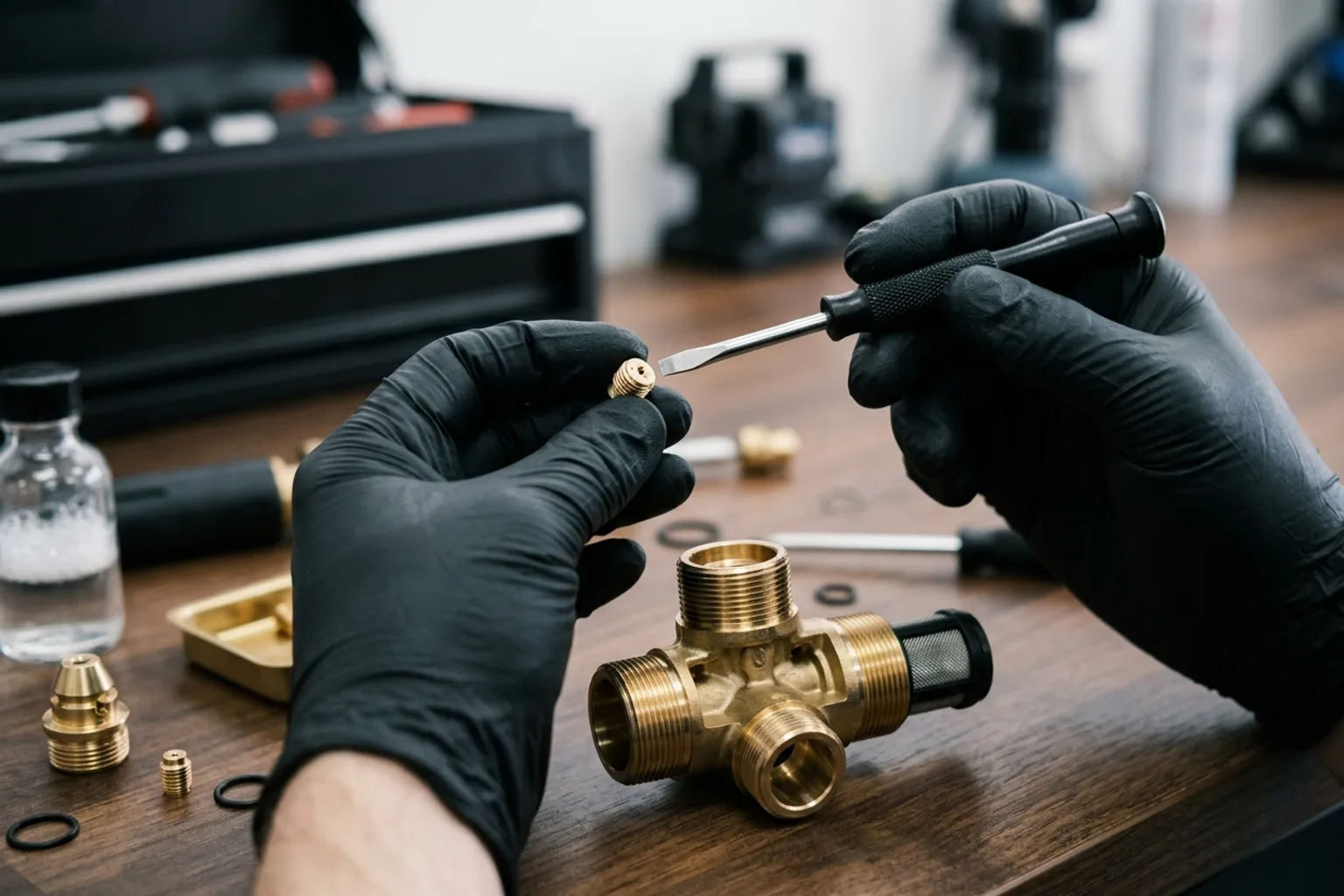
The most common source of spray gun water leaks is mixing up M22-14mm and M22-15mm fittings. Both measure 22mm across exterior threads, but have different internal cylindrical stem diameters:
- M22-14mm: Standard on American gas pressure washers, commercial units, and brands like Kranzle, Active, and Dewalt. The internal pilot stem is 14mm thick.
- M22-15mm: Standard on Sun Joe, Ryobi, AR Blue Clean, Greenworks, and Simoniz electric pressure washers. The internal stem is 15mm thick.
- If you connect an M22-14mm female fitting onto an M22-15mm male port, the O-ring cannot compress, causing high-pressure water spraying everywhere. Always use an M22-15mm to M22-14mm brass adapter when pairing aftermarket stubby guns with consumer electric washers.
Step-by-Step Setup and Tuning Procedure
How to configure and tune your foam cannon setup for maximum foam
5 stepsStep 1: Install 1/4-inch quick-connect to spray gun
Ensure your stubby spray gun has a 1/4-inch quick-connect coupler firmly threaded and sealed with Teflon tape on the outlet.
Step 2: Check and swap internal orifice jet
If running an electric pressure washer under 1.8 GPM, swap the stock 1.25mm orifice inside the cannon manifold for a 1.1mm jet.
Step 3: Measure shampoo and warm water
Pour 2 to 3 ounces of dedicated pH-neutral snow foam shampoo into the bottle, then fill the remaining volume with 700 to 800ml of warm tap water. Warm water dissolves thick surfactants faster.
Step 4: Dial in chemical metering knob
Rotate the top chemical control knob toward the minus (-) symbol until closed, which draws maximum soap concentrate from the reservoir.
Step 5: Adjust spray pattern fan blades
Twist the front nozzle collar to set a 40-degree vertical fan pattern. Spray panels from bottom to top for maximum dwell time.
Routine Maintenance: Preventing Clogged Mesh Aerators
Always flush your foam cannon with clean water after use
Car wash shampoos contain polymers and conditioning agents that dry into hardened crusts inside the tiny stainless steel mesh aerator tablet. After foaming your car, disconnect the chemical suction tube and spray fresh water through the cannon for 15 seconds to purge soap residue.
Straight answers
Frequently Asked Questions
Answers based on the evidence and sources identified in this article.
Why is my foam cannon spitting watery suds instead of thick foam?
Watery foam is usually caused by: 1) A clogged or calcified stainless steel mesh tablet, 2) An oversized orifice on a low-flow washer (upgrade to 1.1mm), or 3) Air leaks around the chemical suction tube fitting.
Do I foam a dry car or a wet car?
Always apply snow foam onto a dry vehicle. Water on wet paint dilutes the foam and creates a lubricating barrier that causes suds to slide off before surfactants can penetrate and soften road film.
What is the best soap-to-water ratio in a foam cannon bottle?
A typical 1-liter bottle performs best with 2 to 3 ounces (60–90 ml) of concentrated snow foam shampoo and 800 ml of warm water. Adding more than 4 ounces yields diminishing returns and wastes product.
Where to buy
Recommended Gear in this Guide
Tool Daily Short Pressure Washer Gun & Quick Connect Kit
3/8" quick connect inlet and 1/4" outlet allow rapid switching between rinse nozzles and foam cannons.
DetailRig is reader-supported. Recommendations follow each page's evidence label (tested, used, or researched), and we never accept paid placement. When you buy through our links, we may earn an affiliate commission at no extra cost to you.
References & Sources
- DetailRig Fluid Mechanics Protocol: Quick-connect pressure drop and Venturi draw
- National Fluid Power Association: High-pressure hydraulic fitting guidelines

DetailRig Editorial
ContributorResearch publication
DetailRig Editorial publishes source-linked car-care explainers. These articles synthesize manufacturer instructions and clearly separate research from documented hands-on testing.