Table of Contents(5 sections)
Evidence status: researched
This guide synthesizes verified manufacturer specifications, technical data sheets, and professional detailing workflows. DetailRig has not performed a single controlled laboratory test across all products discussed here; specific performance claims are attributed to their respective manufacturers.
What Detailing Clay Actually Does (and What It Cannot Do)
Detailing clay is an engineered polybutene resin compound designed for mechanical decontamination. As the pliable clay glides across clear coat over a thin film of specialized lubricant, its tacky surface shears off above-surface bonded contaminants that regular contact washing cannot remove—such as rail dust, brake dust specks, tree sap droplets, paint overspray, and industrial air pollution.
Crucially, a clay bar does not remove scratches, swirl marks, or water spot etchings. Those defects are sub-surface clear coat voids that require abrasive polishing. Furthermore, because clay is an abrasive shear mechanism, it can induce faint micro-marring (hazing), especially on soft paints. It should be used deliberately when needed, not on every wash.
| Contaminant Type | Examples | Removal Method | Does Clay Bar Handle It? |
|---|---|---|---|
| Loose Surface Dirt | Road dust, mud, light pollen | Contact wash with car shampoo | Not needed (Wash handles it) |
| Ferrous Fallout | Airborne brake dust, rail dust shards | Chemical iron fallout remover | Yes, but chemical remover is safer first |
| Organic Sticky Film | Road asphalt tar, fresh tree sap | Solvent or citrus tar remover | Yes, but tar clogs clay; dissolve first |
| Bonded Inert Grit | Paint overspray, baked sap mist, bug chitin | Mechanical clay bar + clay lube | Optimal (Primary role of clay) |
| Sub-Surface Scratches | Swirl marks, fingernail scratches, clear coat etching | Abrasive machine polishing | No (Clay cannot fix scratches) |
The Plastic Baggie Test: The Definitive Diagnostic
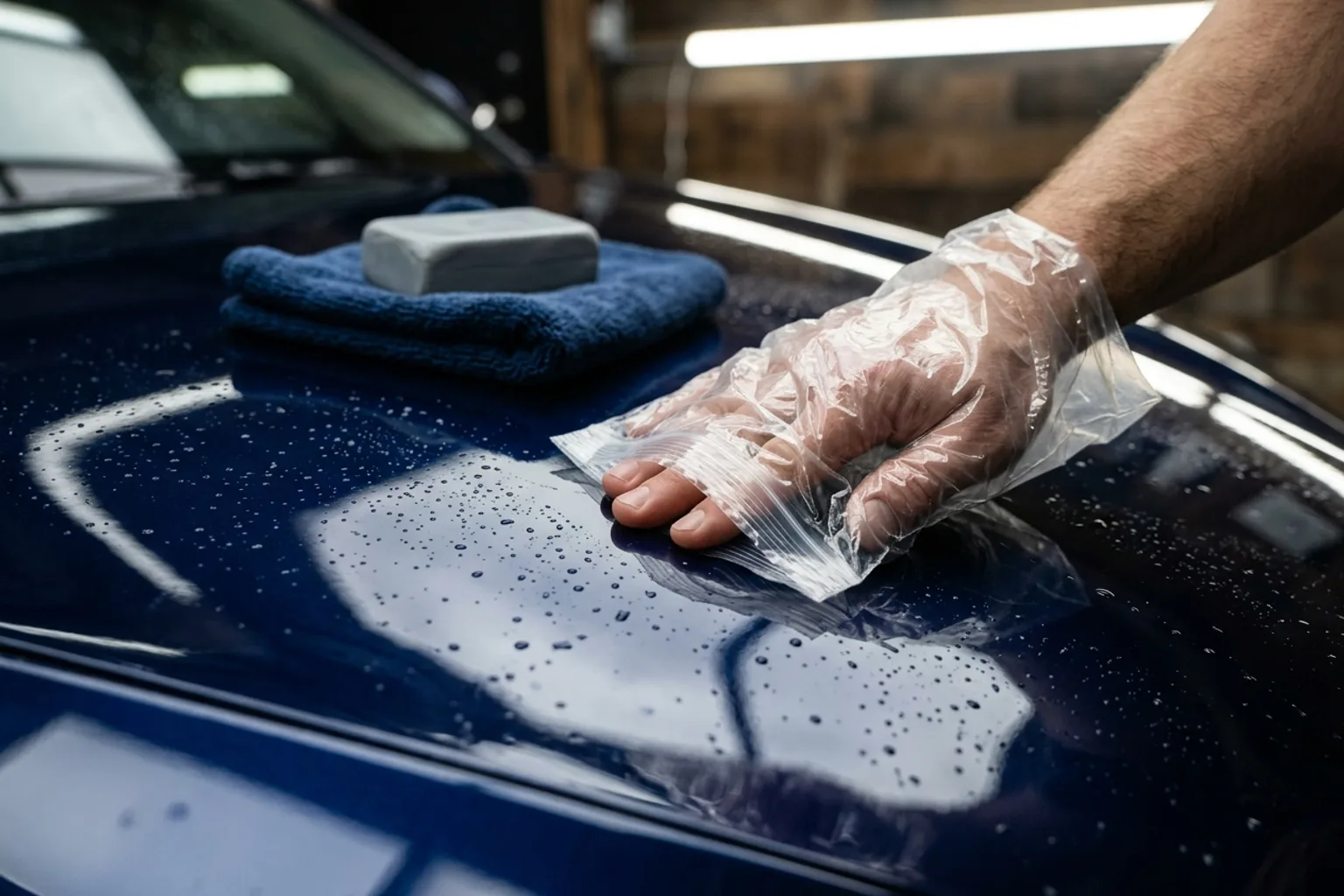
Human fingertips are cushioned by soft ridges and natural skin oils, which desensitize touch. When you slide bare fingers across freshly washed paint, it may feel deceptively smooth. The plastic sandwich bag test magnifies tactile sensitivity tenfold.
How to perform the plastic baggie paint test
4 stepsStep 1: Thoroughly wash and dry a test section
Wash your vehicle hood or upper door panel using standard two-bucket shampoo and dry it completely. Never perform the bag test on dirty paint.
Step 2: Slip your hand inside a thin plastic sandwich bag
Use a standard thin polyethylene sandwich baggie or clean grocery produce bag.
Step 3: Lightly glide fingertips across the clear coat
With zero downward pressure, slide your fingers over the paint. If the panel is clean, the bag will glide like ice on glass.
Step 4: Interpret the tactile feedback
If you feel rough, gritty bumps, stippling, or sandpaper-like drag, embedded industrial fallout has bonded to the clear coat. The vehicle requires mechanical claying.
How Often Should You Clay Bar a Vehicle?
- Daily Drivers Parked Outside: Typically requires claying 2 times per year (spring and autumn) before renewing seasonal paint sealants or waxes.
- Garaged / Low-Mileage Vehicles: Often require claying only once every 12 to 24 months, verified by the baggie test.
- Prior to Machine Polishing: Mandatory. Running a high-speed polishing pad over bonded grit will dislodge particles and grind them into the clear coat, creating severe scratches.
- Prior to Ceramic Coating: Mandatory. Ceramic coatings require direct molecular bonding to bare, virgin clear coat; any bonded fallout trapped underneath prevents proper adhesion.
Safe Claying Best Practices
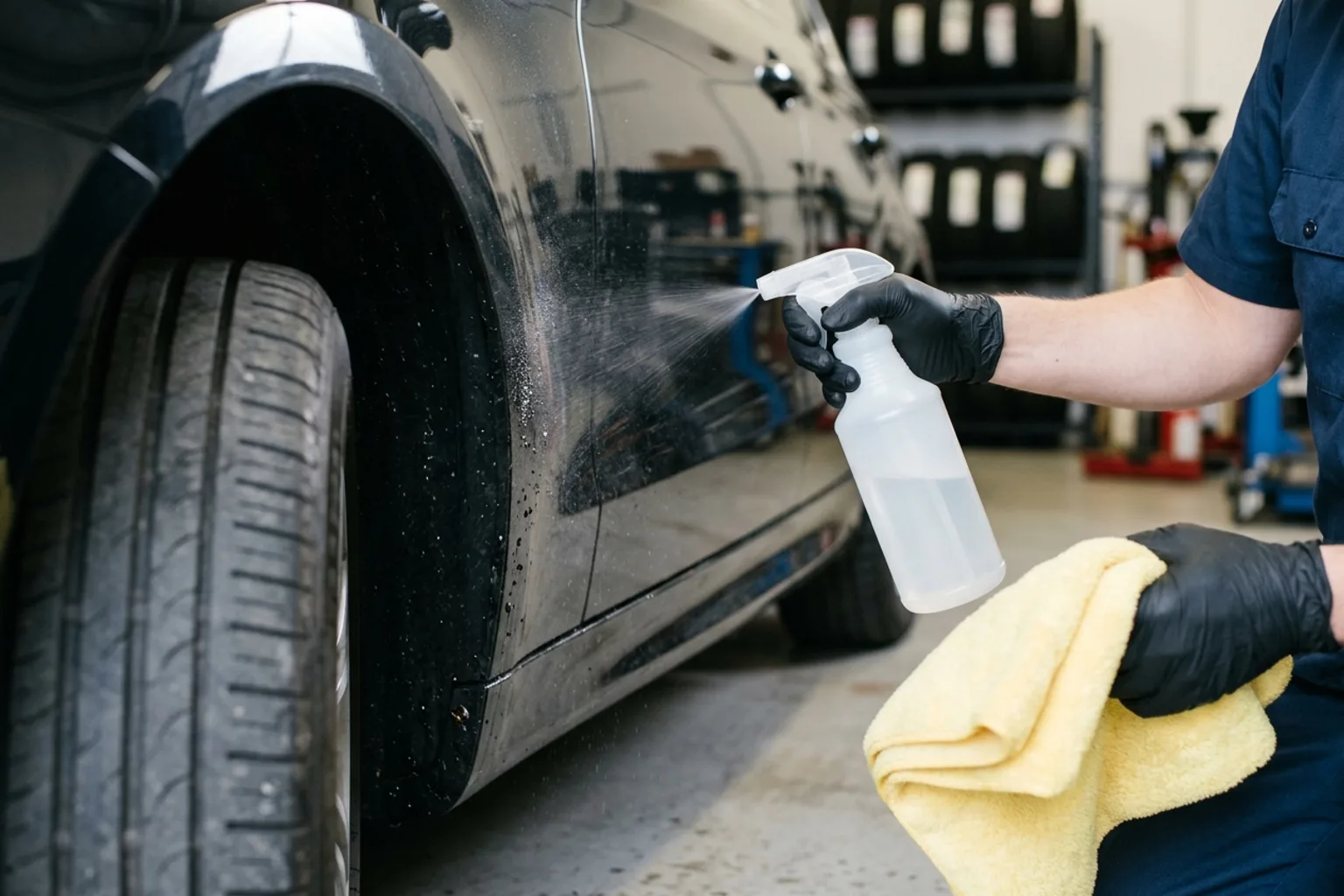
Always decontaminate chemically before touching paint with clay
Spraying an iron remover and tar dissolver before claying melts 70% of bonded sharp metallic shards. This prevents your clay bar from becoming packed with sharp iron spikes that drag across the clear coat and cause micro-marring.
Straight answers
Frequently Asked Questions
Answers based on the evidence and sources identified in this article.
Does a clay bar remove clear coat or scratches?
No. Clay does not remove clear coat or fix scratches. It only shears off above-surface bonded contaminants sitting on top of the clear coat.
What happens if I drop my clay bar on the ground?
Throw it away immediately. Detailing clay is ultra-tacky and will instantly pick up sand, rocks, and ground grit that cannot be rinsed clean. Reusing a dropped clay bar will severely gouge vehicle paint.
Can I use soapy water instead of dedicated clay lubricant?
Standard car wash soap can sometimes be used if mixed slick, but some dish soaps and strong degreasers degrade and dissolve clay polymers. A dedicated clay lubricant provides superior slickness and prolongs clay life.
Where to buy
Recommended Gear in this Guide
Chemical Guys Clay Luber & Heavy-Duty Clay Block Kit
Includes dedicated high-lubricity spray and elastic synthetic clay to lift bonded grit without scratching paint.
DetailRig is reader-supported. Recommendations follow each page's evidence label (tested, used, or researched), and we never accept paid placement. When you buy through our links, we may earn an affiliate commission at no extra cost to you.
References & Sources
- DetailRig Surface Prep Standards: Mechanical shear thresholds and tactile inspection
- Automotive Detailing Network: Paint contamination analysis and decontamination cycles

DetailRig Editorial
ContributorResearch publication
DetailRig Editorial publishes source-linked car-care explainers. These articles synthesize manufacturer instructions and clearly separate research from documented hands-on testing.