Table of Contents(5 sections)
Evidence status: researched
This guide synthesizes verified manufacturer specifications, technical data sheets, and professional detailing workflows. DetailRig has not performed a single controlled laboratory test across all products discussed here; specific performance claims are attributed to their respective manufacturers.
The Chemistry of Road Tar and Bitumen Contamination
During summer repaving projects and highway commuting, molten asphalt, bitumen binding agents, and tire rubber bits are thrown by tires onto vehicle rocker panels, wheel arches, and lower doors. Road tar is an organic hydrocarbon compound: it is completely insoluble in water and unaffected by alkaline car shampoos or iron fallout sprays.
Attempting to scrub sticky tar blobs off paint using a bug sponge or wash mitt simply smears black petroleum grease across clear coat and grinds abrasive mineral sand trapped inside the tar into your finish. Effective removal requires the chemical principle of "like dissolves like"—using specialized non-polar organic solvents or natural citrus terpenes to liquefy the asphalt matrix.
| Solvent Base | Active Chemistry | Tar Dissolution Speed | Clear Coat Safety | Environmental & Odor Profile |
|---|---|---|---|---|
| Natural Citrus Terpene | Refined d-Limonene extract | Moderate (2 – 4 min dwell) | Extremely safe on clear coat, trim & PPF | Biodegradable, pleasant natural orange scent |
| Aliphatic Hydrocarbon Solvent | De-aromatized petroleum distillate | Very Fast (1 – 2 min dwell) | Safe on cured clear coat; avoid fresh lacquer | Solvent odor; requires good garage ventilation |
| Aromatic Hydrocarbon (Xylene/Toluene style) | Heavy aromatic fractions | Instantaneous dissolution | Dangerous (Can soften clear coat and fog plastic) | Hazardous VOCs (Not recommended for detailing) |
| Household Mineral Spirits / Kerosene | Unrefined petroleum cut | Slow to moderate | Low risk if washed immediately | Greasy oily residue; difficult to rinse away |
Citrus d-Limonene vs Modern Refined Solvents
Natural citrus-based tar removers utilize d-limonene extracted from cold-pressed orange peels. They offer outstanding safety on delicate finishes, automotive vinyl wraps, and paint protection films (PPF) where harsh petroleum solvents might degrade adhesives or cloud urethane films. Additionally, their fresh citrus aroma makes them pleasant to use indoors.
Specialized petroleum-based solvent tar removers (such as CarPro TarX or Gyeon Q2M Tar) work slightly faster on hardened, baked-on tar globules that have petrified over several years. High-end modern solvents are de-aromatized, meaning noxious aromatic compounds have been chemically stripped to ensure paint and rubber safety.
Step-by-Step Scratch-Free Tar Removal Protocol
How to safely dissolve road tar and tree sap without scrubbing
5 stepsStep 1: Wash and dry the vehicle panels
Clean away road dust and grit so the tar solvent contacts the bitumen directly rather than sitting on top of mud.
Step 2: Spray tar remover directly onto tar spots
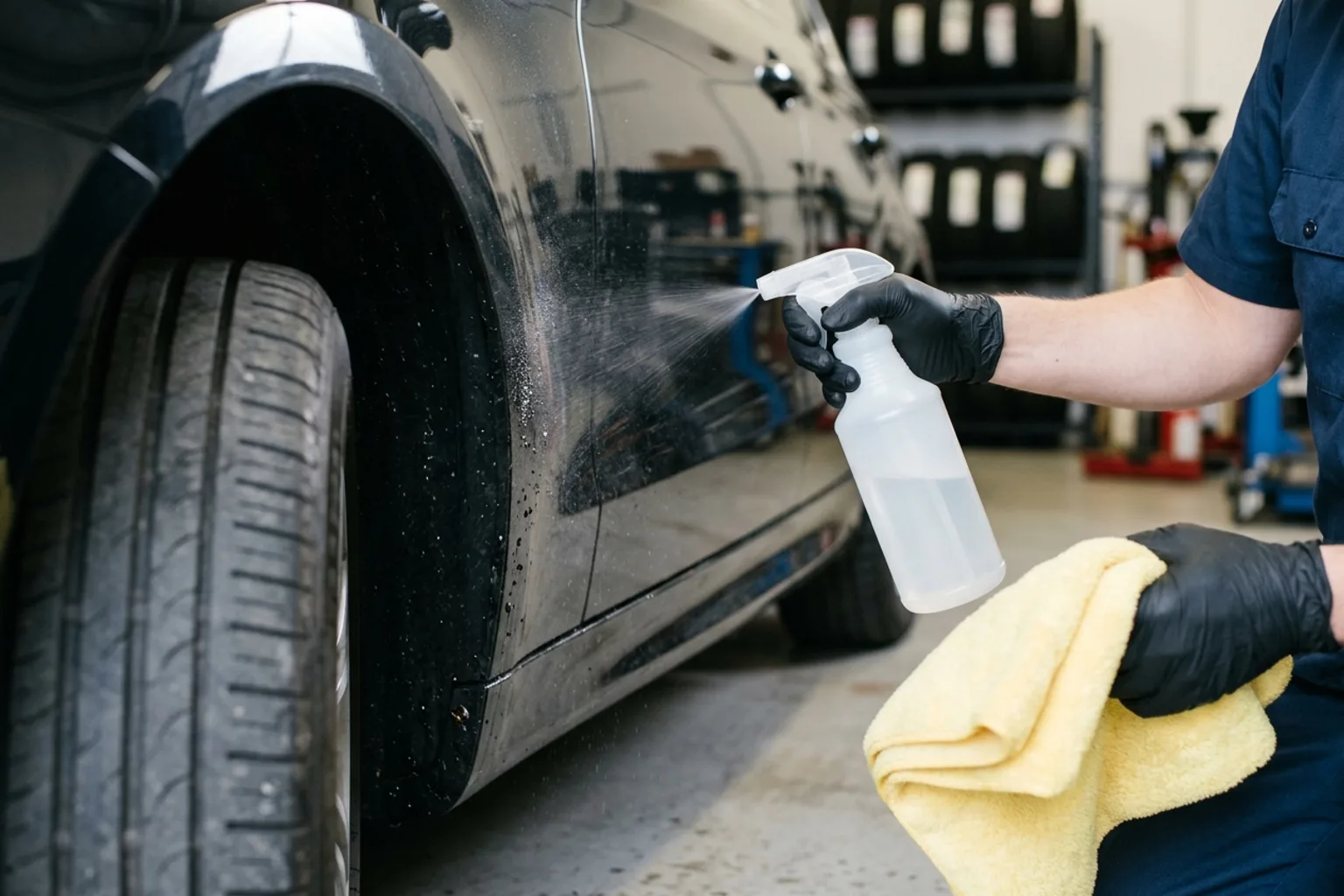
Mist product directly onto lower rockers, behind front tires, and lower door panels. Let the solvent dwell for 2 to 3 minutes.
Step 3: Watch for the runoff melting reaction
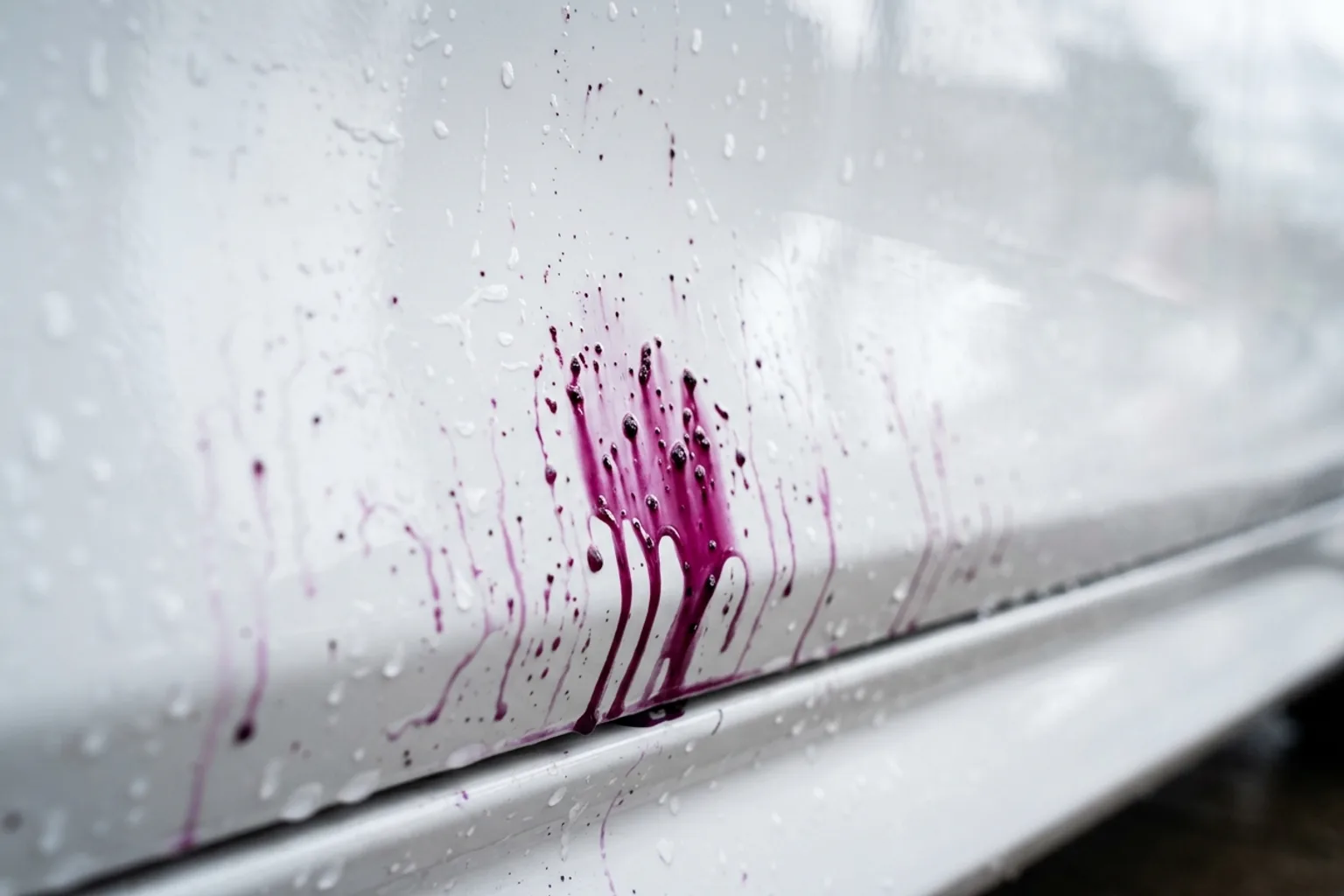
Observe the tar spots dissolving: dark black tar droplets will begin to liquefy and run down the panel in brownish-amber streaks.
Step 4: Wipe gently with a soft microfiber towel
Take a plush, folded microfiber towel dampened with tar remover. Gently glide it across the spots—the tar will wipe away like soft melted butter with zero scrubbing pressure.
Step 5: Re-wash or wipe with panel prep
Re-wash the panel with car shampoo or spray a panel wipe solvent to neutralize and remove lingering solvent film before applying paint protection.
The Bug Sponge Trap: Why Scrubbing Destroys Paint
Never use abrasive mesh bug sponges on clear coat
Hardware store nylon bug-and-tar sponges use stiff, abrasive honeycomb netting. Scrubbing road tar with these sponges scratches clear coat severely. Let the chemical solvent dissolve the tar—your microfiber towel should merely collect the liquefied residue.
Straight answers
Frequently Asked Questions
Answers based on the evidence and sources identified in this article.
Can tar remover also remove baked-on tree sap and sticker glue?
Yes! Tree sap and commercial adhesive residues are organic resins that dissolve readily in citrus d-limonene and hydrocarbon solvents.
Will tar remover damage paint protection film (PPF) or vinyl wraps?
Citrus-based tar removers (d-limonene) are generally safe for PPF and vinyl wraps. However, avoid aggressive petroleum solvent removers on wrapped vehicles as they can soften vinyl edges.
Does tar remover strip wax and sealant?
Yes. Organic solvents dissolve hydrocarbon waxes and synthetic paint sealants instantly. Always reapply wax, sealant, or ceramic spray after using tar remover.
Where to buy
Recommended Gear in this Guide
Stoner Car Care 91154 Tarminator Bug & Tar Remover
Quickly breaks down heavy road tar, tree sap, and asphalt binder without aggressive rubbing or clear coat damage.
DetailRig is reader-supported. Recommendations follow each page's evidence label (tested, used, or researched), and we never accept paid placement. When you buy through our links, we may earn an affiliate commission at no extra cost to you.
References & Sources
- DetailRig Chemical Compatibility Lab: Solvent permeability through automotive clear coats
- American Society for Testing and Materials (ASTM): Bitumen solubility and hydrocarbon dissolution standards

DetailRig Editorial
ContributorResearch publication
DetailRig Editorial publishes source-linked car-care explainers. These articles synthesize manufacturer instructions and clearly separate research from documented hands-on testing.