Table of Contents(5 sections)
Evidence status: researched
This guide synthesizes verified manufacturer specifications, technical data sheets, and professional detailing workflows. DetailRig has not performed a single controlled laboratory test across all products discussed here; specific performance claims are attributed to their respective manufacturers.
When Hand Polishing Makes Practical Sense
In an era dominated by high-speed dual-action polishers, hand polishing remains an essential skill for every detailer. Machine pads cannot safely reach into recessed door handle cups, narrow A-pillars, around delicate exterior badges, or under roof rails. Hand polishing is also the safest method for addressing isolated scuffs, removing rubber parking transfer, or clearing fingernail scratches without masking half the car.
However, expectations must be realistic. Human hands exert uneven, localized pressure and cycle at roughly 2 to 3 strokes per second, compared to a machine executing 50 to 80 orbits per second. Hand polishing will not level widespread deep swirl marks across an entire vehicle; reserve it for spot repairs and tight clearance sections.
| Detailing Task | Hand Polishing Suitability | Machine Polishing Suitability | Recommended Approach |
|---|---|---|---|
| Fingernail scuffs in door cups | Ideal (Only practical tool) | Impossible (Backing plate cannot fit) | Foam applicator + fine polish by hand |
| Paint transfer from rubber bumper rub | Excellent (Fast spot clean) | Overkill for small spot | Microfiber towel + medium compound by hand |
| Pillars and emblem tight borders | Very good (High precision) | Risk of edge burn or pad strike | Folded microfiber cloth or hand puck |
| Full vehicle swirl mark correction | Extremely poor (Dozens of hours) | Optimal (Fast, uniform leveling) | Dual-action random orbital polisher |
Essential Hand Polishing Supplies
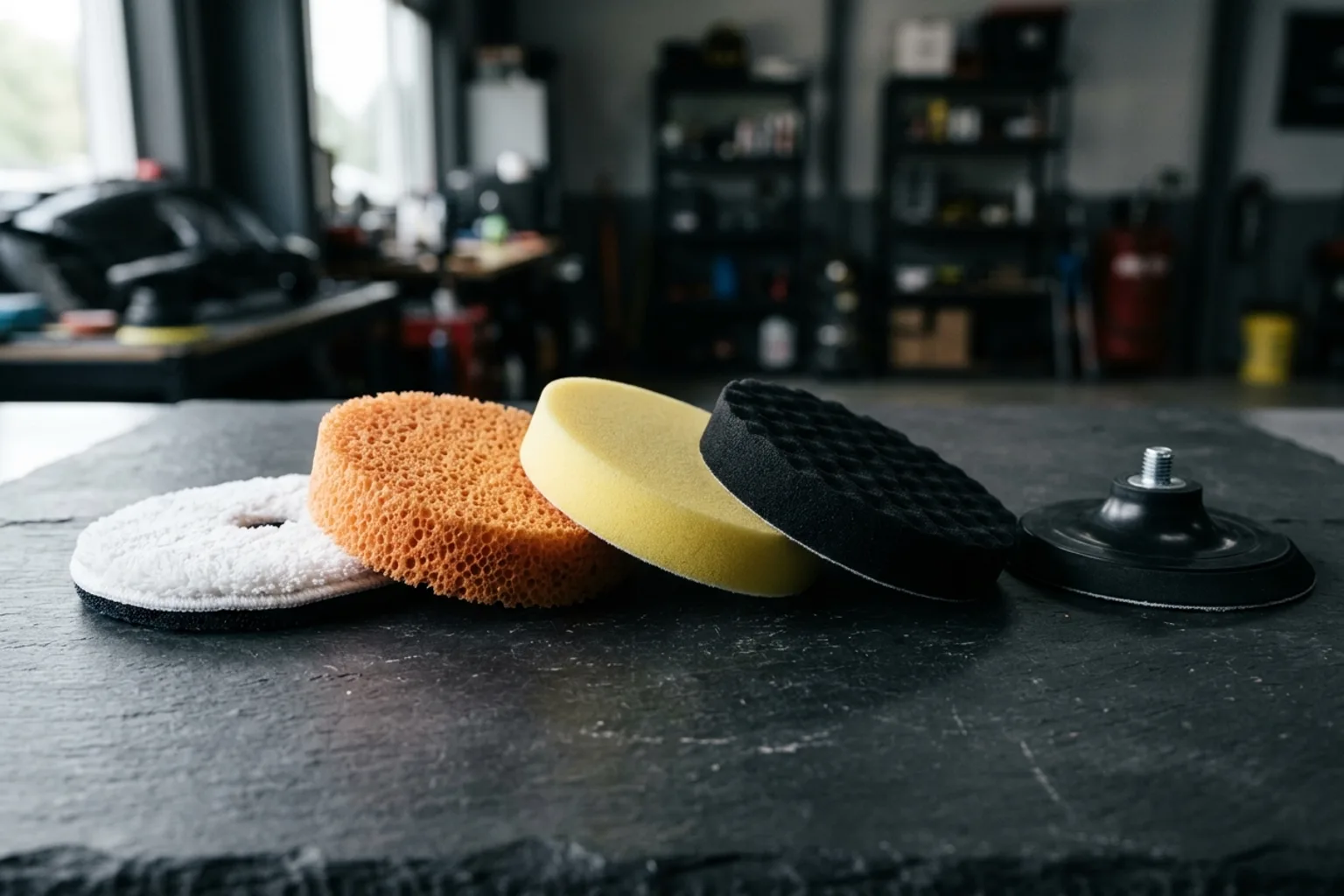
- High-density dual-sided foam hand applicator puck (firm cutting side, soft finishing side).
- Plush edgeless 350+ GSM microfiber towels for residue buffing.
- Modern diminishing abrasive polish or medium-cut compound (avoid old-fashioned gritty rubbing compounds that leave deep gouges).
- Isopropanol (IPA) or dedicated panel wipe solution to inspect true defect removal rather than masking fillers.
- Detailing clay bar and lubricant to decontaminate the area before applying abrasive friction.
Step-by-Step Hand Polishing Procedure
How to safely polish car paint by hand
5 stepsStep 1: Wash and chemically decontaminate the panel
Thoroughly wash the area and use an iron remover and detailing clay bar to extract embedded grit. Polishing over road debris will drag particles across clear coat, creating fresh scratches.
Step 2: Prime the applicator pad
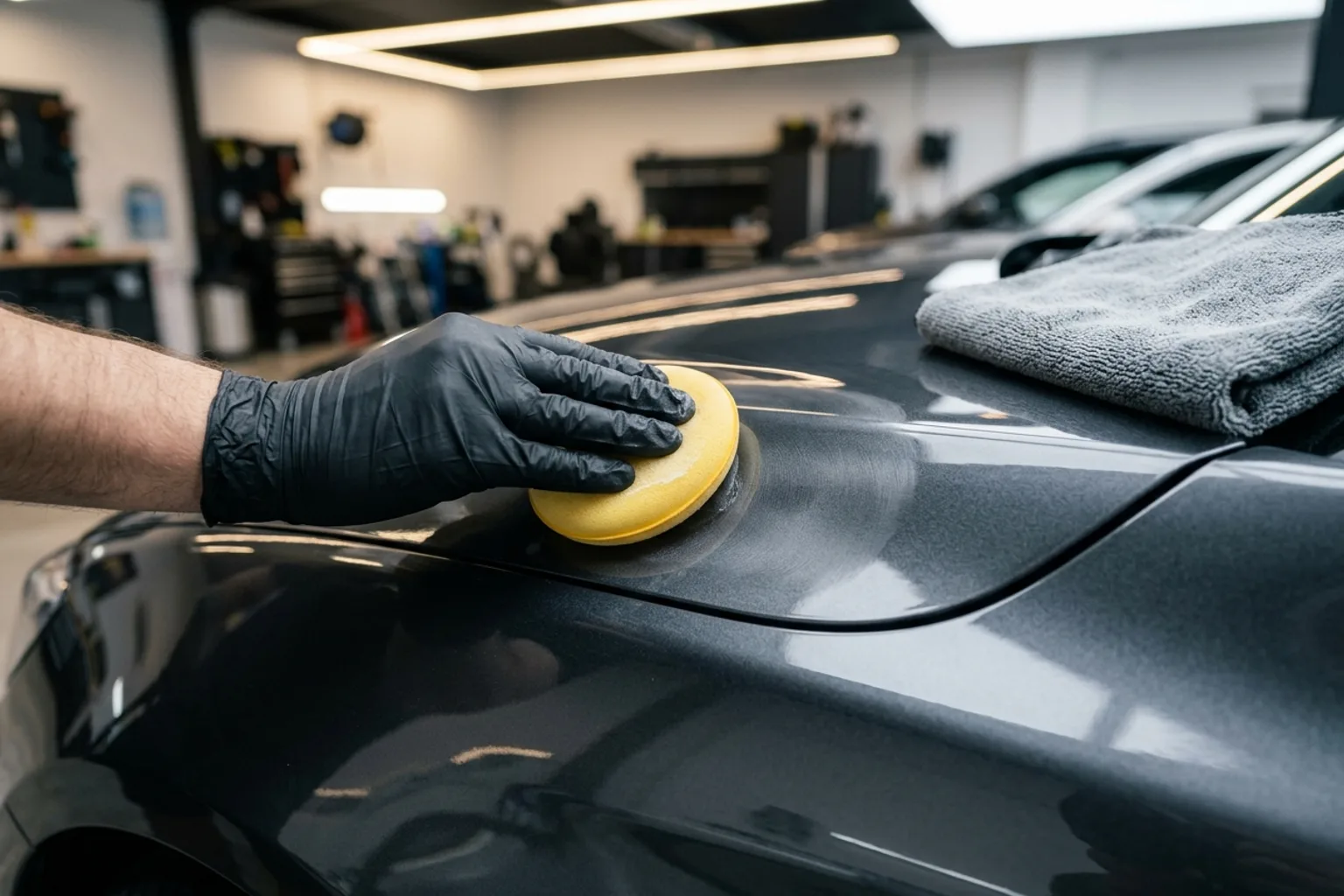
Apply 3 pea-sized drops of compound or polish onto the dense foam applicator. Dab the pad across a small 12x12 inch work area to distribute the abrasive evenly.
Step 3: Work in straight, overlapping cross-hatch lines
Press flat with 3 fingers providing firm, even pressure. Never polish with fingertip points alone, which creates uneven grooving. Move in straight horizontal lines with 50% overlap, then immediately switch to vertical passes for 60 to 90 seconds.
Step 4: Buff away polish residue
Fold a clean microfiber towel into quarters. Gently buff away residue before it bakes onto paint. Turn towel to a clean face for a final inspection wipe.
Step 5: Inspect with panel wipe and protect
Spray a panel wipe solvent to strip away polishing oils and check if the defect is truly removed. Once satisfied, apply a sealant or ceramic spray coating to seal bare clear coat.
Common Hand Polishing Pitfalls to Avoid
Avoid old-school gritty rubbing compounds
Traditional brown paste rubbing compounds use massive unrefined aluminum oxide abrasives designed for lacquer paints. On modern clear coats, they scour the finish with deep hazy micro-scratches that cannot be buffed out by hand. Always use modern SMAT (Super Micro Abrasive Technology) or DAT (Diminishing Abrasive Technology) liquids.
Straight answers
Frequently Asked Questions
Answers based on the evidence and sources identified in this article.
Can I remove deep scratches by hand?
If your fingernail catches sharply in the scratch, it has penetrated clear coat into base color. Hand polishing cannot fix clear coat loss; it can only soften the scratch edges to make it less visible.
Should I polish by hand in circular motions?
No. Polishing in circular motions concentrates uneven pressure on the outside arc of your hand, often causing circular hand swirls. Always use straight, overlapping cross-hatch strokes (left-to-right, then top-to-bottom).
Can I use a regular bath towel to buff off polish?
Never. Coarse cotton bath towels have sharp, stiff fibers that immediately induce swirl scratches into clear coat. Use only clean, edgeless automotive microfiber towels.
Where to buy
Recommended Gear in this Guide
Meguiar's Ultimate Polish & High-Density Foam Applicator Set
Rich polishing oils eliminate minor towel marks and maximize clear coat depth safely without a machine.
DetailRig is reader-supported. Recommendations follow each page's evidence label (tested, used, or researched), and we never accept paid placement. When you buy through our links, we may earn an affiliate commission at no extra cost to you.
References & Sources

DetailRig Editorial
ContributorResearch publication
DetailRig Editorial publishes source-linked car-care explainers. These articles synthesize manufacturer instructions and clearly separate research from documented hands-on testing.