Table of Contents(5 sections)
Evidence status: researched
This guide synthesizes verified manufacturer specifications, technical data sheets, and professional detailing workflows. DetailRig has not performed a single controlled laboratory test across all products discussed here; specific performance claims are attributed to their respective manufacturers.
Why Traditional Paste Wax Frustrates Beginners
For decades, applying car wax was a grueling Saturday afternoon chore. Traditional carnauba paste waxes contained heavy petroleum carriers and chalky kaolin clay fillers. If you applied the wax too thick, let it dry under the sun, or waited five minutes too long before wiping, the paste turned into a stubborn, rock-hard crust that required violent buffing and left dusty white residue all over unpainted plastic trim.
Modern car waxes engineered for beginners have completely eliminated these headaches. Formulated with refined carnauba emulsions, synthetic polymer binders, and non-staining lubricating oils, contemporary waxes spread like butter, wipe away effortlessly with a single microfiber pass, and never leave chalk stains.
| Wax Format | Ease of Application | Buffing Effort | Optical Characteristics | Realistic Durability |
|---|---|---|---|---|
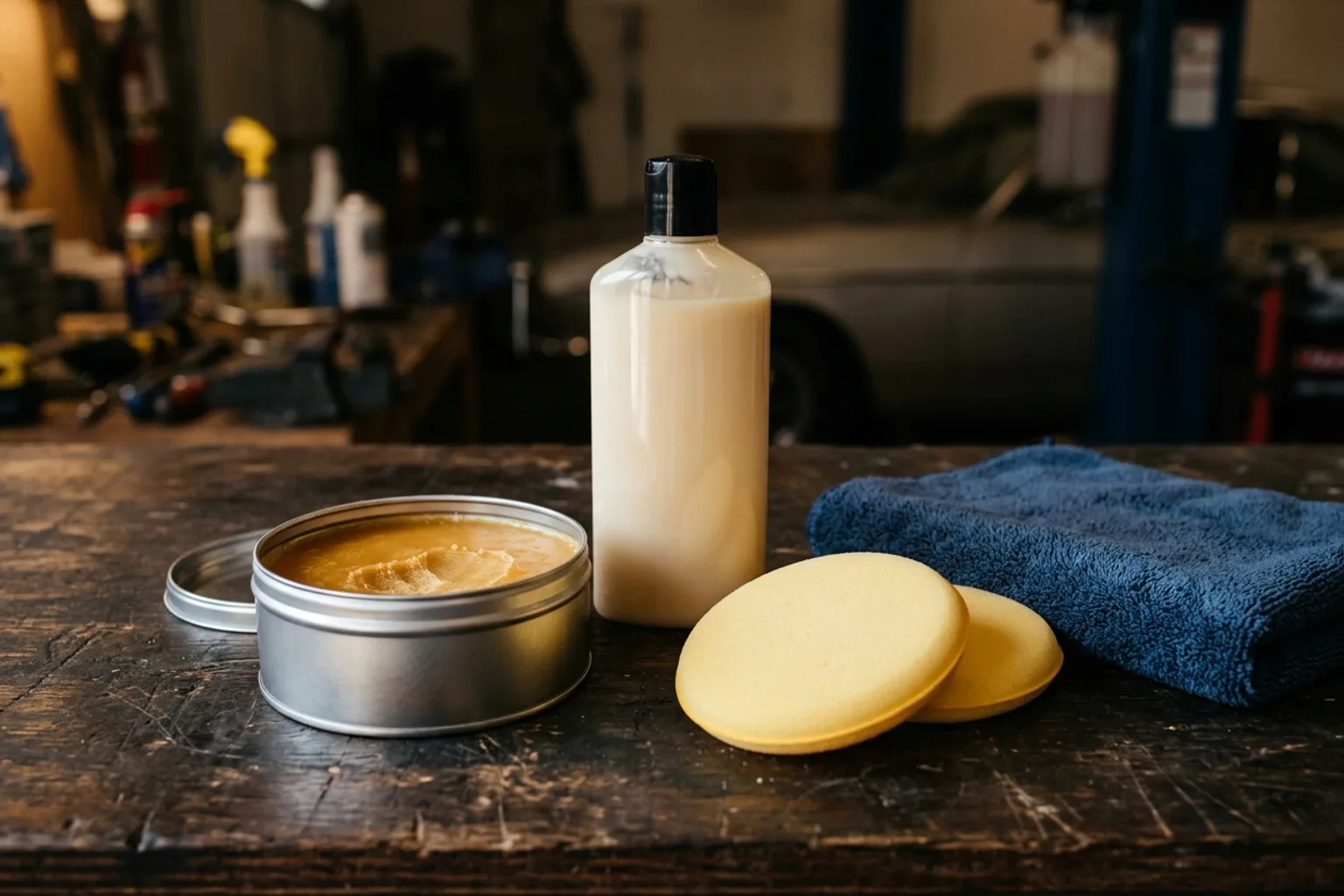
| Synthetic Liquid Polymer Wax | Very Easy (Pour onto foam pad, thin spread) | Minimal (Wipes clean effortlessly) | Sharp, glassy, mirror reflections | 3 – 4 months |
| Soft Carnauba Paste Wax | Moderate (Requires light pad twisting) | Low if applied paper-thin | Warm, deep, wet-look depth (Great on dark colors) | 6 – 8 weeks |
| Trigger Spray Wax | Maximum (Mist and wipe in 10 minutes) | Virtually zero | Light surface enhancement and gloss boost | 3 – 6 weeks |
| Hard Vintage Carnauba Puck | Difficult (Requires heavy friction to melt) | High (Chalks and dusts if over-applied) | Classic warm show-car glow | 4 – 6 weeks |
What to Look for in a Beginner-Friendly Car Wax
- Non-Staining / Trim-Safe Chemistry: The formula must not leave white chalk lines on black textured bumper plastic, mirror stems, or rubber window gaskets.
- Long Open-Time / Forgiving Haze Window: You should be able to wax the entire car from front to back before starting the buffing process, without the wax turning into cement.
- Sunlight and Ambient Heat Forgiveness: Many DIYers lack climate-controlled indoor garages; look for waxes labeled for application in direct sunlight or warm ambient temperatures.
- Subtle Masking and Filling: Beginning detailers rarely perform multi-stage machine paint correction; quality beginner waxes contain mild optical fillers that visually conceal light wash swirls.
The Proper Thin-Coat Waxing Protocol
How to wax a car properly without streaking or dusting
5 stepsStep 1: Thorough wash and panel inspection
Wash the vehicle and ensure panels are cool to the touch. If the surface feels gritty, use a detailing clay bar first.
Step 2: Dampen your foam applicator pad
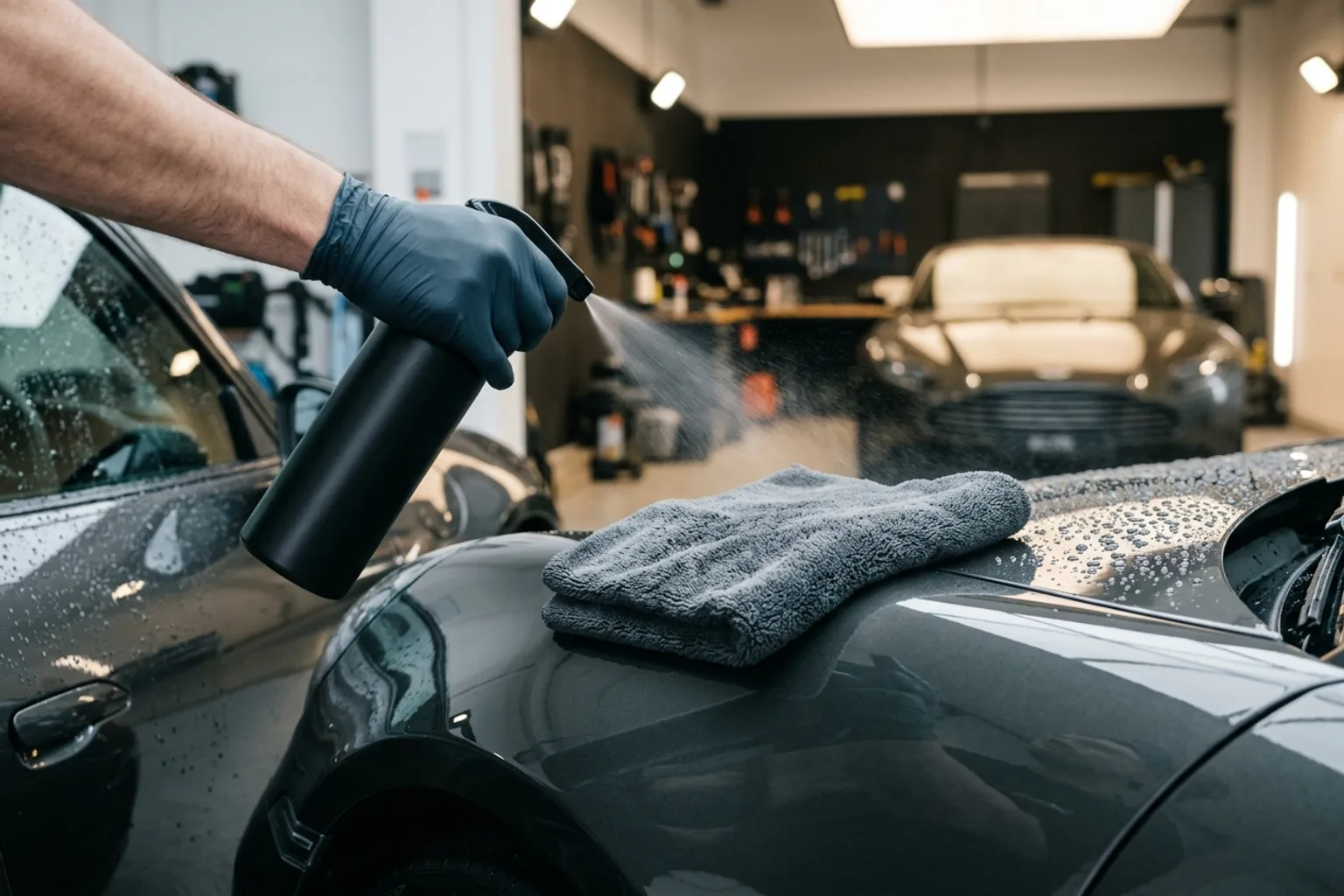
Lightly spritz your round foam applicator with quick detailer or clean water to prime the cell structure and prevent dry pad drag.
Step 3: Apply the wax whisper-thin
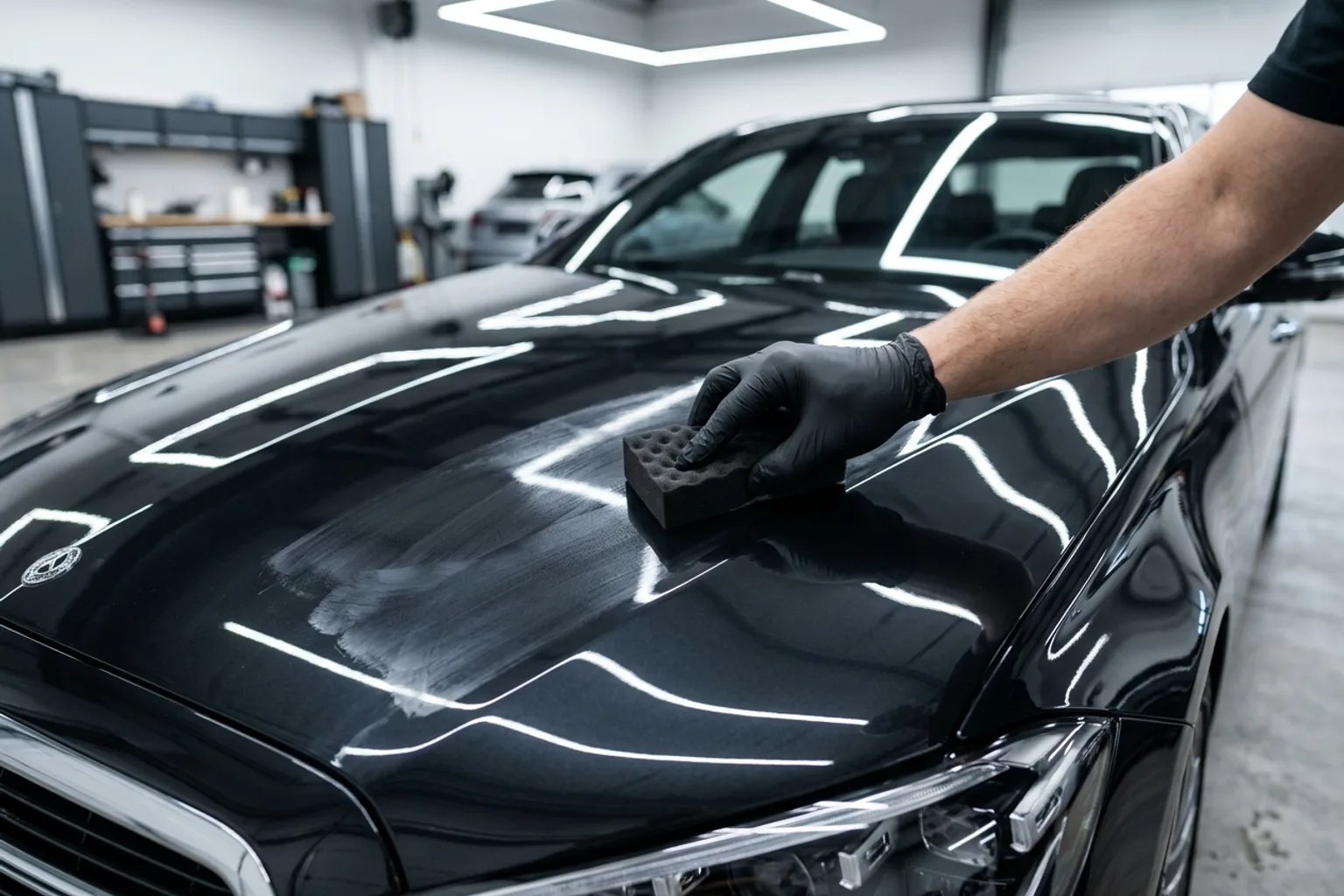
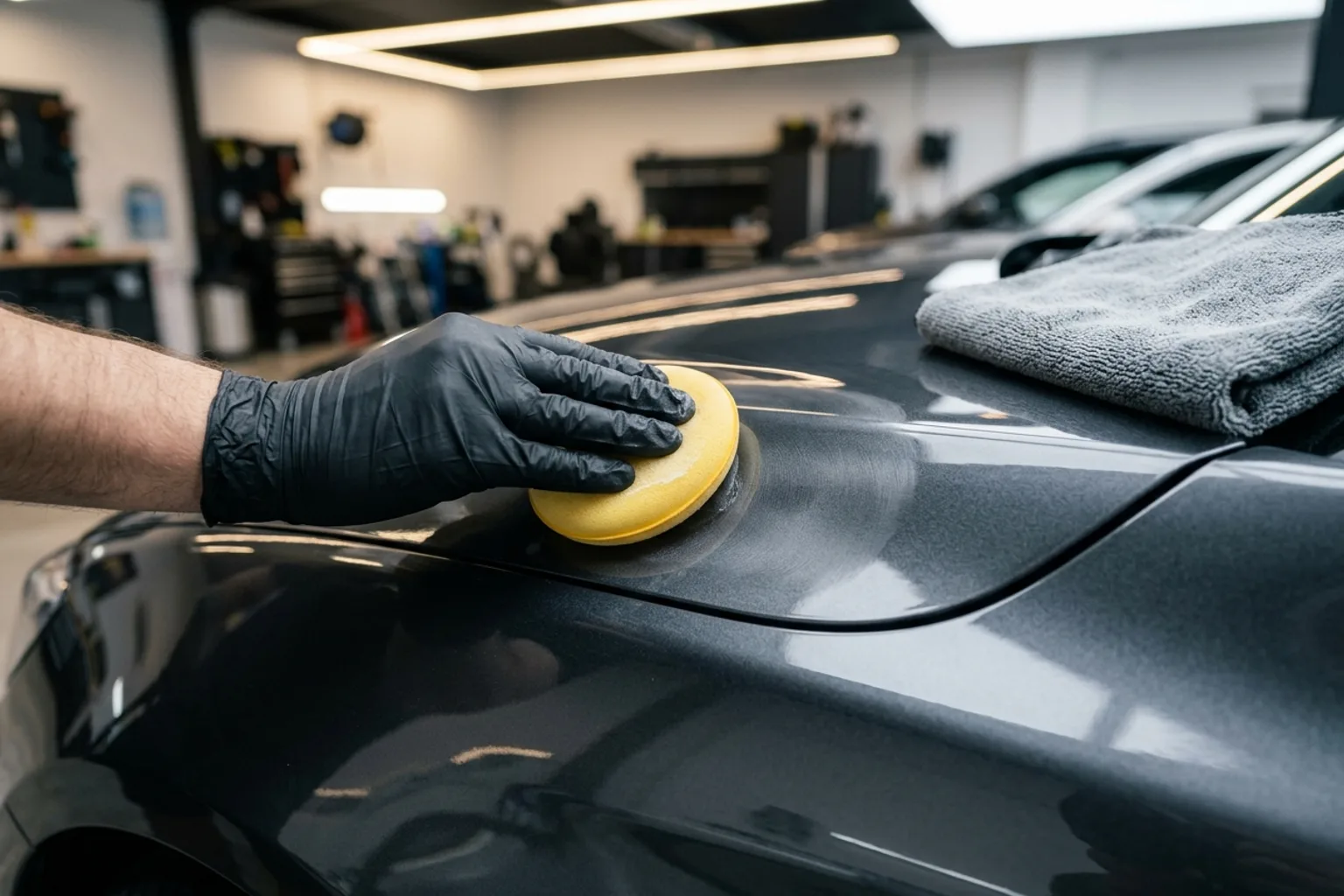
Spread wax in overlapping straight lines or tight circular loops. The single biggest mistake is using too much product: you only need a barely visible, translucent haze.
Step 4: Perform the swipe test
After 5 to 10 minutes, swipe a clean finger across the hazed wax. If the paint underneath is clear and glossy with zero smearing, the wax is ready to buff.
Step 5: Buff clean with folded microfiber
Fold a plush microfiber towel into quarters. Gently wipe the surface clean without downward force, turning the towel frequently to a fresh face.
Summary: Choosing Between Wax and Modern Sealants
When to choose carnauba wax over synthetic coatings
Choose carnauba wax if you enjoy the meditative ritual of hand detailing, want warm, buttery depth on red or black paint, and do not mind re-waxing every 6 to 8 weeks. Choose a synthetic sealant or ceramic spray if you want maximum winter durability, acid rain resistance, and 6+ months of protection.
Straight answers
Frequently Asked Questions
Answers based on the evidence and sources identified in this article.
How much car wax should I use on a sedan?
You only need roughly 1 to 2 ounces of liquid wax or a few light swipes of a paste wax tin for an entire full-size vehicle. If you see thick white clumps, you have applied five times too much wax.
Does car wax wash off when it rains?
Quality car wax withstands multiple rainstorms. However, road grime, ultraviolet sunlight, and high-pH alkaline car wash soaps gradually break down natural carnauba bonds over 6 to 8 weeks.
Can I apply wax by machine using a dual-action polisher?
Yes! Using a soft black foam finishing pad on speed 1 or 2 of a dual-action polisher allows you to spread a microscopically thin, perfectly uniform wax coat across an entire car in under 15 minutes.
Where to buy
Recommended Gear in this Guide
Meguiar's Gold Class Carnauba Plus Premium Liquid Wax
Forgiving application that produces deep, warm gloss without leaving stubborn white chalky residue on trim.
DetailRig is reader-supported. Recommendations follow each page's evidence label (tested, used, or researched), and we never accept paid placement. When you buy through our links, we may earn an affiliate commission at no extra cost to you.
References & Sources
- DetailRig Automotive Finishing Lab: Gloss reflectance and wax layer thickness measurement
- Automotive Care Products Association: Consumer wax application safety guidelines

DetailRig Editorial
ContributorResearch publication
DetailRig Editorial publishes source-linked car-care explainers. These articles synthesize manufacturer instructions and clearly separate research from documented hands-on testing.