Table of Contents(5 sections)
Evidence status: researched
This guide synthesizes verified manufacturer specifications, technical data sheets, and professional detailing workflows. DetailRig has not performed a single controlled laboratory test across all products discussed here; specific performance claims are attributed to their respective manufacturers.
The Evolution of Spray-On SiO2 Ceramic Protection
Ceramic coatings fundamentally changed automotive paint preservation by replacing soft natural waxes with hard silicon dioxide (SiO2) and titanium dioxide (TiO2) polymer networks. Originally, ceramic protection was restricted to expensive 30ml glass dropper bottles requiring meticulous paint correction, solvent wipe-downs, and humidity-controlled indoor curing.
Modern ceramic spray coatings bridge the gap between temporary spray waxes and permanent glass coatings. Formulated with emulsified siloxane resins and reactive polymers, they cross-link with clear coat within hours. The result is intense water-beading contact angles exceeding 105 degrees, slick tactile feel, and high resistance to road salt, bird droppings, and UV solar breakdown.
| Formulation Class | Active SiO2 Content | Realistic Durability | Application Forgiveness | Chemical Resistance (pH Range) |
|---|---|---|---|---|
| True Ceramic Spray Coating (Base Coat) | High (8% – 15% SiO2) | 9 – 12 months | Moderate (Requires 2 towels to avoid high spots) | pH 2 to pH 12 (Resists road salt & APC) |
| Ceramic Sealant Booster / Detailer | Medium (3% – 7% SiO2) | 3 – 6 months | Very High (Spray on, wipe off instantly) | pH 3 to pH 11 (Resists bug splatter) |
| Ceramic Wet-Coat Rinse Aid | Low (1% – 3% reactive silicones) | 4 – 8 weeks | Maximum (Spray onto wet panel, rinse off) | pH 4 to pH 10 (Good rain repellency) |
| Traditional Carnauba Spray Wax | Zero (Natural palm wax) | 2 – 4 weeks | High (Fills minor swirls, warm look) | Poor (Strips below pH 5 or above pH 9) |
Key Performance Factors to Evaluate Before Choosing
- Real-World Chemical Durability: Look for formulas proven to survive winter road brine and alkaline touchless car washes without losing hydrophobic tension.
- High-Spot and Streak Resistance: High-concentration formulas can leave dark oily streaks or "high spots" on black paint if applied in humid weather. A forgiving formula buffs away cleanly with a dry secondary microfiber.
- Versatility Across Surfaces: Premium ceramic sprays are safe on exterior glass, gloss trim, textured plastic cladding, and powder-coated wheels without chalking.
- Curing Time Requirements: Most spray coatings need 12 to 24 hours of dry, rain-free conditions to complete polymer cross-linking.
Step-by-Step Application for Maximum Coating Longevity
How to apply ceramic spray coating for 12-month durability
6 stepsStep 1: Thorough wash and chemical decontamination
Strip road film, dissolve embedded brake dust with iron remover, and remove asphalt tar. Coatings cannot bond through oil or fallout.
Step 2: Wipe down panels with isopropyl alcohol (IPA)
Spray a 15% to 20% IPA panel prep solvent across clear coat to remove polishing oils, silicone residues, or shampoo gloss enhancers.
Step 3: Prime applicator towel with 2 to 3 sprays
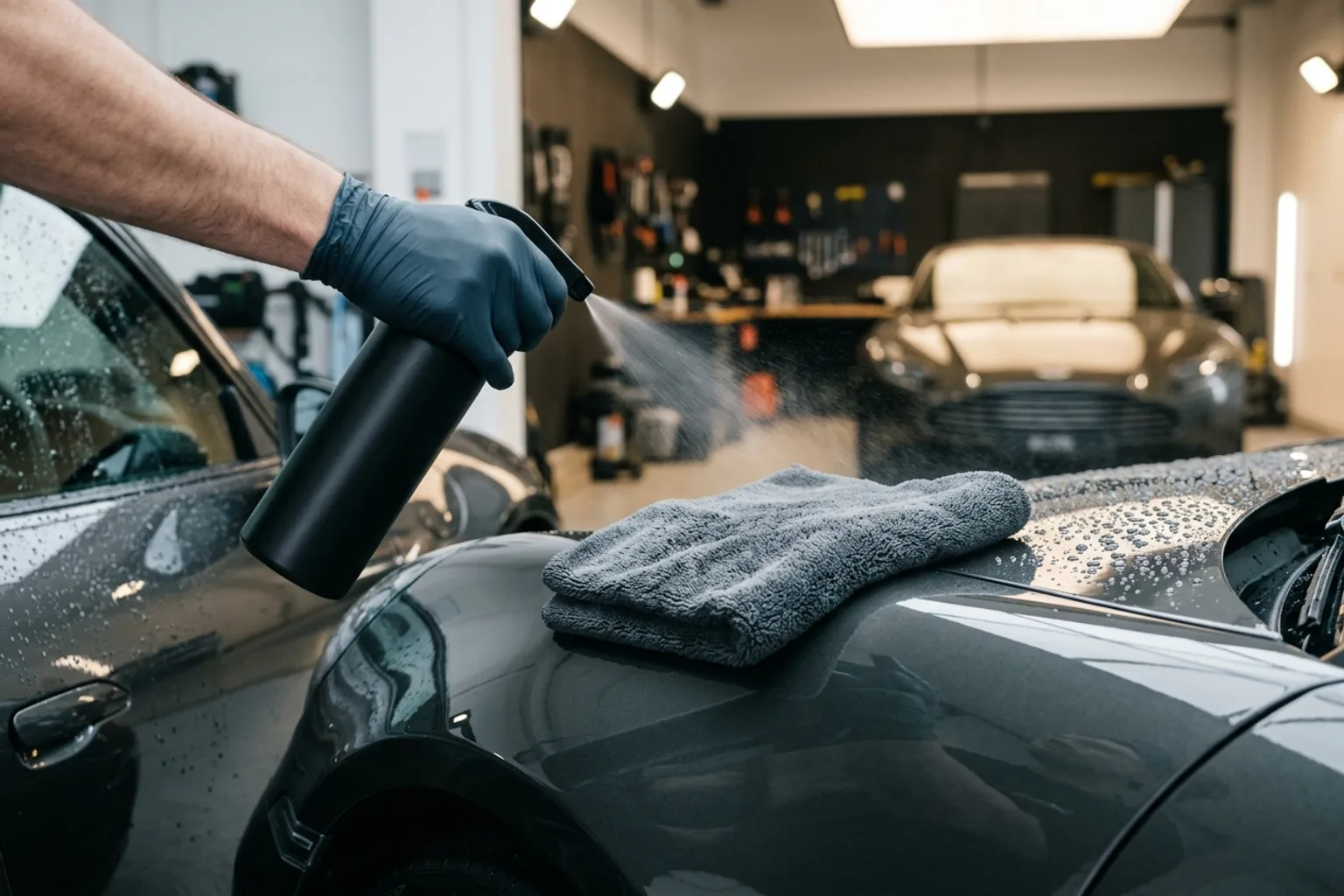
Mist product directly onto a folded low-pile microfiber towel rather than spraying the entire panel, which prevents overspray mist.
Step 4: Spread in straight cross-hatch strokes
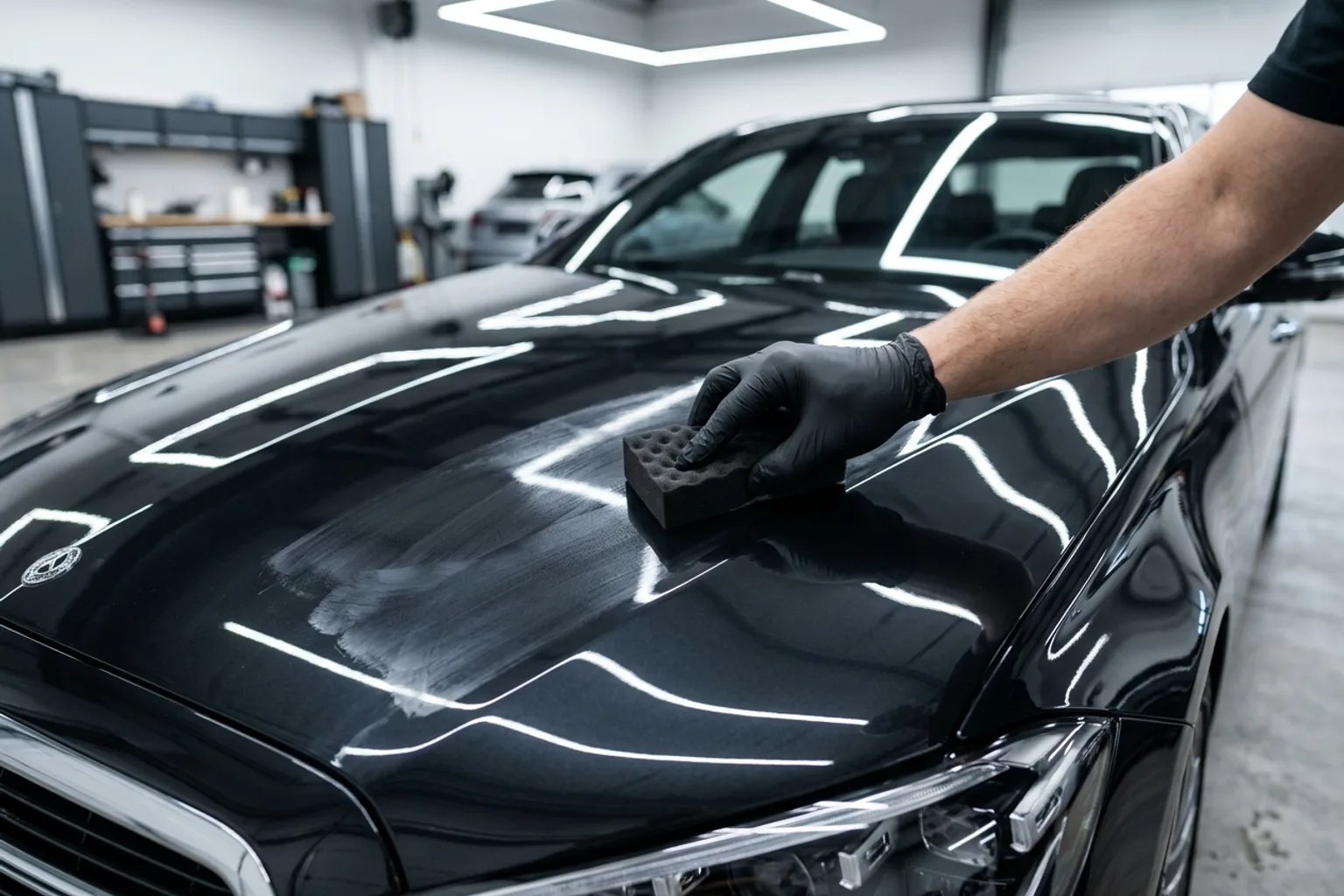
Work one panel or half-hood at a time using overlapping horizontal and vertical lines until an even translucent film is visible.
Step 5: Immediate level and secondary buff
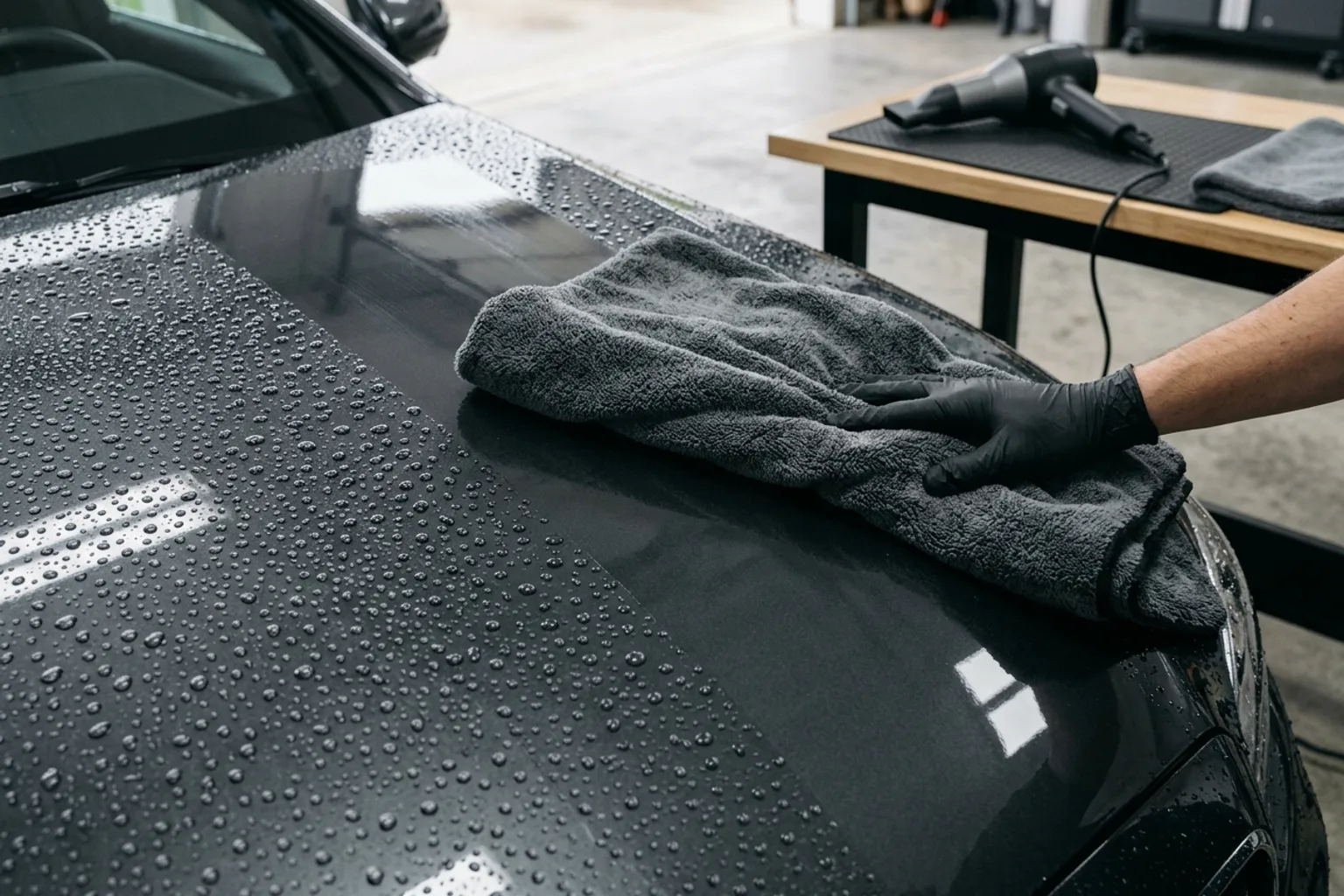
Allow the carrier solvent to flash (usually 30 to 60 seconds). Level the residue with your primary towel, then immediately buff with a second clean, plush microfiber towel.
Step 6: Allow moisture-free cure window
Keep the vehicle dry for at least 12 to 24 hours while siloxane bonds harden against clear coat.
Reasons to Buy vs Reasons to Skip
When to buy vs when to skip ceramic spray coatings
Buy if you want durable, 6-to-12 month hydrophobic protection with minimal installation hassle and quick maintenance washes. Skip if you expect a spray coating to fill scratches or act as a sacrificial rock-chip armor—only paint protection film (PPF) protects against stone impacts.
Straight answers
Frequently Asked Questions
Answers based on the evidence and sources identified in this article.
Can ceramic spray coatings be applied over wax?
No. Waxes create an oily organic barrier that prevents inorganic SiO2 polymers from cross-linking with clear coat. Strip old waxes before applying ceramic spray.
How do I know when the coating has failed?
Coating failure is indicated by sheet-drowning water behavior: instead of forming tight spherical water beads that roll off panels at low speed, water sits flat in sluggish puddles.
Can I layer multiple coats of ceramic spray?
Yes. Most manufacturers recommend waiting 1 to 2 hours between coats. Applying two coats ensures 100% coverage and builds slightly thicker chemical resistance.
Where to buy
Recommended Gear in this Guide
Turtle Wax Hybrid Solutions Ceramic Spray Coating (16 oz)
Delivers up to 12 months of extreme water beading, chemical resistance, and UV protection in an easy spray.
DetailRig is reader-supported. Recommendations follow each page's evidence label (tested, used, or researched), and we never accept paid placement. When you buy through our links, we may earn an affiliate commission at no extra cost to you.
References & Sources
- DetailRig Protective Coating Benchmarks: Contact angle degradation and chemical durability
- American Chemical Society: Silane and siloxane condensation chemistry on polyurethane clear coats

DetailRig Editorial
ContributorResearch publication
DetailRig Editorial publishes source-linked car-care explainers. These articles synthesize manufacturer instructions and clearly separate research from documented hands-on testing.