Table of Contents(6 sections)
Evidence status: researched
This guide synthesizes verified manufacturer specifications, technical data sheets, and professional detailing workflows. DetailRig has not performed a single controlled laboratory test across all products discussed here; specific performance claims are attributed to their respective manufacturers.
How Carpet Extractors Deep-Clean Automotive Fabrics
Automotive cloth seats, floor mats, and trunk carpeting trap years of spilled coffee, sodas, road salt slush, skin oils, and pet dander deep within their foam padding. Surface wiping with a microfiber towel and carpet cleaner only cleans the top 5% of fabric fibers, often driving dirt deeper into seat cushions where it causes persistent musty odors.
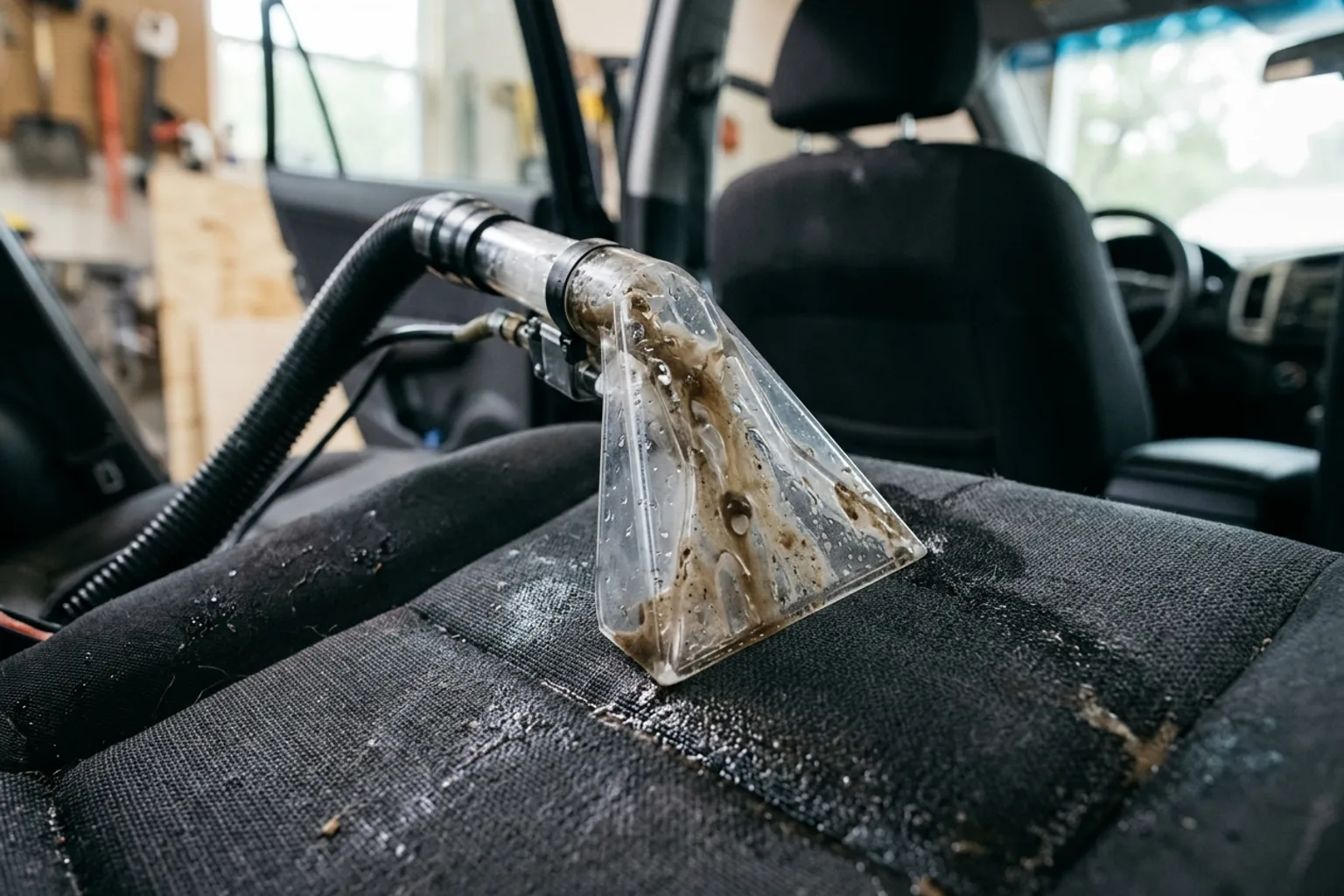
Carpet extractors perform true deep sanitization. High-pressure pumps inject cleaning solution deep into fabric weaves, dissolving bonded grime. Simultaneously, a powerful vacuum motor connected to a clear extraction hand wand pulls the dirty slurry back out into a recovery tank. Seeing the dark brown, murky water flow through the transparent nozzle provides instant visual proof of soil removal.
| Extractor Class | Vacuum Water Lift (Inches) | Pump Pressure (PSI) | Inline Water Heating | Ideal Detailing Application |
|---|---|---|---|---|
| Portable Spot Cleaner (Bissell / Hoover style) | 40 – 60 inches water lift | 15 – 30 PSI | None (Fill tank with hot tap water) | Weekend DIYers, spot stains, light family car care |
| Heavy-Duty Portable Commercial (Mytee Lite style) | 85 – 100 inches water lift | 55 – 120 PSI | Built-in 1,000W heater (up to 210°F / 99°C) | Mobile detailers, full interior restorations, stubborn oil |
| Industrial Heavyweight Extractor | 120 – 140 inches water lift | 100 – 250 PSI | High-output dual heaters | High-volume detailing shops and fleet reconditioning |
| Wet/Dry Shop Vac with Extraction Nozzle Adapter | 50 – 70 inches water lift | Manual trigger bottle | None | Budget DIYers on a strict equipment budget |
Key Performance Metrics: Water Lift vs CFM vs PSI
When evaluating carpet extractors, do not be misled by electric motor horsepower claims. Focus on these three engineering specifications:
- Water Lift (Sealed Suction): Measured in inches of water column lift. High water lift pulls trapped moisture out of dense seat foam padding. Higher water lift directly correlates with faster fabric drying times (preventing mildew odors).
- Airflow (CFM - Cubic Feet per Minute): Represents the volume of air moved through the vacuum hose, crucial for pulling dissolved dirt over distance.
- Solution Pump Pressure (PSI): High pump pressure (55+ PSI) drives cleaning solution deep into heavy commercial floor carpets to flush embedded sand particles out of backing fibers.
The Massive Advantage of Inline Water Heaters
Temperature is a core pillar of the cleaning equation (Time, Action, Chemical, Temperature). Hot water at 180°F to 200°F (82°C to 93°C) breaks down stubborn food fats, melted candy, sunscreen lotions, and oily shoe scuffs exponentially faster than cold or lukewarm water. Furthermore, hot water extraction accelerates moisture evaporation, allowing treated car seats to dry completely in 2 to 3 hours rather than an entire damp day.
Step-by-Step Interior Fabric Extraction Protocol
How to extract automotive cloth seats and carpets properly
5 stepsStep 1: Thorough dry vacuuming first
Never extract without dry vacuuming first. Extracting over dry sand turns grit into mud. Use a crevice tool and drill brush to dislodge all dry particles.
Step 2: Pre-spray fabric cleaner or enzyme shampoo
Mist a dedicated low-foaming carpet cleaner across the fabric. Do not put high-foaming soap into the extractor clean water tank.
Step 3: Agitate fabric with a soft horsehair or drill brush
Work cleaner into fibers to loosen bonded stains before introducing extraction moisture.
Step 4: Pressurized spray and suction extraction passes
Pull the hand wand trigger to inject hot rinse water while dragging the clear nozzle firmly across the fabric.
Step 5: Perform dry extraction passes
Make 2 to 3 additional passes with the spray trigger released (dry suction only). This extracts 90% of trapped liquid, leaving seats merely damp.
Preventing Mold and Mildew Post-Extraction
Never roll windows up on freshly extracted vehicles
Always run the vehicle heater with air conditioning enabled (defrost mode) or place an air mover fan inside the cabin with windows cracked for 1 to 2 hours. Trapping moisture inside a closed vehicle in warm weather breeds sour mold and mildew odors within 24 hours.
Straight answers
Frequently Asked Questions
Answers based on the evidence and sources identified in this article.
Can I use regular laundry detergent or high-foaming shampoo in an extractor?
Never use high-foaming detergents in an extractor. Heavy foam fills the recovery tank instantly, bypassing the float shut-off valve and getting sucked into the electric vacuum motor, which will short out and destroy the motor. Always use specialized low-foaming extraction rinse.
How long does it take cloth car seats to dry after extraction?
With a high-power extractor (85+ inches water lift) and proper dry vacuum passes, cloth seats dry in 2 to 4 hours. Without dry passes or using weak vacuums, seats can stay damp for 12 to 24 hours.
Can I extract vehicle headliners with a carpet extractor?
Do not use a wet extractor on vehicle headliners. Excessive moisture and heavy vacuum suction will dissolve the fragile glue holding the fabric to the backing board, causing the headliner to sag permanently. Clean headliners gently by hand with a dry foam cleaner and microfiber towel.
Where to buy
Recommended Gear in this Guide
Bissell SpotClean Pro Portable Commercial Carpet Extractor
Commercial-grade suction and scrub tool lifts ground-in dirt, grease, and coffee spills from seats and floor mats.
DetailRig is reader-supported. Recommendations follow each page's evidence label (tested, used, or researched), and we never accept paid placement. When you buy through our links, we may earn an affiliate commission at no extra cost to you.
References & Sources
- DetailRig Interior Restoration Lab: Moisture extraction efficiency and microbial drying thresholds
- Institute of Inspection Cleaning and Restoration Certification (IICRC): Professional upholstery cleaning standards

DetailRig Editorial
ContributorResearch publication
DetailRig Editorial publishes source-linked car-care explainers. These articles synthesize manufacturer instructions and clearly separate research from documented hands-on testing.