Table of Contents(5 sections)
The Problem Is Uncontrolled Drying
Sunlight itself is not a chemical that ruins a wash on contact. The practical problem is heat and evaporation: Consumer Reports says to avoid hot bodywork and direct sun because heat accelerates drying and deposits. Ford's Bronco cleaning guidance also says not to wash in hot, direct sun. Griot's likewise recommends a cool surface in shade or out of direct sunlight.
Short answer
Wait for shade and a cool panel when possible. If conditions are not ideal, do not compensate by leaving soap on longer or using stronger chemicals; control the working area and follow the product label.
| Condition | Main risk | Better response |
|---|---|---|
| Hot panel in direct sun | Water and product dry before rinsing | Wait for the surface to cool and move into shade |
| Cool panel in shade | More manageable working time | Still wash and rinse without letting product dry |
| Large section in warm weather | Uneven drying across the section | Reduce the section size and coordinate rinsing |
| Product with a specific temperature limit | Use outside label conditions | Follow that product's restrictions exactly |
A Better Wash Setup
Wash with surface temperature under control
5 stepsChoose the location and time
Use available shade and avoid starting immediately after a hot drive or prolonged sun exposure.
Check the panel and products
Let bodywork cool and read wash-product directions for surface temperature, sun, and drying restrictions.
Pre-rinse loose soil
Consumer Reports recommends pre-rinsing. Remove loose grit before contact rather than relying on shampoo to make rubbing dirt harmless.
Wash and rinse by section
Clean a manageable section and rinse before moving on. Keep the process coordinated rather than soaping the entire vehicle and leaving it unattended.
Dry promptly
Use a clean suitable drying method after the final rinse. Shade can slow evaporation but does not eliminate mineral deposits from water left to dry.
What If Shade Is Not Available?
The most reliable option is to wait for better conditions or move the vehicle. Simply working faster can lead to missed residue and rushed contact. If washing must proceed under the product's permitted conditions, reduce the area, maintain rinse control, and never use extra dwell or a stronger mix to fight evaporation.
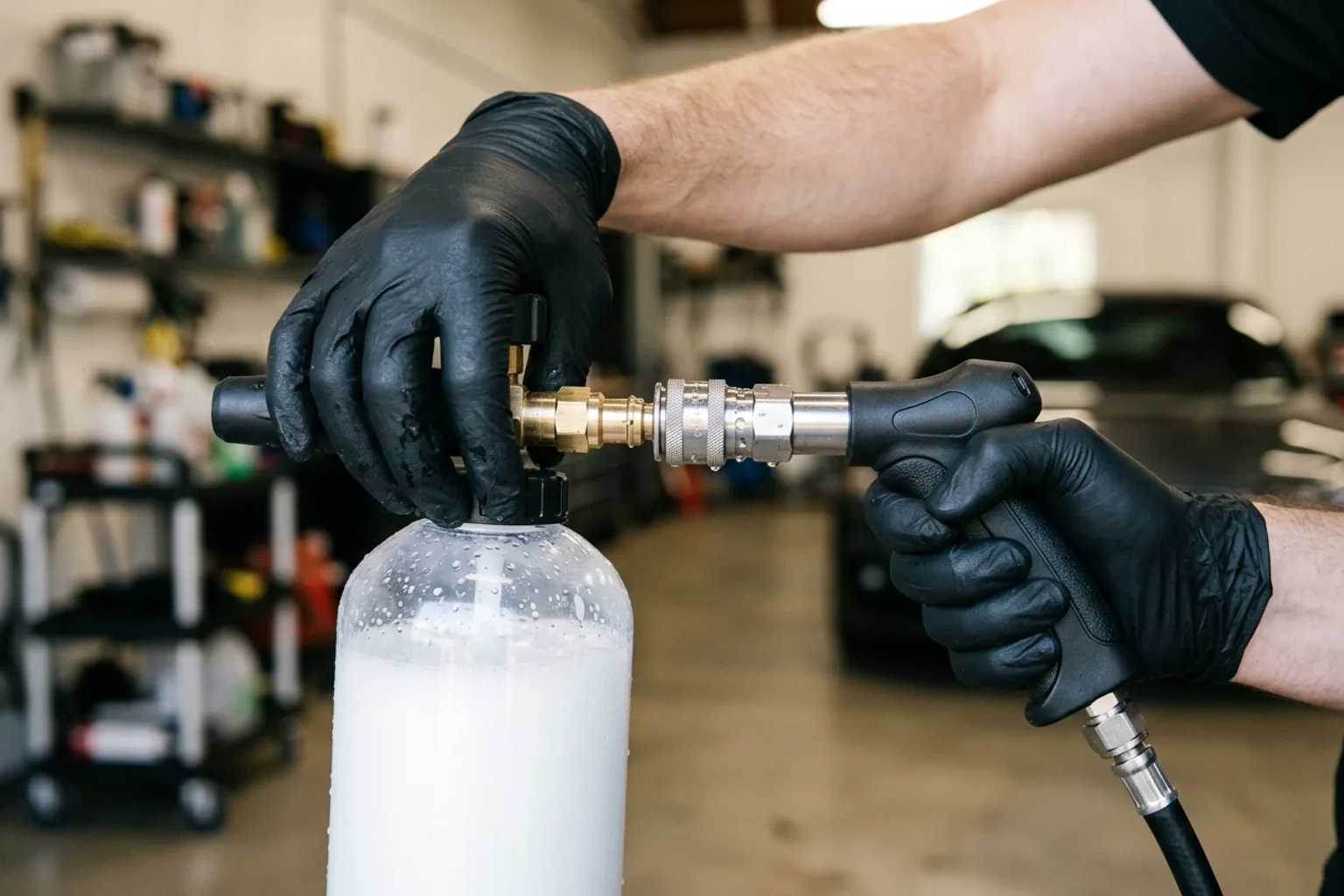
- Do not apply a snow foam to a hot panel when its label says to use a cool surface.
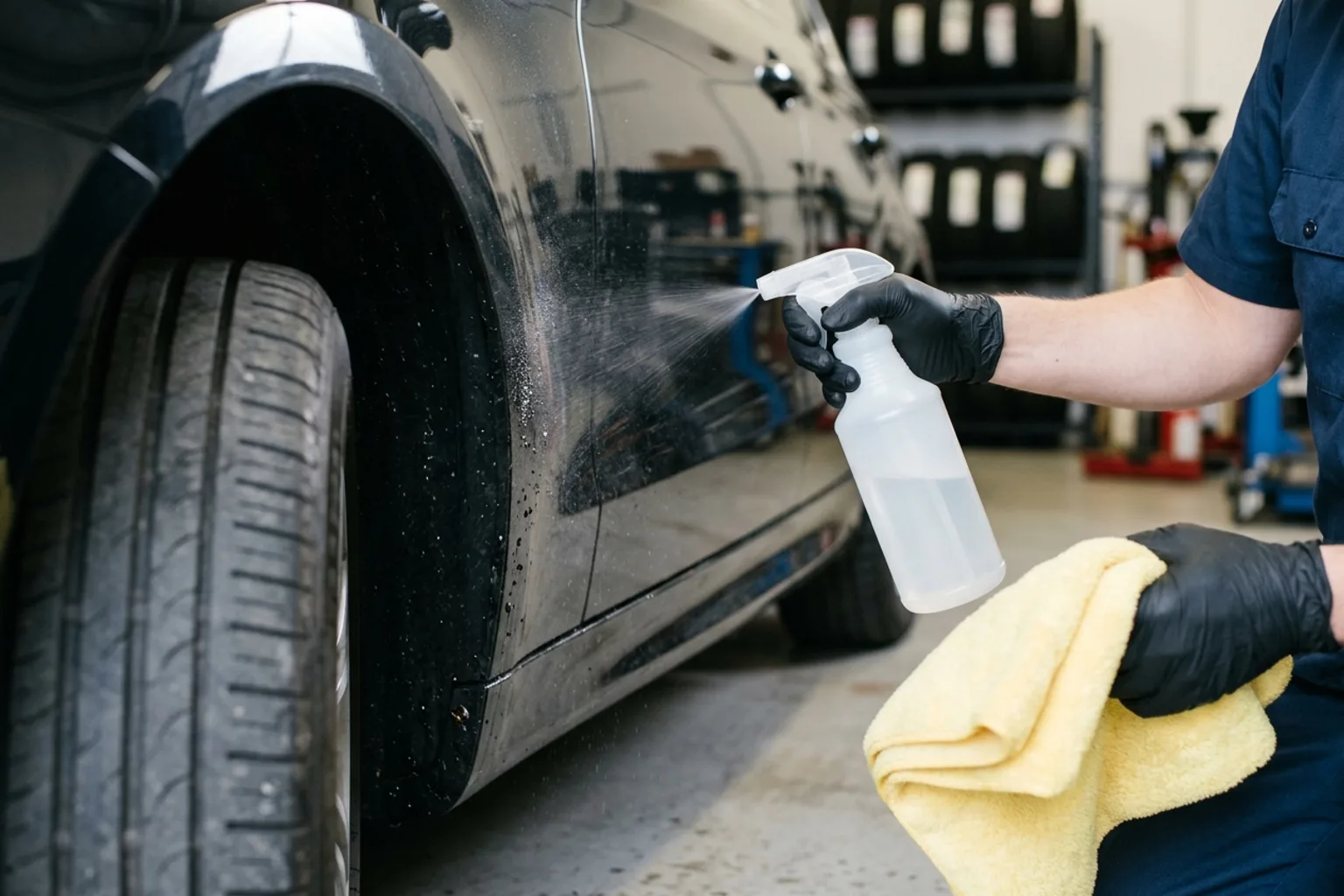
- Do not let soap, bug remover, or wheel cleaner dry while you work elsewhere.
- Do not use very cold water as an improvised treatment for extremely hot bodywork; follow vehicle and product guidance.
- Do not assume shade makes a physically hot panel immediately cool.
Is This Only About Water Spots?
Water deposits are one visible concern, but product management is another. Different cleaners have different dwell and drying restrictions. Reading those instructions and controlling panel temperature makes the entire process more predictable, whether you are using shampoo, foam, or a dedicated bug remover.
Evidence status: researched
This article reflects published vehicle-care and washing guidance. DetailRig has not measured panel temperatures or compared water-spot formation under controlled sunlight conditions.
Straight answers
Frequently Asked Questions
Answers based on the evidence and sources identified in this article.
Is it ever safe to wash a car outside on a sunny day?
Assess panel temperature, available shade, and product directions rather than the calendar alone. Cool, shaded bodywork is the recommended condition in the cited guides.
Can I wash at night instead?
A cooler surface can help, but you still need safe lighting, visibility of soil and residue, thorough rinsing, and drying. Night does not change label requirements.
Does a ceramic coating make sun washing harmless?
No protection should be treated as permission to ignore product drying warnings or hot-panel guidance. Control the wash conditions and follow coating aftercare directions.
Where to buy
Recommended Gear in this Guide
Active 2.0 1800 PSI 2.0 GPM Pressure Washer
Our lab-tested standard for safe automotive flow and pressure.
DetailRig is reader-supported. Recommendations follow each page's evidence label (tested, used, or researched), and we never accept paid placement. When you buy through our links, we may earn an affiliate commission at no extra cost to you.
References & Sources

DetailRig Editorial
ContributorResearch publication
DetailRig Editorial publishes source-linked car-care explainers. These articles synthesize manufacturer instructions and clearly separate research from documented hands-on testing.