Table of Contents(4 sections)
Evidence status: researched
This decontamination protocol is derived from standard paint preparation guidelines used by OEM body shops, certified detailing coating installers, and paint chemical manufacturers.
Why must chemical decontamination happen before mechanical claying?
Microscopic industrial fallout and brake dust particles are jagged, ferrous metal shards embedded deep in your vehicle’s clear coat. If you run a clay bar across untreated paint, the clay shear-drags those hard metal shards across the finish, causing widespread micro-marring and swirl scratches. Chemical fallout removers dissolve these particles into water-soluble complexes before any clay touches the car.
What is the full 4-stage paint decontamination sequence?
The 4-stage chemical and mechanical paint decontamination sequence
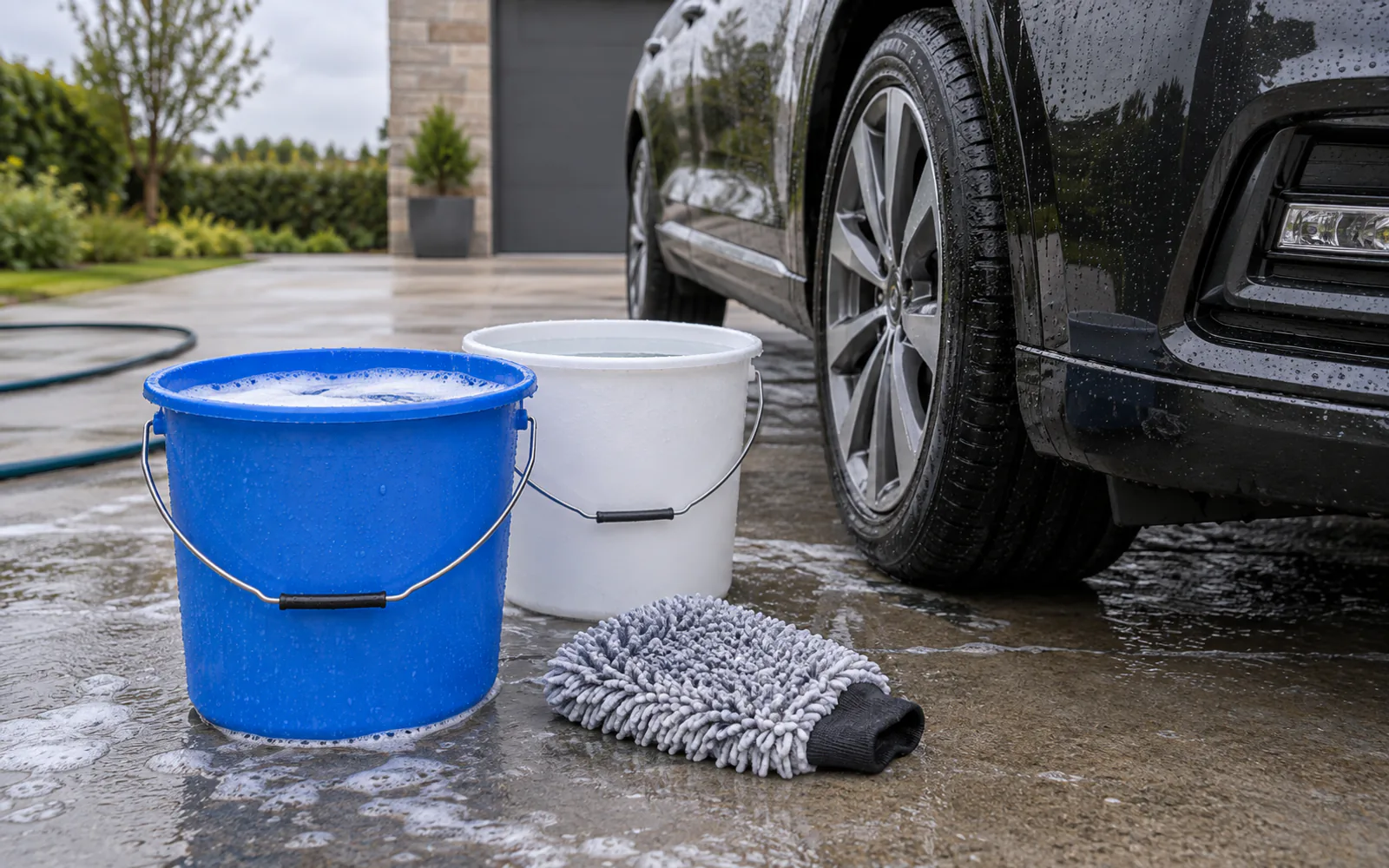
4 stepsStep 1: Deep contact wash and rinse
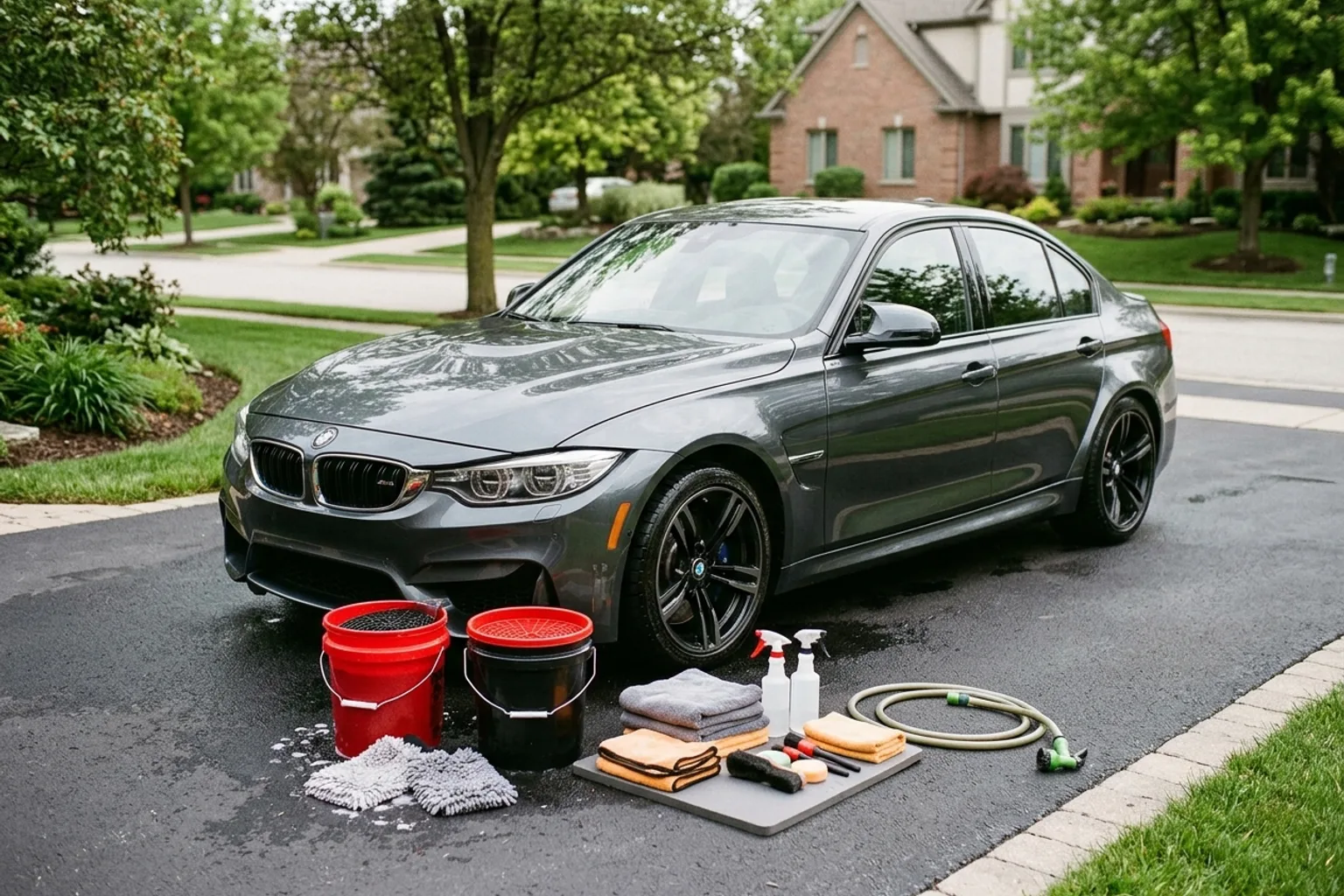
Strip loose road dust, bugs, and organic film with a high-lubricity two-bucket wash so chemicals can reach bare paint directly.
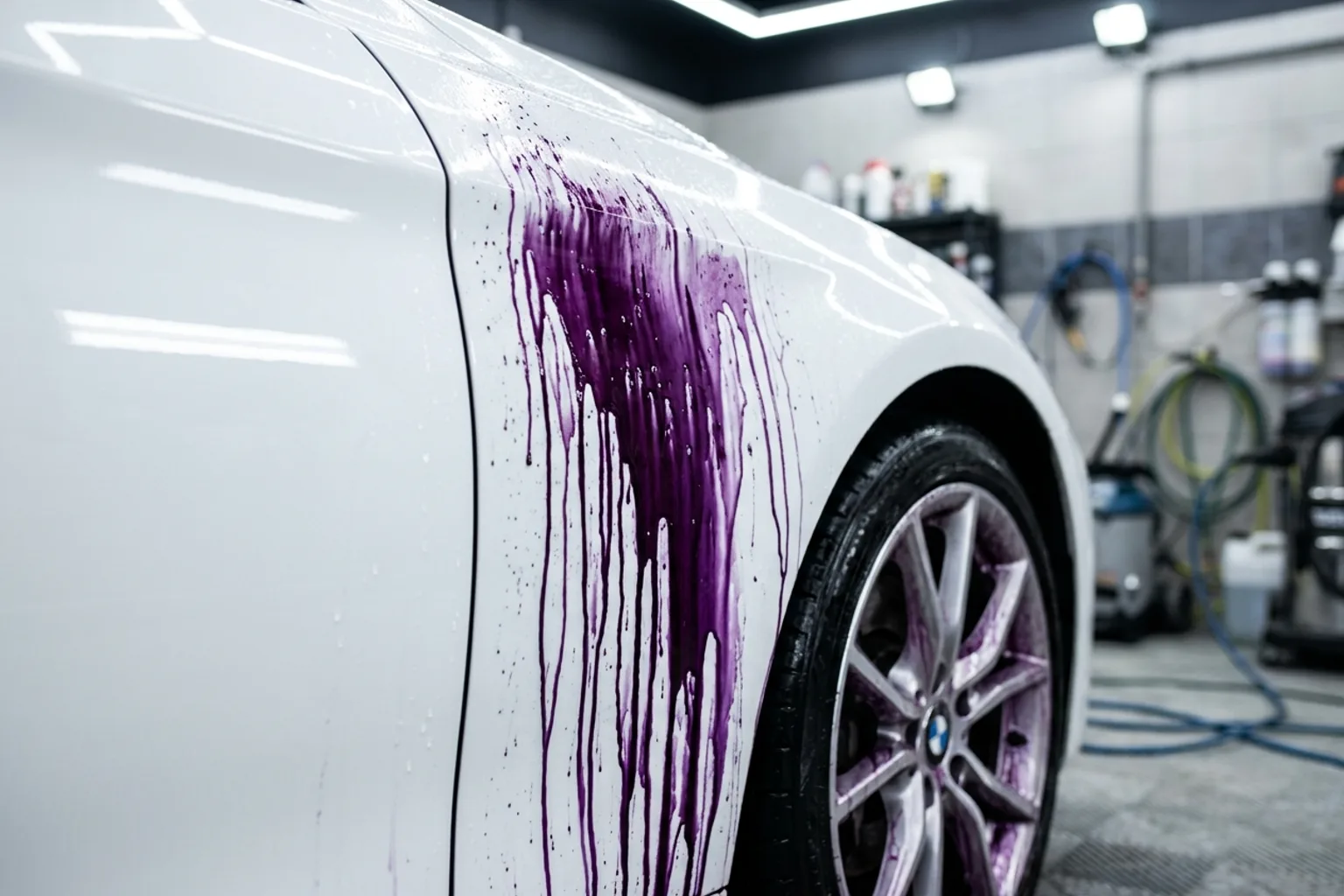
Step 2: Spray chemical iron fallout remover
Apply onto cool paint in shade. Watch for the purple bleeding reaction as it dissolves brake dust (dwell 3–4 minutes), then rinse thoroughly.
Step 3: Dissolve road tar and adhesives
Apply dedicated citrus or solvent tar remover to rocker panels and wheel arches. Let tar melt, gently wipe with microfiber, and rinse.
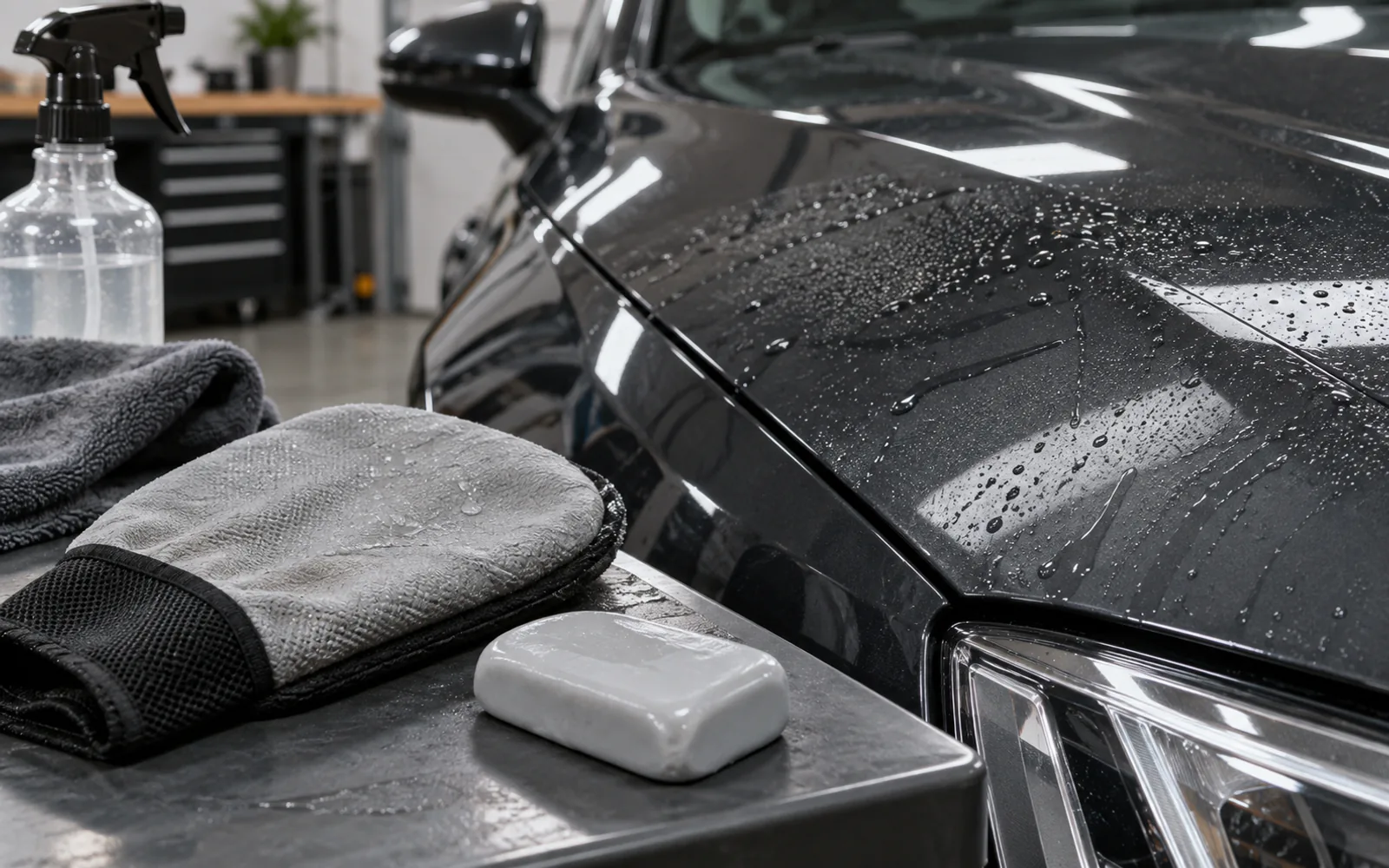
Step 4: Mechanical clay bar or clay mitt with lubricant
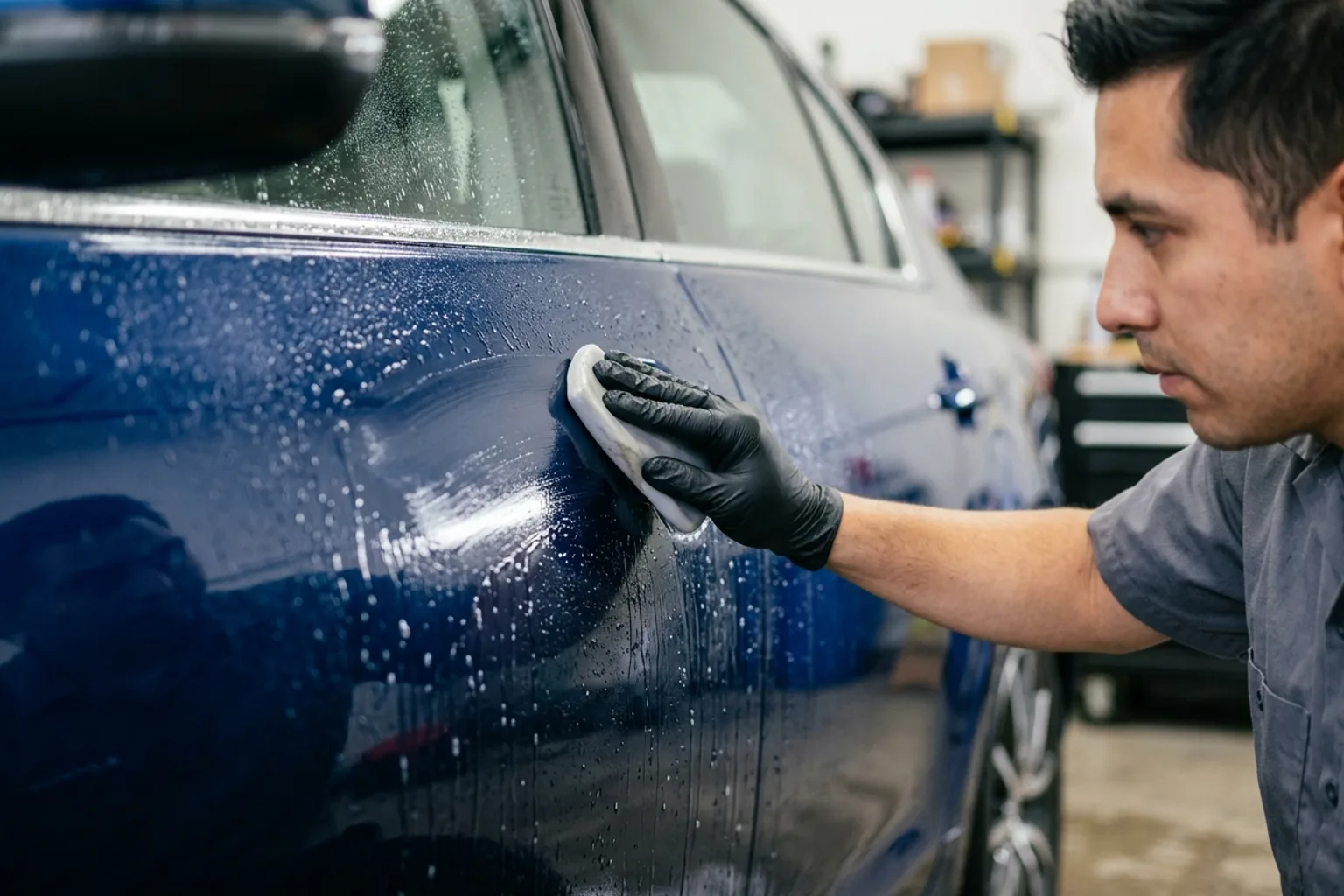
Use generous clay lubricant to gently glide the clay bar over panels in straight, overlapping lines until the surface feels glass-smooth.
How do you know if your paint actually needs decontamination?
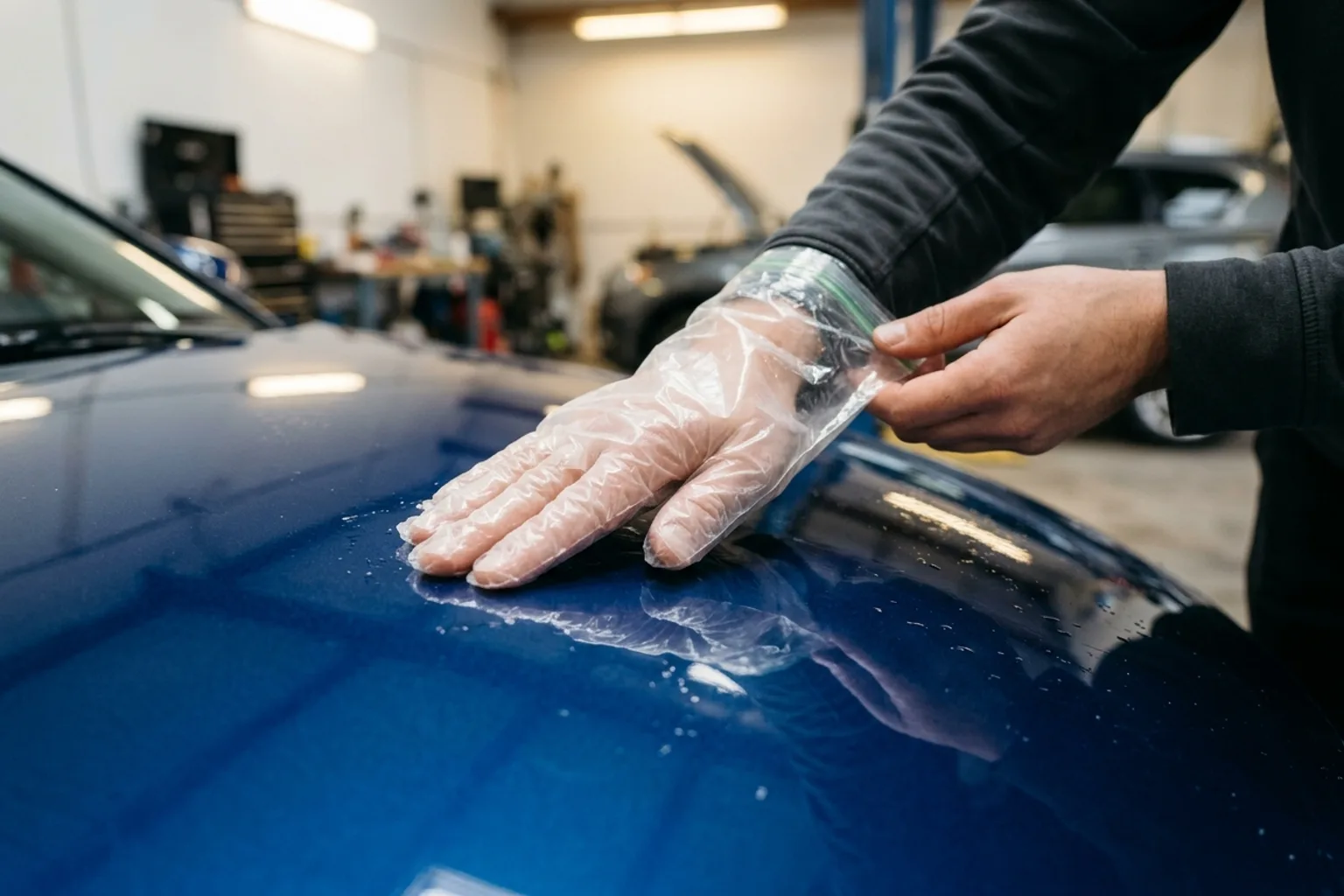
Perform the classic "baggie test": wash and dry your vehicle, slip your hand inside a thin plastic sandwich bag, and glide your fingertips lightly across the hood and lower doors. The thin plastic film magnifies tiny surface imperfections. If the panel feels like rough sandpaper, embedded fallout and bonded tar are present.
Never let chemical iron removers dry on paint
Iron fallout removers contain active ammonium thioglycolate salts. If allowed to dry under direct sunlight, they leave stubborn chemical etch stains on clear coat and unpainted plastic trim.
Straight answers
Frequently Asked Questions
Answers based on the evidence and sources identified in this article.
Does claying a car remove existing wax or sealant?
Yes. Mechanical clay bars shear off bonded contamination along with most existing waxes and synthetic sealants. Always reapply paint protection after claying.
Can you use car wash soap as clay lubricant?
Only if the soap formula is high-lubricity and specifically approved by the manufacturer. Plain water is never safe; dedicated clay lubricants or properly diluted rinseless wash solutions are best.
How often should you decontaminate car paint?
Perform chemical iron decontamination every 4 to 6 months. Mechanical claying should only be done when the baggie test confirms roughness, typically 1 to 2 times per year before applying fresh protection.
Where to buy
Recommended Gear in this Guide
Active 2.0 1800 PSI 2.0 GPM Pressure Washer
Our lab-tested standard for safe automotive flow and pressure.
DetailRig is reader-supported. Recommendations follow each page's evidence label (tested, used, or researched), and we never accept paid placement. When you buy through our links, we may earn an affiliate commission at no extra cost to you.
References & Sources
- CARPRO: IronX Chemical Fallout Neutralization Protocols (carpro.global)
- Bilt Hamber Laboratories: Chemistry of Surface Corrosion and Fallout Removal (bilthamber.com)
- Meguiar’s Professional Detailing: Surface Preparation and Contaminant Removal (meguiars.com)

DetailRig Editorial
ContributorResearch publication
DetailRig Editorial publishes source-linked car-care explainers. These articles synthesize manufacturer instructions and clearly separate research from documented hands-on testing.