Table of Contents(6 sections)
Evidence status: researched
This guide uses a towel manufacturer's construction and use descriptions. DetailRig has not performed comparative paint-marring, lint, or absorbency tests.
The Edge Is One Part of the Towel
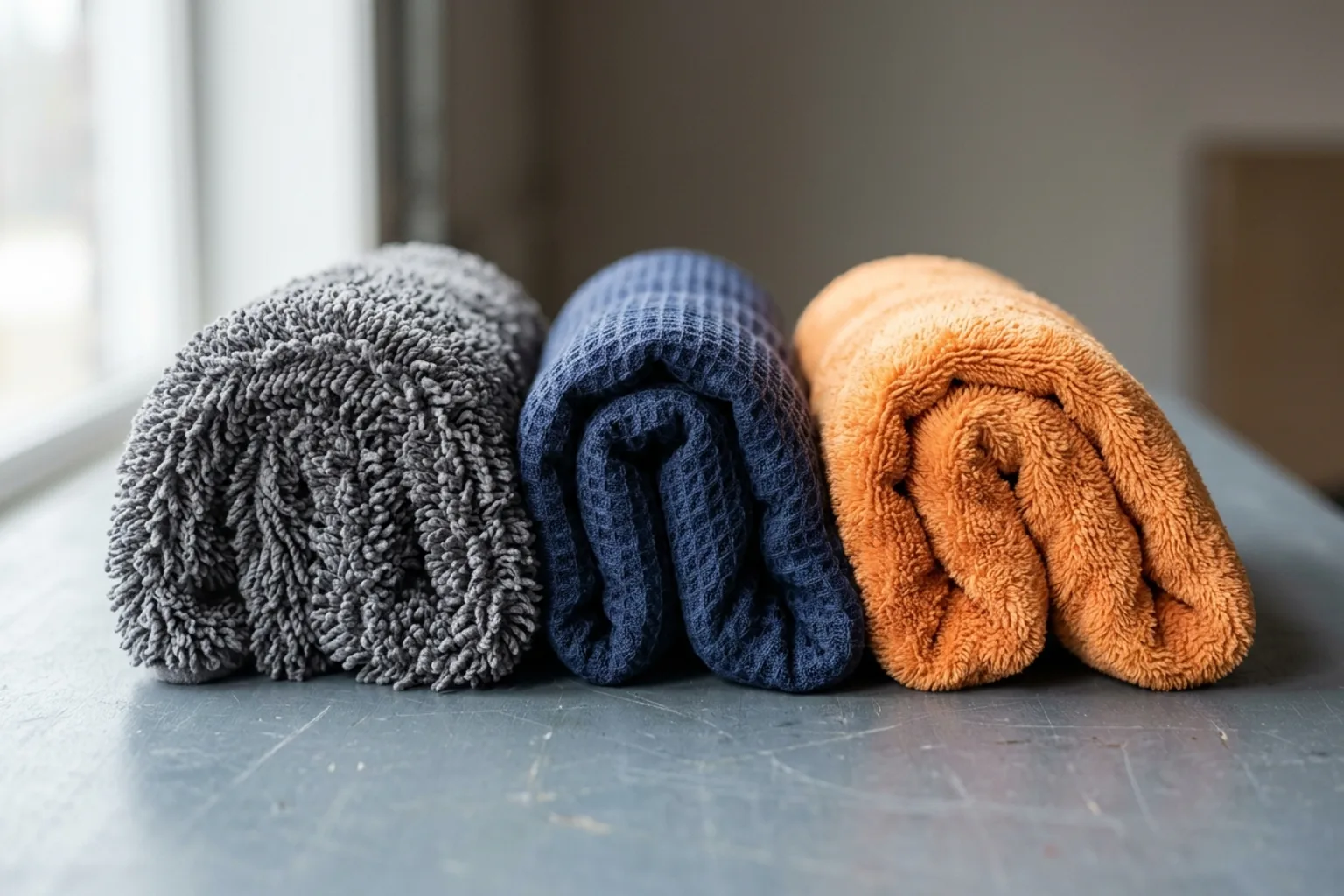
The Rag Company's comparison chart presents edge construction alongside GSM and weave, not as a standalone quality grade. It positions edgeless and suede-edge options for paint tasks and overlock construction for interior or dirtier jobs. Those intended-use distinctions are more useful than declaring every stitched border unsafe.
| Construction | Practical fit in the cited chart | What else to inspect |
|---|---|---|
| Edgeless | Many paint-oriented towel designs | Weave, pile, contamination, tags, and actual condition |
| Suede or soft wrapped edge | Paint use where the specific towel is designed for it | Edge cleanliness, damage, and surface compatibility |
| Overlock stitched edge | Interior and dirty-job positioning | Keep separate from paint unless the specific product says otherwise |
| Any edge | Only as safe as the complete clean towel and process | No scratch-free guarantee |
Reasons to Choose Edgeless or Suede-Edge
Choose one when the towel's complete construction is intended for your paint, coating, or finishing task and you want to avoid a more utility-oriented border. It can be a sensible part of a paint-only towel system. That is a selection preference, not evidence that the towel can make contaminated paint contact harmless.
Reasons an Overlock Towel Can Still Be Useful
An overlock towel may be appropriate for its designated interior or dirtier task, giving you a clear place in the tool system without buying every towel around paint use. Skip it for paint when its manufacturer does not position it there, and never let a wheel or jam towel become a finishing towel simply because its edge looks soft.
- Check weave and GSM in the manufacturer's comparison rather than treating edge as the whole specification.
- Inspect for loose threads, damaged borders, rough labels, and embedded debris before every use.
- Separate paint, glass, interior, wheel, and heavily contaminated towels.
- Launder according to the towel label and retire anything whose condition is no longer suitable for the assigned surface.
A Pre-Use Inspection That Matters More Than Marketing
Inspect a microfiber towel before paint contact
4 stepsConfirm the assigned task
Use a towel intended for that surface and keep it within its established laundry group.
Inspect both faces and edges
Look for grit, stiff contamination, pulled threads, rough stitching, and tags. Do not use a towel that has fallen on the ground.
Check the surface and technique
Pre-rinse loose soil and use the towel for its designed wet, drying, or buffing job with minimal unnecessary pressure.
Retire or downgrade deliberately
When a towel is no longer appropriate for paint, remove it from that kit rather than hoping an edgeless design compensates.
The Buying Answer
Buy by task and complete construction. Edgeless or suede-edge is often the relevant choice in paint-oriented ranges, while an overlock towel can earn a place elsewhere in the kit. If your current towel is contaminated, damaged, incorrectly laundered, or used with heavy pressure, replacing only the edge style will not address the main problem.
Straight answers
Frequently Asked Questions
Answers based on the evidence and sources identified in this article.
Are all edged microfiber towels unsafe on paint?
No universal statement is justified. Edge construction, the specific towel's intended use, cleanliness, and condition all matter. Follow the manufacturer's paint-use designation.
Does edgeless mean scratch-proof?
No. Dirt, technique, surface condition, weave, and towel damage can still contribute to marring. Edgeless describes construction, not a guarantee.
Can I use an interior overlock towel on paint after washing it?
Do not reassign a heavily contaminated or differently designated towel merely because it has been laundered. Keep dedicated task groups and follow the towel maker's intended use.
Where to buy
Recommended Gear in this Guide
Active 2.0 1800 PSI 2.0 GPM Pressure Washer
Our lab-tested standard for safe automotive flow and pressure.
DetailRig is reader-supported. Recommendations follow each page's evidence label (tested, used, or researched), and we never accept paid placement. When you buy through our links, we may earn an affiliate commission at no extra cost to you.
References & Sources

DetailRig Editorial
ContributorResearch publication
DetailRig Editorial publishes source-linked car-care explainers. These articles synthesize manufacturer instructions and clearly separate research from documented hands-on testing.