Table of Contents(5 sections)
Evidence status: researched
This comparison uses manufacturer setup descriptions and wash-process guidance. DetailRig has not run a head-to-head foam-thickness or cleaning test.
The Main Difference Is the Water Source
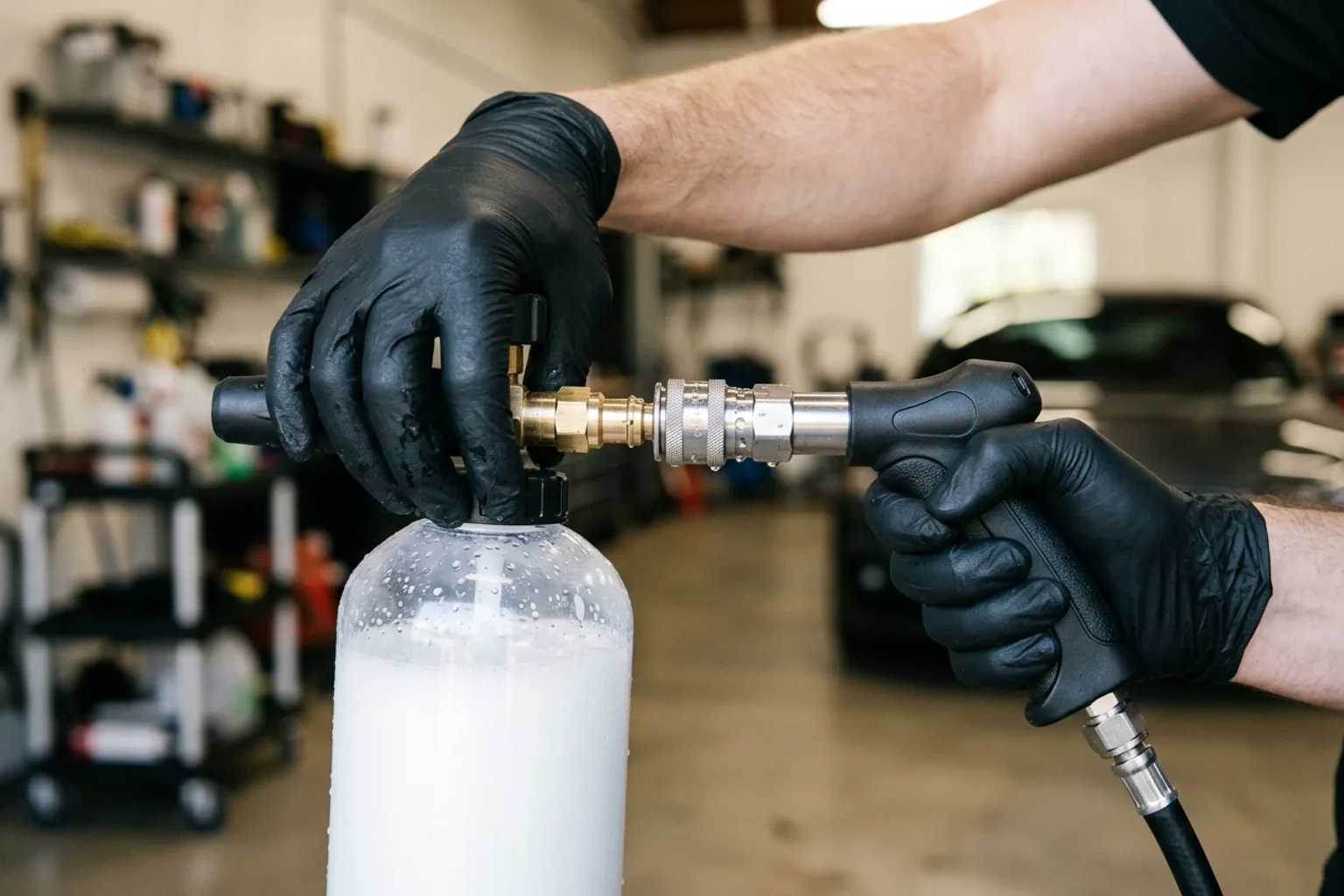
MTM Hydro describes traditional foam cannons as pressure-washer attachments and low-pressure foamers as garden-hose tools. That connection determines much of the buying decision before foam appearance enters the conversation. Start with the equipment you actually own and the connection it supports.
| Decision | Traditional foam cannon | Low-pressure foam gun |
|---|---|---|
| Water source | Compatible pressure washer | Garden hose |
| Connection | Pressure-washer lance and suitable fitting | Hose-compatible connector |
| Setup work | Pressure washer, hose, lance, cannon, and dilution | Hose, attachment, and dilution |
| Good reason to choose | You already use a pressure washer for vehicle prewash | You want a hose-based foaming workflow |
| Reason to skip | No compatible washer or an awkward connection setup | You do not need a foaming step or prefer another prewash method |
What Foam Can and Cannot Tell You
Visible foam shows where solution has been applied, but a photograph does not measure soil removal, lubrication, or safety. The soap formula, dilution, water, surface temperature, dwell instructions, and subsequent rinse all matter. More foam is not permission to let a product dry or to skip required contact washing.
- Follow the soap maker's dilution and dwell directions for the chosen delivery method.
- Work on a cool surface out of direct sun when the product or wash guidance calls for it.
- Rinse thoroughly and do not allow the prewash to dry.
- Pre-rinse loose grit and use suitable wash media for contact cleaning; foam alone is not a dirt-removal guarantee.
A Fitting and Handling Checklist
Choose a foam attachment without compatibility surprises
4 stepsIdentify the inlet and outlet
Record the pressure-washer or hose connection you need rather than buying from appearance alone.
Check the complete setup
Account for the lance, fittings, hose, bottle, and any accessories required. A matching connector is only one part of usability.
Consider control and storage
Choose a bottle and assembly you can handle, rinse, and store without tipping or straining the connection.
Match chemistry to equipment
Confirm the chosen product can be delivered through that attachment and follow its specific dilution instructions.
Which One Should You Buy?
Buy the pressure-washer cannon when it completes an already compatible washer workflow and you will use a prewash often enough to justify setup and cleanup. Buy the hose foamer when hose-only access is the constraint and its application style fits your routine. Skip both if a simple pre-rinse and careful bucket wash already meet your needs, or if the product you intend to use does not call for foaming.
If your current problem is water drying too quickly, address shade, section size, and dwell control before upgrading hardware. If the problem is grit removal, inspect the entire rinse and contact-wash process rather than treating foam thickness as the fix.
Straight answers
Frequently Asked Questions
Answers based on the evidence and sources identified in this article.
Does a foam cannon clean better than a foam gun?
There is no universal winner. Water source, product, dilution, dwell, rinse, and the rest of the wash process affect the result. Choose the compatible delivery system rather than judging by foam photos.
Can I connect a foam cannon directly to a garden hose?
A traditional pressure-washer cannon and a low-pressure hose foamer are different setups. Use the connection specified by the manufacturer and a purpose-built hose attachment for hose work.
Does thick foam mean I can skip a wash mitt?
No. Foam application is a prewash step, not a guarantee that all bonded or remaining soil has been removed safely. Follow the product and vehicle wash process.
Where to buy
Recommended Gear in this Guide
DetailRig is reader-supported. Recommendations follow each page's evidence label (tested, used, or researched), and we never accept paid placement. When you buy through our links, we may earn an affiliate commission at no extra cost to you.
References & Sources

DetailRig Editorial
ContributorResearch publication
DetailRig Editorial publishes source-linked car-care explainers. These articles synthesize manufacturer instructions and clearly separate research from documented hands-on testing.