Table of Contents(5 sections)
Evidence status: researched
This guide synthesizes verified manufacturer specifications, technical data sheets, and professional detailing workflows. DetailRig has not performed a single controlled laboratory test across all products discussed here; specific performance claims are attributed to their respective manufacturers.
Why the Pad Dictates 60% of Your Paint Correction Results
Many detailers spend weeks researching expensive dual-action polishers and high-end compound bottles, only to skimp on cheap, generic polishing pads. This is a critical mistake: the pad is the mechanical interface that transfers oscillating kinetic energy, regulates surface friction, manages chemical saturation, and dissipates heat.
Pairing an aggressive compound with a soft finishing pad will produce minimal scratch removal, while running a fine polish on a stiff microfiber cutting pad can induce unwanted micro-hazing on soft clear coat. Mastering the hierarchy of pad materials and density grades is essential to predictable paint correction.
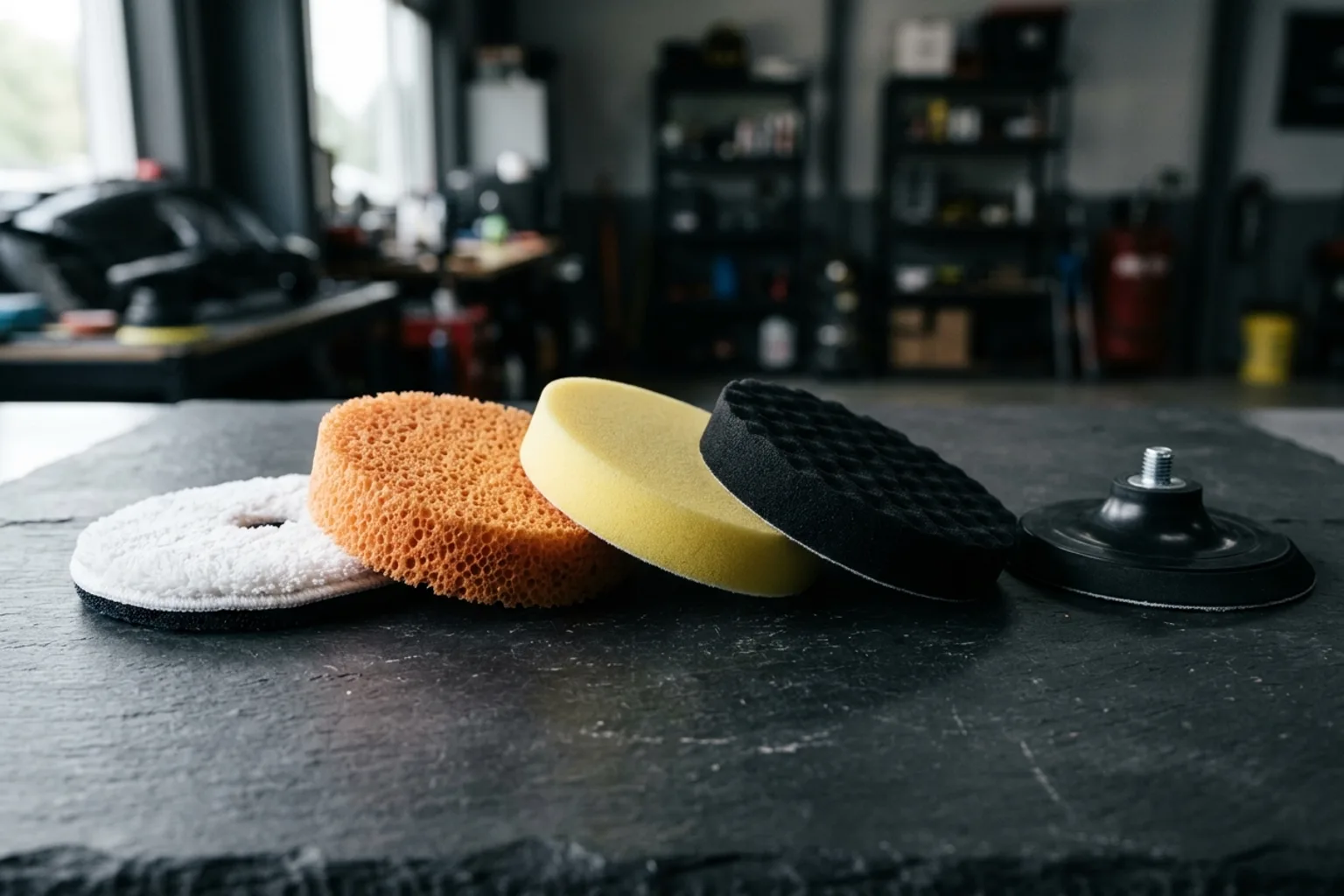
| Pad Material Class | Cell / Fiber Structure | Cutting Power | Finishing Capability | Heat Dissipation Rate |
|---|---|---|---|---|
| Microfiber Cutting Disc | Dense vertical microfiber filaments over foam interface | Very High (Levels severe swirls & 2,000 grit marks) | Moderate (Requires secondary finishing step on soft clears) | Excellent (Thin profile stays cool) |
| Hybrid Foamed Wool Pad | Nanofiber wool tufts bonded into open-cell foam matrix | Maximum (Raw cutting speed for hard German clears) | Low to Moderate (Leaves light compounding haze) | Very High (Natural fibers disperse heat) |
| Firm Open-Cell Foam (Heavy Cut) | Dense, rigid reticulated polyurethane foam | High (Removes moderate swirls and water spots) | Good (Finishes clean on medium-to-hard paint) | High (Reticulated open cells breathe) |
| Medium Open-Cell Foam (Polishing) | Intermediate pore density with moderate flex | Medium (Light defect removal & gloss enhancement) | Very Good (One-step polish standard) | High (Cool air flows through pores) |
| Soft Open-Cell Foam (Finishing / Jeweling) | Ultra-soft, ultra-fine open-cell foam | Very Low (Zero mechanical leveling) | Maximum (Produces flawless, hologram-free optical depth) | Moderate (Avoid excessive downward force) |
Microfiber Discs vs Open-Cell Foam Pads
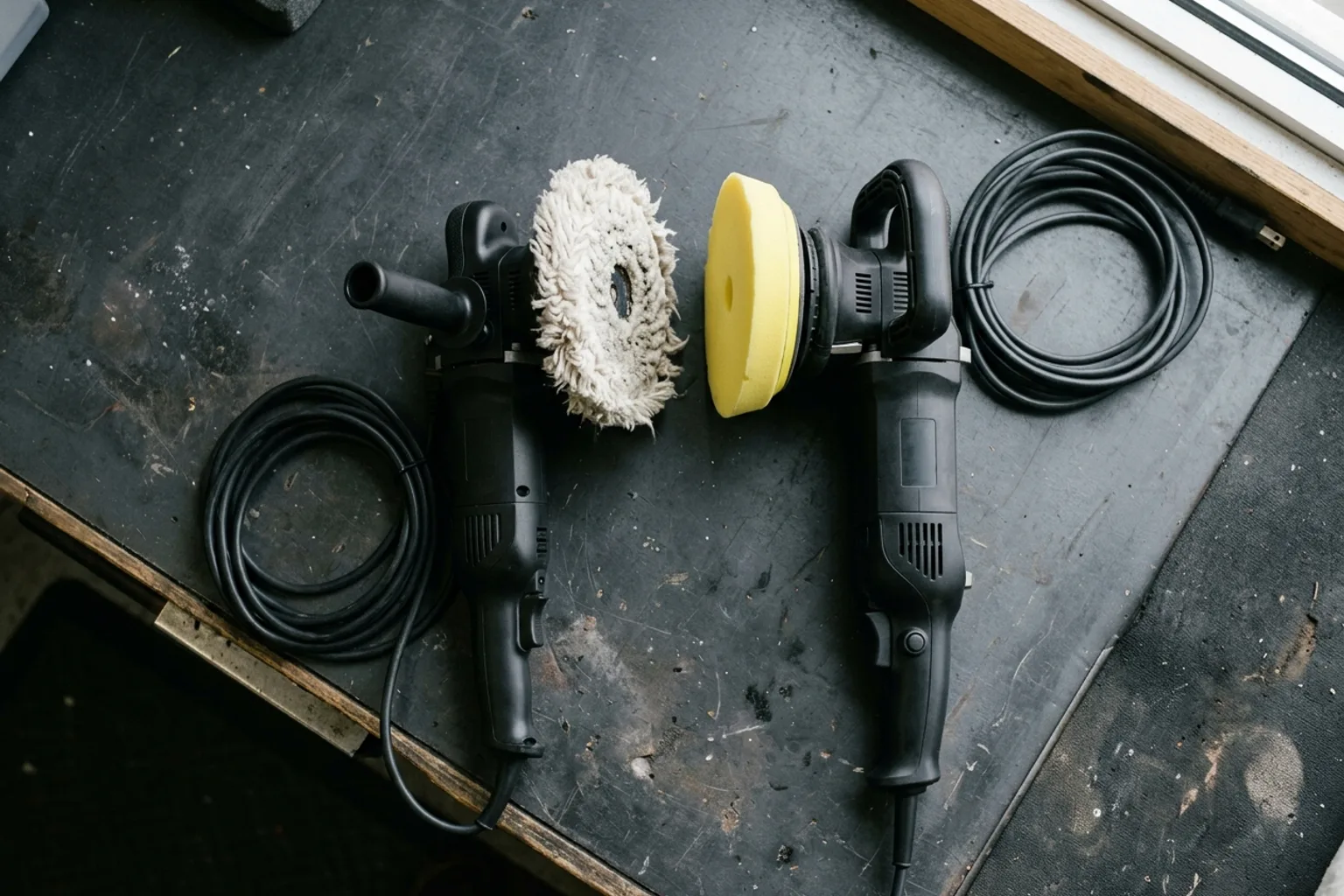
Microfiber cutting pads revolutionized dual-action polishing. Unlike foam pads that press flat against paint, thousands of microscopic microfiber strands flex independently, providing exponentially more abrasive contact points per square inch. This allows a dual-action polisher to cut through stubborn scratches in hard ceramic clear coats (like Mercedes and Audi finishes) in half the time of standard foam.
However, foam pads remain undefeated for final jeweling and finishing. Open-cell foam cushions the abrasive particles, allowing diminishing polish abrasives to break down uniformly into ultra-fine polishing powders that produce razor-sharp mirror gloss without micro-tick hazing.
How Many Pads Do You Need to Correct a Vehicle?
One of the most widespread amateur mistakes is trying to compound an entire car using a single pad. As a pad works, it collects dissolved clear coat dust, spent compound oils, and friction heat. Within two panels, the pad becomes heat-soaked, collapsed, and caked with debris, losing 80% of its cutting ability.
- For a Complete Two-Stage Correction on a Sedan:
- Compounding Stage: 4 to 6 clean microfiber or heavy-cut foam pads (change pad every 1 to 2 panels).
- Finishing Stage: 3 to 4 soft foam polishing pads.
- Spot & Tight Work: 2 to 3 smaller 3-inch pads for bumpers, A-pillars, and mirror caps.
Cleaning Pads "On the Fly" to Maintain Cutting Speed
Always clean your pad after every working section pass
Use compressed air (tornador blow gun) or a stiff nylon pad conditioning brush against the spinning pad face after every 2x2 foot section pass. This expels spent polish and clear coat dust, fluffs microfiber strands, and keeps pad temperatures cool.
Straight answers
Frequently Asked Questions
Answers based on the evidence and sources identified in this article.
How do I wash and dry polishing pads after a job?
Soak pads in warm water with dedicated pad cleaner or citrus degreaser. Gently massage foam from center outward to flush compound oils, rinse thoroughly, spin dry on your machine polisher, and lay face-down on a wire rack to dry.
What does pad color mean?
Pad colors are not universally standardized across brands. While orange is commonly medium-cut and black is finishing in many systems (like Lake Country or Chemical Guys), always check the manufacturer’s specific cut-and-finish scale rather than relying on color alone.
Why do pads delaminate from the Velcro hook-and-loop backing?
Velcro delamination is caused by excessive friction heat and improper pad removal. Avoid pulling pads off backing plates by the foam edge; always peel from the backing Velcro directly, and never let pads overheat on high machine speeds.
Where to buy
Recommended Gear in this Guide
SPTA 5-Pack Foam & Wool Buffing Polishing Pads (5.5 Inch)
Density-graded foam and microfiber pads dissipate heat quickly and pair with all dual-action machines.
DetailRig is reader-supported. Recommendations follow each page's evidence label (tested, used, or researched), and we never accept paid placement. When you buy through our links, we may earn an affiliate commission at no extra cost to you.
References & Sources
- DetailRig Paint Correction Lab: Thermal degradation and abrasive friction dynamics across polyurethane foam
- Lake Country Manufacturing: Engineered foam pad formulations and hook-and-loop thermal bonding standards

DetailRig Editorial
ContributorResearch publication
DetailRig Editorial publishes source-linked car-care explainers. These articles synthesize manufacturer instructions and clearly separate research from documented hands-on testing.