Table of Contents(5 sections)
First Establish What Was Spilled
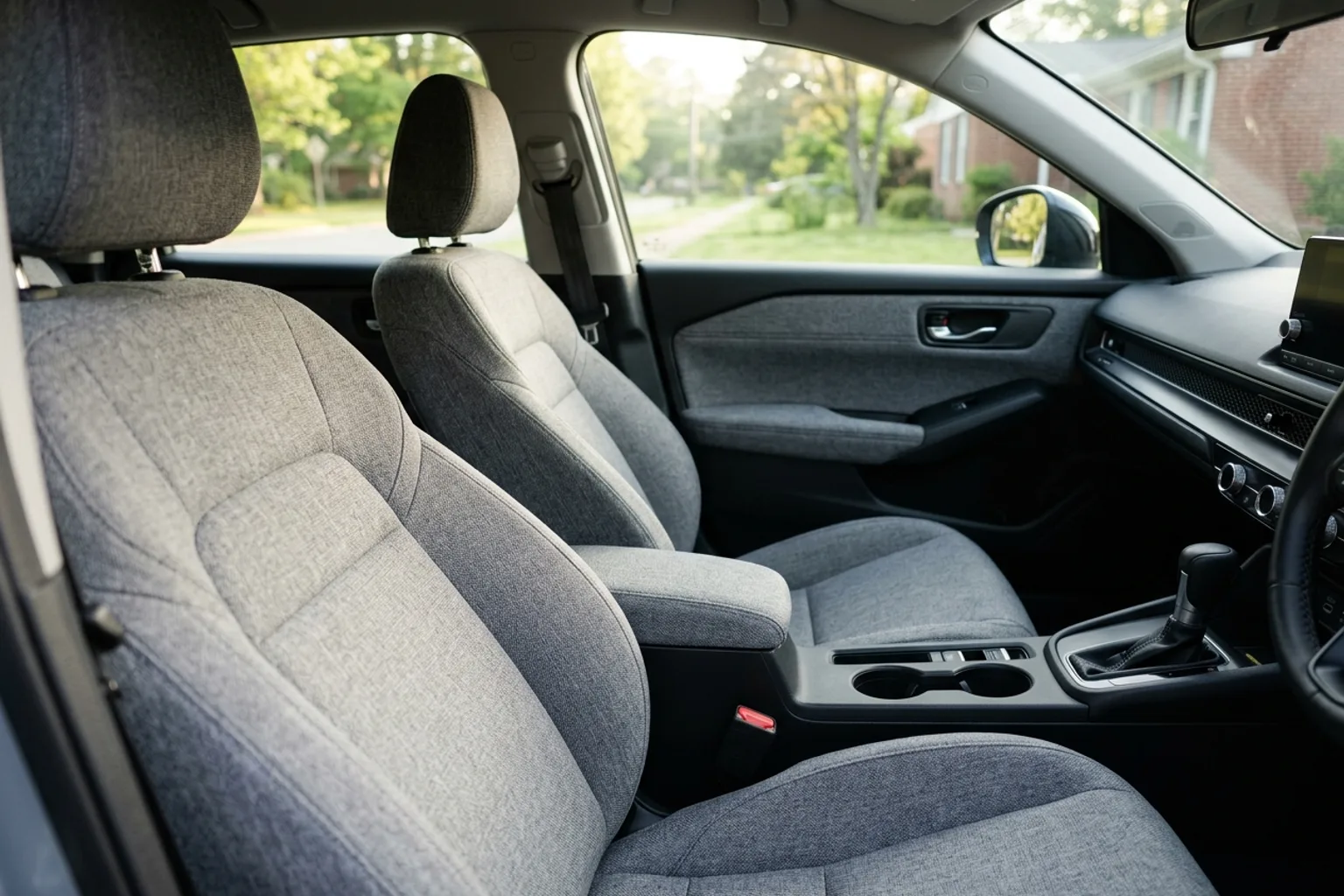
Black coffee and a sweetened milky drink are not the same cleaning problem. The drink may contain color, sugar, fats, and other ingredients, while the seat may be cloth, leather, synthetic material, or a combination. Identify both before selecting a product. This article focuses on cloth upholstery; other materials require their own vehicle-approved care.
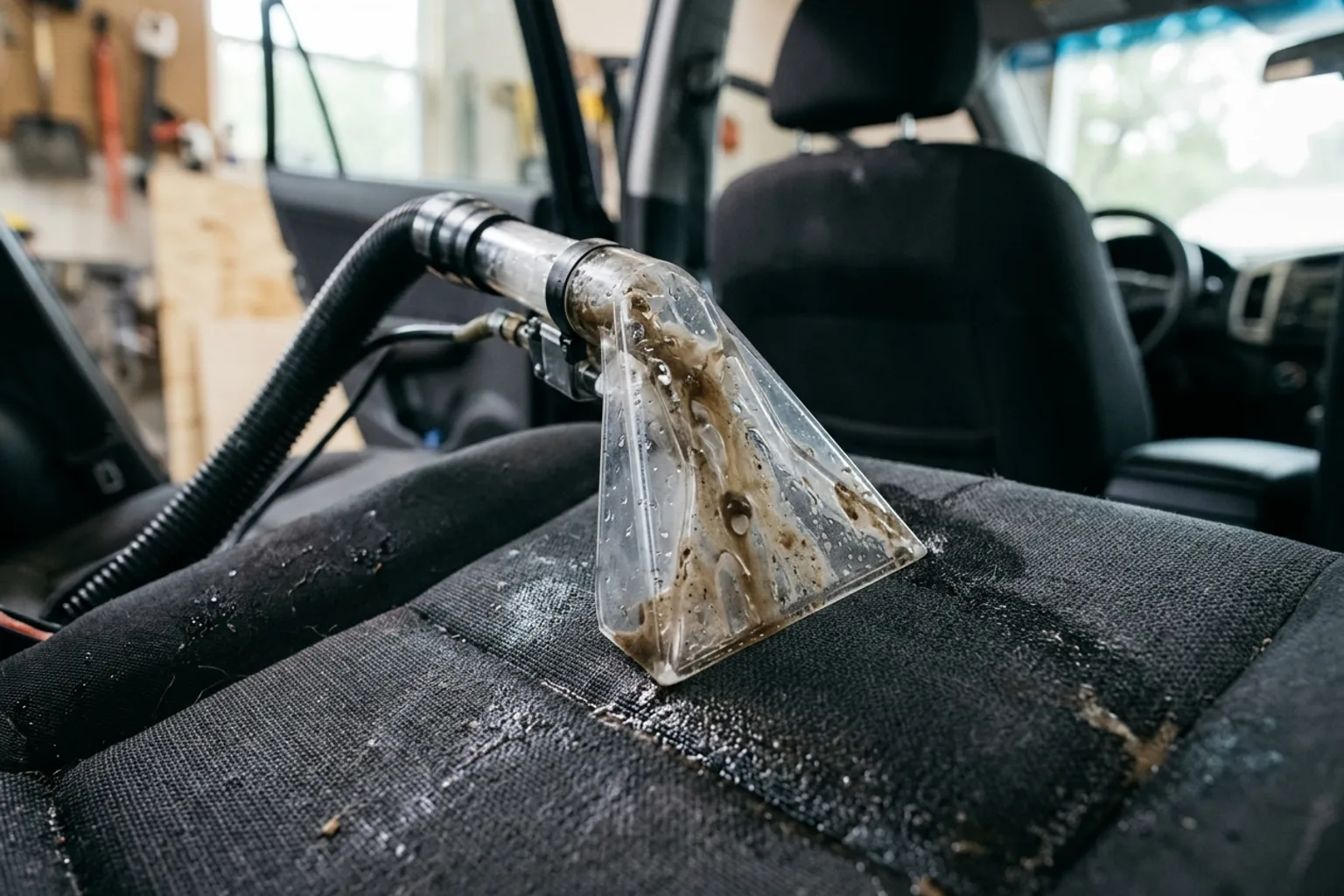
For a fresh spill, absorb liquid with a clean cloth rather than scrubbing it into a larger area. For an old spill, avoid adding a large volume of water simply to make the stain move. BISSELL's car-interior guidance begins with vacuuming and follows with suitable upholstery cleaning, excess-moisture removal, and air drying.
Evidence status: researched
This is a cautious upholstery workflow based on the cited cleaning guidance, not a DetailRig stain-removal trial. No cleaner is promised to erase every coffee stain.
| Situation | First priority | Next check |
|---|---|---|
| Fresh liquid | Blot with clean absorbent material | How far did the spill spread and what does the vehicle permit? |
| Sticky dried residue | Remove loose soil and use a compatible upholstery method | Does the cleaner address the drink's other ingredients? |
| Old discoloration | Test a small hidden area and control moisture | Is the mark staining, wear, or dye damage? |
| Persistent odor | Look for residue in adjacent fabric or cushion | Is professional cleaning or inspection needed? |
A Controlled Cloth-Seat Cleaning Routine
Treat a coffee spill on a cloth car seat
5 stepsRemove liquid and loose debris
Blot a fresh spill gently. Vacuum surrounding dry debris before introducing cleaner, and do not grind particles into the fabric.
Check compatibility
Read the vehicle upholstery guidance and cleaner label. Test in an inconspicuous place for color or texture change.
Apply the cleaner sparingly
Use the product's specified amount and method. Work the stain area without deliberately soaking the cushion beneath it.
Lift soil and residue
Blot or extract using suitable equipment and follow with the residue-removal step required by the product. Avoid leaving sticky cleaner behind.
Dry the seat
Remove excess moisture and allow thorough air drying with practical ventilation. Do not close up a wet vehicle or assume the surface dryness means the cushion is dry.
Why Does the Mark Come Back?
Residue below the visible fabric or cleaner left in the upholstery can change the appearance as the seat dries. Repeated wetting can spread the problem. Instead of chasing the ring with stronger mixtures, stop and assess how much moisture is present, whether the correct residue-removal step was used, and whether professional extraction is appropriate.
- Do not mix cleaning chemicals to create a stronger stain remover.
- Do not use a household product merely because it is safe on a carpet inside a building.
- Do not attack worn or discolored fabric as though aggressive scrubbing can restore its color.
- Do not forget belts, buckles, seams, and electrical components around the wet area.
When Professional Help Makes Sense
Consider a professional when the spill is large, has soaked deeply, involves a sensitive material, or leaves a persistent odor. The useful handover is specific: what was spilled, when it happened, and which products have already been applied. That information is more useful than another untested home remedy.
Straight answers
Frequently Asked Questions
Answers based on the evidence and sources identified in this article.
Does vinegar remove coffee from car seats?
Do not make an unverified household mixture your first choice. Vehicle materials and cleaner labels vary; use an approved upholstery method and test it rather than assuming a pantry ingredient is compatible.
Can I use a carpet extractor for old coffee stains?
Only when the machine, solution, and vehicle upholstery directions support it. Controlled moisture and residue removal matter more than forcing large amounts of liquid through the seat.
Why does the coffee smell remain after the stain fades?
Milk, sugar, or liquid may remain in adjacent fabric or deeper material. Visual improvement does not establish that the source is gone; reassess residue and drying rather than masking the odor.
Where to buy
Recommended Gear in this Guide
Active 2.0 1800 PSI 2.0 GPM Pressure Washer
Our lab-tested standard for safe automotive flow and pressure.
DetailRig is reader-supported. Recommendations follow each page's evidence label (tested, used, or researched), and we never accept paid placement. When you buy through our links, we may earn an affiliate commission at no extra cost to you.
References & Sources

DetailRig Editorial
ContributorResearch publication
DetailRig Editorial publishes source-linked car-care explainers. These articles synthesize manufacturer instructions and clearly separate research from documented hands-on testing.