Table of Contents(5 sections)
The washer manual controls the procedure
Electric and gasoline units, pumps, hoses, and accessories can have different storage requirements. Stop the equipment safely and follow the exact manufacturer instructions rather than using a generic engine or pump procedure.
Why Residual Water Is the Issue
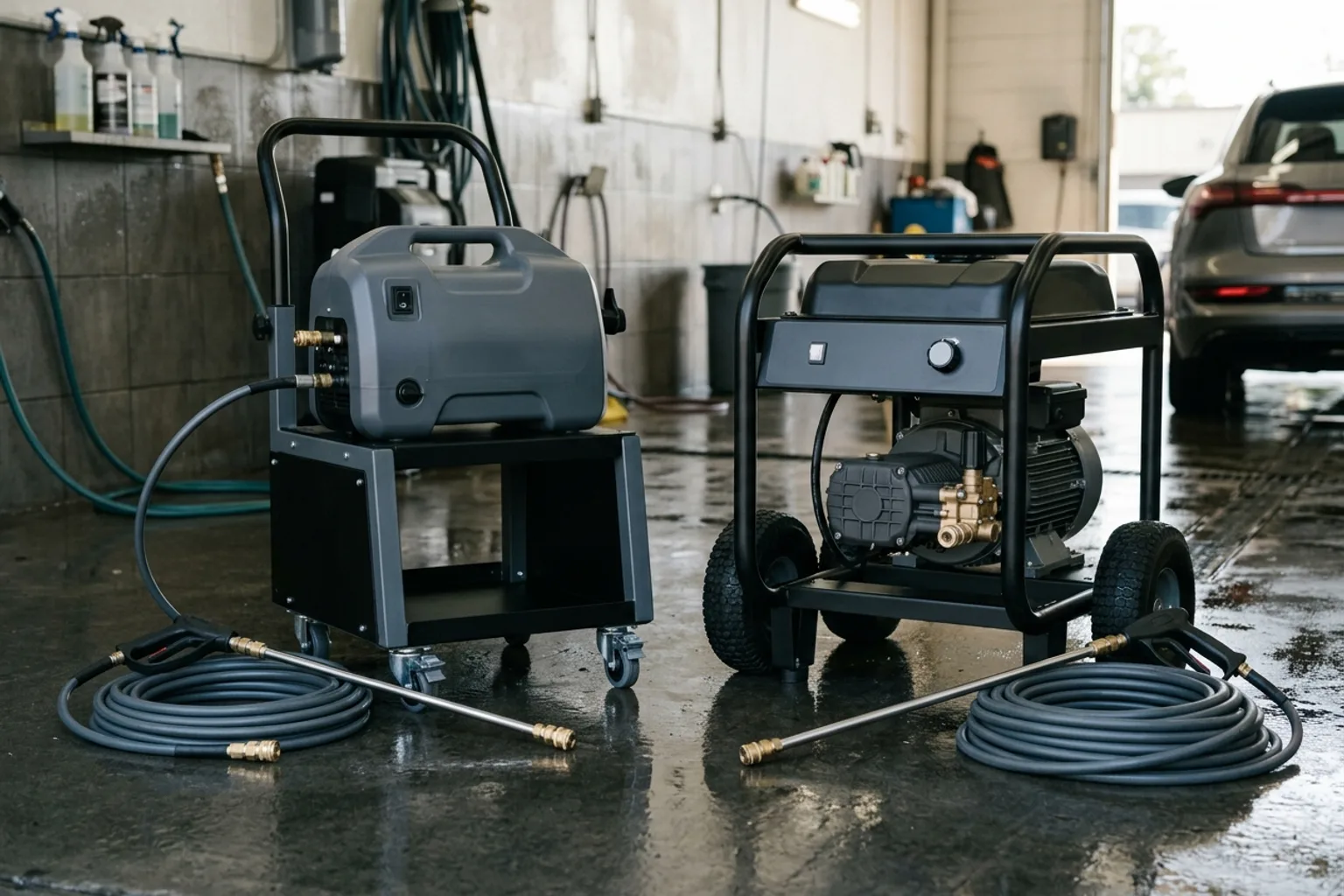
A washer can retain water after the supply is disconnected. Freeze preparation therefore involves the complete unit and its accessories, not just moving the main body indoors while leaving a wet hose outside. Your manual should identify drainage, starting restrictions, pump protection, and any model-specific steps.
Kärcher sells Pump Guard as a dedicated product and states freeze protection down to −25°F (−32°C) for that formula. Treat that as a manufacturer specification for Pump Guard, not a rating for every protectant or a guarantee when the application procedure is ignored.
| Component | What to verify | Avoid |
|---|---|---|
| Pressure washer and pump | Shutdown, drainage, and protectant directions in the manual | Improvised operation outside manufacturer instructions |
| High-pressure hose | Water removal and storage position specified by the maker | Leaving it wet in freezing conditions |
| Trigger gun, lance, and accessories | Drainage and dry storage requirements | Assessing only the main machine |
| Garden-hose supply | Disconnection and appropriate water removal | Leaving a connected frozen supply setup |
| Pump protectant | Compatibility, exact dose or application, and product rating | Automotive antifreeze as an unapproved substitute |
A Manual-Led Storage Sequence
Prepare a pressure washer for freezing conditions
5 stepsRead the complete storage section
Identify instructions for your exact unit, including safety, drainage, pump protection, fuel or electrical considerations, and restart.
Shut down and disconnect safely
Use the manufacturer's procedure for depressurization and disconnection. Do not open or service a pressurized system.
Remove water as instructed
Drain the machine, hoses, gun, lance, and accessories using the approved steps. Do not invent compressed-air or engine-running procedures.
Apply compatible pump protection
If the washer maker supports a protectant, use that product's label method and quantity. Kärcher's −25°F (−32°C) statement applies to its Pump Guard product only.
Store and label the setup
Keep the complete system in suitable conditions and note what protectant was used so spring recommissioning follows the right flush and restart directions.
Why Not Pour in Automotive Antifreeze?
Automotive coolant is formulated for a vehicle cooling system, not automatically for a pressure-washer pump, seals, downstream surfaces, or disposal route. A dedicated pump product has its own instructions and compatibility scope. Unless the exact washer and product manuals explicitly support an alternative, do not improvise one.
- Do not rely on a heated garage that may lose power or drop below freezing without considering the actual storage temperature.
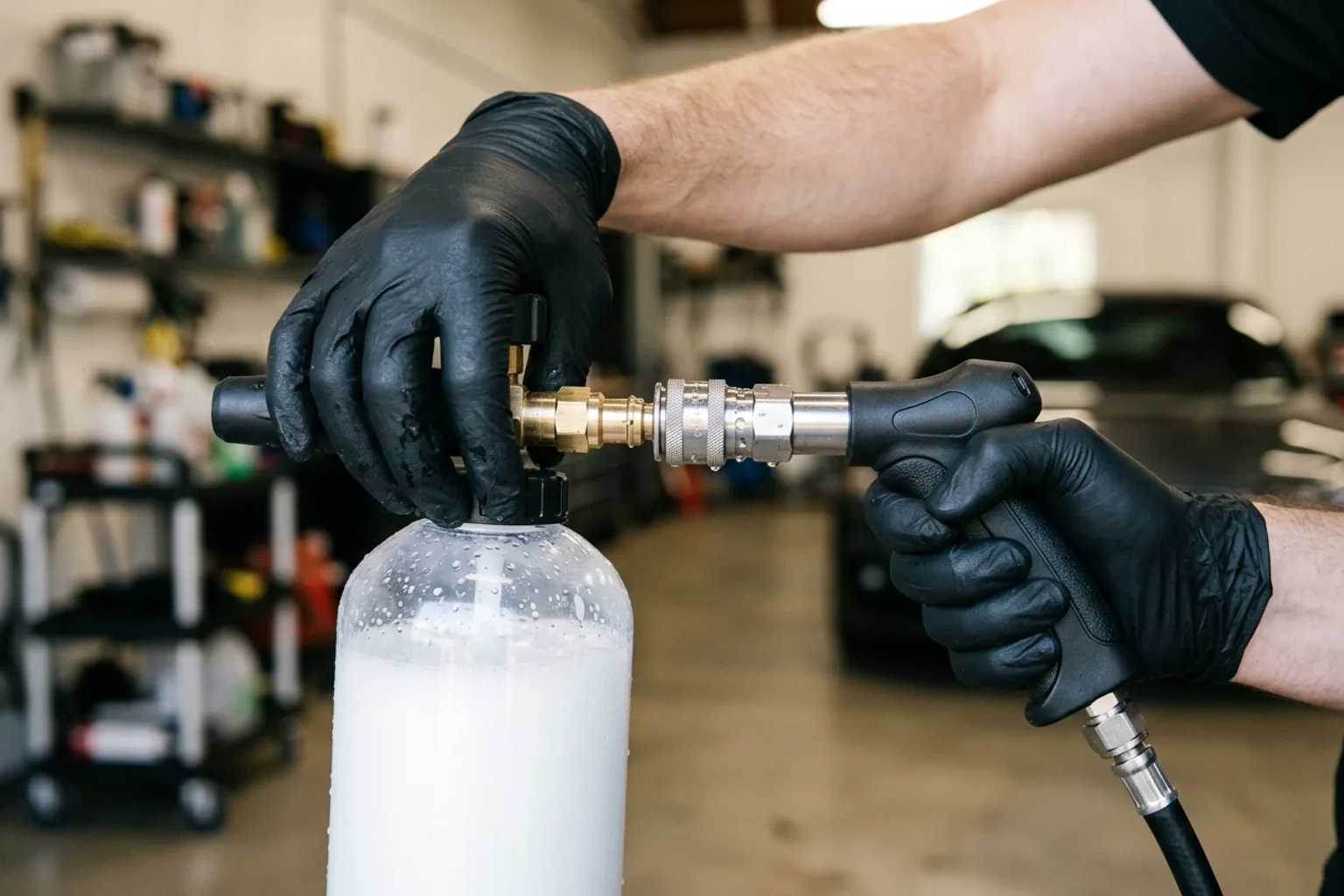
- Do not forget detachable foam cannons, nozzles, and hoses that can retain liquid.
- Do not assume a protectant rating repairs damage from a previous freeze.
- Do not restart a suspected frozen unit; follow the manufacturer's inspection and service guidance.
What to Do Before the Next Use
Inspect hoses, fittings, cords or engine components as applicable, and follow the manual's recommissioning and protectant-flushing steps. Collect or dispose of fluids according to the product label and local requirements. If the washer was exposed to freezing before protection, seek inspection rather than simply adding Pump Guard afterward.
Evidence status: researched
The temperature rating is attributed specifically to Kärcher Pump Guard. DetailRig has not conducted freeze-chamber, pump-durability, or compatibility testing.
Straight answers
Frequently Asked Questions
Answers based on the evidence and sources identified in this article.
Does Kärcher Pump Guard protect to −25°F?
Kärcher states freeze protection down to −25°F (−32°C) for that Pump Guard product. Follow its application label and your washer manual; the rating is not universal.
Can I use RV or automotive antifreeze in a pressure washer?
Do not assume either is compatible. Use only a pump protectant and procedure supported by the washer and product manufacturers.
Is draining the pump enough for winter storage?
It depends on the complete unit and conditions. Follow the manual for residual water, hoses, accessories, and any required pump protection rather than treating one drainage step as universal.
Where to buy
Recommended Gear in this Guide
Active 2.0 1800 PSI 2.0 GPM Electric Pressure Washer
Patented 5-piston brass pump delivers true 2.0 GPM flow at 1000–1800 PSI, optimal for safe automotive rinsing.
DetailRig is reader-supported. Recommendations follow each page's evidence label (tested, used, or researched), and we never accept paid placement. When you buy through our links, we may earn an affiliate commission at no extra cost to you.
References & Sources

DetailRig Editorial
ContributorResearch publication
DetailRig Editorial publishes source-linked car-care explainers. These articles synthesize manufacturer instructions and clearly separate research from documented hands-on testing.