Table of Contents(5 sections)
The Useful Rule Is Separation, Not a Magic Order
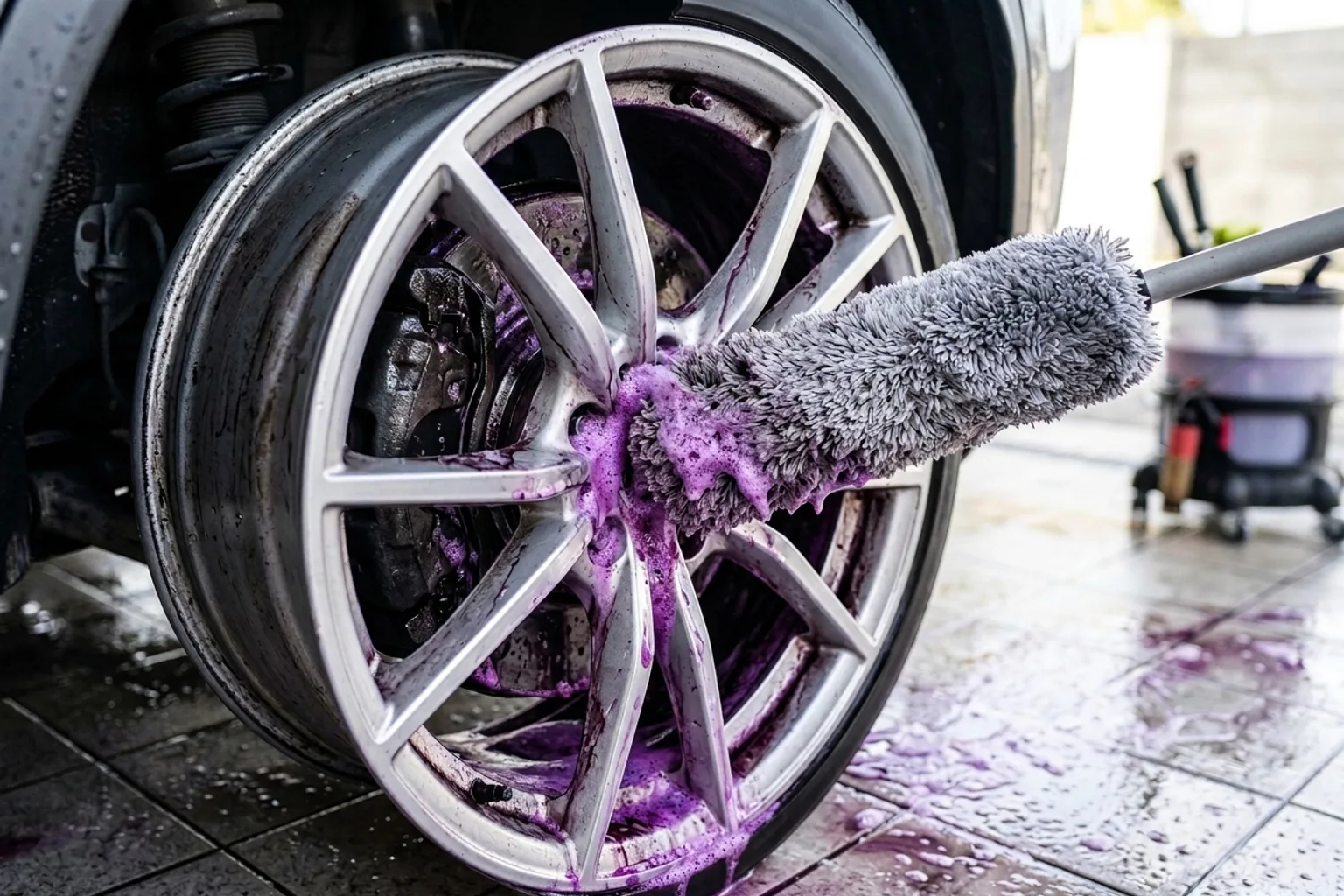
Wheels collect different contamination from painted bodywork, so their brushes, mitts, and towels should not migrate to paint. Washing them first can keep heavy splatter off an already cleaned body. However, if your process throws dirty wheel water onto clean paint, leaves cleaner to dry, or shares tools, simply changing the order does not fix it.
A practical preference, not a universal law
This guide recommends wheels-first as one controllable workflow. It does not claim that paint-first always damages a vehicle or that every manufacturer mandates one sequence.
| Workflow | Potential advantage | What can still go wrong |
|---|---|---|
| Wheels first | Heavy wheel splatter is handled before final paint cleaning | Wheel tools or contaminated rinse water reach body panels |
| Paint first | Can suit a carefully separated process with controlled wheel splatter | Later wheel work recontaminates clean paint or leaves residue |
| Either order | Works when chemistry, tools, and rinse are managed | Cleaner dries, shared media transfers grit, or a dropped tool is reused |
A Wheels-First Workflow That Contains the Mess
Wash wheels before bodywork with separate tools
5 stepsCheck surfaces and products
Work on cool wheels and paint. Follow vehicle, wheel-finish, and cleaner instructions, including any restrictions on sun and drying.
Pre-rinse loose contamination
Rinse the wheel area and nearby bodywork as needed so loose grit is not pushed around during contact.
Use dedicated wheel tools
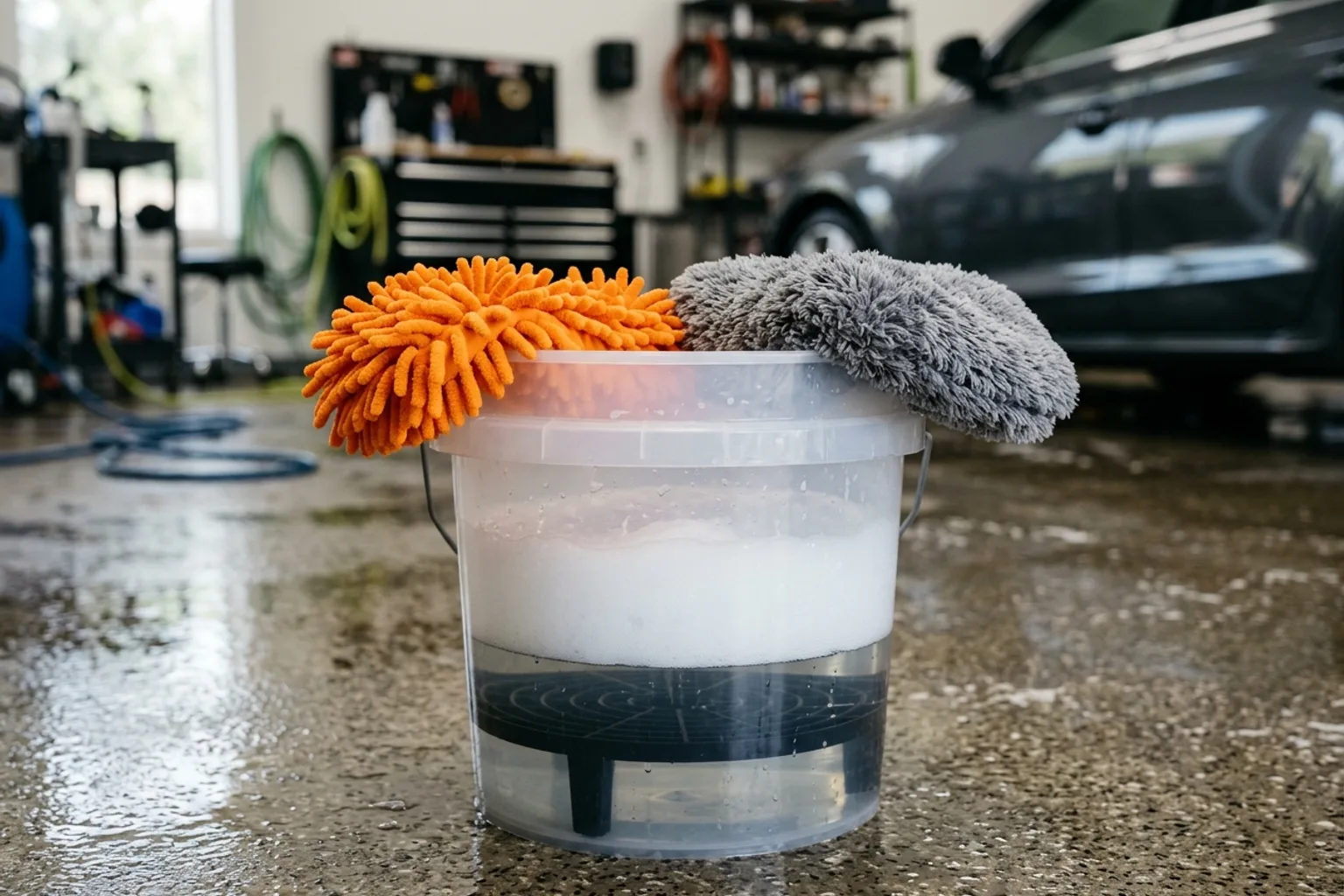
Keep wheel brushes, buckets, and towels visibly separate from paint equipment. Clean one wheel at a time if that helps control dwell.
Rinse away wheel residue
Remove all wheel-cleaner and loosened soil according to the label, including splatter on adjacent panels. Do not leave this residue for later.
Reset for paint
Switch to clean paint-only tools and fresh suitable wash solution. Consumer Reports recommends pre-rinsing and washing and rinsing the body one section at a time, working from the top down.
What Matters More Than Sequence
- Tool separation: wheel equipment never becomes paint equipment during the same wash.
- Chemical control: each product stays within its stated surface, temperature, and dwell limits.
- Rinse control: loosened wheel soil and cleaner do not remain on bodywork.
- Contact control: dropped, contaminated, or unsuitable media are removed from service rather than reused on paint.
- Drying control: separate suitable towels or methods prevent wheel residue from reaching the final body finish.
When Paint-First Can Still Be Managed
A user who controls wheel splatter, keeps all tools separate, prevents drying, and rinses any affected bodywork may prefer another sequence. That is a process choice, not evidence of an unsafe wash. Assess the result by contamination control rather than enforcing a ritual with no supporting vehicle-manufacturer requirement.
Evidence status: researched
The body-wash portion reflects Consumer Reports guidance. The order comparison is a practical workflow analysis, not a DetailRig abrasion or contamination measurement.
Straight answers
Frequently Asked Questions
Answers based on the evidence and sources identified in this article.
Does washing wheels first prevent scratches?
No order can guarantee that. Separate tools, remove loose grit, use suitable products, and control contact. Wheels-first mainly helps manage splatter and workflow.
Can I use the same bucket for wheels and paint?
Keep them separate to reduce cross-contamination. A shared bucket undermines the main safety benefit regardless of which area you wash first.
Should I wash paint from the top down?
Consumer Reports recommends top-down body washing and rinsing one section at a time. This bodywork routine can follow a properly contained wheels-first stage.
Where to buy
Recommended Gear in this Guide
Sonax Beast Color-Changing Acid-Free Wheel Cleaner (1000ml)
Thick color-changing gel clings to wheel faces and barrels to dissolve sintered iron dust safely on all alloy finishes.
DetailRig is reader-supported. Recommendations follow each page's evidence label (tested, used, or researched), and we never accept paid placement. When you buy through our links, we may earn an affiliate commission at no extra cost to you.
References & Sources

DetailRig Editorial
ContributorResearch publication
DetailRig Editorial publishes source-linked car-care explainers. These articles synthesize manufacturer instructions and clearly separate research from documented hands-on testing.