Table of Contents(6 sections)
Evidence status: researched
This comparison draws on an industry formulation explanation and a manufacturer application label. DetailRig has not measured wear, gloss, tire condition, or sling across products.
Carrier Type Is Not a Complete Performance Score
Professional Carwashing & Detailing explains water-based dressings as emulsions and discusses formulation-dependent durability. That means two products in the same broad category need not behave identically. Gloss, drying feel, application, cleanup, and longevity should be checked at product level rather than inferred from one ingredient-family label.
| Question | Why it matters | Where to verify |
|---|---|---|
| What finish do I want? | Gloss preference is separate from carrier type | Manufacturer finish description |
| Is it intended for this tire and use? | Compatibility should not be assumed across surfaces | Product label and vehicle or tire guidance |
| How is it applied? | Applicator, amount, and drying directions affect the workflow | Current manufacturer instructions |
| How do I control spin-off? | Excess product can be flung during driving | Label directions and excess wipe-off |
| How will I clean it next time? | Build-up can change the next application | Manufacturer maintenance and cleaning guidance |
Reasons to Choose Either Type
Choose a particular water-based or solvent-based product when its stated appearance, intended surface, application, and cleanup suit your routine. A category name alone is not a reason to buy. A specific formula may be attractive because you prefer its applicator, finish, or maintenance instructions, not because marketing assigns universal virtues to its carrier.
Reasons to Skip or Reconsider
- Skip any product that is not intended for the tire or surface you plan to treat.
- Skip dressing if your priority is simply a clean natural tire and you do not want added appearance products.
- Reconsider a high-output application if you cannot remove excess or keep it away from tread and surrounding panels.
- Do not buy on the claim that all solvent formulas damage tires or that all water-based formulas are sling-proof; those are unsupported universal statements.
Application Matters More Than Category Promises
Apply tire dressing with controlled excess
4 stepsClean and dry the tire
Remove existing soil and residue using a compatible cleaning process. Meguiar's Endurance Tire Gel instructions call for clean, cool, dry tires.
Use the specified applicator
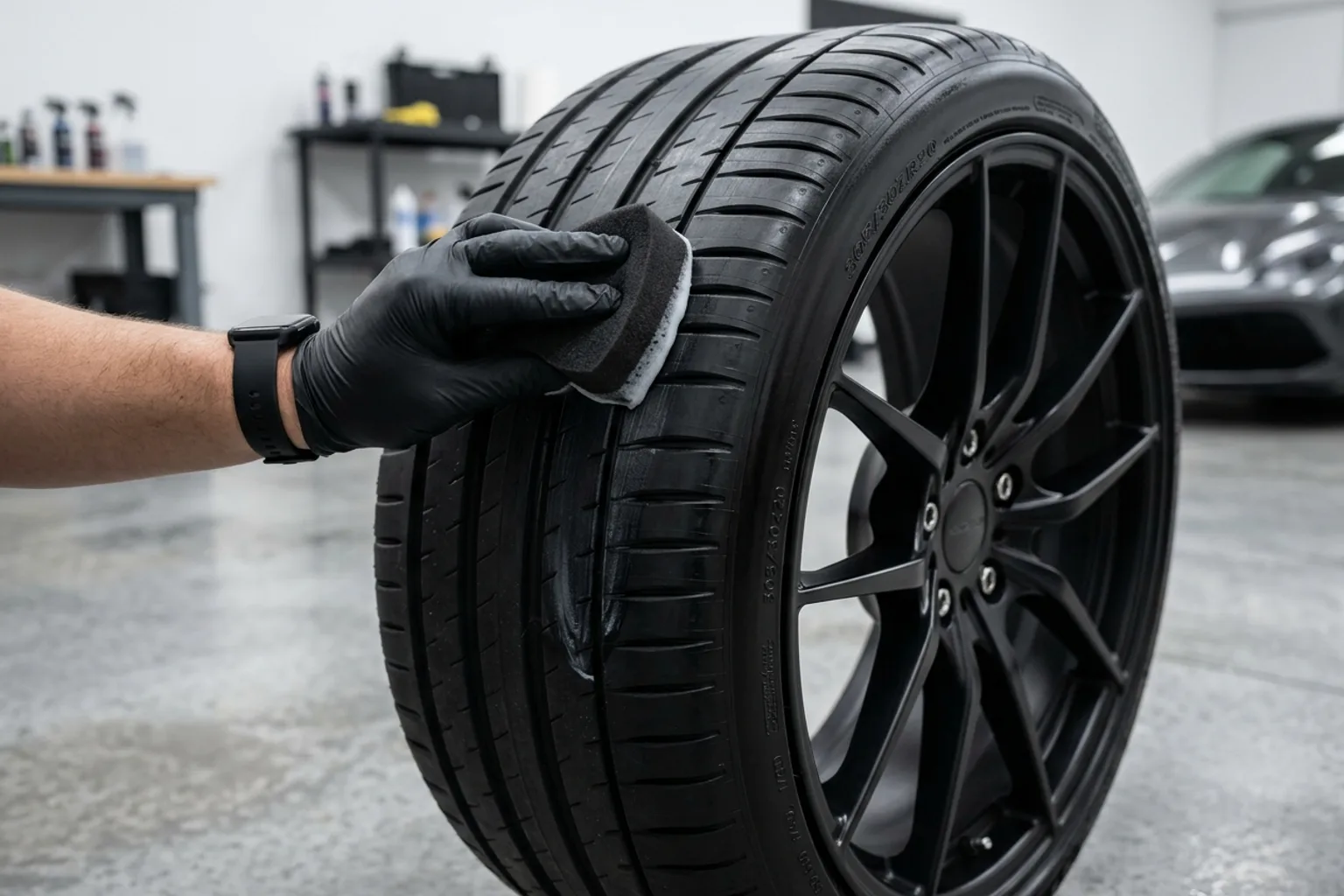
Apply the product in the amount and manner directed. More product is not automatically a better finish or longer-lasting result.
Keep dressing off the tread
Meguiar's specifically says to avoid the tread. Dressing belongs only where the manufacturer intends it.
Wipe and inspect excess
Follow the label's leveling or wipe-off instructions. Endurance Tire Gel says wiping excess reduces spin-off; inspect adjacent wheel and body areas before driving.
What Causes Sling?
Do not reduce sling to a water-versus-solvent label. Application amount, excess removal, product behavior, and driving conditions can all be relevant. If dressing reaches paint, follow the product's cleanup guidance and wash the affected area appropriately rather than hiding it under another coat.
The best comparison is therefore concrete: current label, intended finish, amount, applicator, excess removal, and cleanup. That gives you a defensible purchase decision without inventing test percentages or promising a universal wear period.
Straight answers
Frequently Asked Questions
Answers based on the evidence and sources identified in this article.
Are water-based tire dressings always sling-proof?
No. Application and excess removal still matter, and formulas differ. Follow the specific product directions and wipe excess where instructed.
Do solvent-based dressings always damage tires?
That universal claim is not supported by this comparison. Evaluate the exact product, intended use, and manufacturer directions rather than assigning damage to an entire category.
Should tire dressing be applied to the tread?
No for the cited Meguiar's product, which specifically says to avoid tread. Apply dressing only to the surface and area its label permits.
Where to buy
Recommended Gear in this Guide
303 High Gloss Tire Shine & Protectant (16 oz)
Water-based formula locks into tire pores to provide deep black shine without sling onto clean side panels.
DetailRig is reader-supported. Recommendations follow each page's evidence label (tested, used, or researched), and we never accept paid placement. When you buy through our links, we may earn an affiliate commission at no extra cost to you.
References & Sources

DetailRig Editorial
ContributorResearch publication
DetailRig Editorial publishes source-linked car-care explainers. These articles synthesize manufacturer instructions and clearly separate research from documented hands-on testing.